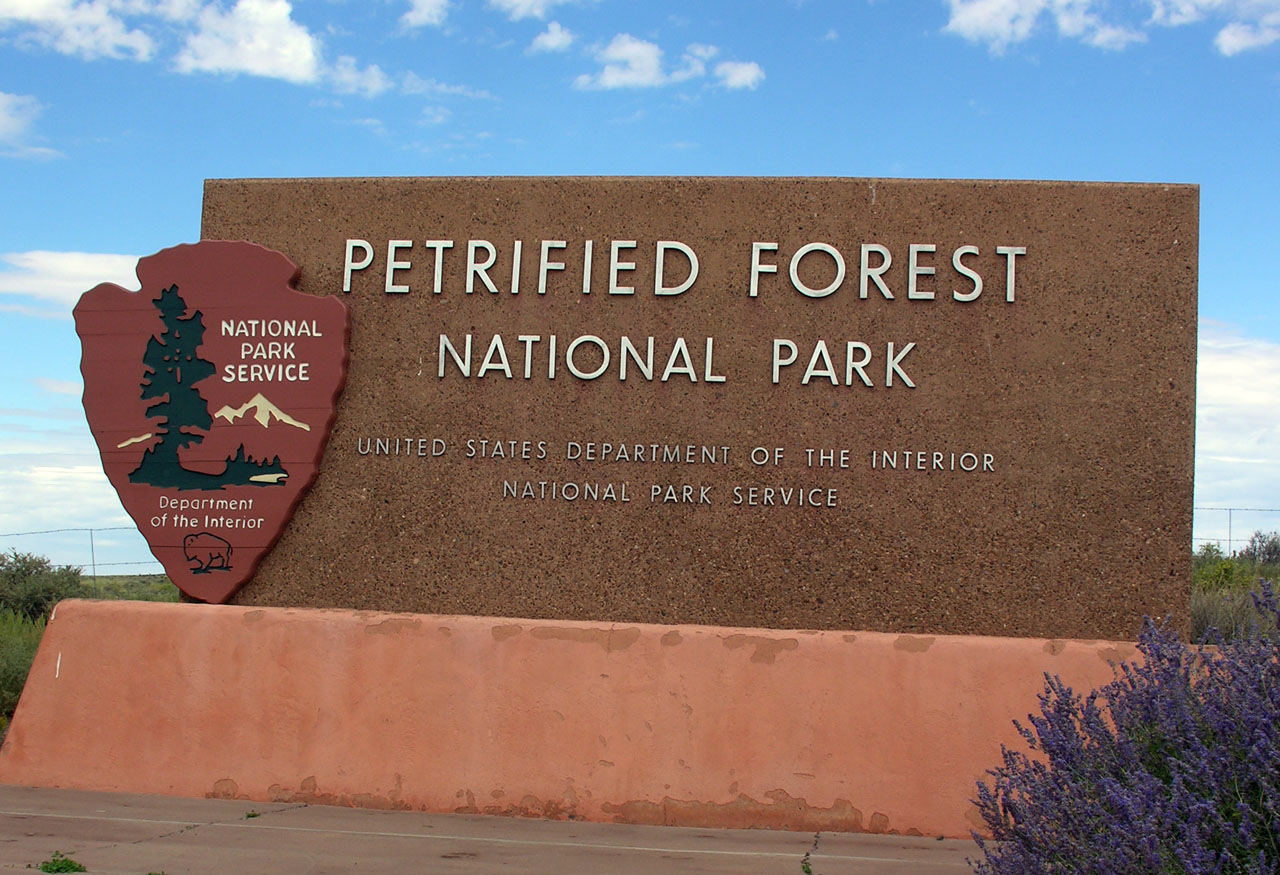
Petrified Forest National Park

I have a goal of visiting every major attraction along (or close to) the famous Route 66 within my lifetime.  Why this is, I couldn’t tell you.  Never-the-less, I plug away at it.  So here is yet another Route 66 attraction that is well worth taking the time to see if you happen to be traveling along Interstate 40 in northern Arizona.  I’m referring to the Petrified Forest National Park located within the beautiful Painted Desert of Arizona.
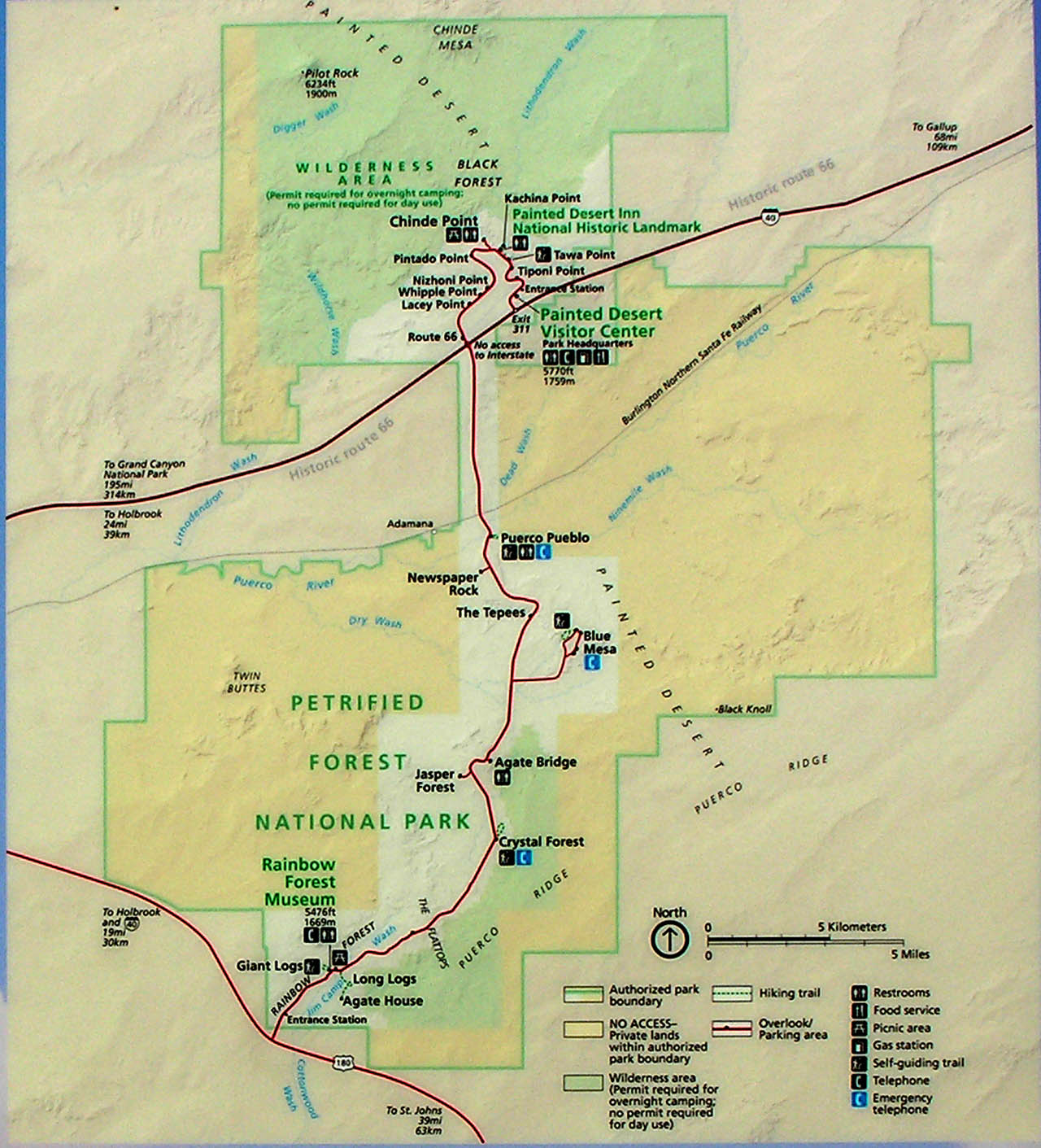
This map shows the outline of the park, along with the major features contained therein.  You may notice that visiting the park, and driving along the main park road will not add a major amount of time to your east or west-bound travel along the interstate.  There is a lot to see within the park, however, so you may want to allocate sufficient time for hiking and sightseeing during your visit.  If you are west-bound on the Interstate, the first thing you will encounter as you divert off the main road is the visitors center, where you can obtain information about the park.  The visitors center is exactly what you might expect, so I have not included any photos of it in this post.
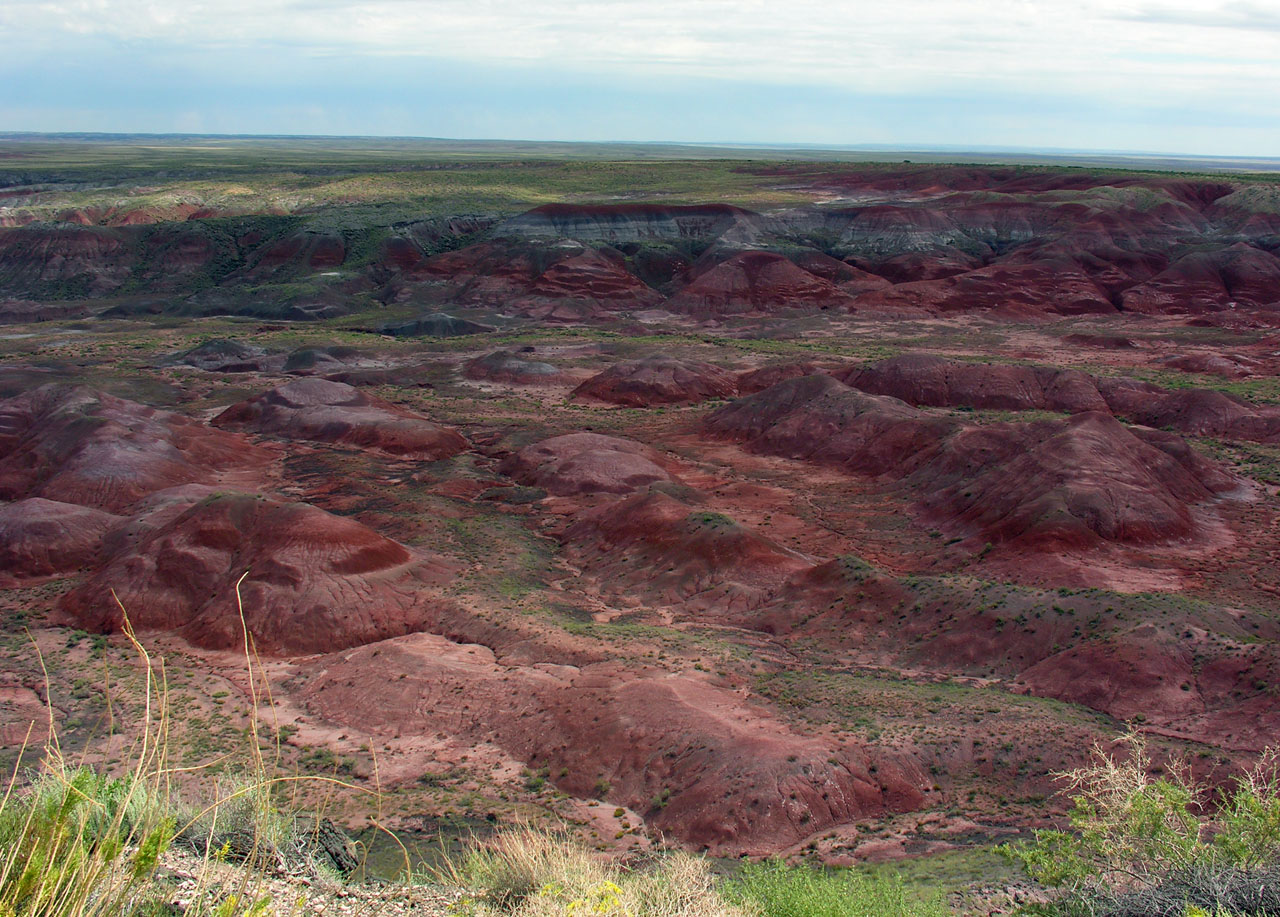
After paying the entrance fee at the park entry kiosk, the first thing you encounter along the park road are overlooks from which you have excellent vantage points of the spectacular Painted Desert.
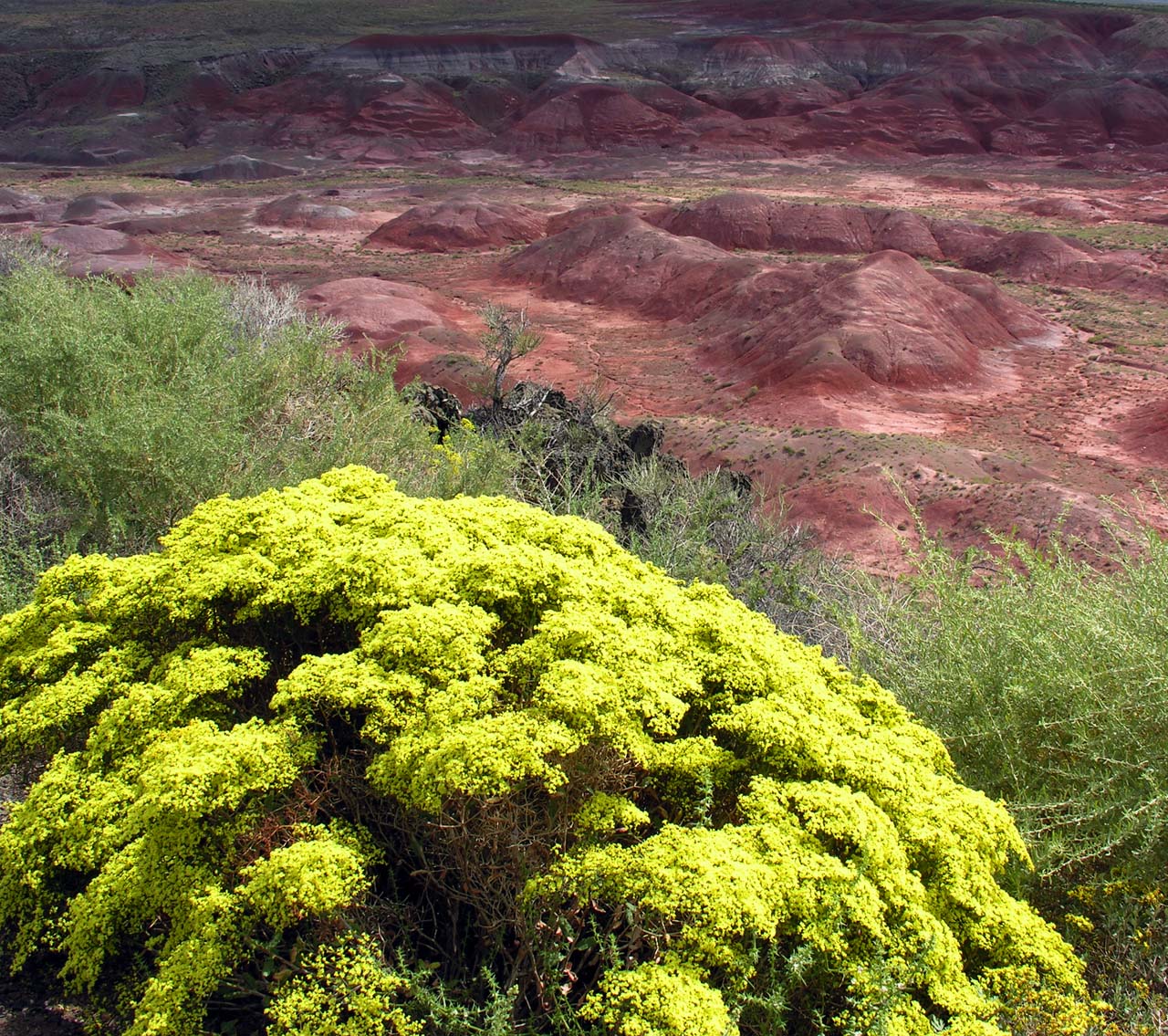
If you happen along this route at the right time of the year, wildflowers abound, adding a colorful touch to the already beautiful scenery.
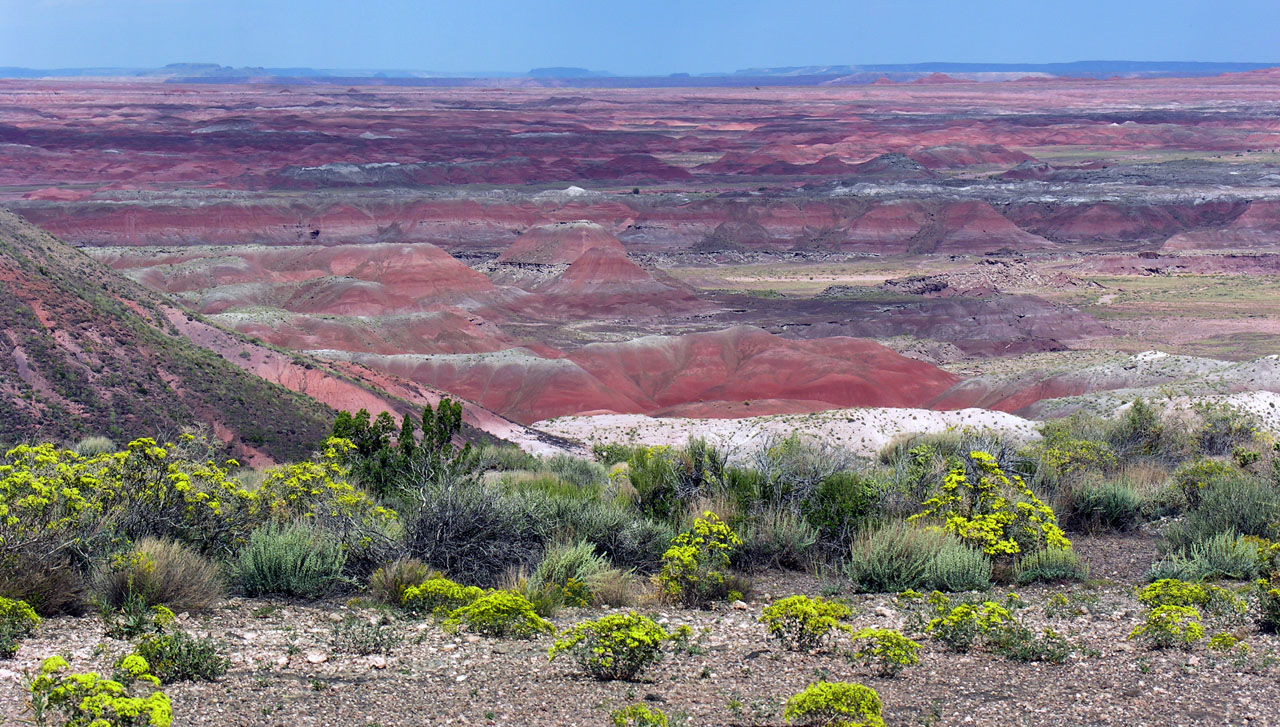
As you continue driving, you are rewarded with views of the desert in all directions, each view seeming more spectacular than the previous one.
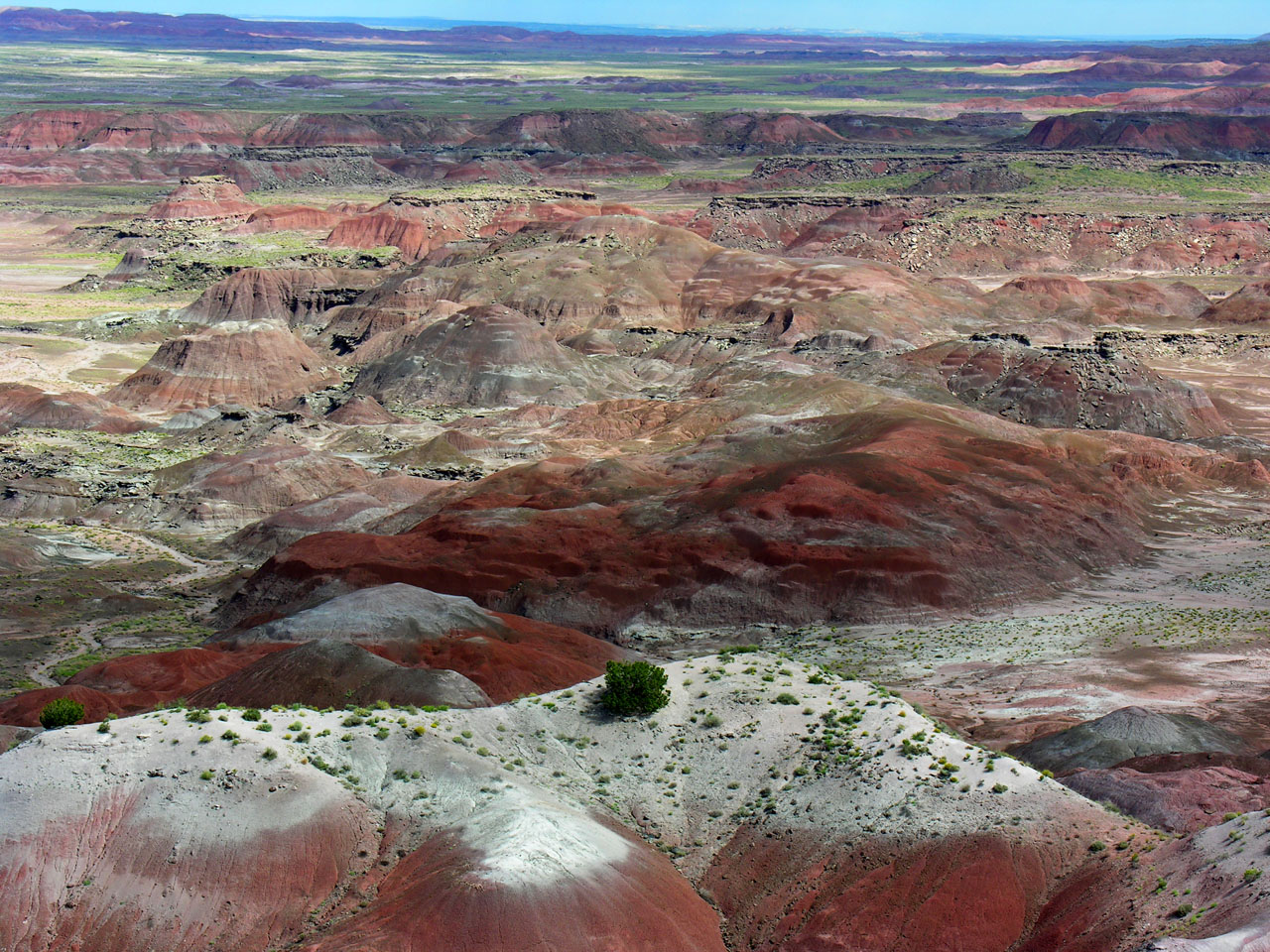
The clean desert air, combined with the elevated vantage point afforded by the turnouts allow you to see the hills and valleys for what seems a hundred miles.
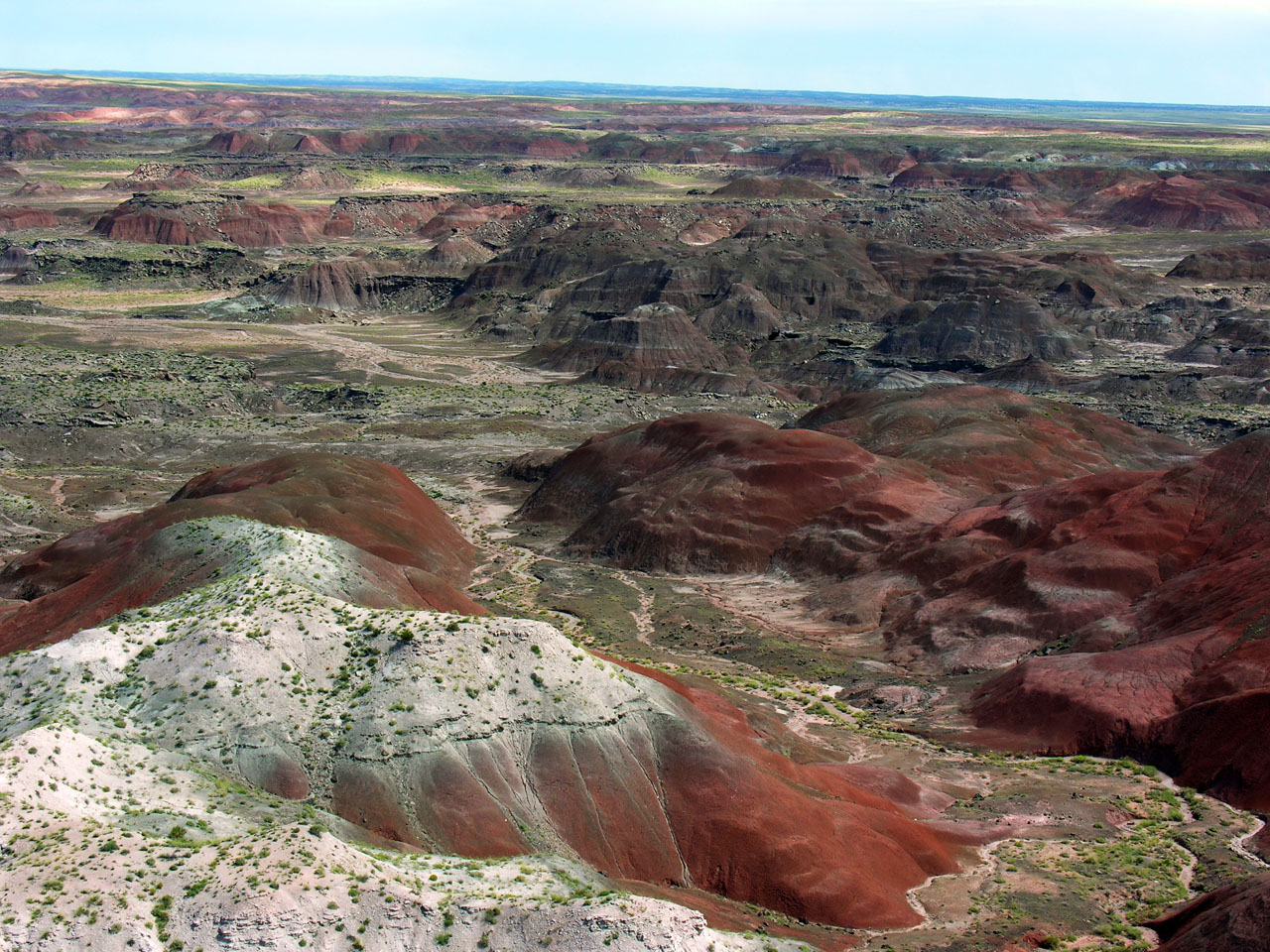
There are hiking trails along the way that will allow you to explore the area much more thoroughly than if you simply stayed in your automobile.
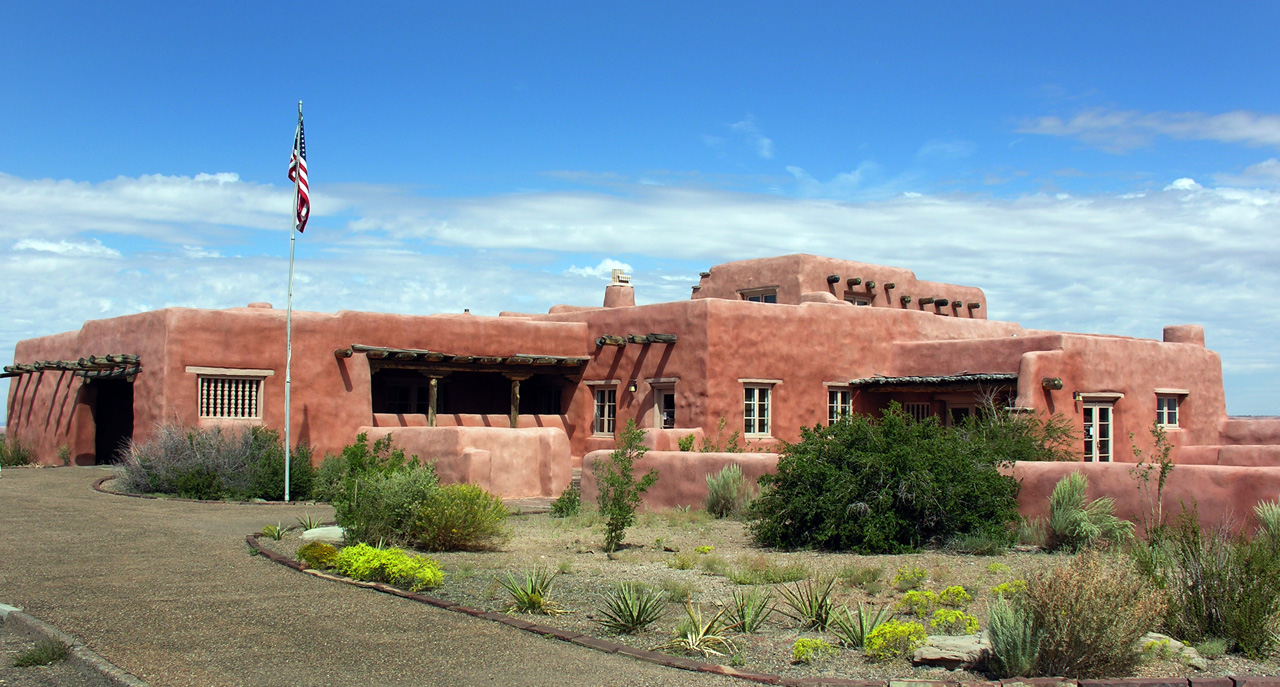
Soon you will arrive at the Painted Desert Inn National Historical Landmark, which is well worth exploring.
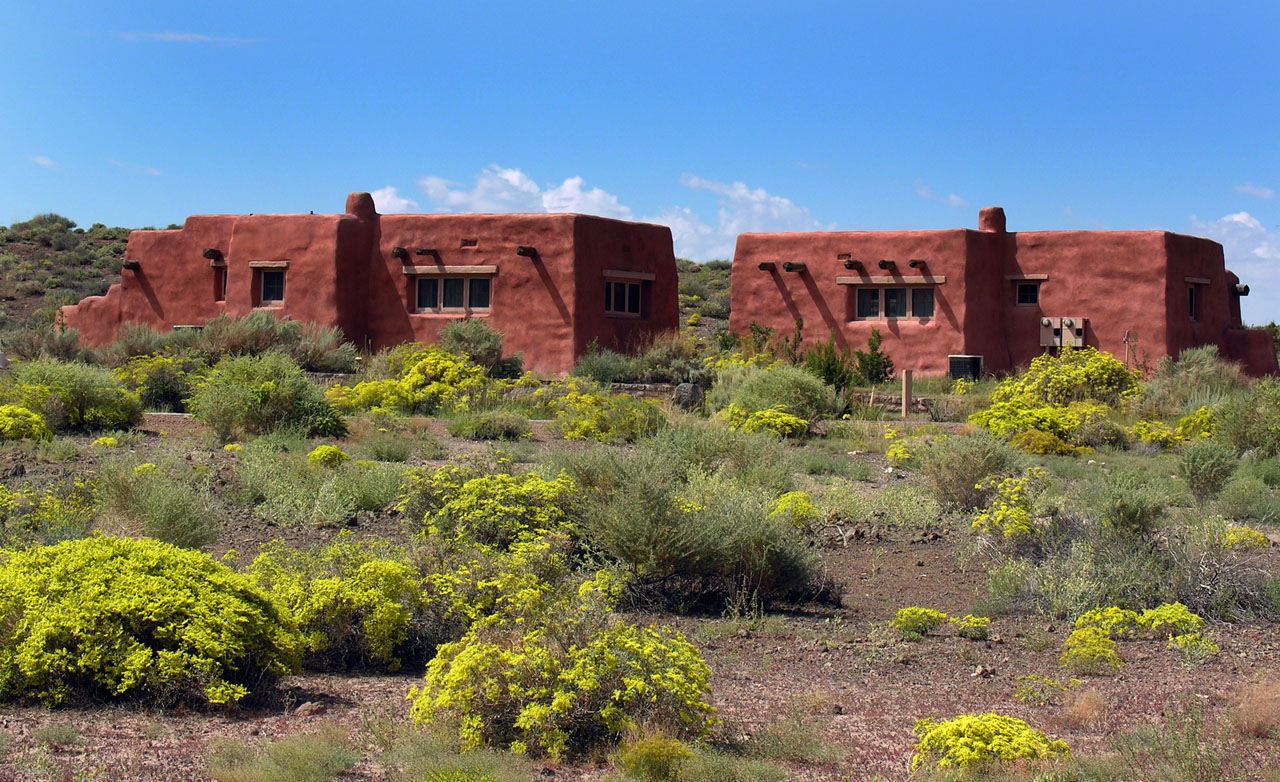
Across the road from the Inn are additional service buildings, built in the same Pueblo style as the Painted Desert Inn.
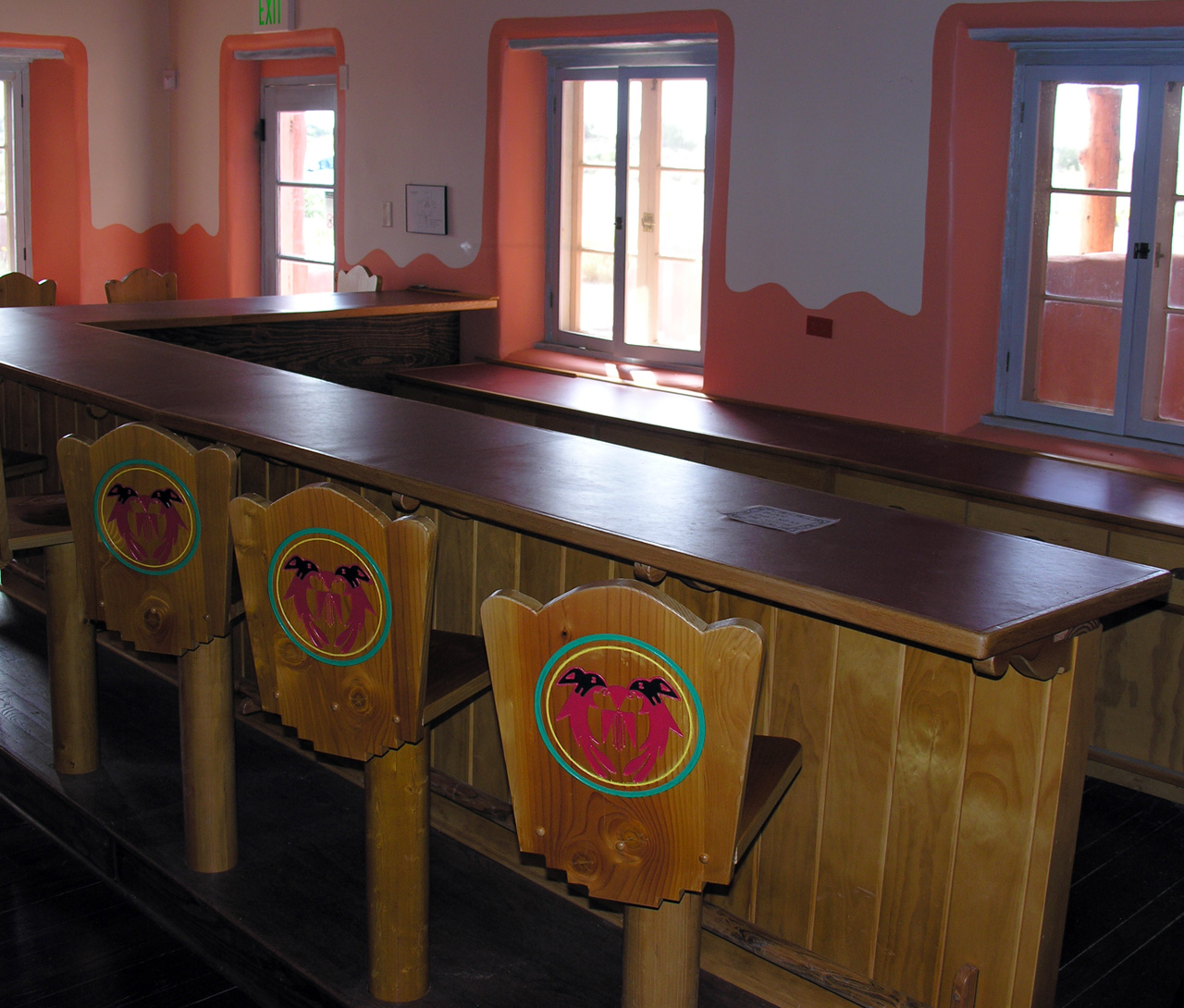
Visitors are welcome to enter the Inn, where you can see the wonderful architecture and decorating that make this such a special place.
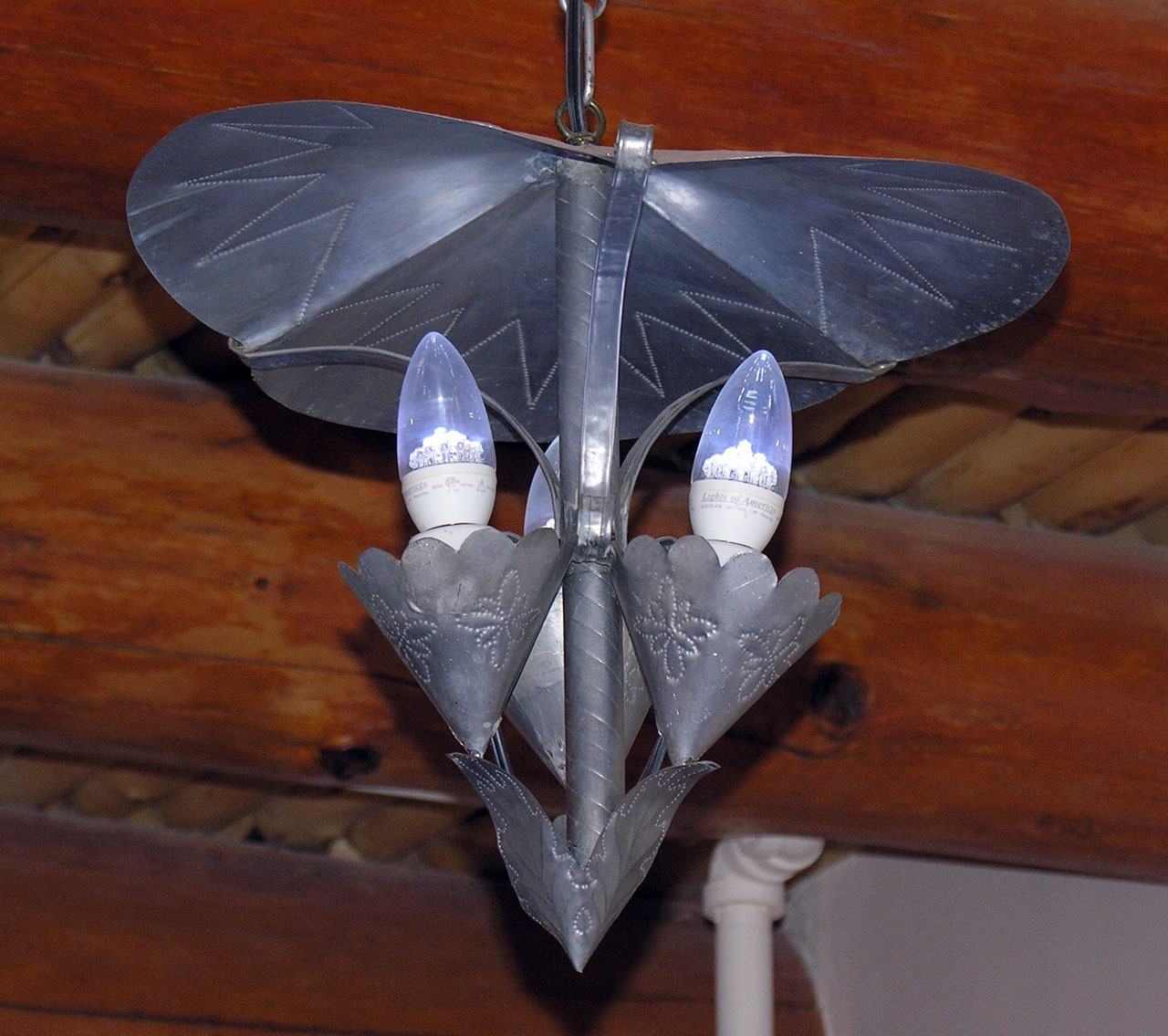
It is worth the effort to search for the little details that make this place unique, such as this hand-crafted light fixture in the bar area.

This mural depicts the dance and ceremonial costumes of the Native Americans from the region.  You will find similar artwork throughout the Painted Desert Inn.
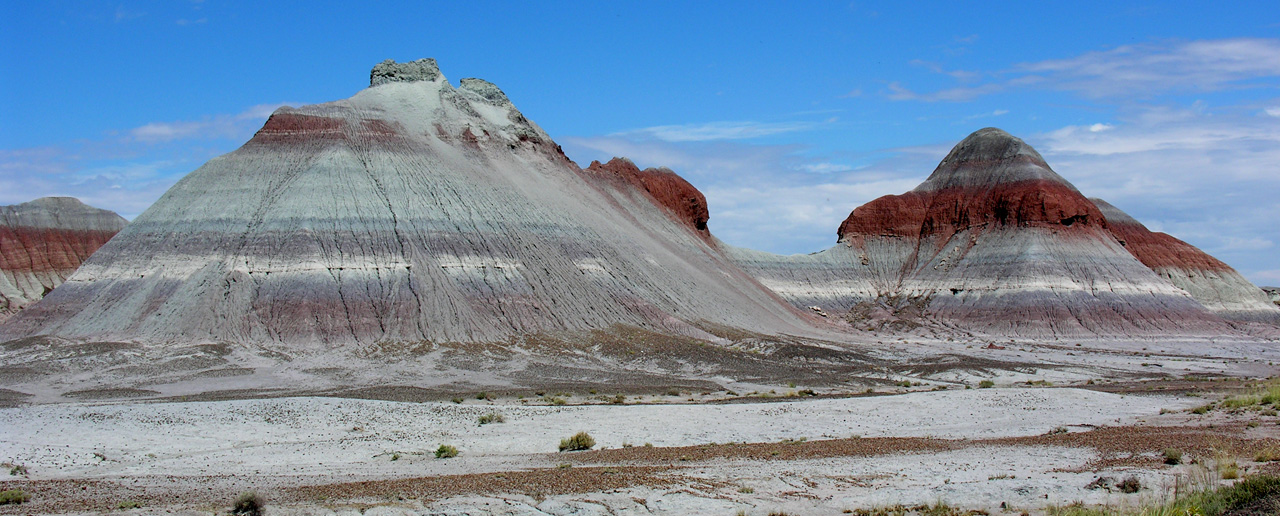
Back on the road heading south, you find yourself within an area of badlands.  Take the time to enjoy the scenery, as these types of geological formations occur only in a few areas of the United States
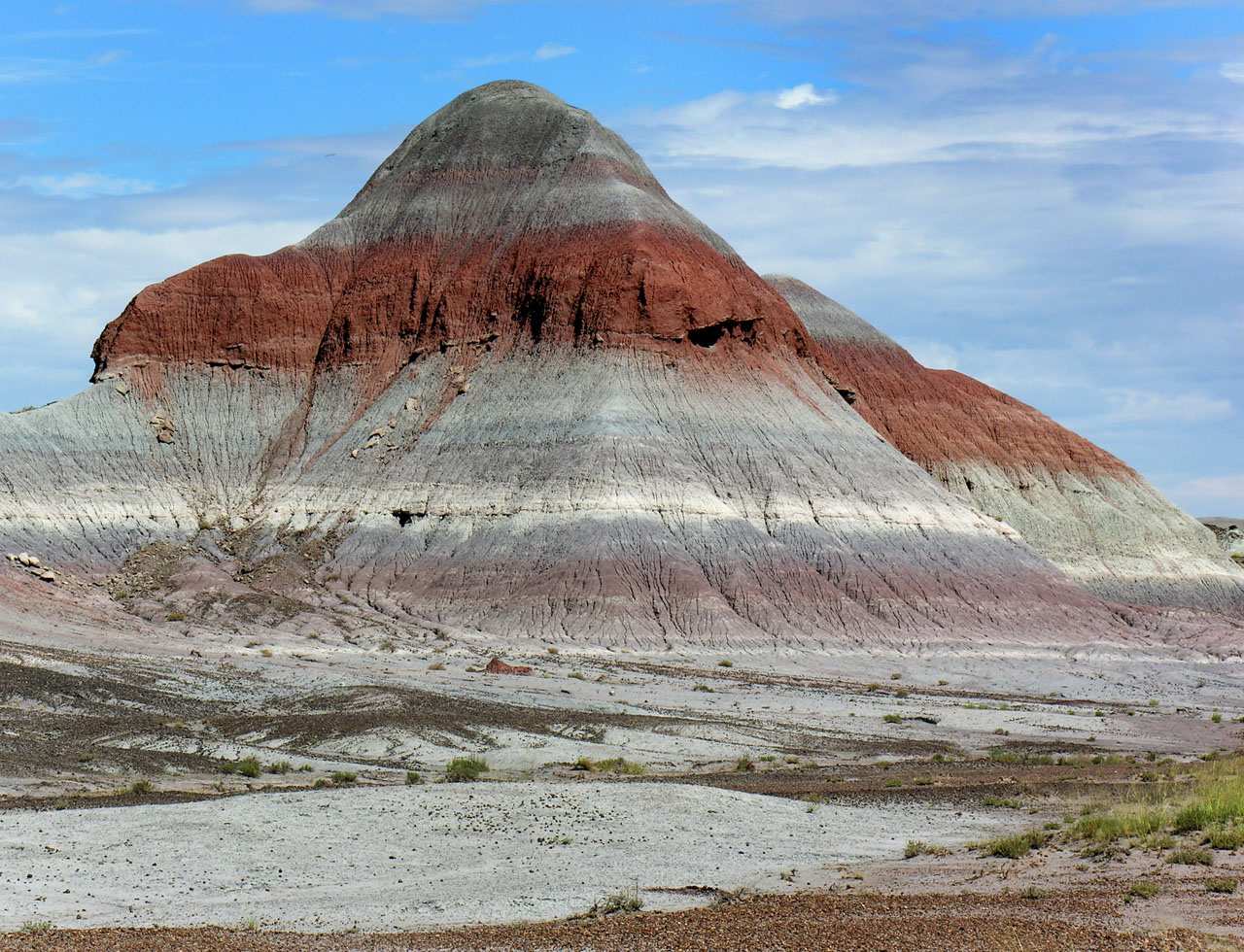
The starkness of the landscape contrasts nicely with the beauty and colors of the barren, rocky hills.  I can only imaging what this entire area must look like in the evening alpenglow.  Even in the flat, monochromatic lighting of the mid-day sun, the colors pop out at you, daring you to take photograph after photograph.
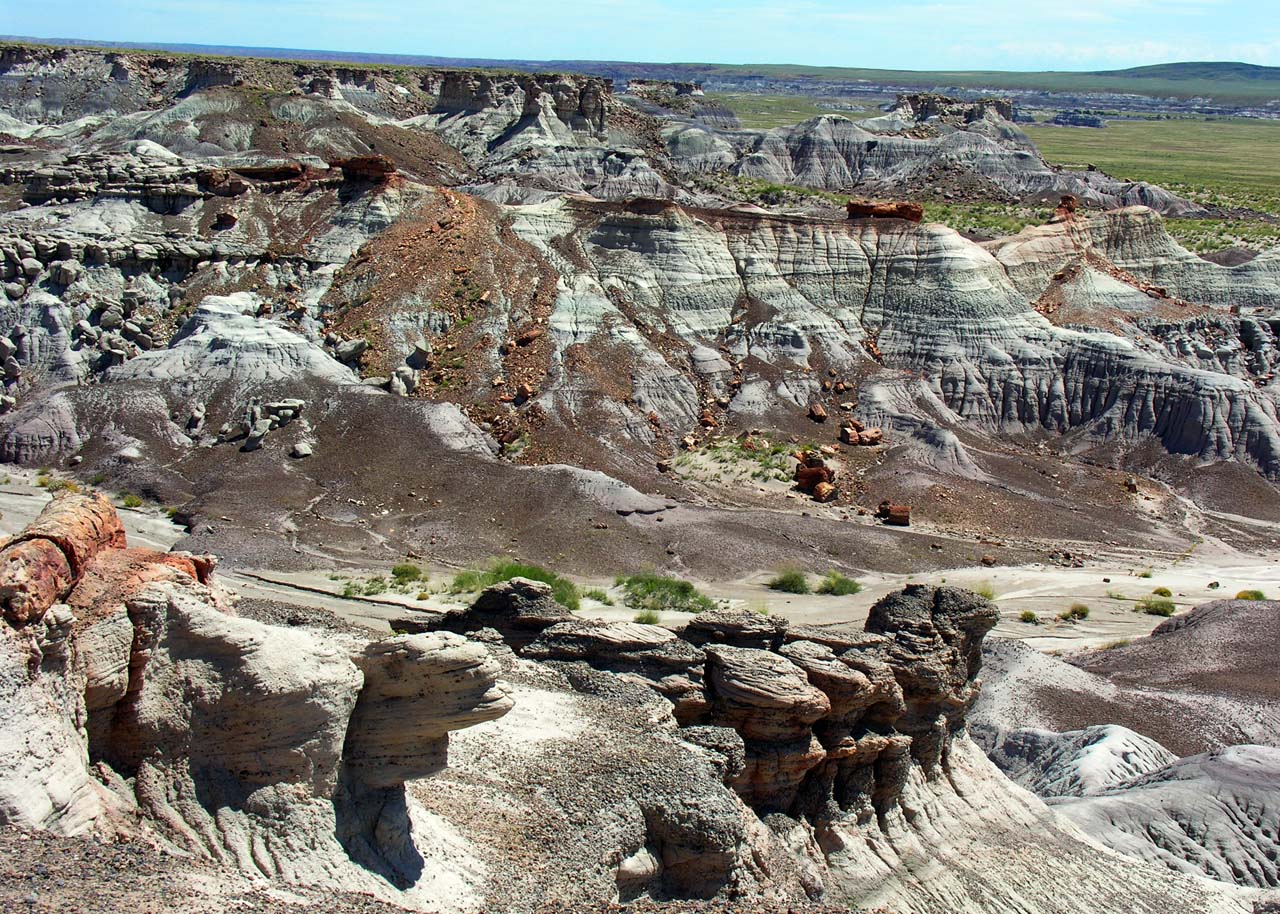
The jagged landscape appears as if someone had picked it up and crumpled it in their hands.  Can you imagine early travelers attempting to traverse this region?
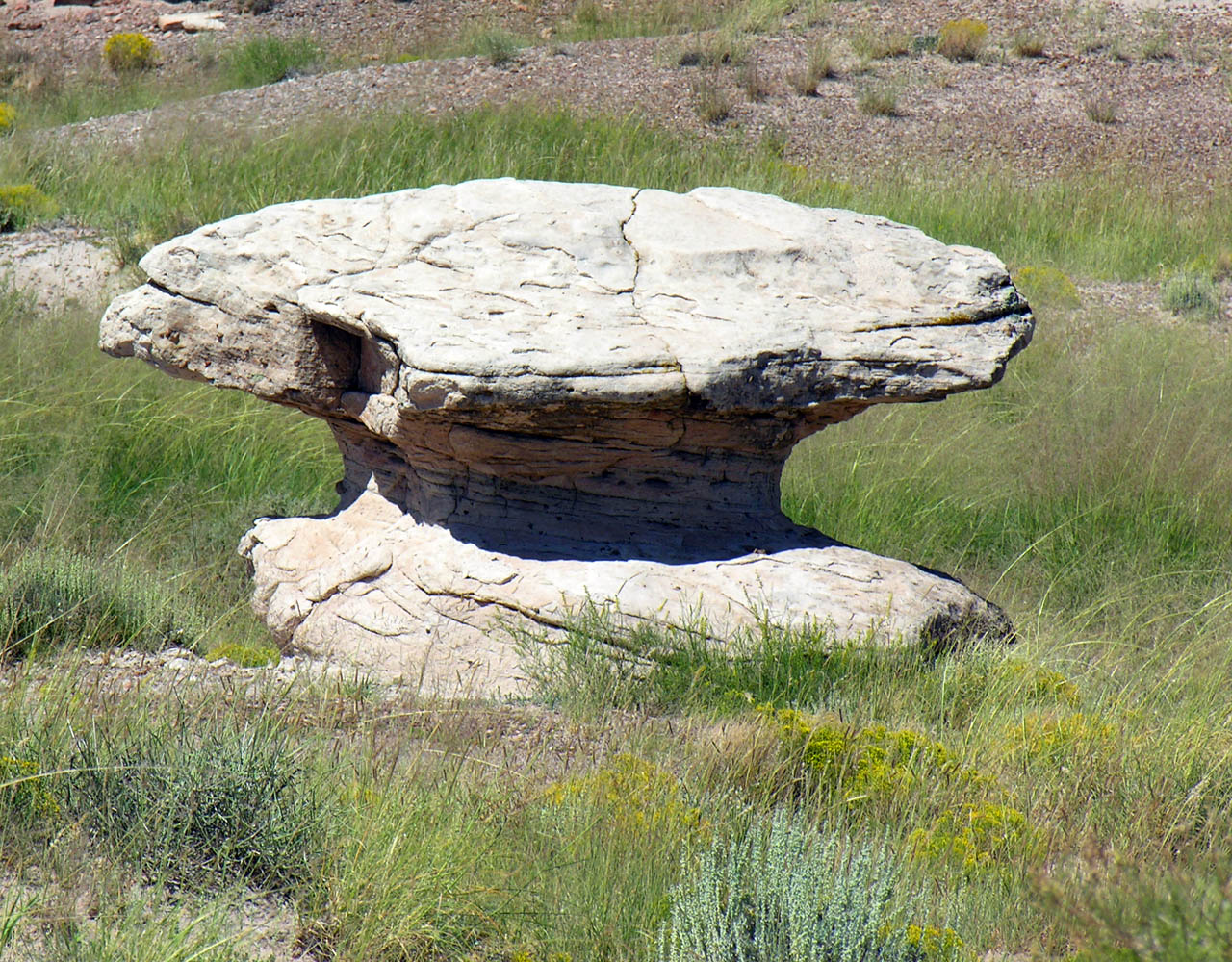
The perceptive tourist will notice the varied and unusual rock formations that seem to occur whichever way one looks.  Combined with the wildflowers, they make excellent photographic subjects.
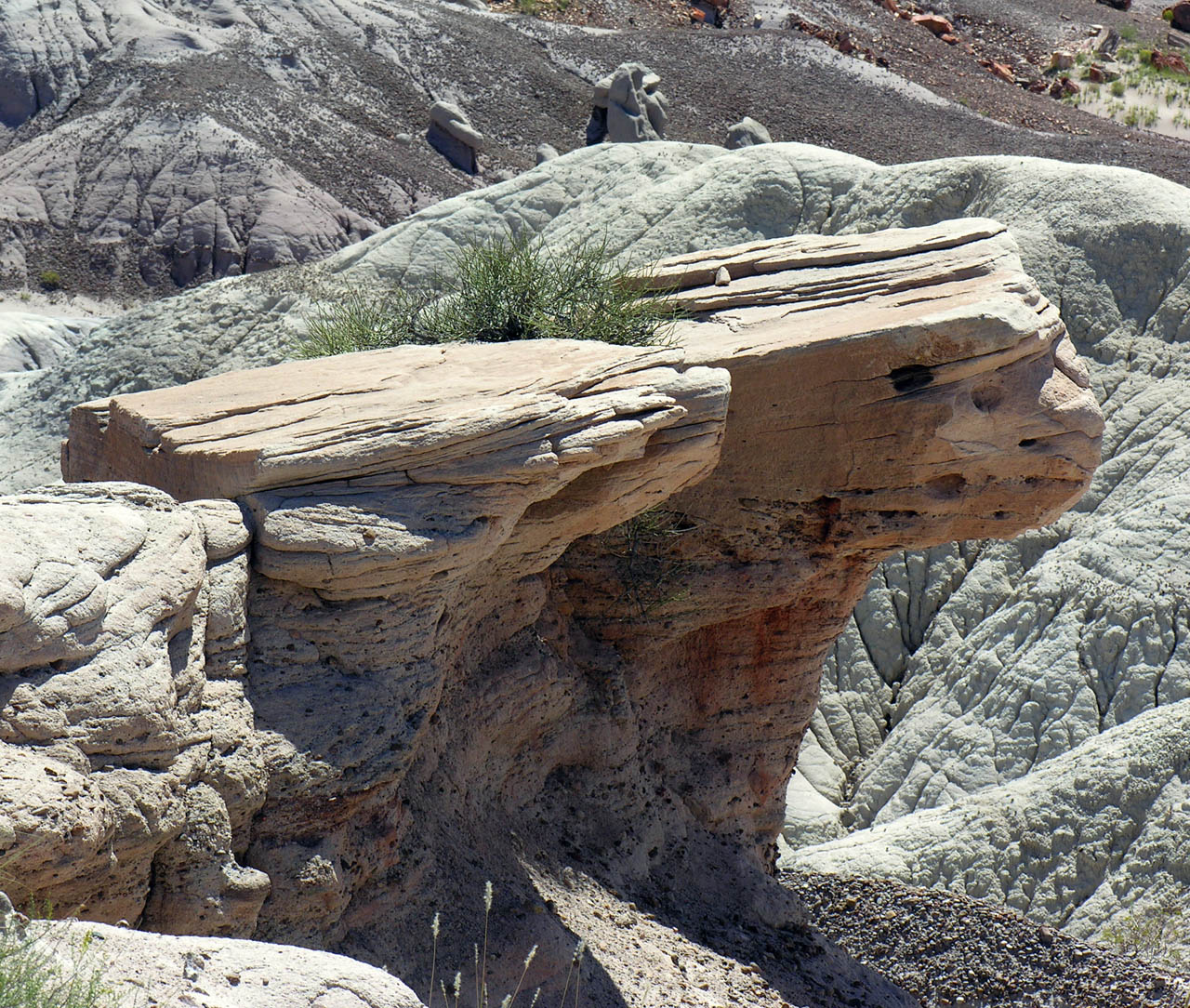
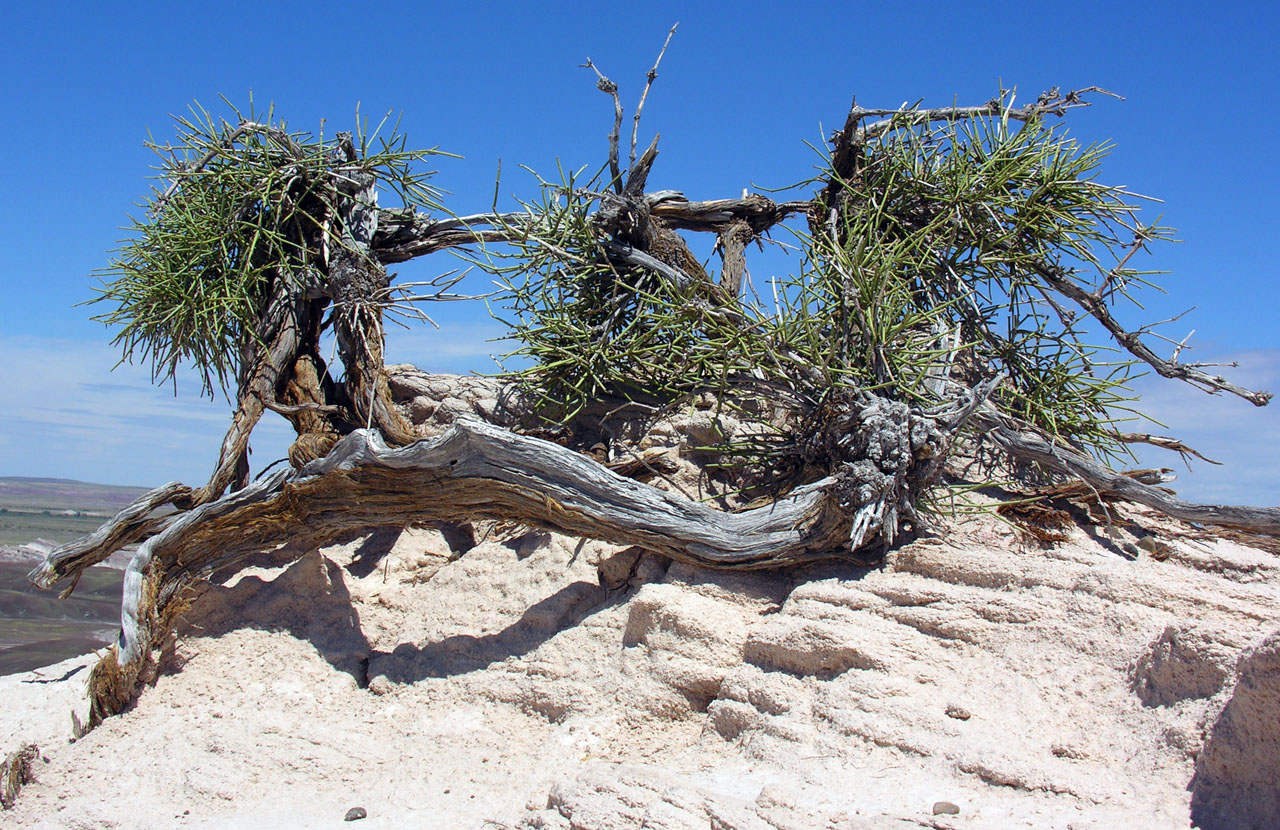
Besides the isolated rock outcroppings, there are many examples of cacti and desert vegetation managing to eke out an existence in the hot, arid desert climate.
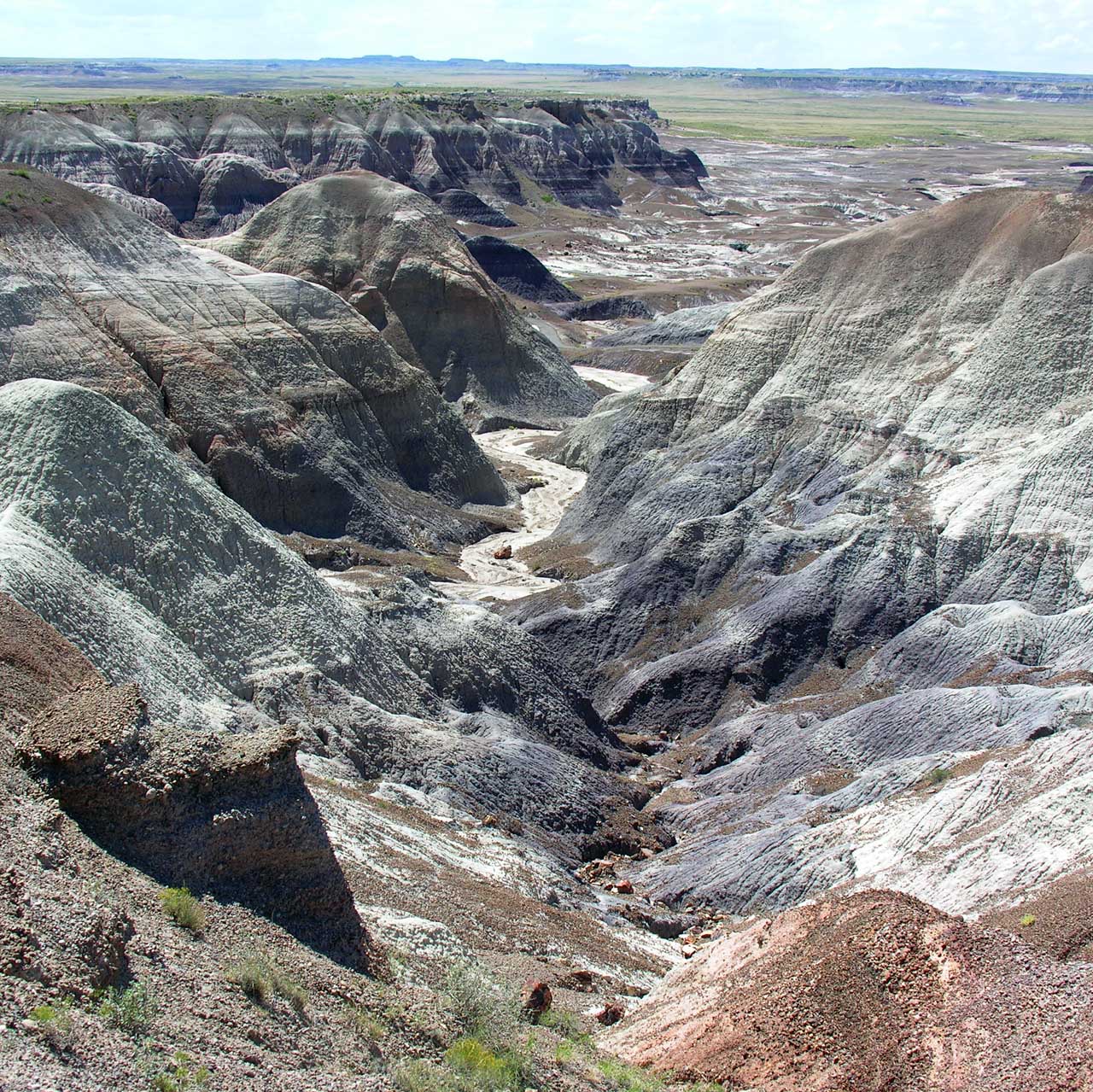
This area of badlands has a nice paved pathway that makes for pretty easy hiking.  It is a great way to stretch your legs from all the driving you might have been doing along Interstate 40, and allows you to see the details that make up this terrain from close-up.
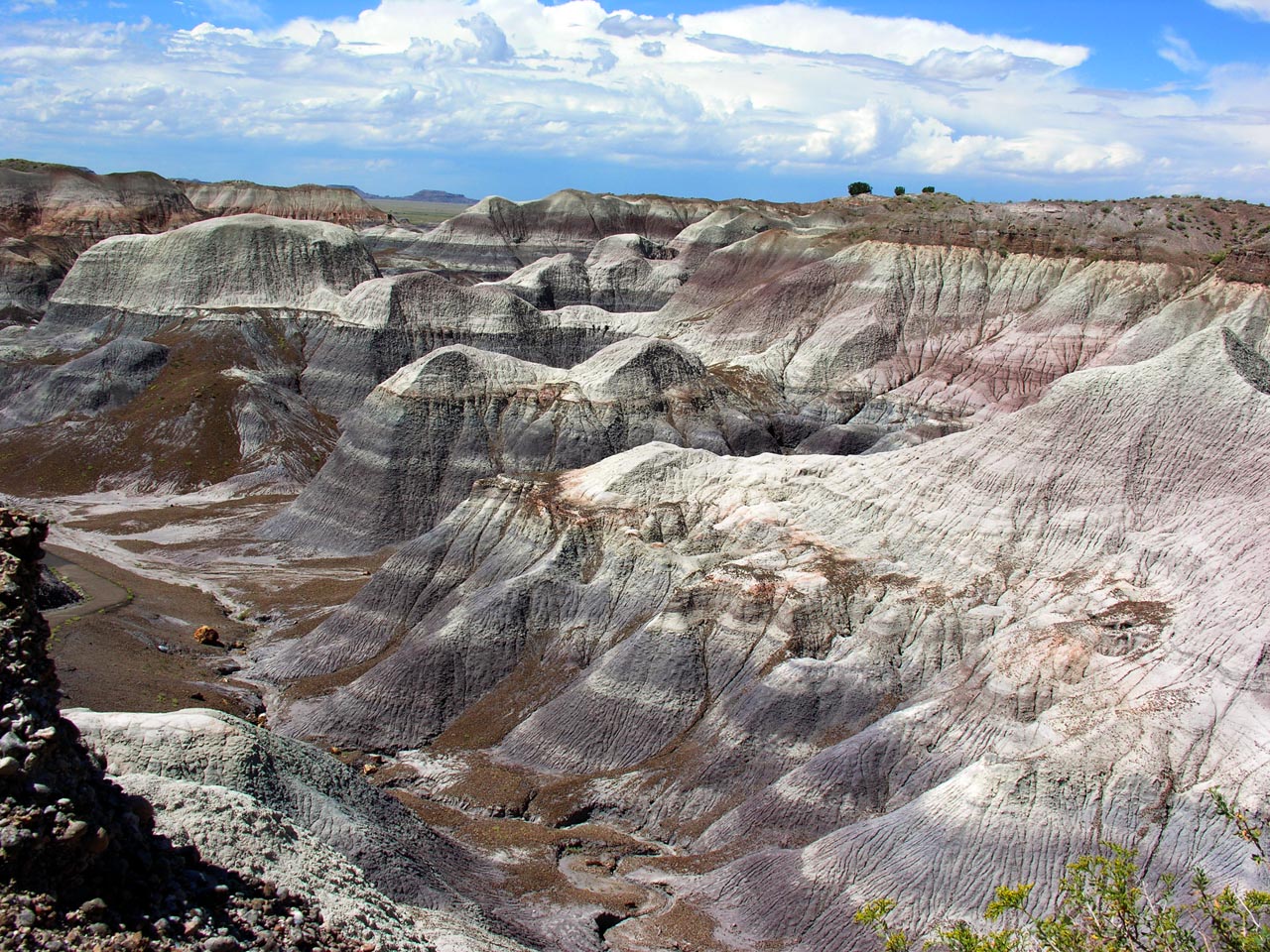
The colors in these badlands seem to change minute-by-minute, particularly when the clouds dance along in the sky above.
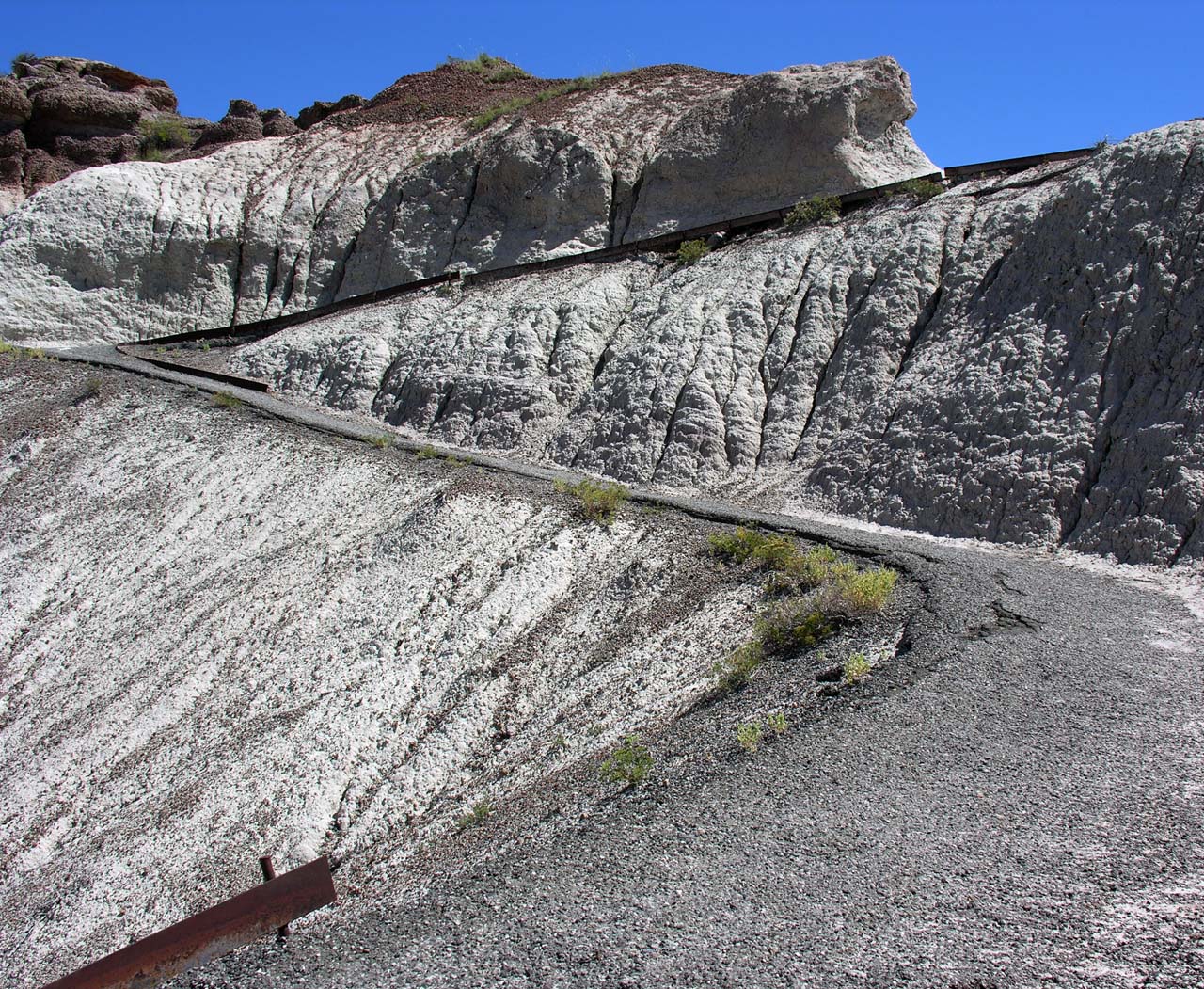
The trail through the badland canyons is paved, as you can see here.  This is the only section of the trail the really causes physical exertion, so take it slow and easy here.  The rest of the trail is relatively flat, making it easy to hike.  I witnessed tourists of all ages and conditioning walking along the trail, so don’t be hesitant to give it a try.
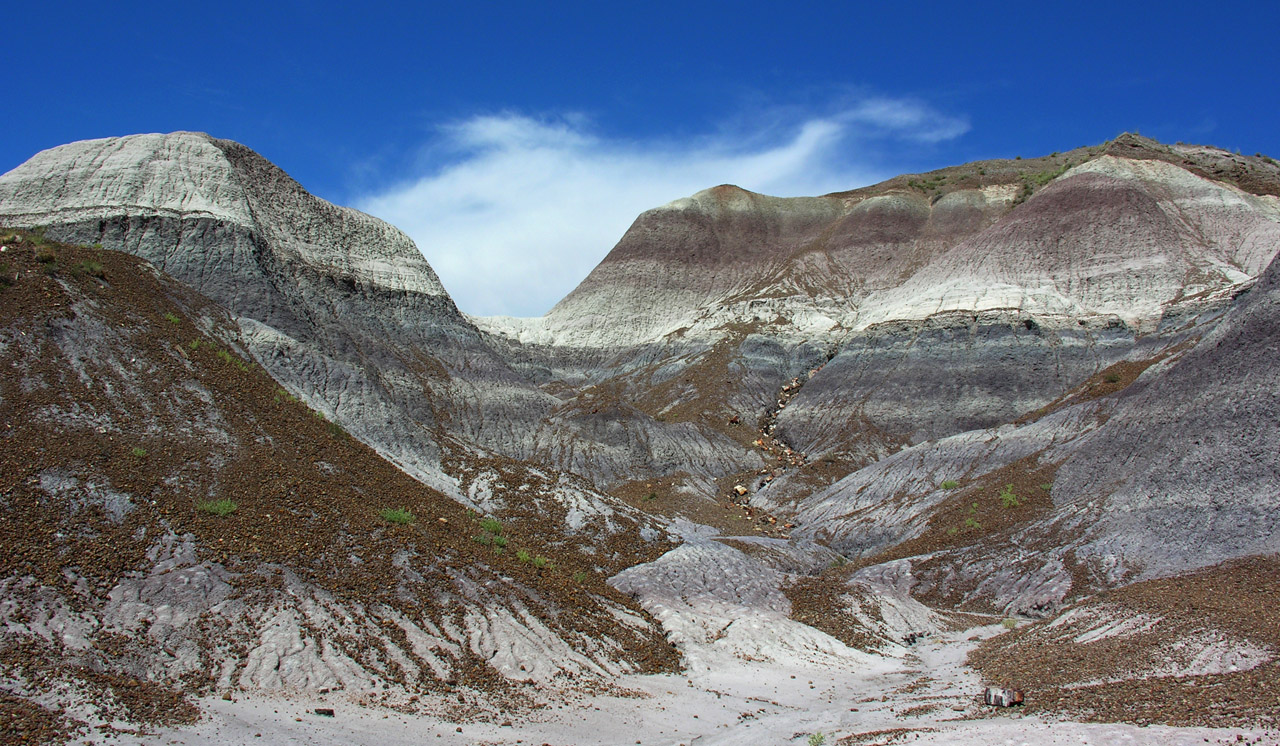
One thing you notice as you walk the badlands trail is that the scenery looks entirely different from the bottom looking up, as opposed to looking down on the badlands from above.
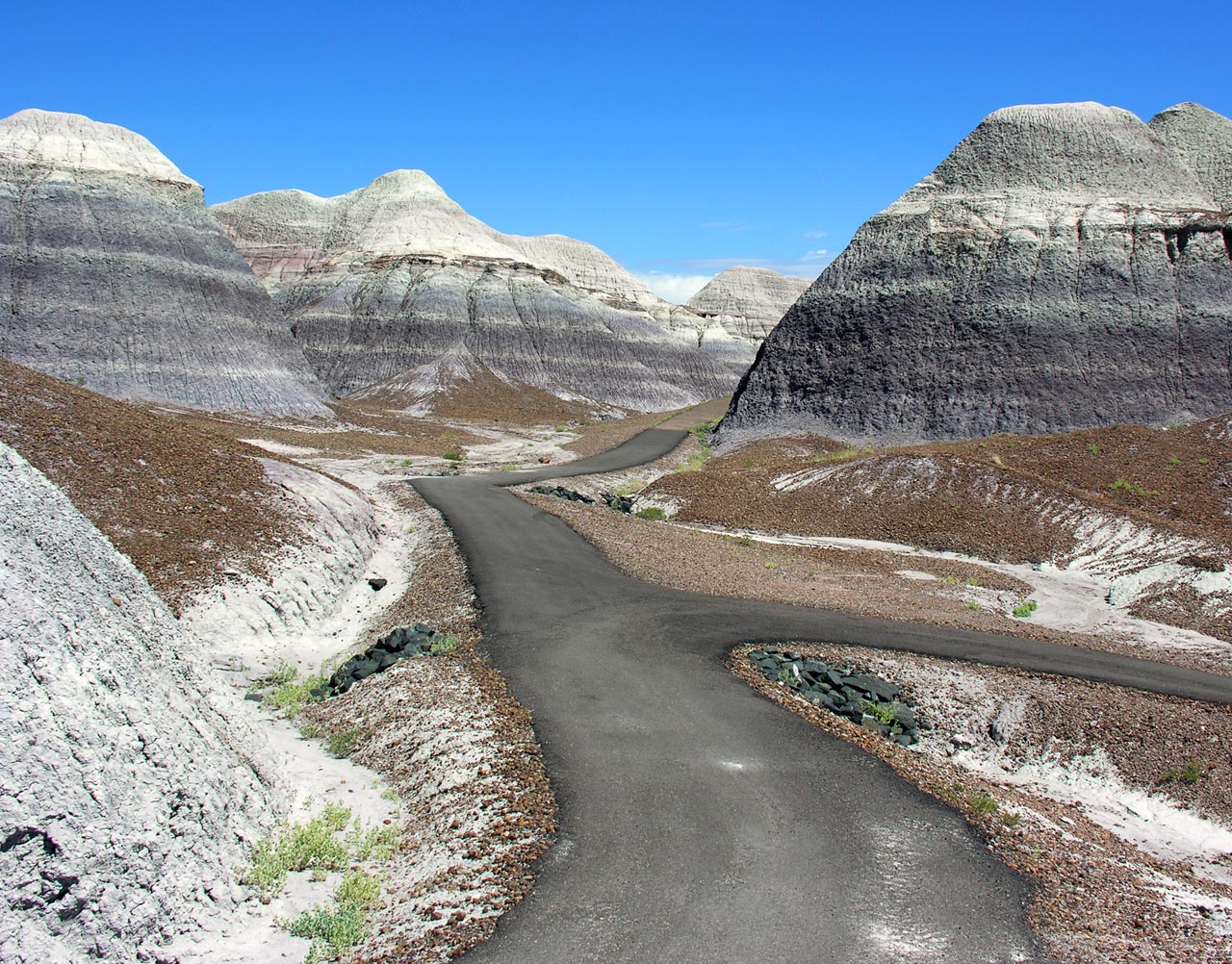
As you can see, I wasn’t pulling your leg when I stated that the badlands trail flattens out at the bottom.  The views along this section of trail are great, and you can enjoy a leisurely stroll as you partake of the picturesque scenery before you.
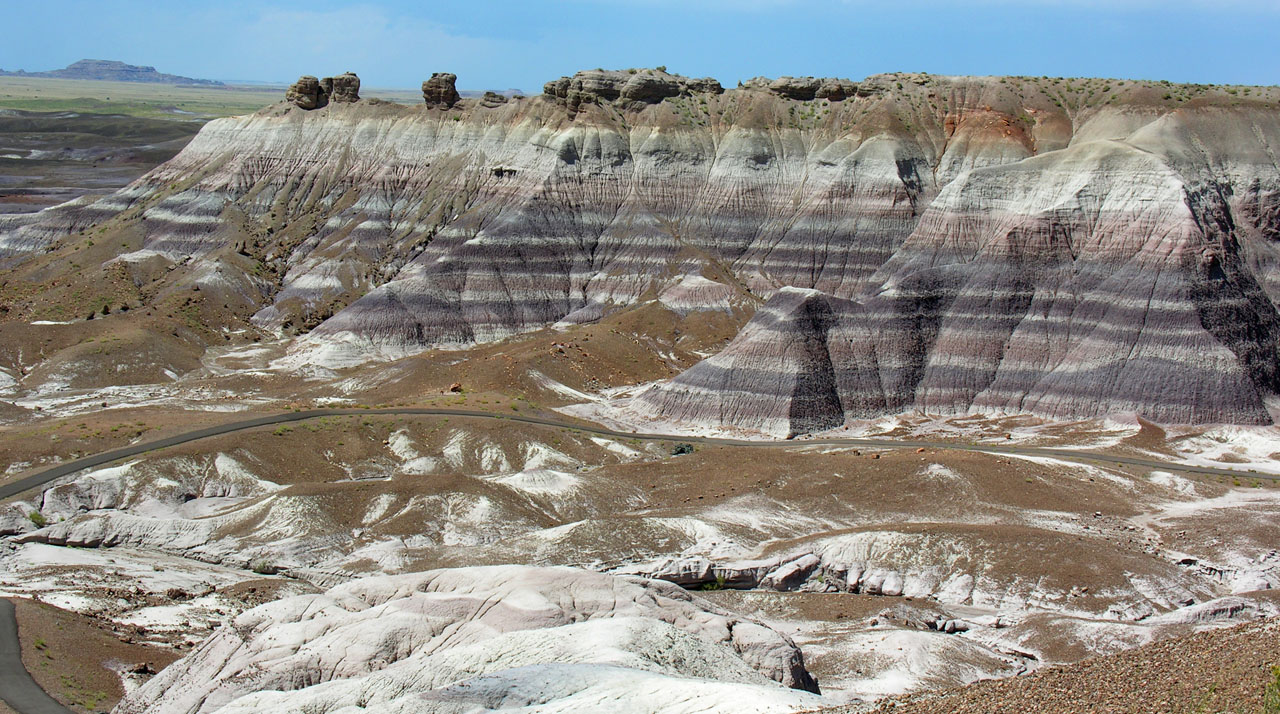
From this vantage point near the top of the trail you can see how the paved path wends its’ way through the canyon.
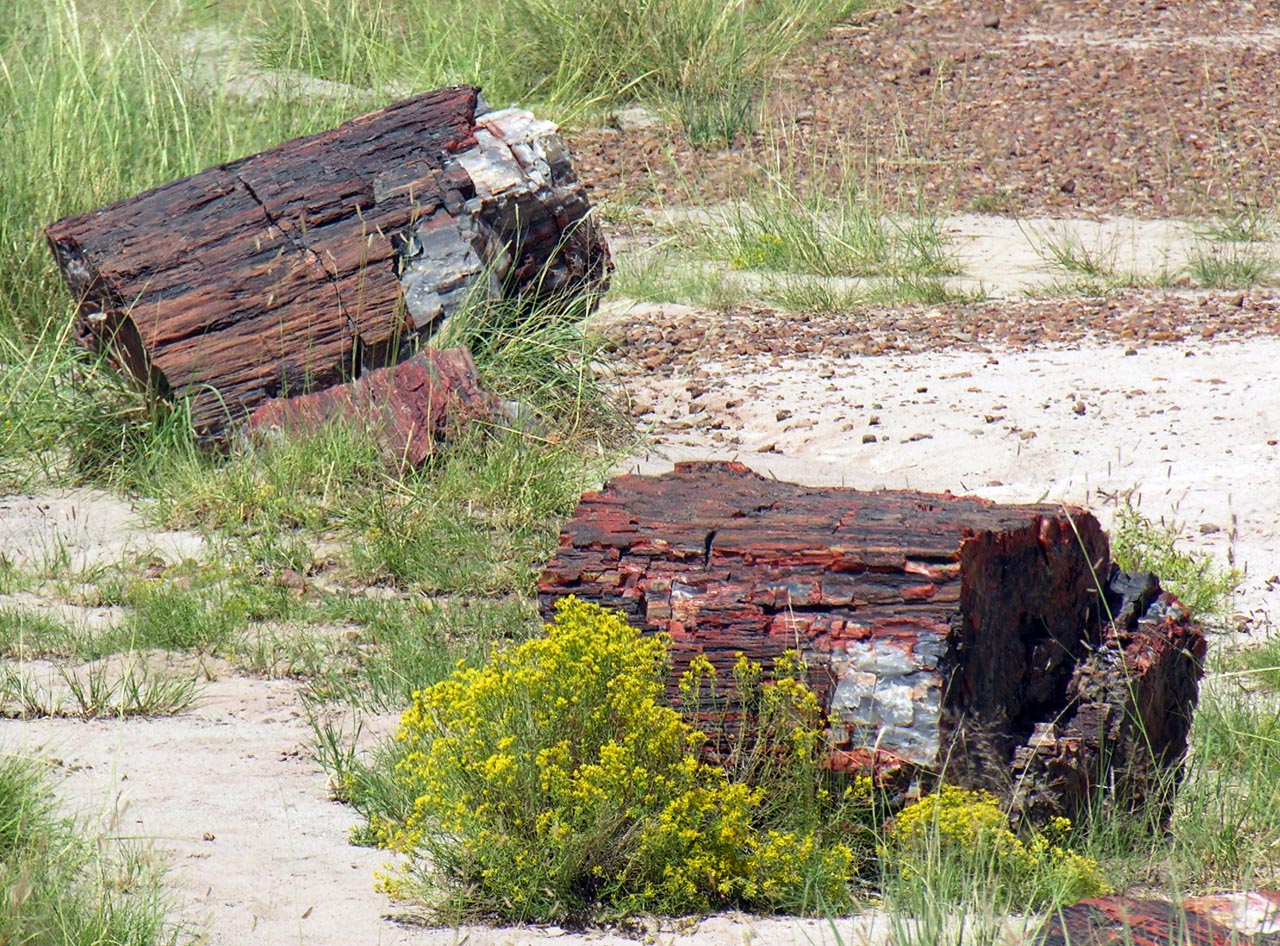
After returning to your automobile and heading south again along the park road, you will finally arrive at areas that contain the stars of the park, namely the petrified wood (interchangably called petrified rock).
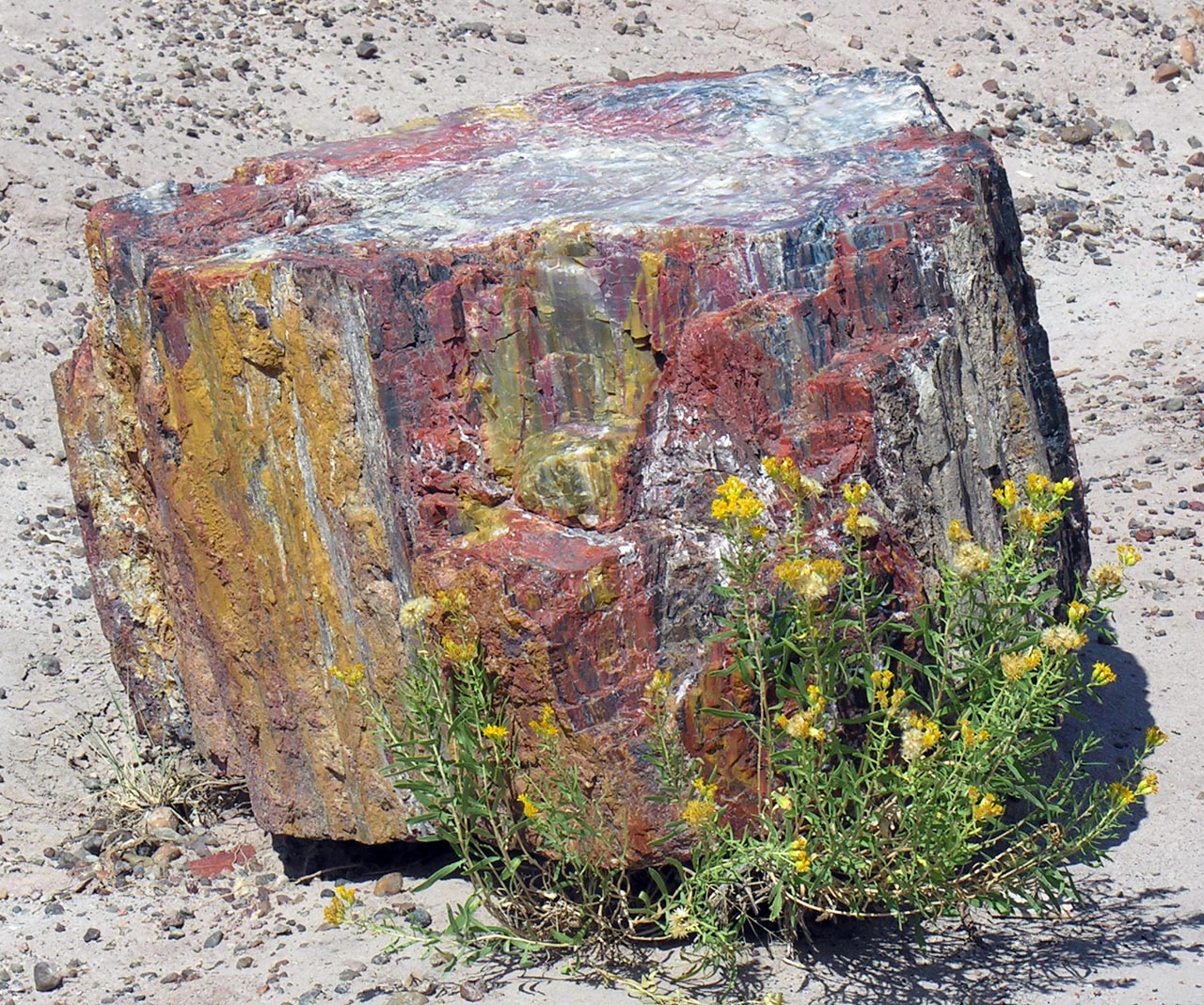
These photographs were taken in a section of the park called the Crystal Forest.
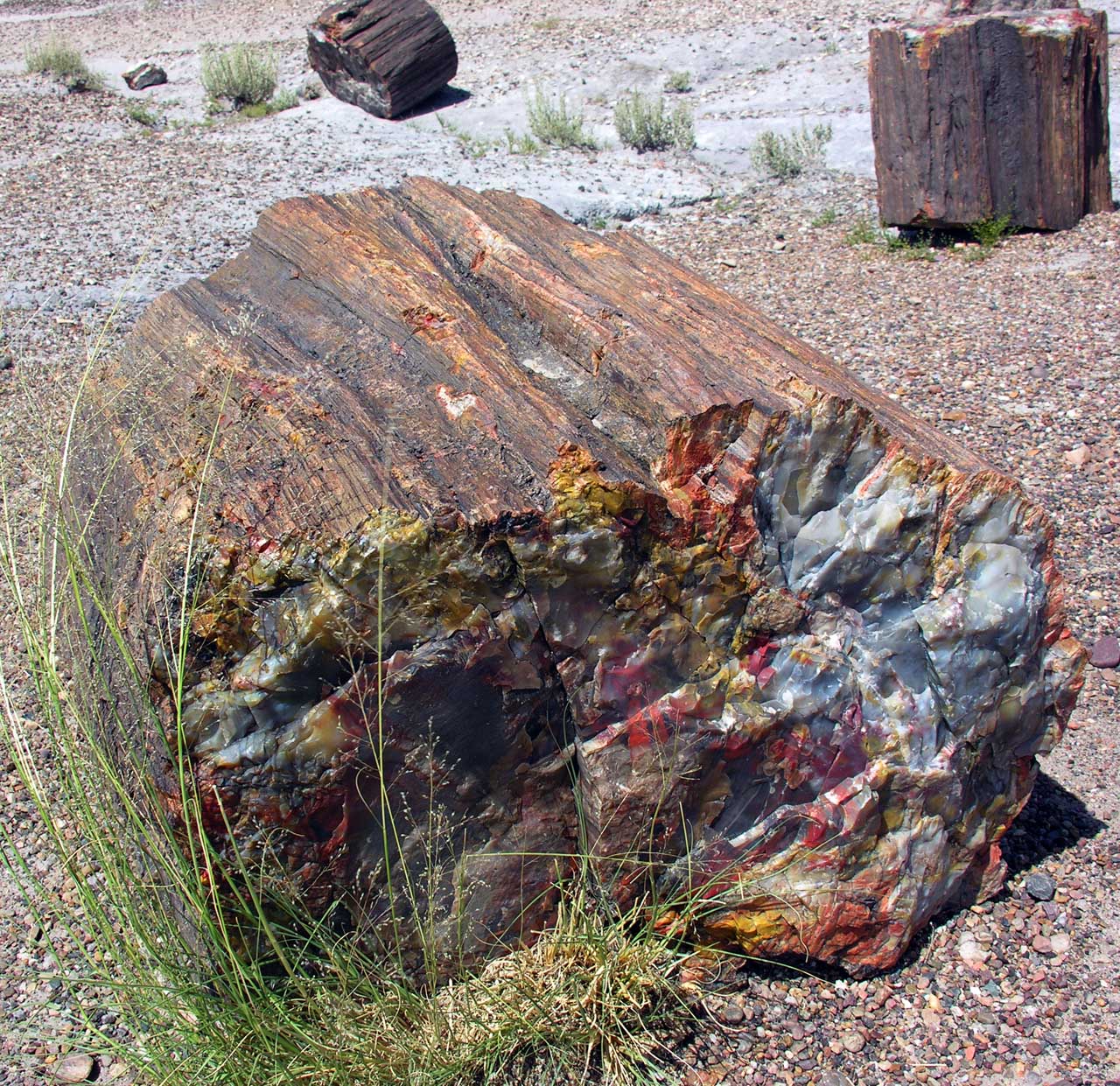
As you amble along the paved trail you will come across hundreds of pieces of petrified wood.  Although it is called petrified wood, it is not wood at all, but actually stone.  It once was wood, as these were formed by the permineralization of toppled trees.  In an amazing process, the wood morphs into stone, leaving the rock in a shape that is exactly the same as the host tree that allowed it to form.
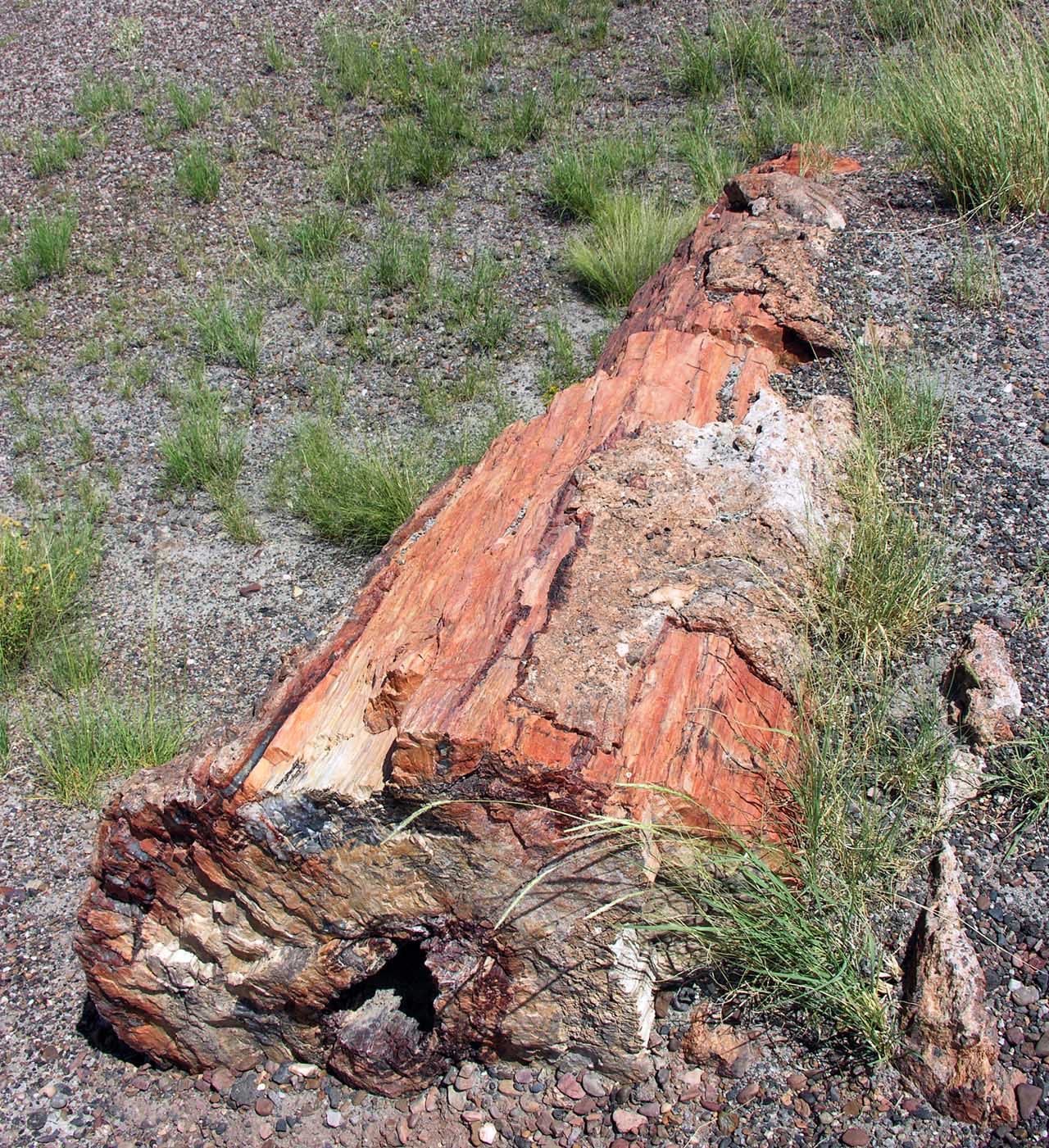
In this piece you can even see how the structure of the bark is apparent in the rock.
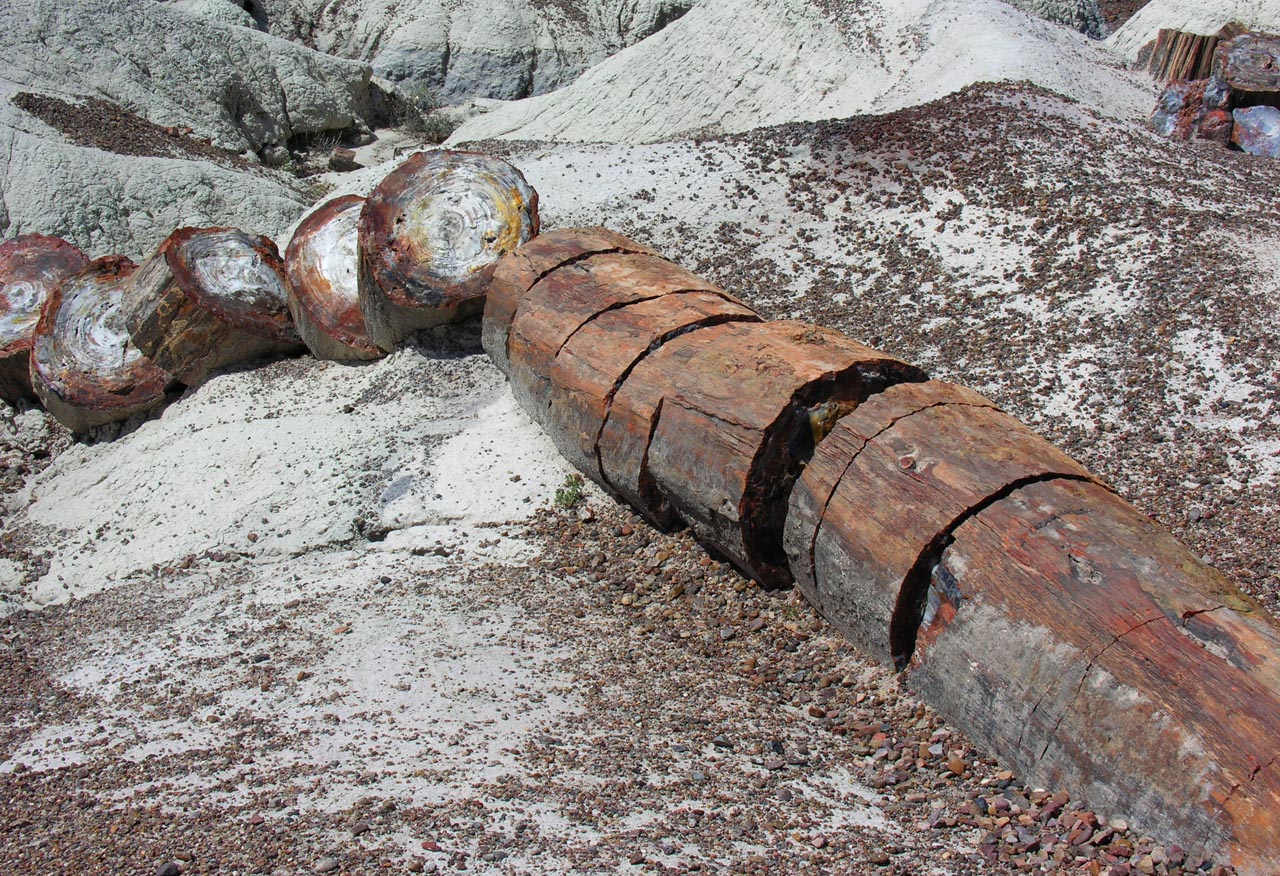
The photograph above clearly shows the host tree trunk that turned into stone long ago.  It almost looks as if someone segmented the trunk with a stone-cutting chain saw.
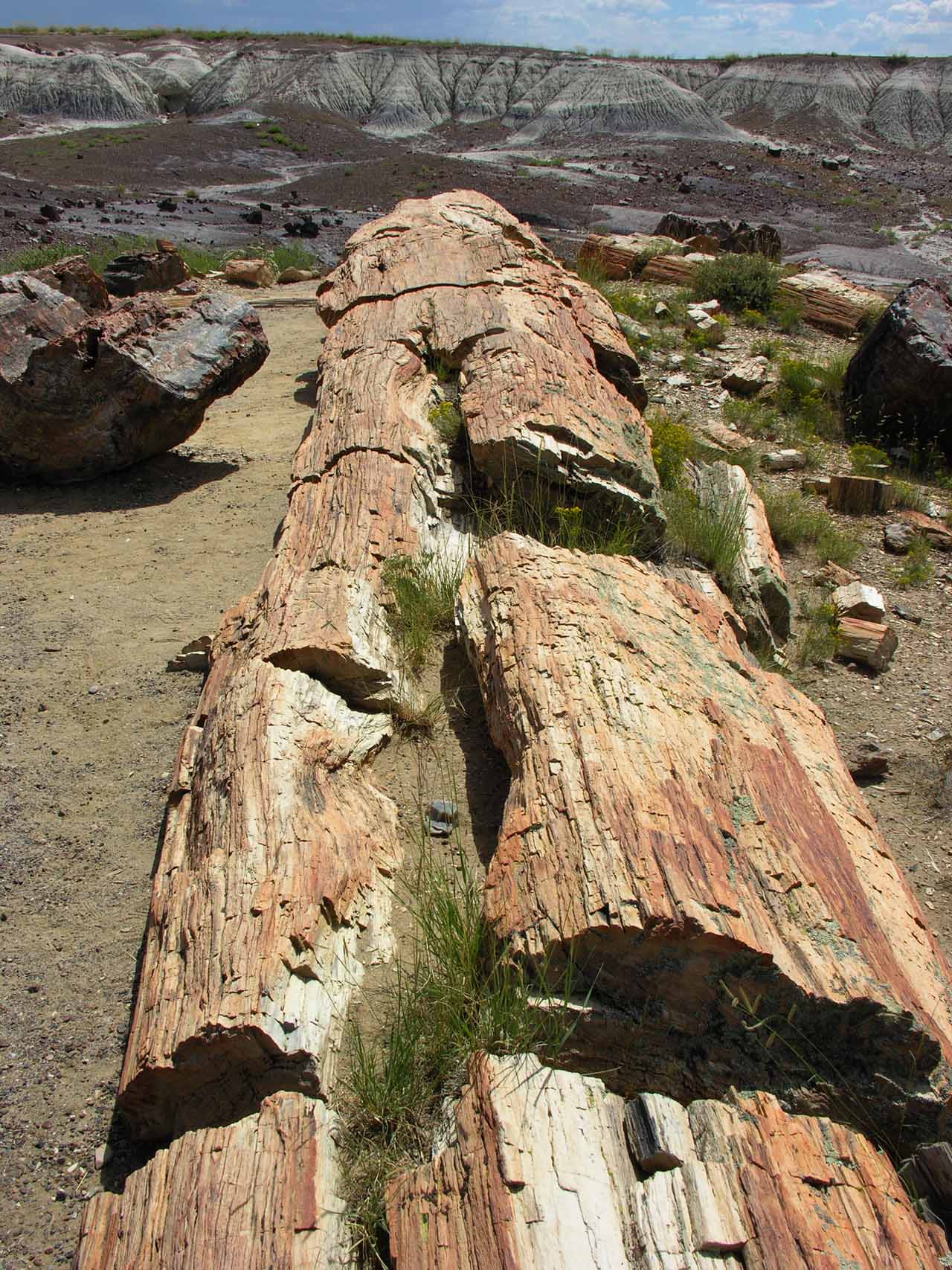
Again, a clear example of a tree-turned-to-stone.
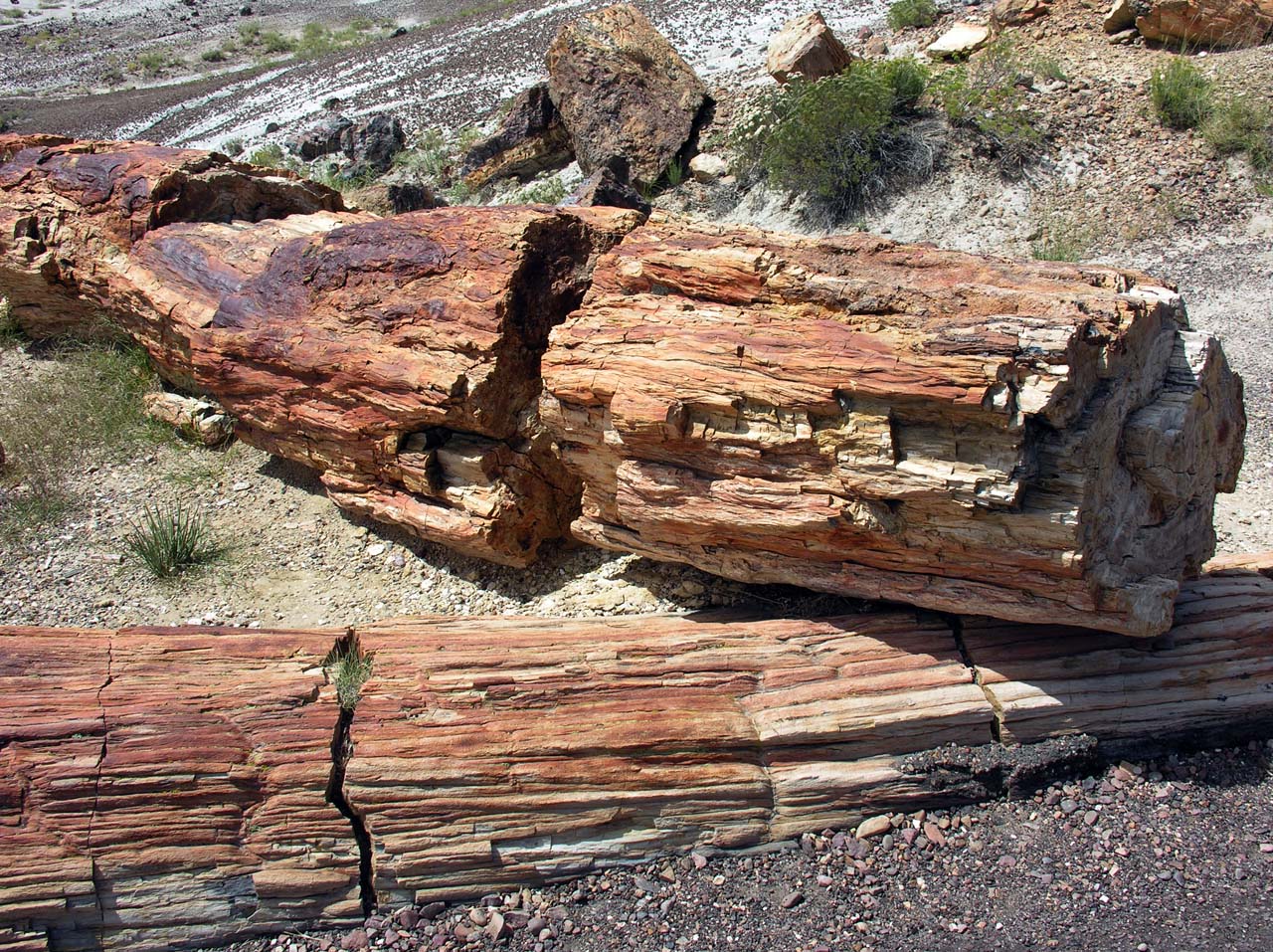
And another.
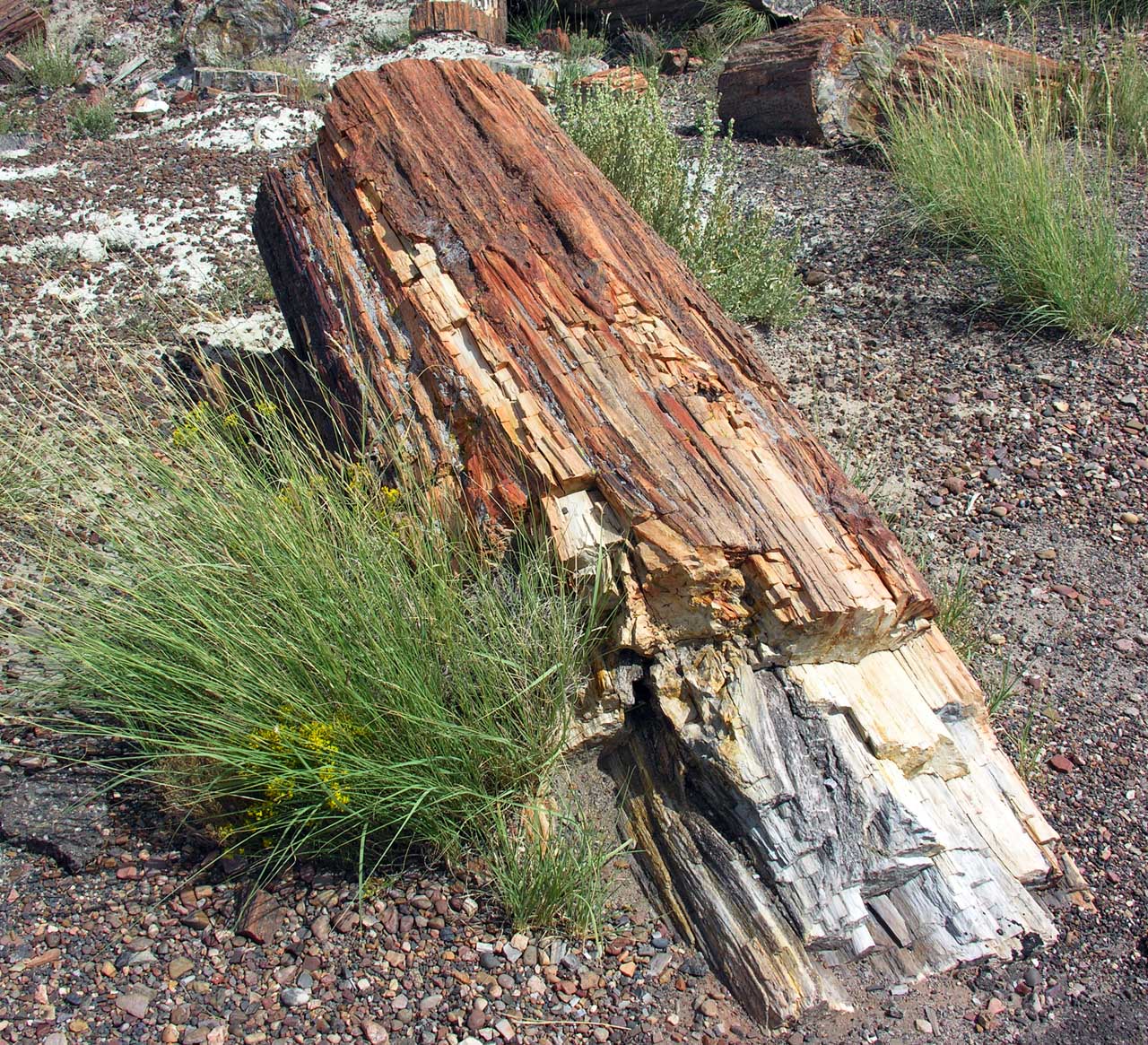
When the desert flora and cacti grow in proximity to one another, it creates a magnificent sight, as well as a great photo-op.
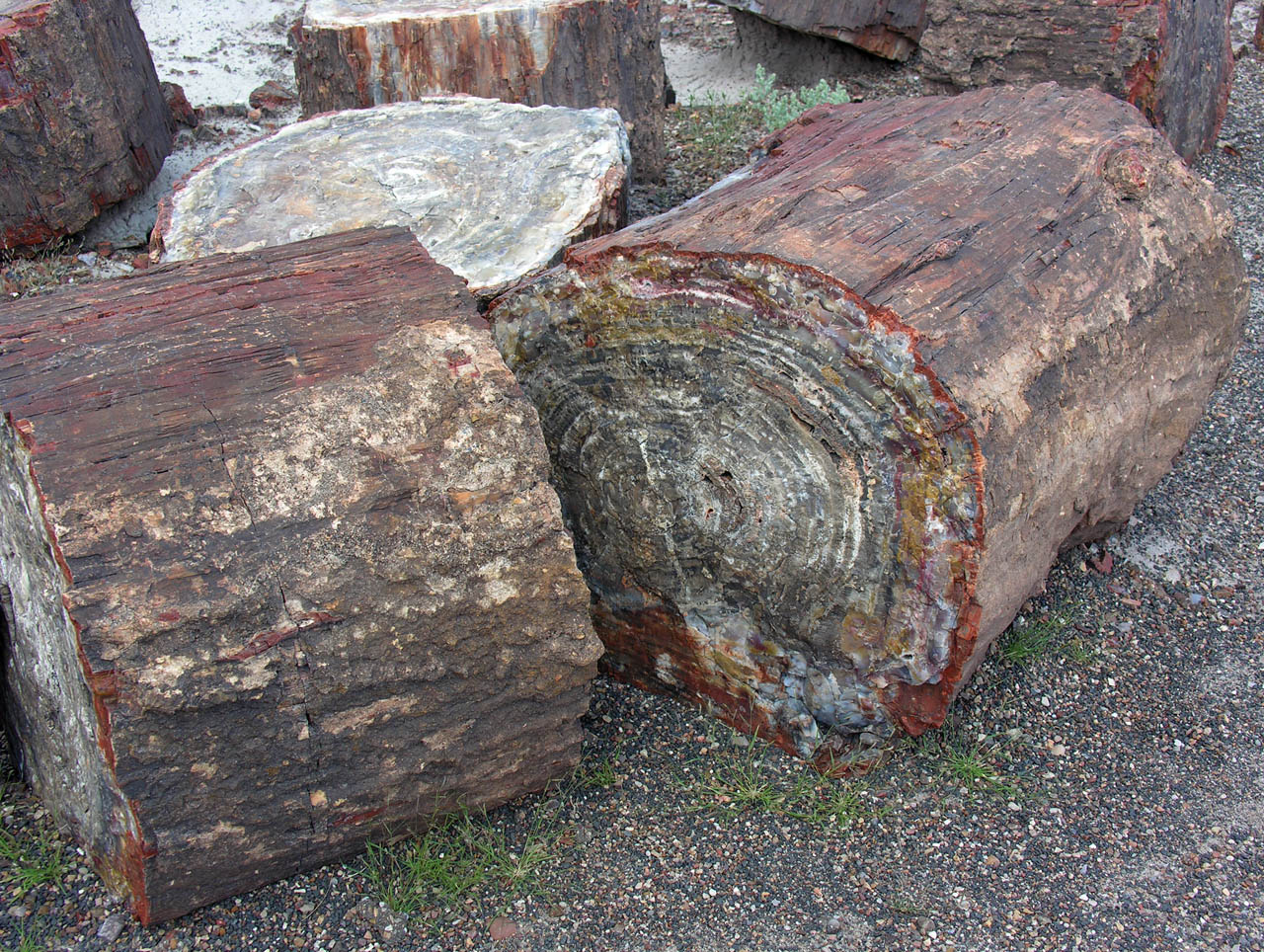
These pieces of petrified rock reveal the rings that existed within the tree trunk, and which have been preserved in the permineralization process.
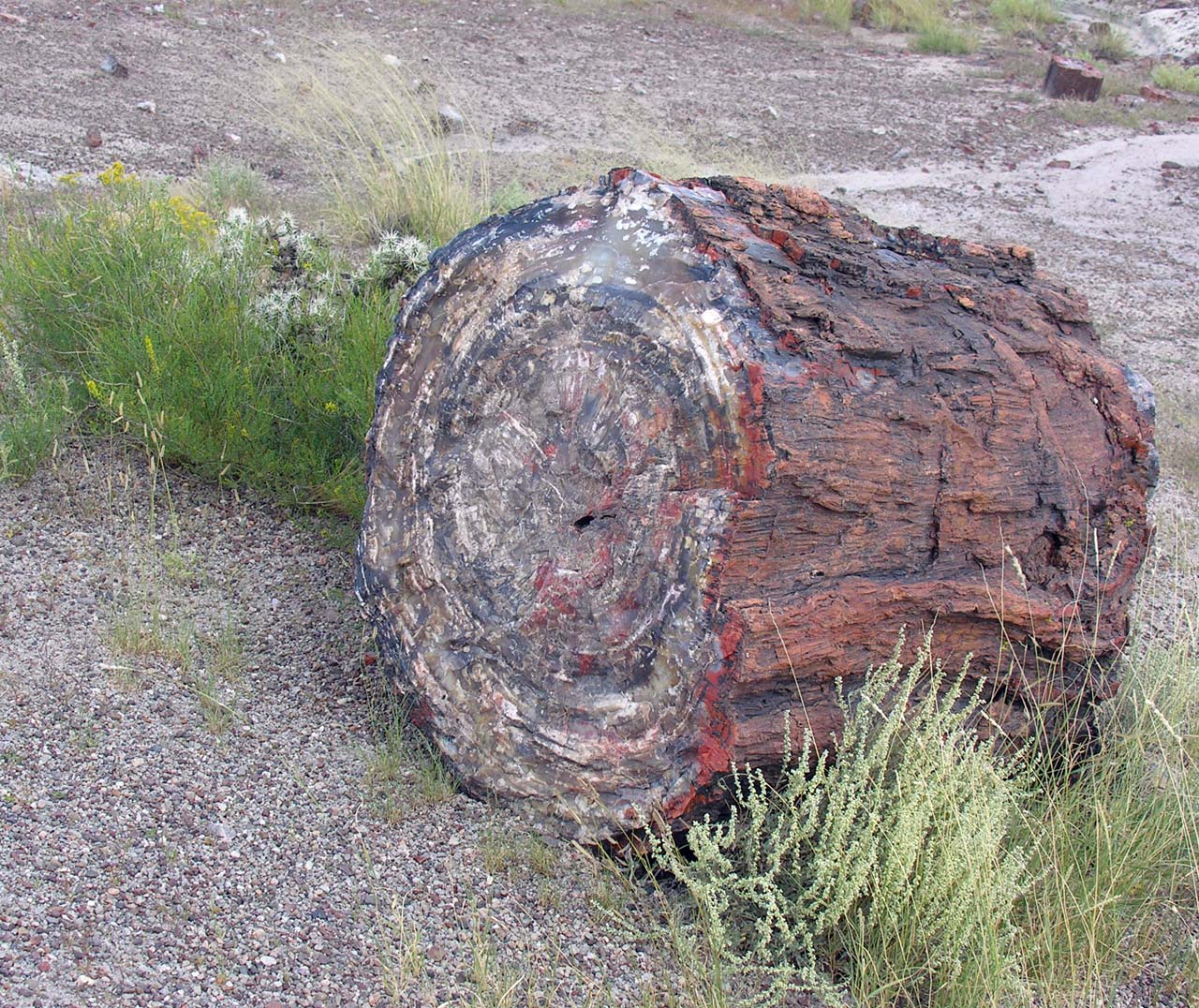
This segment evidences both the rings of the former tree, as well as the bark on the outer surface.
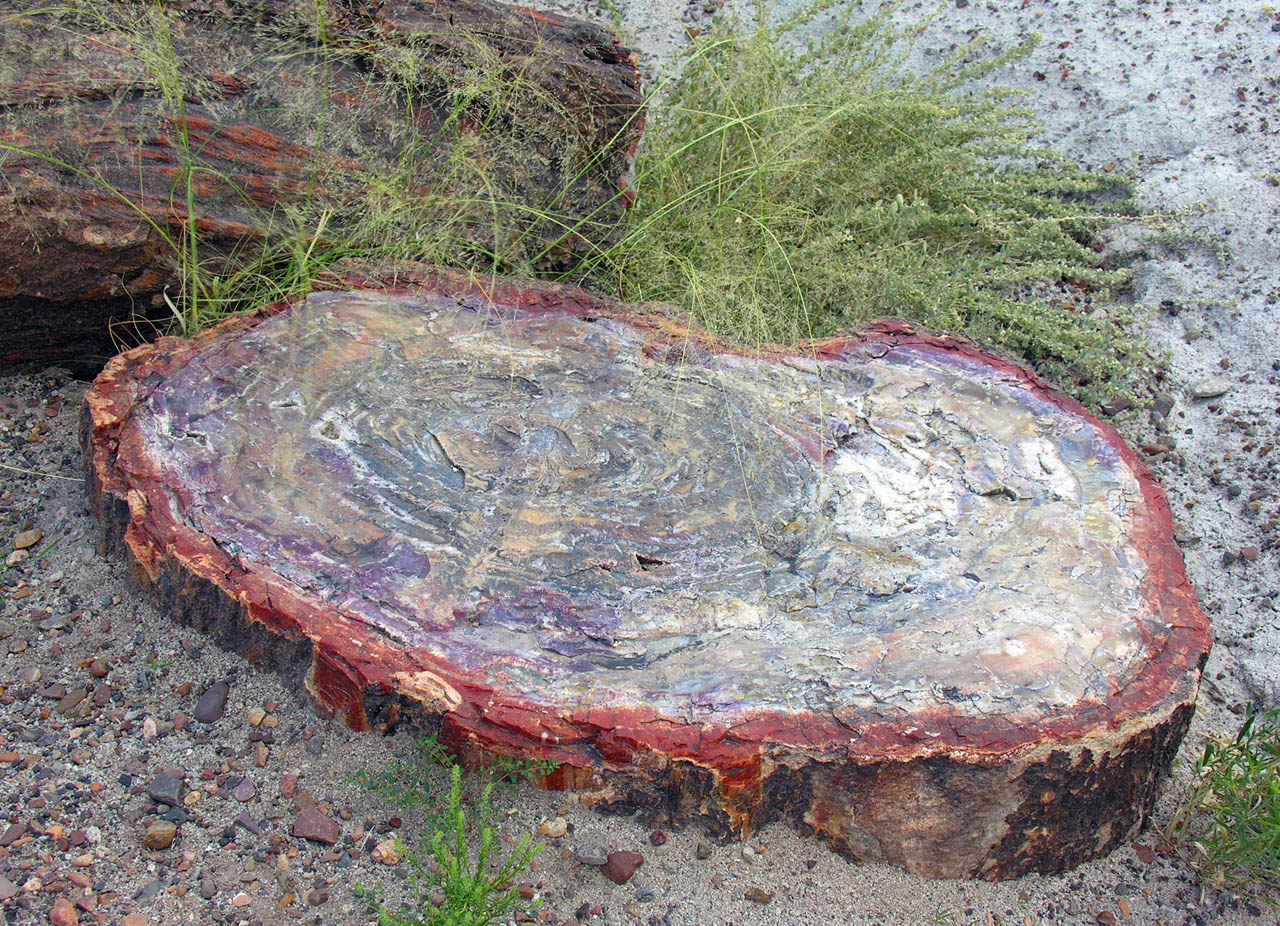
The sections of petrified rock above and below show the coloration that the stone takes on as it morphs.  In the gift shops outside the park, one can purchase pieces of petrified wood that have been harvested from private land outside the park.  The pieces that are for sale are usually cut smooth and polished, creating a shiny, colorful piece that makes a beautiful display in ones’ home, and becomes a wonderful momento to remind you of your visit to Petrified Forest National Park.
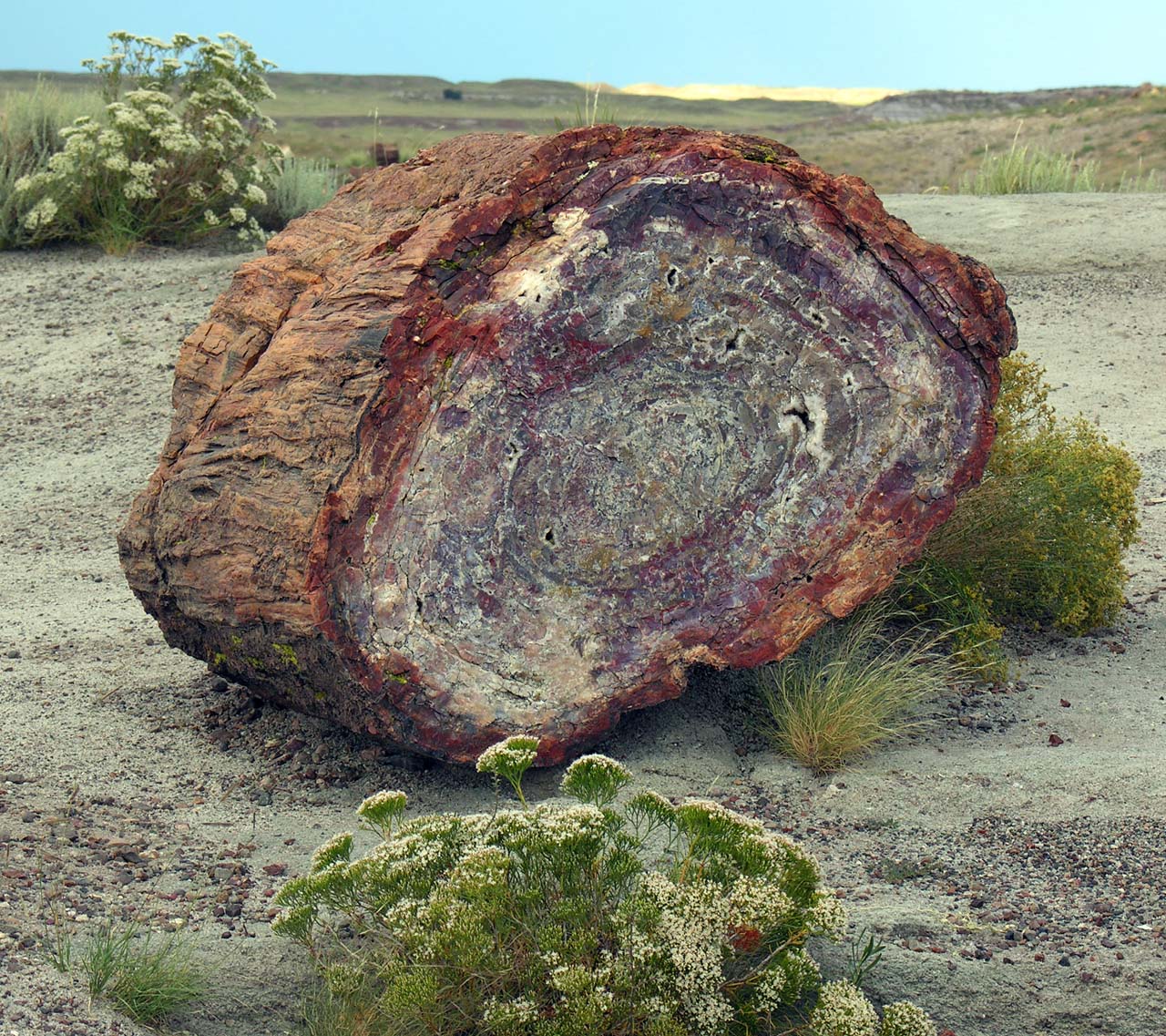
In closing, I would whole-heartedly recommend a visit to the park, preferably with enough free time to hike along at least one of its’ many trails, and to savor the spectacular scenery that only occurs here.

Barn Modification Project

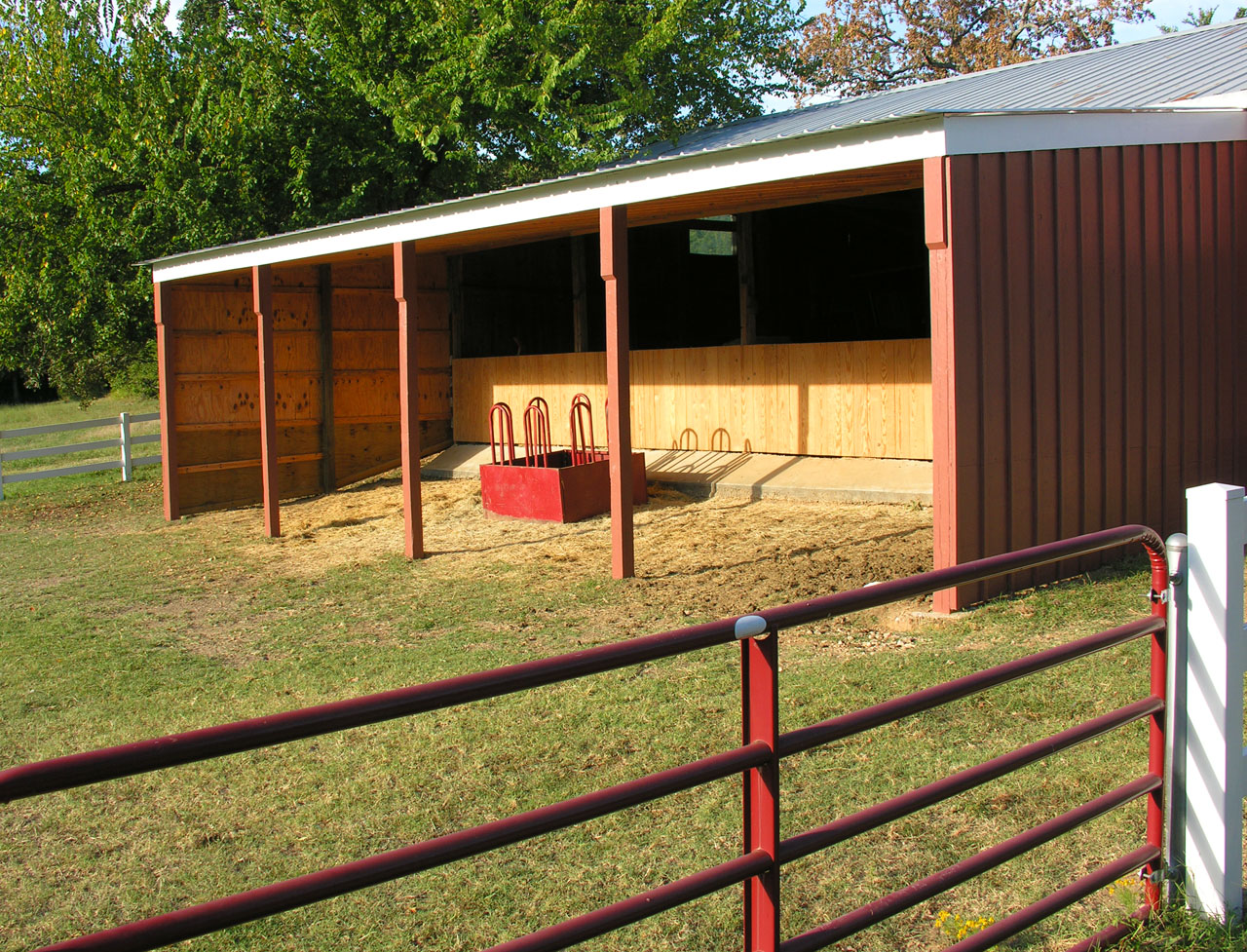
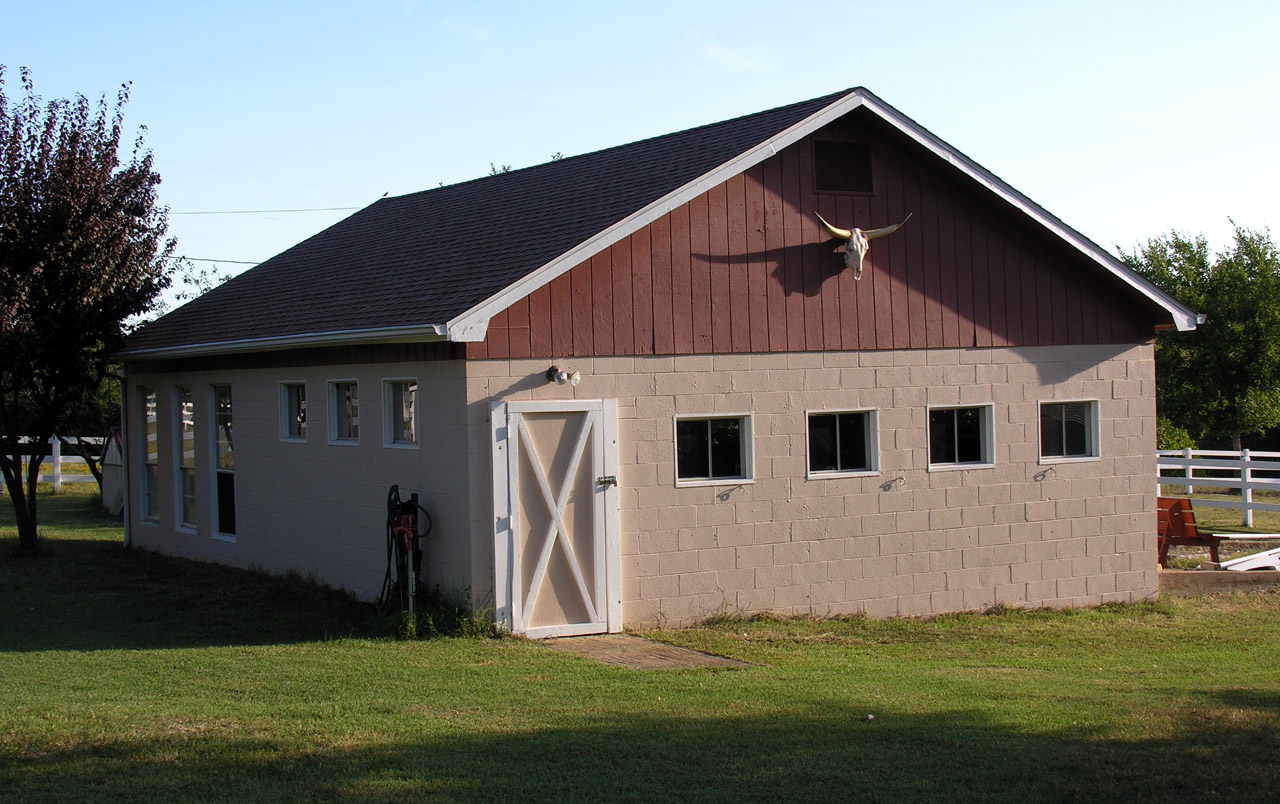
We have recently completed a multi-stage barn project, which included the addition of a loafing shed to the side of the barn, repairing some of the wood that had deteriorated, and painting the entire structure.
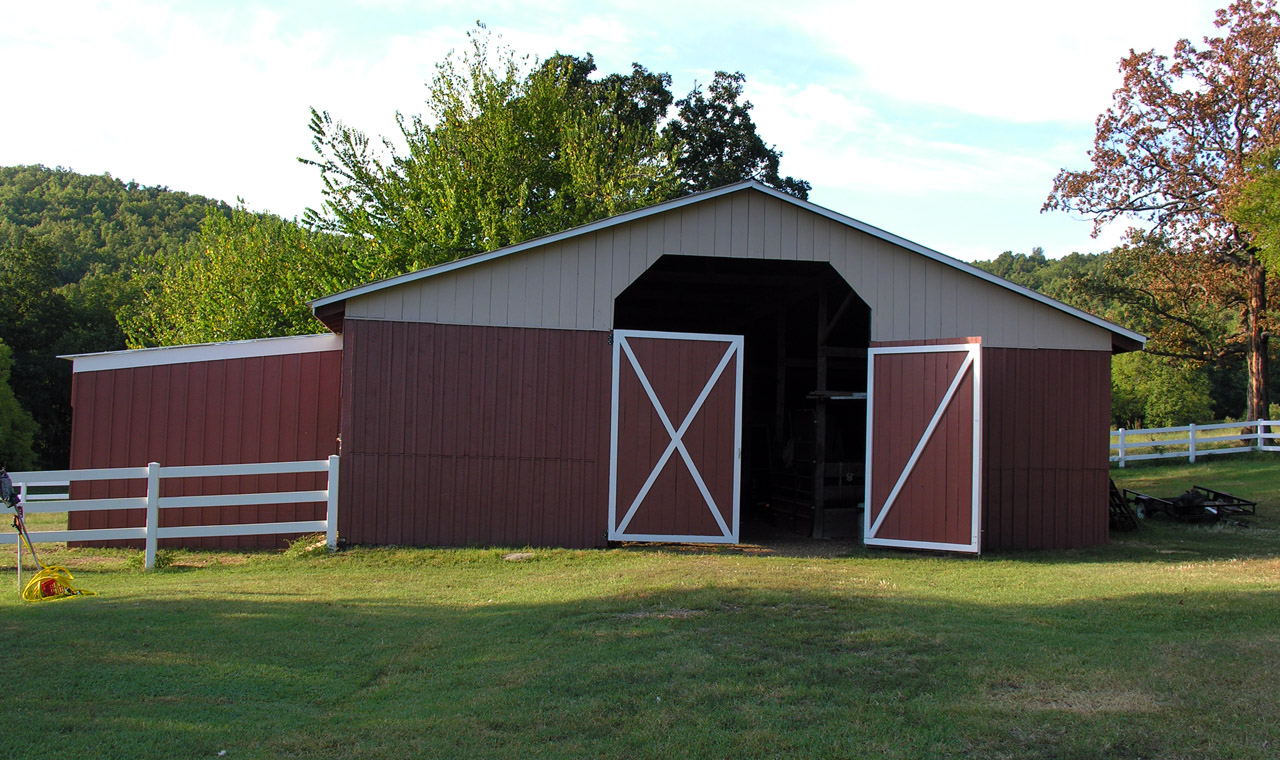
Above is a picture of the barn after the work was completed.  You can see the new loafing shed on the left side of the barn.

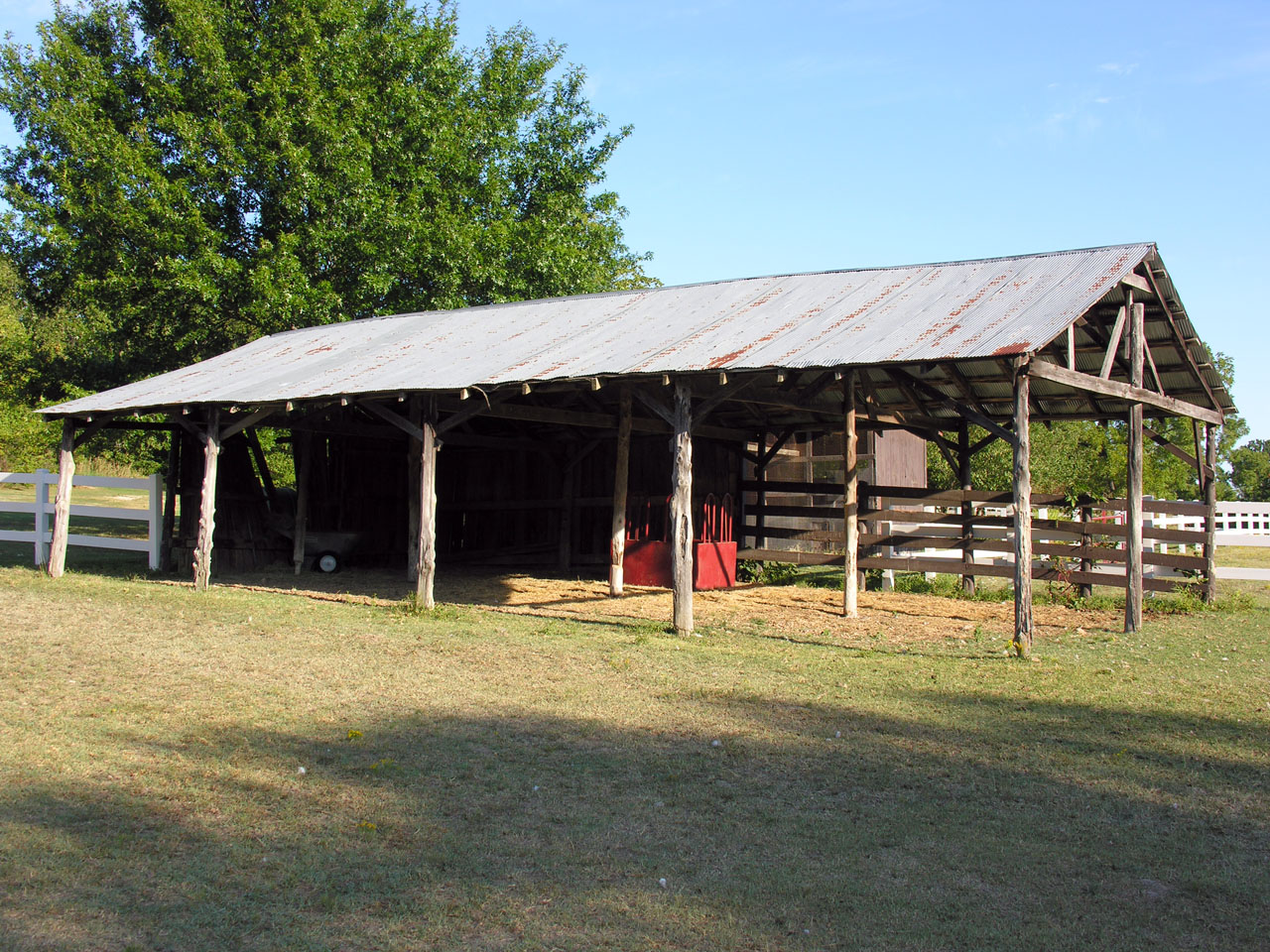
This is the old loafing shed.  While not readily apparent inthis photo, the old structure is in a very poor state, beyond any reasonable repair.  It will come down in the future, salvaging any useful components in the process.

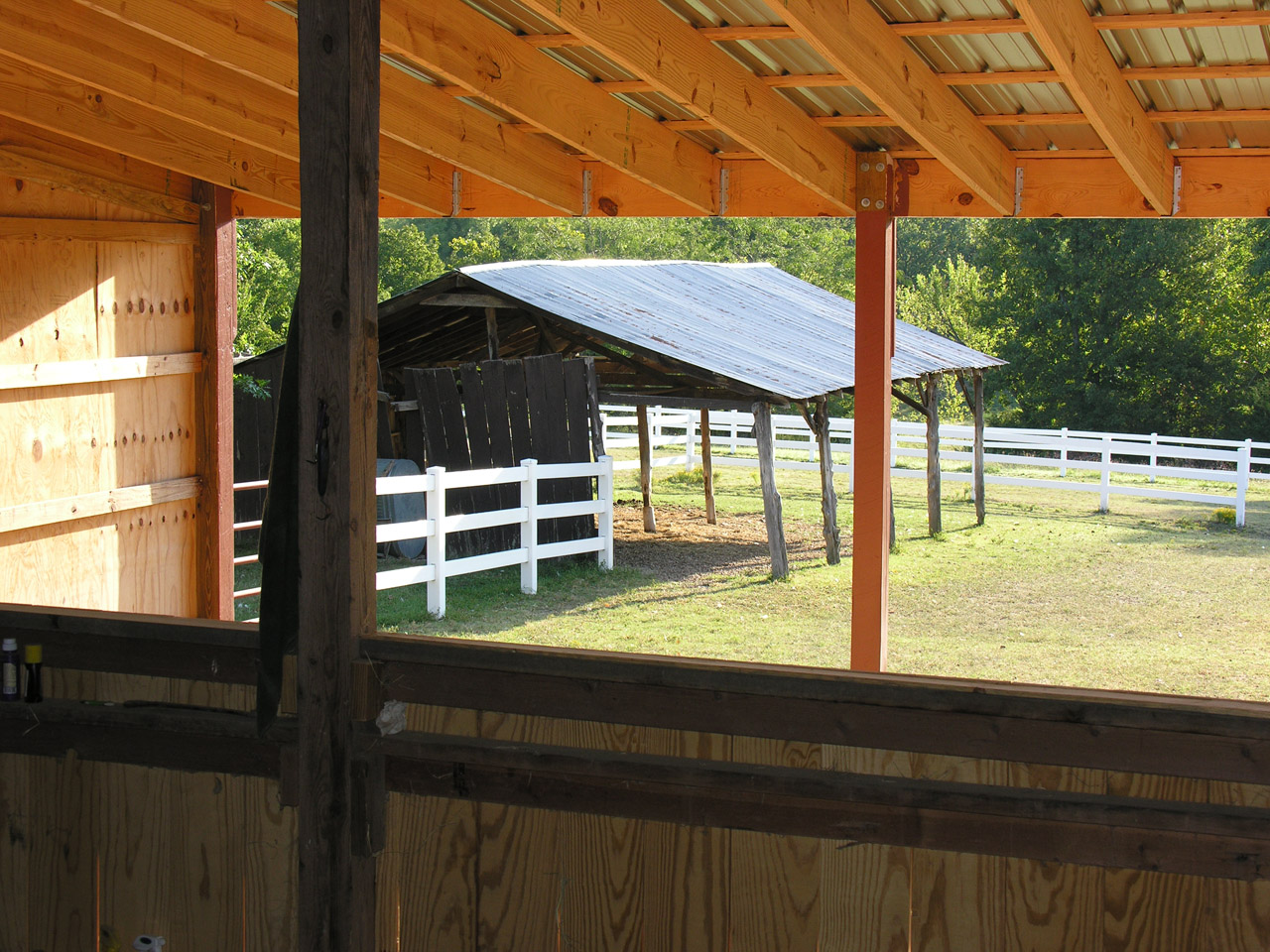
Here is a view of the old loafing shed, as seen from inside the equipment barn.  You might be able to discern the wall about to tumble down – that it hasn’t fallen yet baffles me.
Here is a view of the new 16 foot X 40 foot loafing shed that we added to the side of the equipment barn.
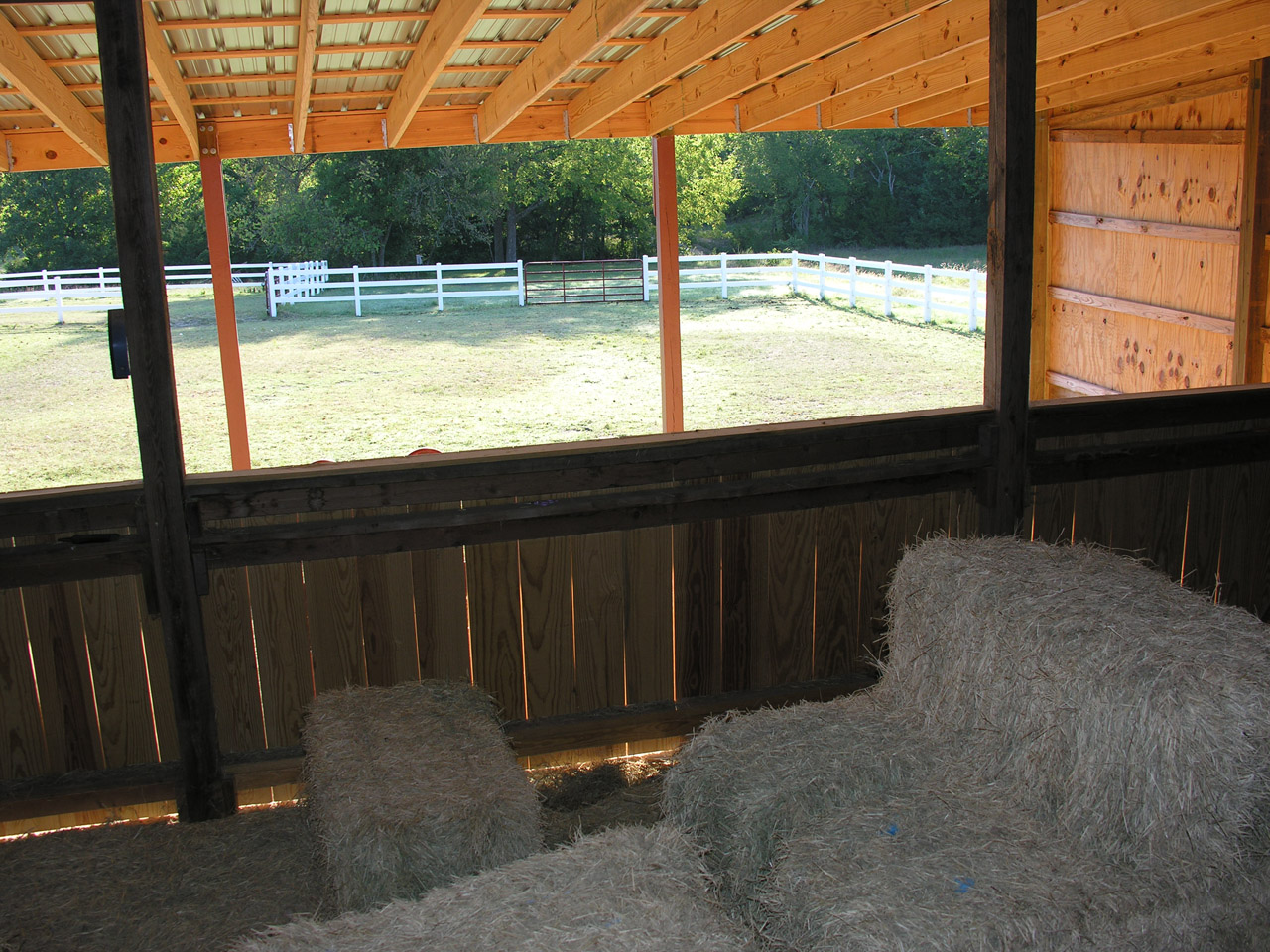
We designed the loafing shed in such a way as to allow hay to be easily tossed over the wall into hay bunkers in the paddock area.

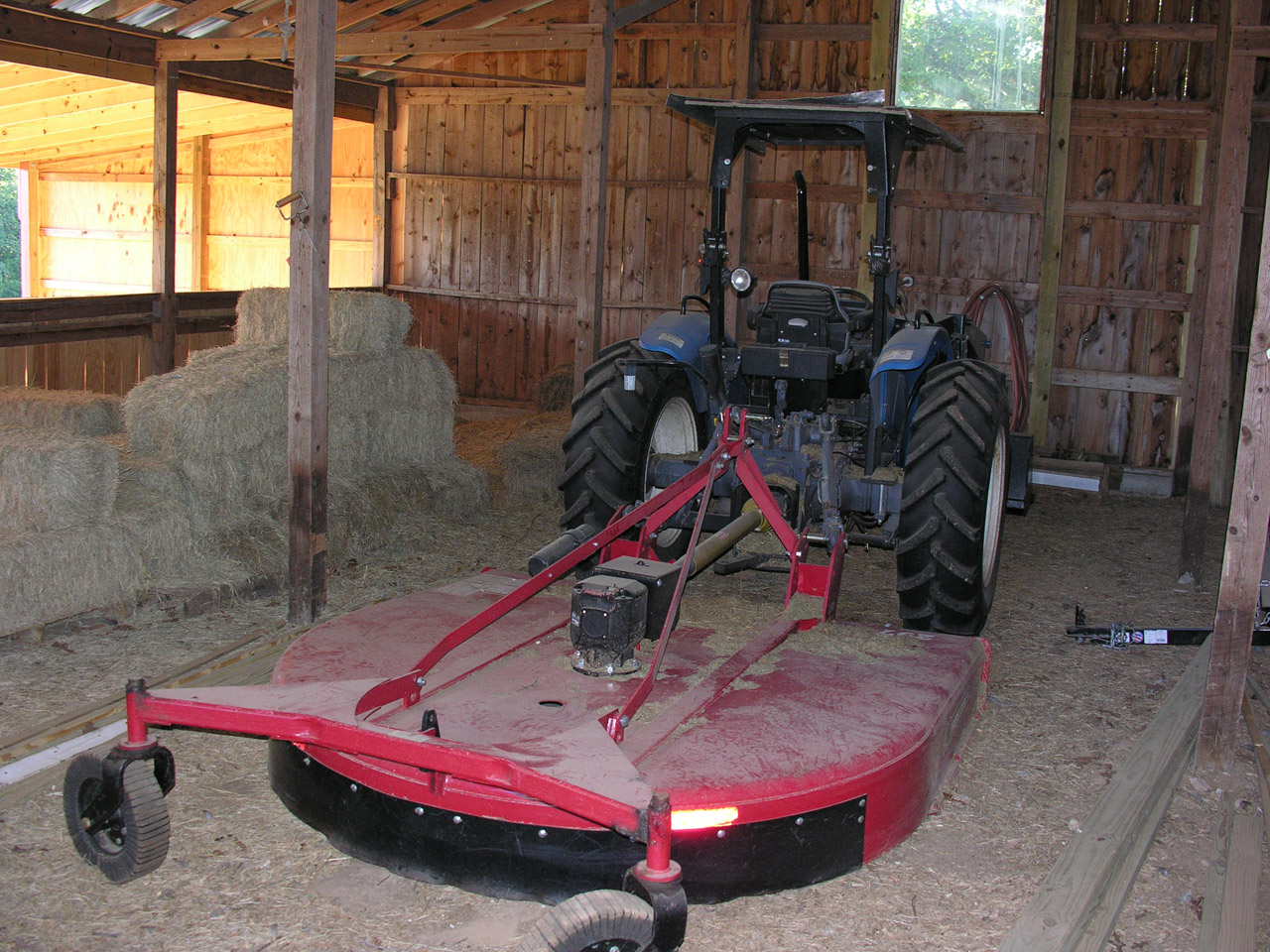
Of course, this is an equipment barn, so here you see the tractor stored inside.  You might notice the bush hog is new (what the heck is a bush hog?).  Our old one finally bit the dust, having been repaired and rewelded numerous time due to those dang rocks!

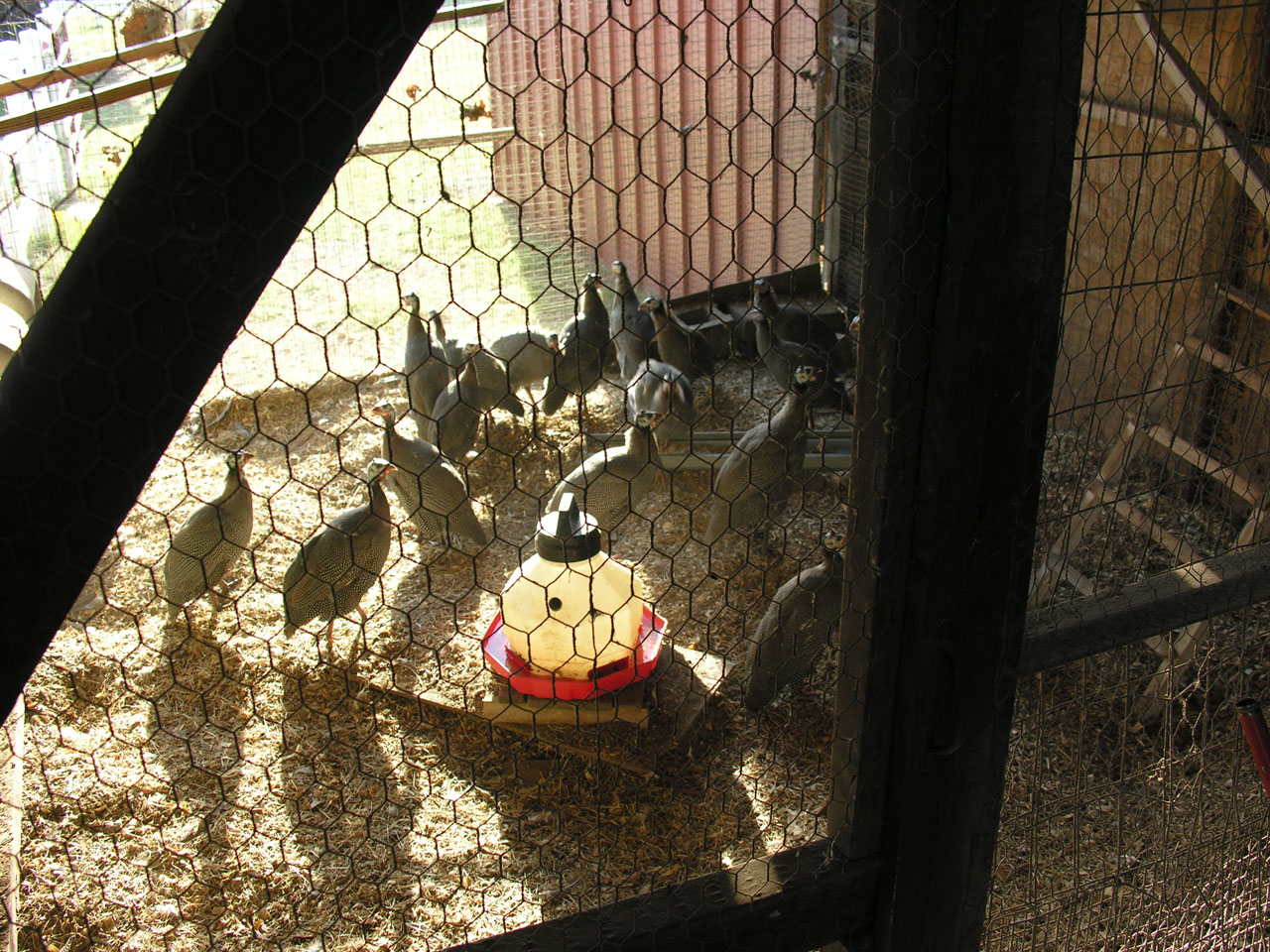
Inside the equipment barn we have an enclosure to house some of our guineas (see “How Could You Not Love a Face Like This?”).

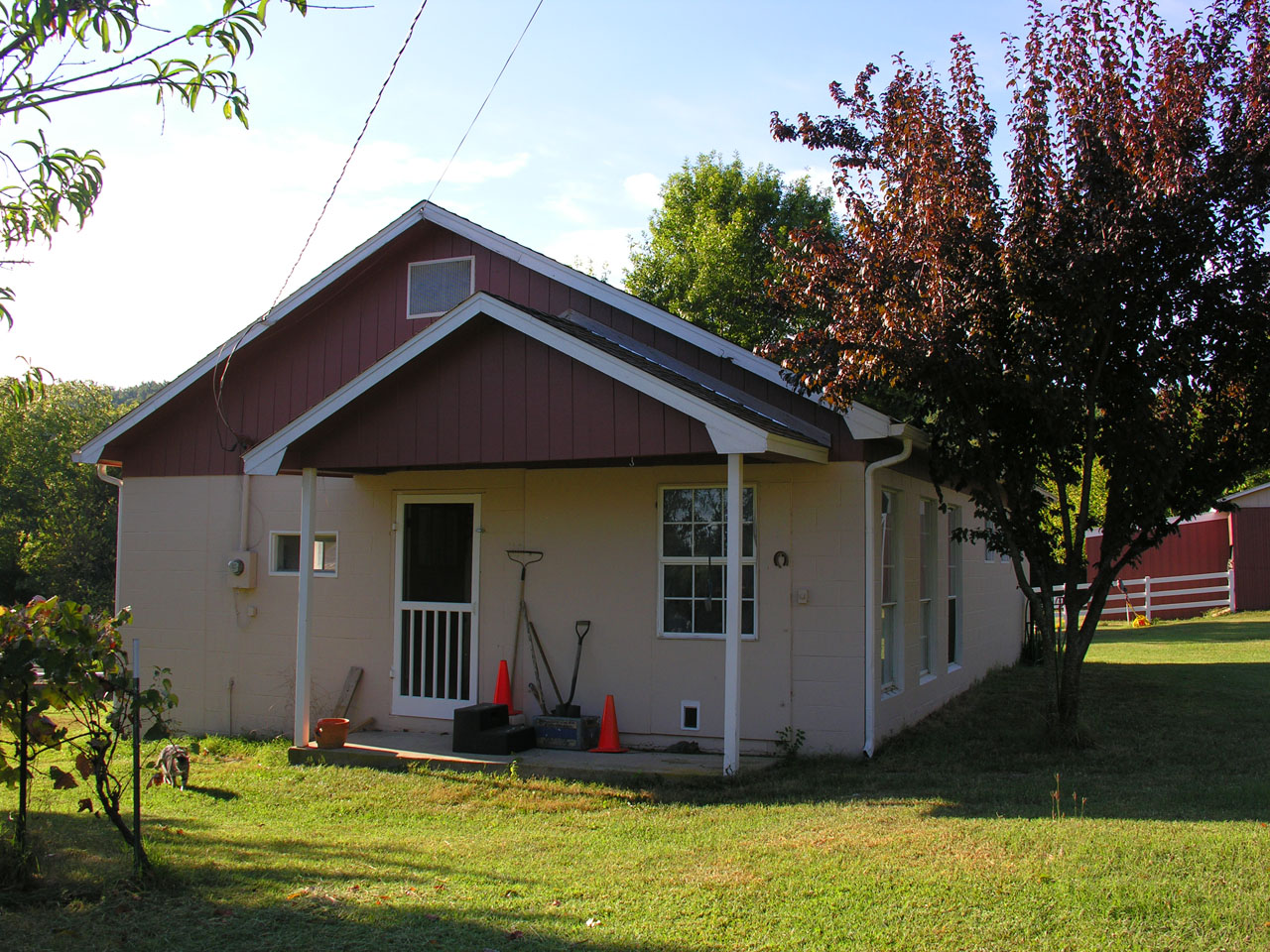
In looking at our shop/tack room, you might notice that we have endeavored to color coordinate the various structures in our barnyard area.   This is the shop side of the cinder block building.  For more on the shop/tack room, see “A Project Long Delayed“.

This is the tack room side of the same building.  Notice the newly renovated equipment barn in the background on the right side of the picture.

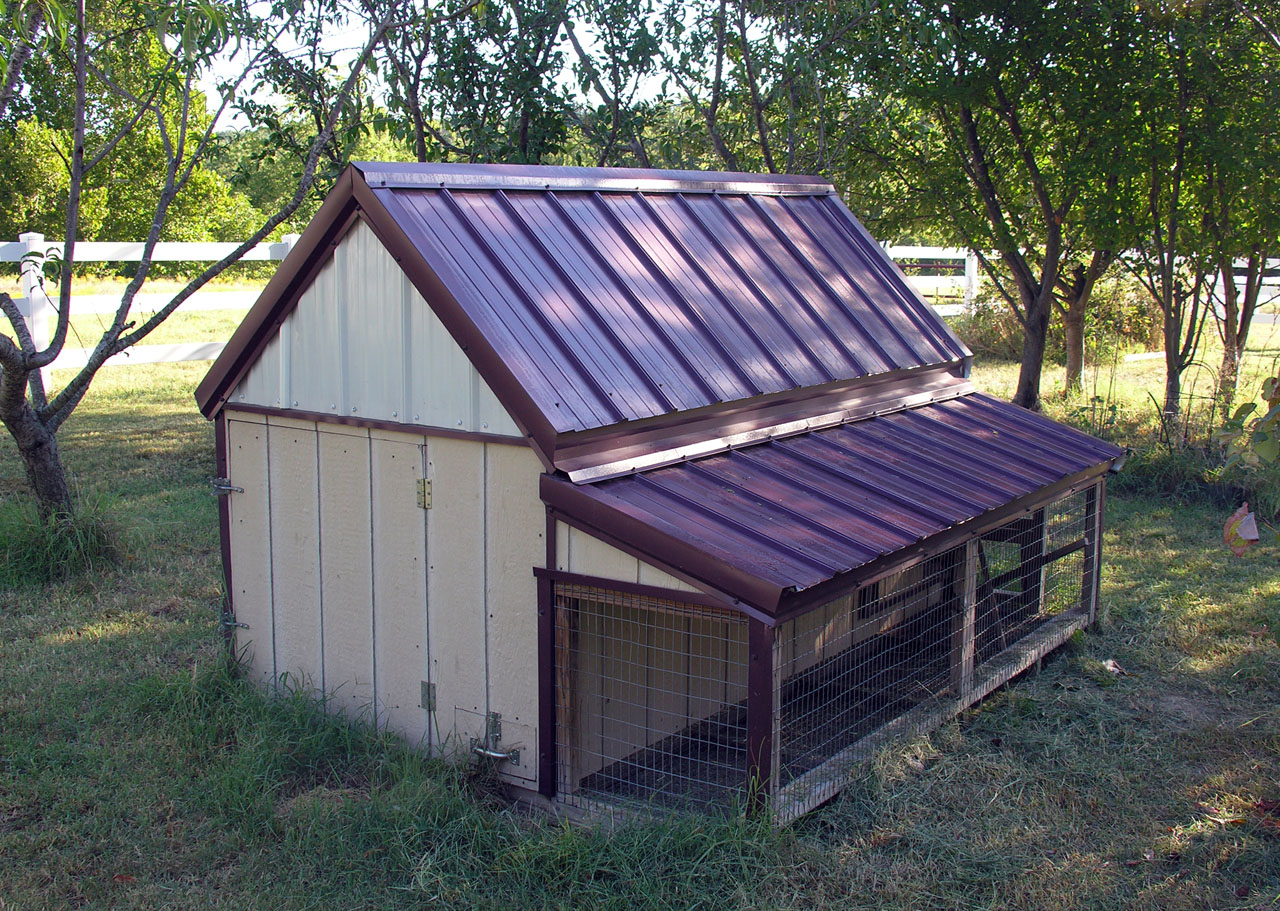
The color coordinated theme includes this small hen house as well.  The other hen house will soon follow suit – it is on our list of projects to be completed in the near future.  For more on the hen houses, see “Welcome to Our Hen Houses“.

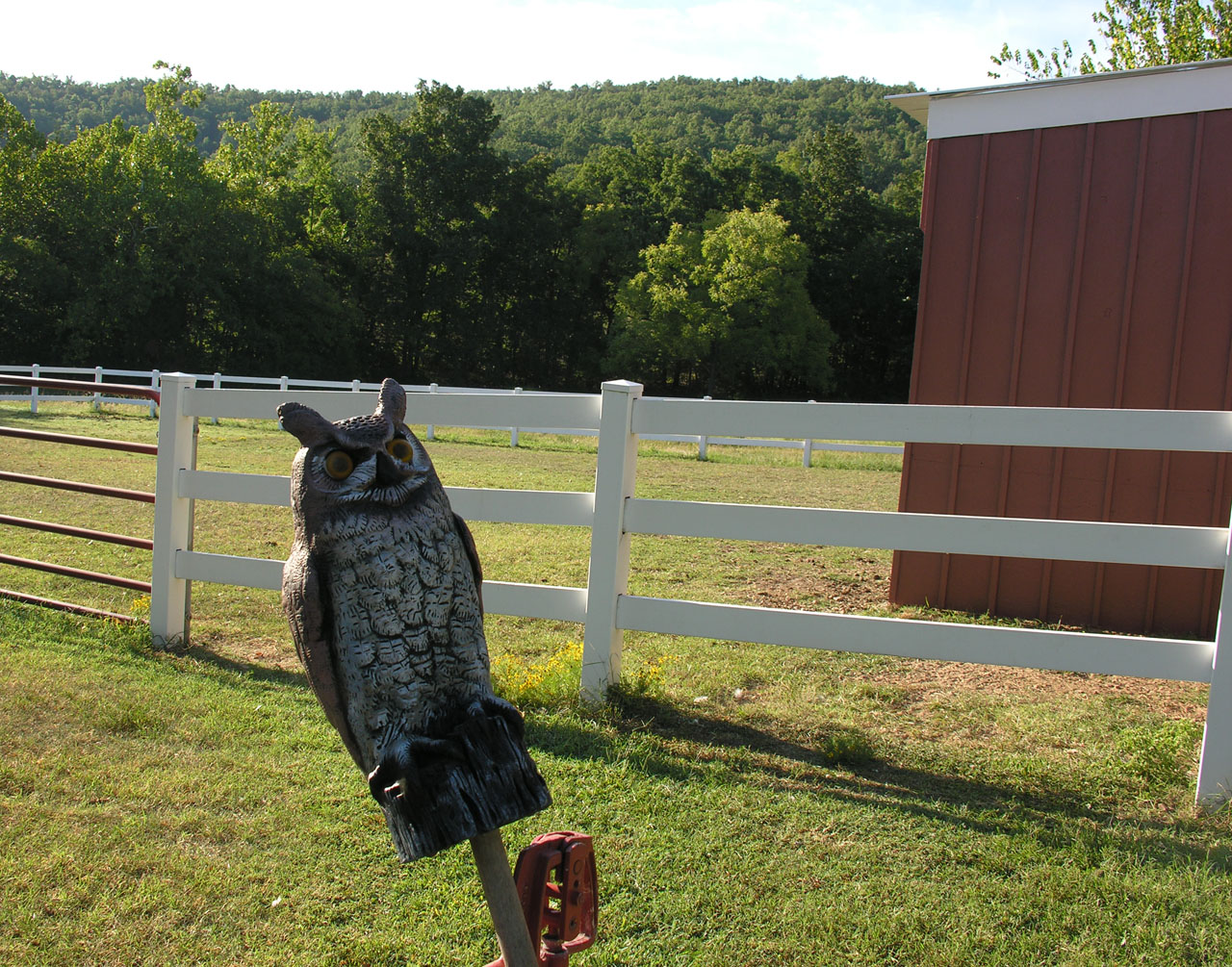
Finally, what barnyard is complete without an owl to keep a keen eye on things?

Some Chores Are a Drag

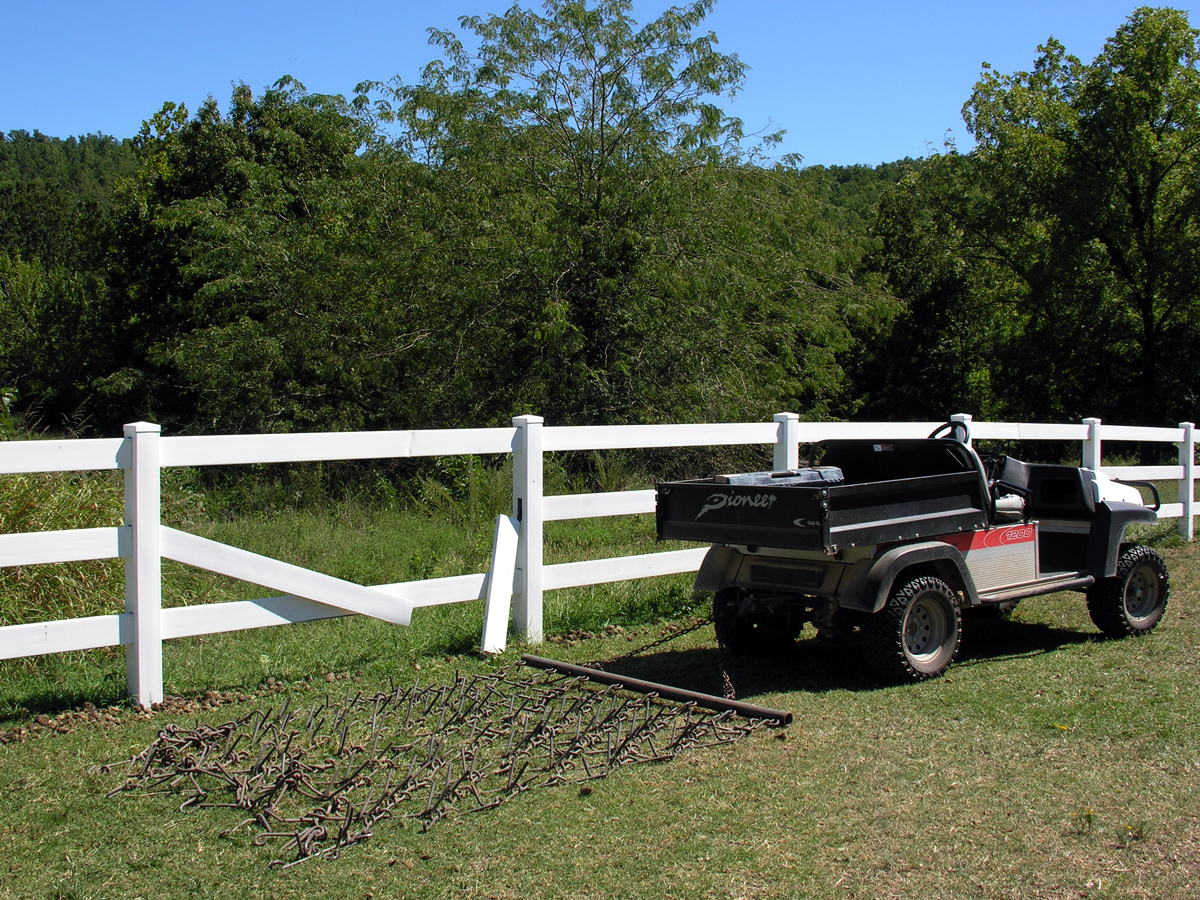
There is something romantic about living on a farm/ranch in the rural Ozarks.  But sometimes, unglamorous chores have a way of presenting themselves.  Today (after much procrastination) was the day I needed to repair a section of fencing.  But before undertaking this job, I needed to drag the pasture so I could walk around without tromping through piles of manure.  So here is a picture of the broken fence rail, and the scotch harrow I use to deal with the manure:

For more about this scotch harrow and dragging the horse pastures, see my previous post entitled Non-Toxic Fly Control, which is, I believe, irresistable reading ;)

For more info on fencing, see my previous post entitled The Most Effective Fence Ever Grown?, and about other damage that has befallen our fencing see Still Cleaning Up After the Ice Storm of 2009.

HP TouchPad – AAAAARGH!!

Saturday’s Rant

Earlier this week, HP shot itself in the foot by announcing a) that they were seeking ways to jettison their $40 billion per year PC business, b) immediately killing all their webOS hardware products, and c) announcing their intention to totally restructure their core business to emulate IBM and Oracle as a software and IT services firm. As one might expect (except for HP senior executives), the market rewarded this news by devaluing HP stock by over 20% in one day (see chart). Approximately $16 billion in shareholder wealth vanished overnight. Good going, HP!

So on a personal note, I am now in a dilemma. I purchased a 32Gb TouchPad in July, shortly after it’s introduction, for $600. I don’t regret the purchase per se, as the TouchPad running webOS has proven to be phenomenal in my daily routine (I plan to write about my experience with the TouchPad on my blog soon). It has been transformational for me, to say the least. But now I see that the TouchPad is going to be dumped at fire-sale prices. The Touchpad is now being offered on hpshopping.com for as little as $99! At that price, I am seriously considering buying another TouchPad for Retta. It’s a steal, which might soften the blow of having overpaid for the first one by about $500 :'(

Peaceful Co-existence

DSCN0854

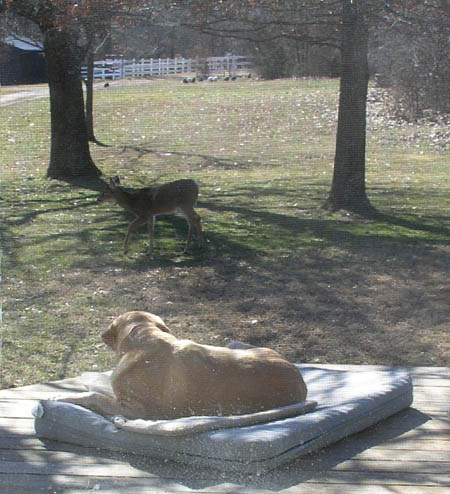
The local population of white tail deer apparently feel right at home with us.  This juvenile seems unphased by our Labrador’s presence, and the dog appears to show only mild interest in the deer.

DSCN0865

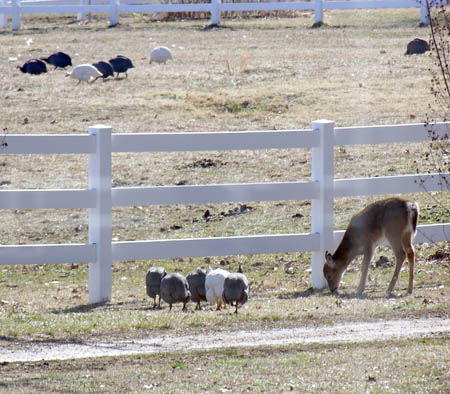
These guineas are curious about any creatures that share their habitat, and take the opportunity to check out this young deer.

DSCN0871

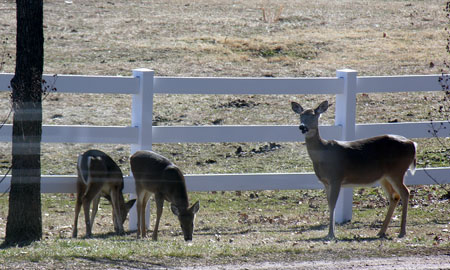
This doe, with her two offspring, have been hanging around the house for some time now.  Now that they have become comfortable with our presence, I suspect we will be seeing them frequently this year.

Stand-By Generator Project

One of the more significant projects we accomplished this past year was the installation of an emergency stand-by generator system.  A major icing event occurred across the Ozarks last winter, which caused wide-spread and prolonged power outages throughout the region.  As fate would have it, I was in California helping with a family medical crisis at the time, while Retta was left alone to deal with the ice storm and it’s aftermath.

One lesson we learned was that the electric company (Entergy, in our case) prioritizes reconstruction of the power grid after a disaster,  and when you live “at the end of the road” in a sparsely populated area,  you are placed at the end of the list (for obvious and appropriate reasons).  It could possibly take weeks for power to be restored, so you had better be prepared!  When the power goes off, so does the heat.  So does the well pump.  Without the well pump, there is no running water.  Without water, there are also no usable toilet facilities.  Without power, communication become difficult or impossible.  Satellite television ceases to operate.  The Internet disappears, as does email, on-line banking and bill-paying.  Cooking reverts to camp stove cookery, while food rots in refrigerators and freezers.  These things were just at the beginning of the list of hardships Retta endured until the power was eventually restored.

When I returned home from California, I promised Retta that she would not have to worry about being without electricity should an ice storm reoccur in our neck of the woods - we would install an emergency generator.  So that is the genesis of this particular project.

gen01

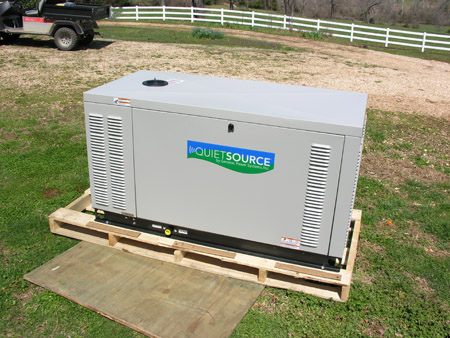
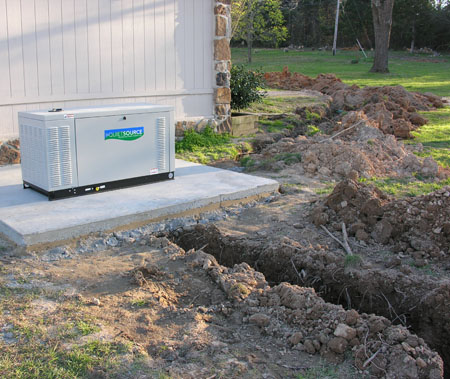
There are many sizes and types of generators available for emergency use.  We decided to purchase this QuietSource 27kw generator (pictured above), after consulting with people in our area who had tried other solutions during the ice storm.  The consensus of opinion was that a permanently installed, automatic whole-house generator system, adequately sized to satisfy a reasonable electrical demand during an emergency, was the way to go.  Opting for 27kw provides us with sufficient capacity so that all reasonable electrical needs will be met, while allowing the generator to run well below it’s full-load rating, saving fuel and prolonging the generator’s useful life.

gen02

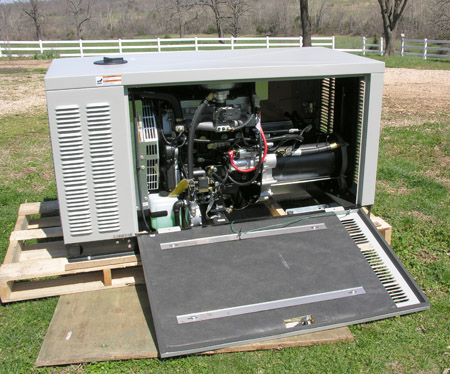
The unit is powered by a 2.4 liter Mitsubishi 4-cylinder liquid-cooled engine.  This engine is designed to run at a constant 1800 RPM, which compares to the 3600 RPM of it’s competitors.  Operating at half the speed of most other engines results in significantly quieter operation.  Another benefit, which was more important to me, was the increased fuel economy the slower running engine obtained compared to other engines on the market.  The importance of this will become clear later in this post.

gen03

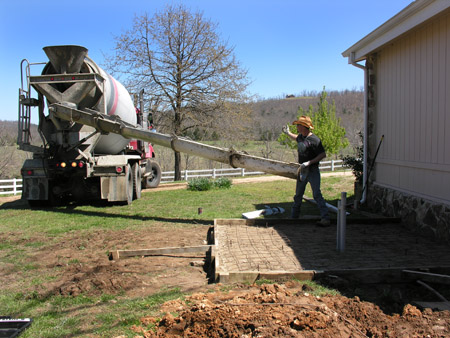
Because of the size and weight of the generator, the manufacturer recommends placement on a concrete slab.  We opted to place the generator along the side of the carport, where you see the slab being poured. 

gen04

Notice in the poured slab above that we stubbed PVC conduit through the concrete, so that the electrical service would feed directly into the generator control panel.

gen05

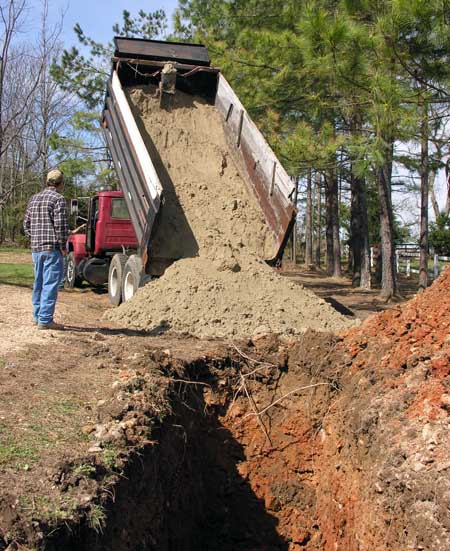
To power the generator, we needed to install a propane tank.  After digging a hole of the proper dimensions, the cavity is bedded with sand, which is meant to prevent contact between the tank and potentially damaging rocks in the ground. 

gen06

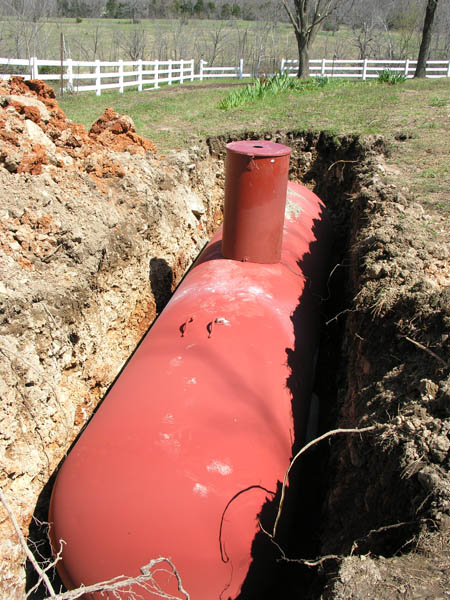
This is what the 1000 gallon underground propane tank looked like prior to filling the hole with sand, and then topsoil.  Why a 1000 gallon tank?  Let’s do the math.  A propane tank can only be filled to 80% of it’s volume capacity.  Therefore, a 1000 gallon tank will be filled with 800 gallons of propane.  For a variety of reasons, our propane company recommends filling the tank when it falls to 20% of capacity.  So a 1000 gallon tank provides about 600 usable gallons of fuel to the generator.

The 27kw QuietSource generator burns 2.2 gallons of fuel/hour when run at 50% load, so the 600 usable gallons of propane should last for about 270 hours, or slightly more than 11 days.  Since it could easily be over a week before a propane truck could replenish our fuel supply (given our experience from this past winter), the 1000 gallon capacity propane tank was the smallest size we felt comfortable with – there is no point to installing a system like this if it runs out of fuel in an emergency.

gen07

Now we placed the generator on the concrete slab and began the process of connecting things together.  We ran the propane line underground (in the trench on the lower right), as well as the electrical service (in the trench leading around the house, in the upper right).

gen08

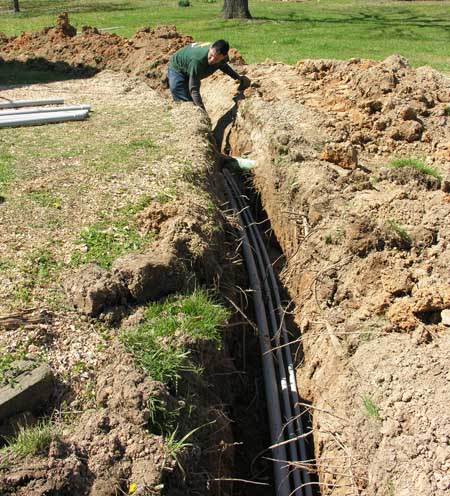
Three PVC conduits were placed underground.  The larger conduit carries the main power lines.  One of the smaller conduits carries the control wiring between the generator and the transfer switch (at the utility service-entrance of the house), while the other carries 110 volt power to the generator, which keeps the generator starting battery fully charged at all times.

gen09

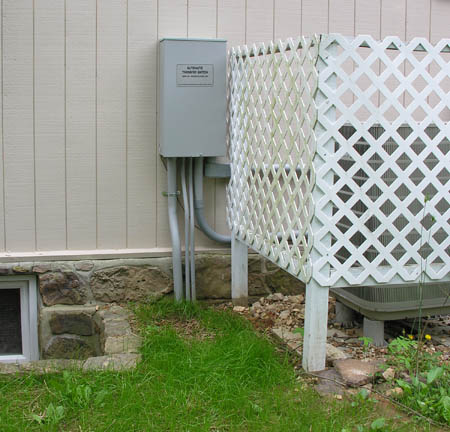
This is the automatic transfer switch we installed near the utility service entrance.  All of the electricity that goes into the house comes from this switch.  When conditions are normal, the source of power is from the utility company.  When the system senses a power outage, the generator starts, warms up for a short time, and then the transfer switch automatically switches the source of power over to the generator.  Thus, in a power outage, the house only experiences a power loss for a short period of time. and this all happen without any homeowner intervention.

gen10

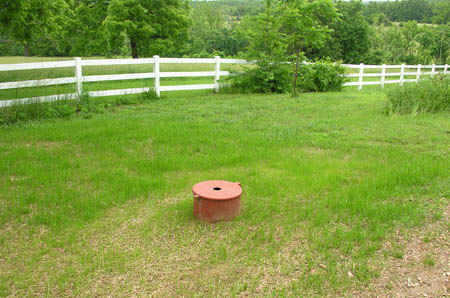
We replanted grass over the propane tank location, and all that is visible now is the small access riser, seen in the photo above.

gen11

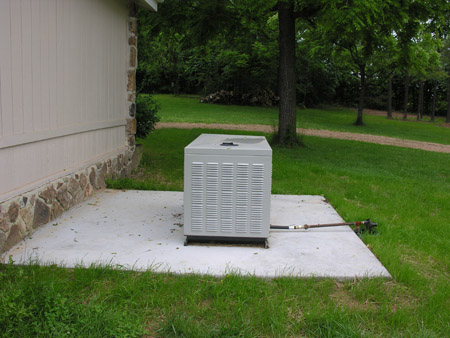
This is how the finished project looks, now that the trenches are filled and the grass has been reseeded.  The over-sized slab allows for convenient access for routine maintenance or any repairs that may become necessary in the future.

The generator is programmed to start up automatically once a week, in an exercise mode designed to keep the system ready for use at a moments notice.  Since we installed the system, we have only experienced one brief power outage (thank goodness!), but it was comforting to see the stand-by power system kick in automatically, just as it was intended to do in an emergency.

Still Cleaning Up After the Ice Storm of 2009

Ice Storm Damage (0)

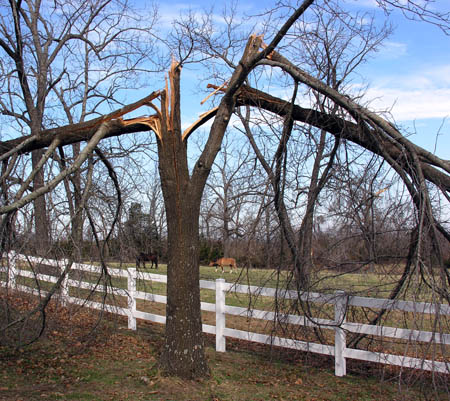
The ice storm that occurred a year ago in the Ozarks created many beautiful scenes, as in the photo above (courtesy of Retta), but it also left a trail of damage and destruction.  Aside from a power outage that lasted weeks (and the subject of my post entitled Standby Generator Project), the ice brought down many trees and limbs in our area.

Ice Storm Damage (1)

This tree limb, over a foot in diameter, was no match for the weight of ice which had accreted on it during the duration of the storm.  It is only one example of the numerous downed limbs strewn throughout the property.

Ice Storm Damage (2)

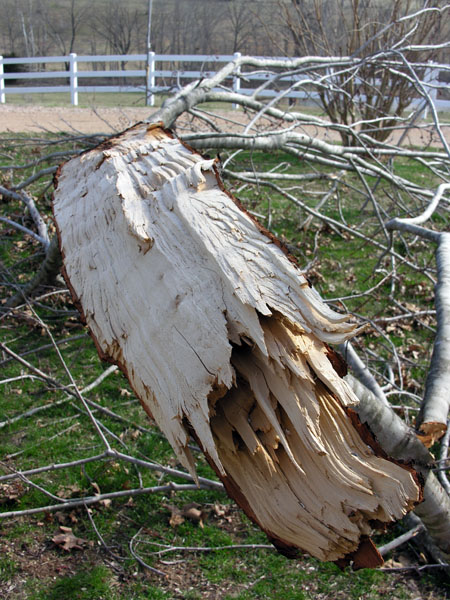
Here is a tree that has no chance for survival.  The three ways to deal with this are;  A) leave it as is, B) remove the potentially dangerous hanging limbs, leaving a dead trunk, or C) remove the entire tree.  Due to the location of this tree (and others within our yard), we opted to remove the tree, however there are many other similarly damaged trees on the property where we have chosen options A) or B) instead.

Ice Storm Damage (3)

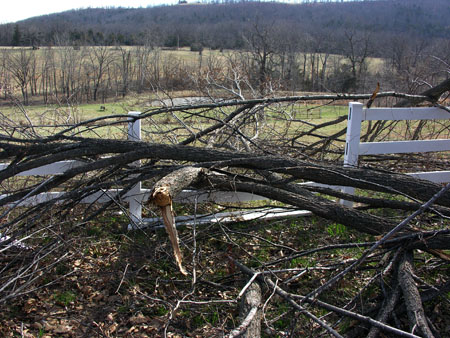
The falling limbs played havok with our fencing.  Where large limbs fell on vinyl fencing, rails and posts were broken or shattered.  Sections of barbed-wire fencing either snapped or were toppled to the ground.  We have completed repairs on all the vinyl fencing, but only a portion of the barbed-wire fencing, where the repairs will be ongoing for the foreseeable future.

Ice Storm Damage (4)

Outside the immediate area of the yard, many trees were toppled like matchsticks.  Tree that have fallen into our horse pastures or hay fields have been cut up for firewood and removed, although some of this work still remains.

Ice Storm Damage (5)

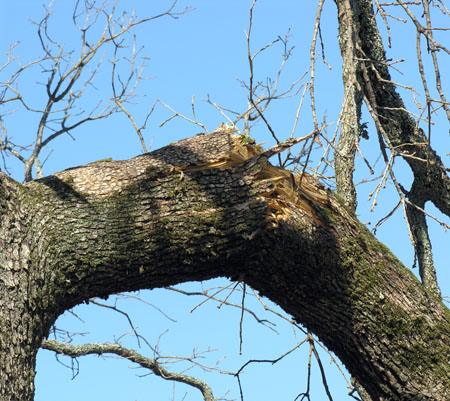
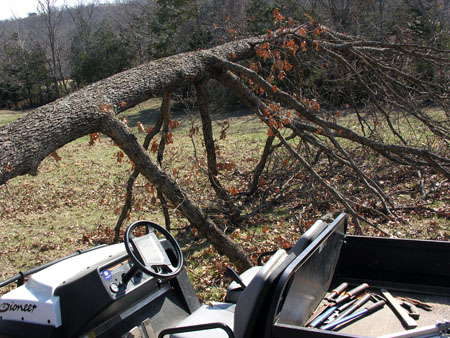
Here is another snapped limb, well over a foot in diameter, located along one of our trails.  I am in the process of locating these potential “widow-makers” and dropping them to the ground, where they can sit safely until I can deal with them fully.

Ice Storm Damage (6)

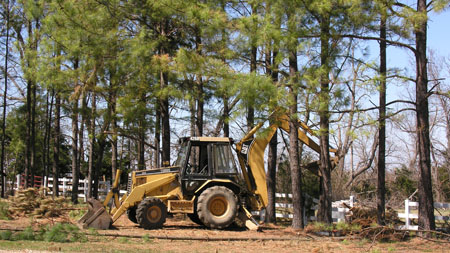
Where we had to fell trees in the yard, we opted to remove the stumps that remained, which required the use of a backhoe, seen above.  After the stumps were pulled from the ground, the backhoe operator filled the resultant holes with topsoil.

Ice Storm Damage (7)

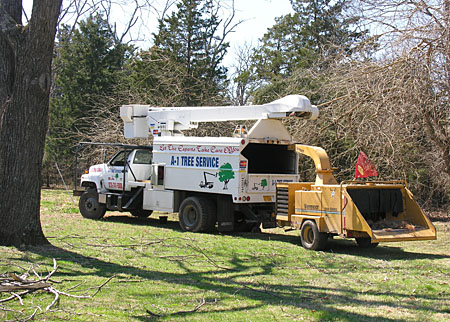
Around the house, there was so much fallen debris that we employed the services of a bucket truck, an industrial size chipper, and a 3-man crew for 5 full 8-hour days.  We now have tons of organic mulch sitting in piles in strategic locations throughout our property!

Ice Storm Damage (8)

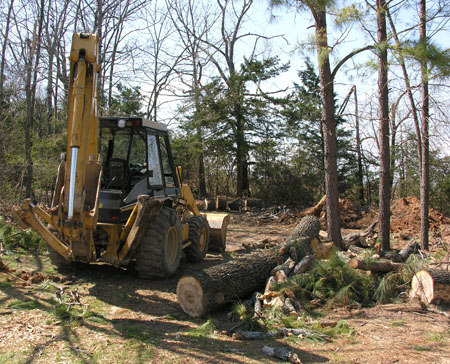
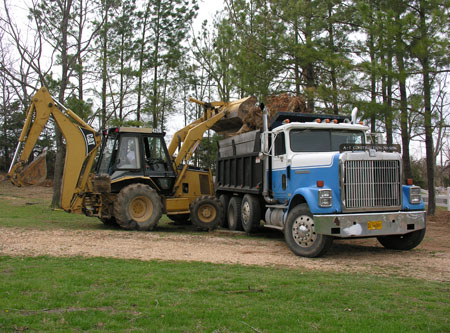
Removal of the tree stumps and cut timber in the yard required the use of heavy equipment, seen above, and large trucks, seen below.

Ice Storm Damage (9)

Even with all the work that has been completed to date, it will probably take us several more years to clean up after the ice storm of January, 2009.  In fact, there are over 200 acres that I have not yet had the opportunity to cut my way into yet.  I had better get to work, pronto (or at least when the temperature climbs out of the single digits)  ;)

Hello World (Again)!

Hearth Fire

It’s hard to believe that it has been a year-and-a-half since I last posted on this blog.  Now that winter is here in full-force, I intend to resurrect Ranch Ramblins with more frequent posts (some of which may actually be interesting).  Also, I have recently been talked into creating a personal Facebook page (how passe) – I’ll post a link to that page as soon as I figure out how the heck Facebook works!

There is a lot that has transpired in the last 18 months, so I will post some of the more noteworthy events as I can.

This Year’s Hay Production – Part I

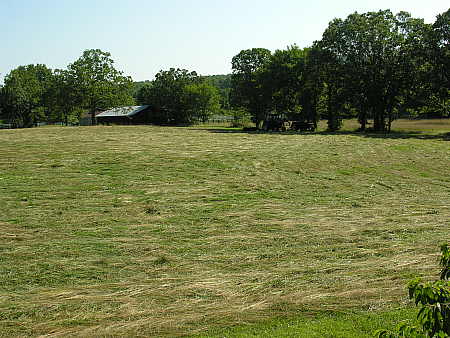
This is one of our hay fields immediately prior to cutting, the first of four steps in our hay production for this year.

The freshly cut fescue grass, seen above, is allowed to dry in the sun for a few days until the moisture content is low enough to permit safe baling of the hay.

When the grass has dried to the point that it is ready to be formed into bales of hay, it will look different from when it was newly cut, as is evident from the photograph above.

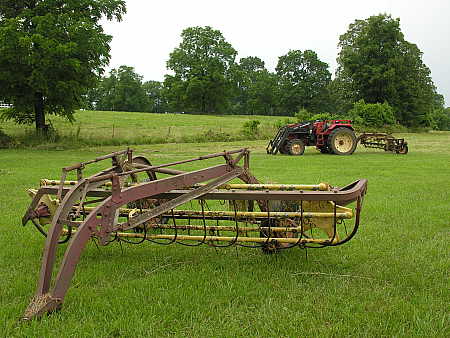
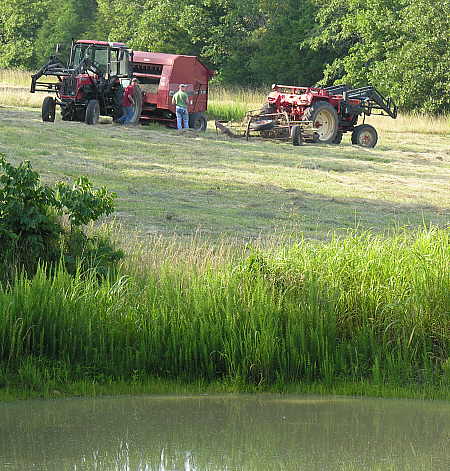
At this point, the dried fescue is ready to be raked into windrows in preparation for mechanical baling.  The photograph above shows the two rakes that are being used to wind-row the grass laying in the fields.

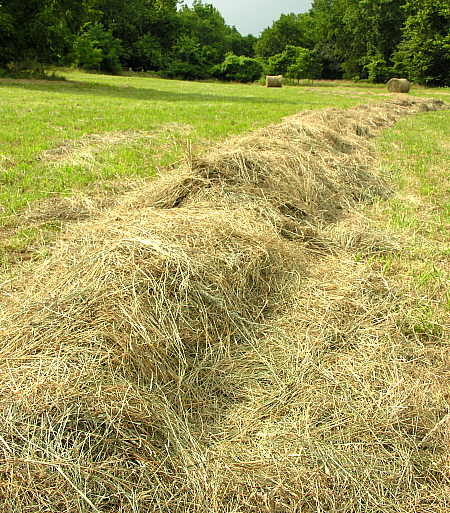
This is the end product of cutting and wind-rowing in the field.  The grass is now ready for the baling machine to arrive and perform it’s magic (the topic of last year’s post Boosting The Average).

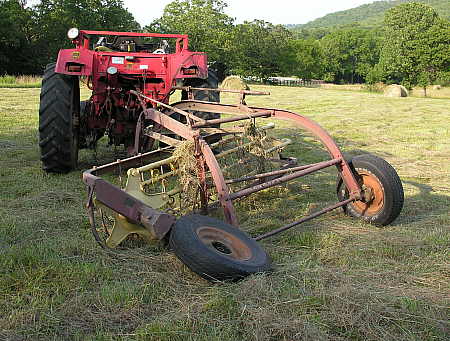
But what’s this?  Something seems to be haywire out in one of the hay fields.  You may recall from last year’s Boosting The Average post that one of the rotary cutters used to cut the fescue broke, requiring repairs in the field in order to proceed with the hay production.

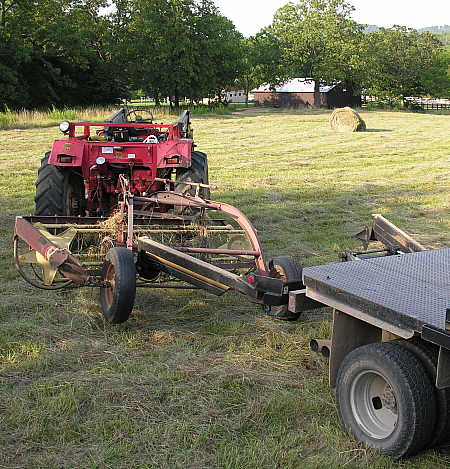
 As you can see, this year’s problem involves one of the hay rakes.  It seems a wheel decided to fall off!

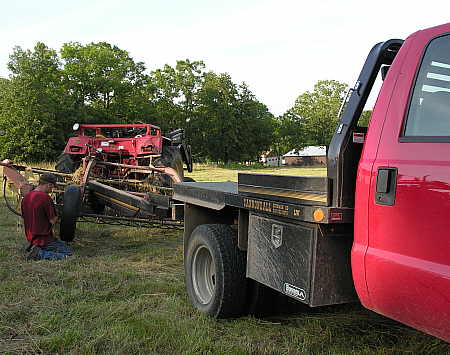
As Craig knelt down to figure out what would be required to fix the broken wheel, another problem came to mind.  How to lift the very  heavy implement in order to re-attach the wheel?


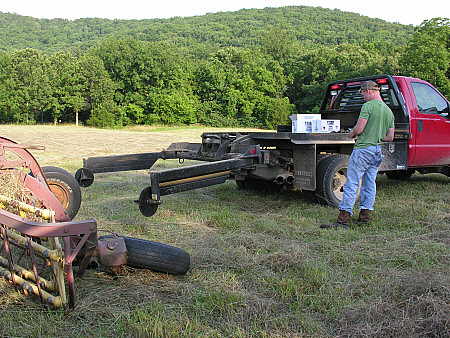
 Fortunately, Craig had his hay hauling truck “Cannonball” with him, and as you can see, this truck is fitted with a hydraulic bale lift on the bed of the truck.  With a little bit of care, the lift could be used to elevate the heavy hay rake for the repairs it required.  

With the hay rake elevated, Craig had no problem fixing the broken wheel (with a little help from a few hardware items found in my shop parts bins).

And as you can see, the hay rake is now as good as new – well, almost good as new, considering that it is probably as old as I am!

Part II (and perhaps a Part III) of our hay baling shenanigans will most likely be forthcoming in the near future.  I’ll bet you can’t wait, can you?