An Exercise In Futility?

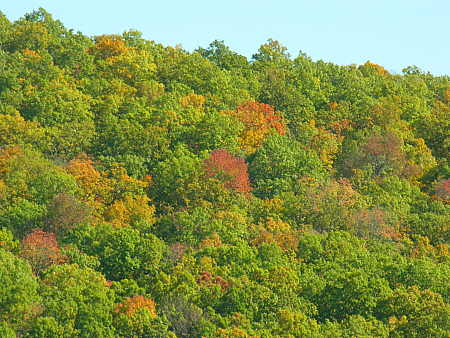
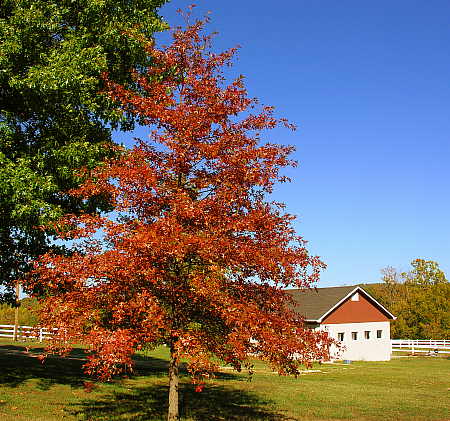
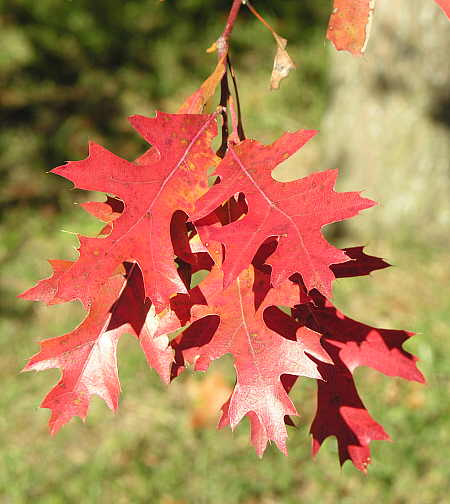
Are you ready for a simple math exercise?  If not, just scan the pictures below – you’ll probably get the drift.
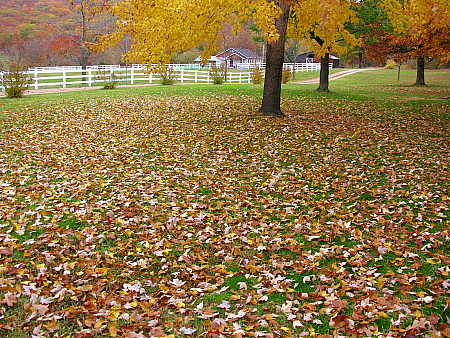
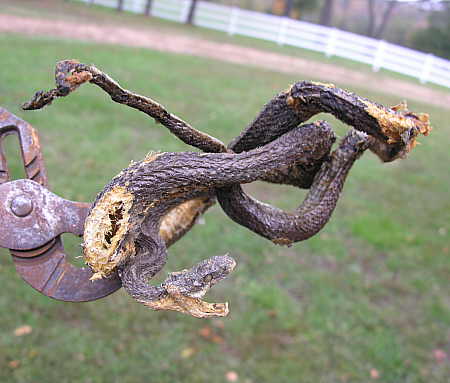
Where do they go from here?

According to Arkansas Birds – Their Distribution and Abundance (James & Neal, pg 41, Table 3-5), there are, on average, 272 trees per acre in NW Arkansas upland forested areas.  The same reference indicates that of these 272 trees, over 65% are a species of oak, so for the purposes of this exercise only, and for the sake of simplicity, let’s assume that they are all oak trees.

Now, we have 330 total acres here.  Aerial photography shows that of the 330 acres, approximately 50%, or 165 acres are wooded.  Multiply 165 wooded acres by 272 trees per acre, and you arrive at a grand total of 44,880 trees.  That’s a lot of trees!

According to this response from Google Answers, there are approximately 200,000 leaves per oak tree (Google – the ultimate authority on everything).  By multiplying 200,000 leaves times the previously derived 44,880 trees, we find that each and every year, approximately 8,976,000,000 leaves are produced on our land.  Based upon the casual accuracy of these calculations, let’s just say around 9 billion leaves per year!

Now, if you’ve followed this blog recently, you will know that I have been ecstatic with joy over the beautiful fall colors we have been experiencing this year.  Witness the following posts to appear in the recent past:

Fall Colors Are Slowly Appearing 

The Fall Colors Keep Getting Better

Oh, Those Precious Fall Colors

Nearly At It’s Peak

People will sometimes ask me, “Hal, even though the colors are great, there must be something about autumn that you don’t like.  What’s the worst thing about the Fall season, in your opinion?”

To which I reply “The thing I dislike about Fall the most is just that – the FALL, as in the leaves falling from the trees” (O.K. – nobody really asks me that, but you knew that all along).

Who is going to rake up those 9 billion leaves each year?  Fortunately, all of those leaves don’t need to be raked each season, just a small percentage of them.  Why do I bother to rake any of them at all?  For two reasons: neatness, and fire containment.

The Neatness Angle

The neatness aspect pertains to the fact that we have two large dogs that are, for all intents and purposes, an integral part of our family.  They come and go, in and out of the house, just as we humans do.  But in a messier fashion.  Our first year here, I attempted to rake the leaves around the yard, so that the dogs would stop tracking them into the house.
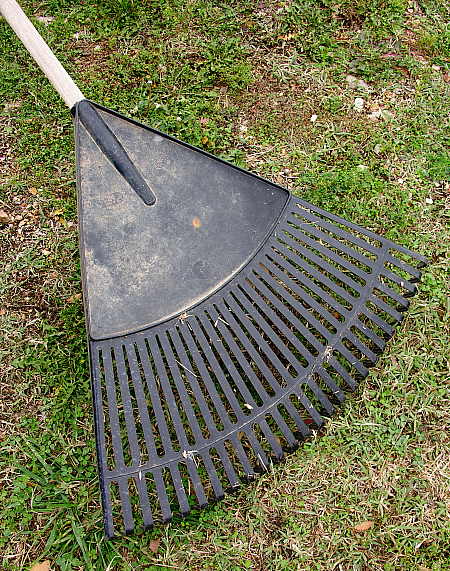
Broad plastic leaf rake

I used a wide leaf rake made out of plastic, that I had purchased in the garden department of my nearest super-duper discount center.  The idea was to rake up the leaves as they fell, and to transport them a distance from the house.  But the sheer quantity of leaves around the house quickly made it apparent that I could not perform this task manually.

My natural inclination, being a technophile, is to turn to technology as a solution to my problems, and here was a situation where equipment was readily available to help.  I figured what I needed was a good “leaf vacuum cleaner” to neaten the lawn.
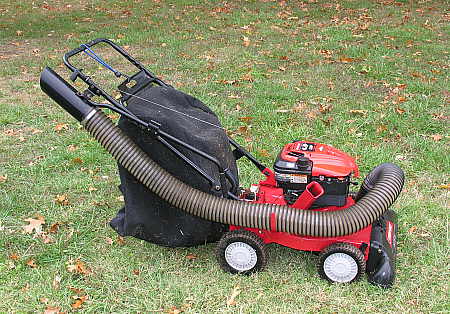
Solution to my problem?

Here is a machine that I purchased to vacuum and shred the leaves that fall around the house.  It seemed like a good idea at the time, but experience with the machine soon proved me wrong.  First of all, I thought I would save some money by buying a NON self-propelled model.  Big mistake!  By the time the collection bag was half-full, the machine weighed so much that you could not push it.  When the bag needed to be emptied (frequently), the engine had to be stopped, the bag removed (with much difficulty), the bag of shredded leaves had to toted to a preselected spot and dumped, returned to the location of the shredding machine, and re-installed onto the machine (not a simple procedure).  The engine would then have to be restarted with a rope starter.  By the time I had finished around one tree, I was exhausted for the balance of the day!  I soon abandoned any fantasy that I had about using this machine to solve my leaf removal problem.
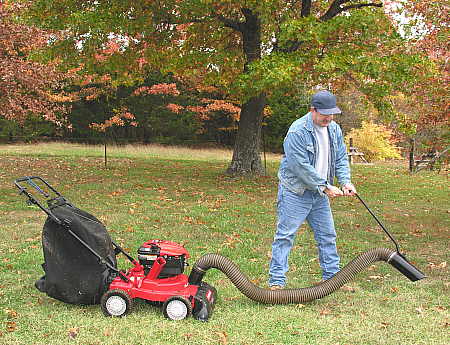
Upright verses cannister mode of operation

This machine has a feature which allows it to suck up leaves with an attached hose, as shown above.  Although the machine failed to meet my expectations for all my leaf cleanup needs, at least I can still use it around planters and flower beds using the hose feature, so it has not been a total waste of money, but I certainly would not have parted with the cash for this minor task that I put it through.  Oh well, that’s how you learn.

The following season was a complete disaster, as far as the mess situation was concerned.  I decided to affix mulching blades to my lawnmower, and simply shred the leaves in place, allowing nature to take care of decomposing the leaves over time.  Nature will decompose the shredded leaves over a period of time, but not over one winter, as I soon learned.  The shredded leaves accumulated on the ground where they fell, and the cold rains of fall, followed by the blankets of snow in the winter quickly matted the leaf litter into a muddy, leafy mess where my lawn has once existed.  So now, the dogs tracked in not only leaves, but mud as well!  Good going, Hal!
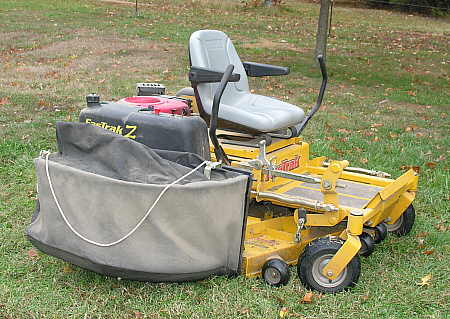
Mower to the rescue

The following season I tried a slightly different strategy.  Instead of merely mulching the leaf litter, I bought a leaf collection system for the lawnmower, as shown above.  Now, the leaf litter would be removed from the lawn completely, thus allowing a healthy carpet of grass to exist as ground cover all year long, and the dogs would be free to come and go without tracking in a huge mess.
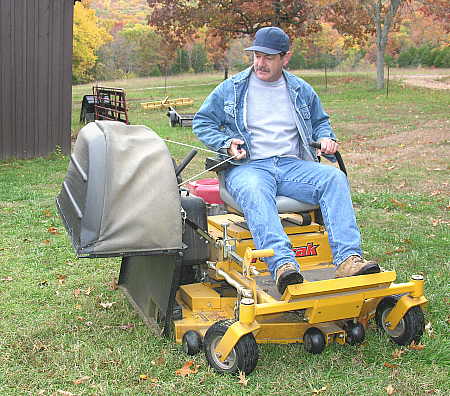
Leaf dumping system

Not only has this procedure been successful in minimizing the amount of leaf litter and mud that comes into the house, it has been a blessing for my physical well-being also.  You can see in the photograph above how the collection container empties.  The mower does not have to be shut down, and I do not even have to get off the machine.  All I have to do is drive the mower to my predetermined dumping spot, slow down, and then pull a release cord affixed to the container.  The container flips up, thereby allowing the shredded leaf litter to fall to the ground using the force of gravity.

Whereas with the leaf vacuum machine, I could clean up around one tree per day before running out of energy, with the method I’m using now, I can clean up the entire yard in less than one morning, and have energy to spare for the rest of the day.  Quite an improvement, indeed.
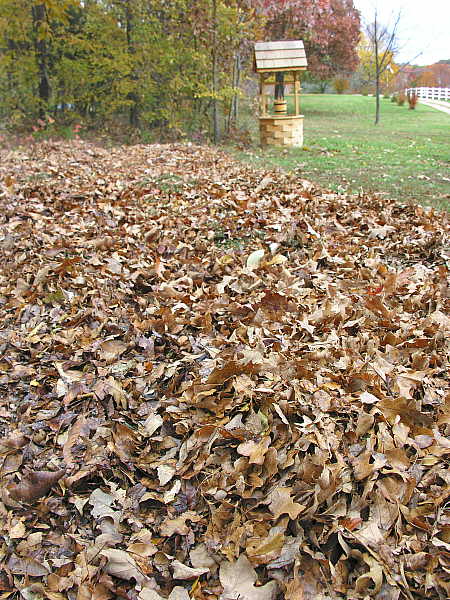
Pile of collected leaves

Eventually, I end up with a huge pile of leaves in my designated dumping spot, which we can compost for the garden or use as mulch over the winter.  In any event, the leaf litter does not get tracked into the house very much anymore.

The system works well, and I am happy once again.

The Fire Containment Angle

Regular readers of this blog may recall that up until his arrest, we had been plagued by several fires on our property started by an arsonist.
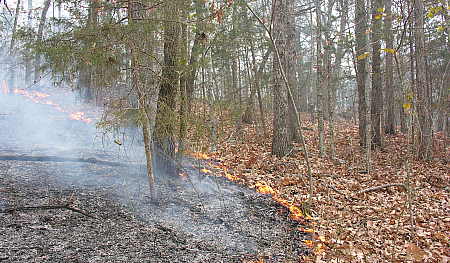
 A rake would have been nice to have here

The first time I ran across fire on the property, I found the fire burning through leaf litter on the forest floor, as seen in the photograph above.  Quickly returning to the house to phone the authorities, I then grabbed the black leaf rake (that was previously pictured), and returned to the scene of the fire.  With the flames rapidly spreading through the dried leaves, a rake is an important tool used to contain a fire in an emergency.  But as I soon learned, a plastic rake just doesn’t fit the job at hand.  Within minutes, the rake, being made of plastic, had melted, rendering it useless in my hands.
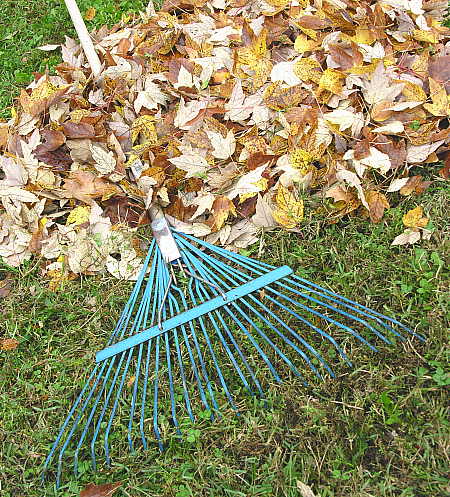
Steel tined leaf rake

Always trying to learn from my mistakes, I armed myself with a proper steel-tined leaf rake (as pictured above), in preparation for any fire that might come in the future.  Little did I know at the time, that day would come all too soon.  And the steel-tined rake stood up to the heat of the fire this time.  The only downside to the type of rake I had was it’s size.  While it’s large size was beneficial in raking up leaves on the fire line, it was difficult to lug into the woods, where the fire was burning.  It would get snagged in the briers and underbrush of the woods, impeding access to the fire area at times.
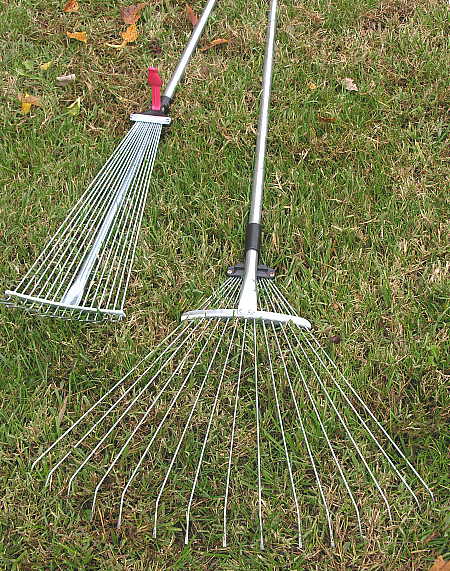
Recently, I found these adjustable steel-tined rakes at the local farm store.  They seem to be tailor-made for raking leaves ahead of an advancing fire, although I have not had the opportunity (thankfully) to test them yet.  As you can see, with the simple flick of a lever, they go from the fully closed position to the fanned out working position.  They are built entirely from metal parts, so the heat of the flames should not cause these rakes to melt or burn.  Now that the neighborhood arsonist has been apprehended, I hope to not have to use these rakes, but time will tell. 

Gettin’ Goin’ While The Goin’s Good

Migrating geese

We have been treated to the sights and sounds of migrating geese for the past couple of days.  Apparently, we are directly beneath one of the many flyways that the migrating geese use in their annual fall journey down to warmer southern climates.  One of the great benefits of living in such a remote, rural area is the relative quiet that comes from residing a respectable distant from civilization.  In the case of the geese, this allows us to hear their approach long before we can catch sight of the flocks flying accross the sky. 

Nearly At It’s Peak

Are you getting tired of my fall color change photographs?  I’m not.  I just wish that I had the skill and equipment to capture the beauty that my eyes behold, but alas, that is not the case.  In any event, here are two more pictures that I have taken today.

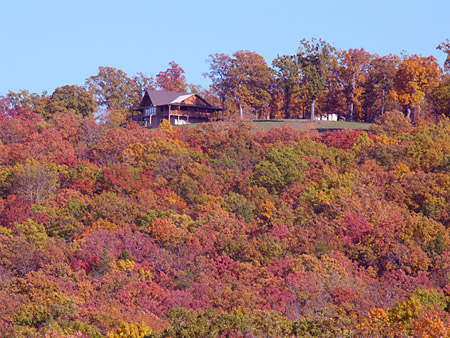
Neighbor's log home

Yesterday’s post contained a panoramic photograph overlooking our property.  I took that photograph from the balcony of a neighbor’s log home, which overlooks our property.  The photograph above is that neighbor’s log home, as seen from down here.  The colors just keep getting better each day.

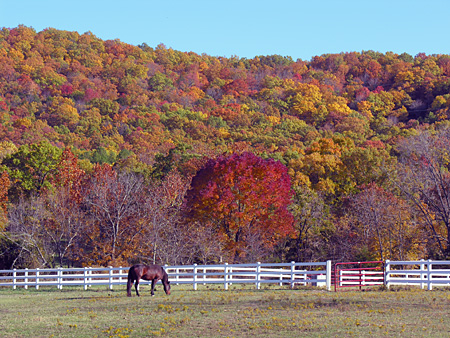
Tojo's pasture has a great view

A few days ago, I posted a picture that contained a tree which I believe is a autumn purple ash.  In this photograph, you can see that the ash tree has continued to turn from green to purple.  The trees on the hillside also continue to adopt their autumn hues.  Tojo, the Missouri Foxtrotter in the picture, really seems to enjoy the view from his pasture when he takes a moment out of his busy grazing schedule to look up.


Oh, Those Precious Fall Colors

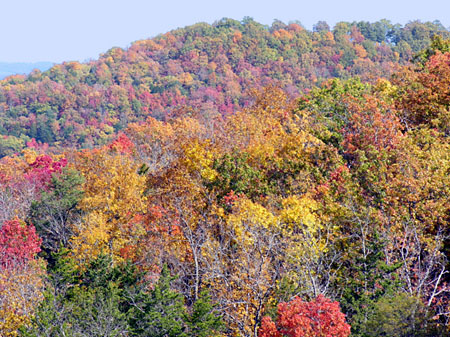
Hillside turning red

As you can see from the photograph above, the fall color change continues to evolve, bringing with it the varied red, gold, and orange hues that glimmer so brightly in the mid-day sun.  The colors become more vivid with each passing day, and I think we are still a few days away from this year’s peak coloration.

You may recall from a previous post entitled Is That You I’m Seeing Over There?, I like to take panoramic photographs.  The link below will take you to a large panoramic photograph which overlooks our property, and which shows what the countryside is looking like right now.  It is a large file and may take a minute to load, but it is well worth the short wait (even for the impatient amongst you readers).

                           Panoramic view of property in fall

As you may have figured out by now, I’ll keep posting about fall colors as long as they last.  As I already mentioned, I suspect that we are about at the peak of this year’s colors, although the forecast is for continuing weather conditions conducive to a beautiful show.

The Fall Colors Keep Getting Better

We have been having good cooperation among the weather deities, as rainfall, day time, and night time temperatures have been nearly ideal for the production of vivid fall leaf coloration in this area.  The photograph below shows the progress that has occurred since my last post on the subject of fall colors.

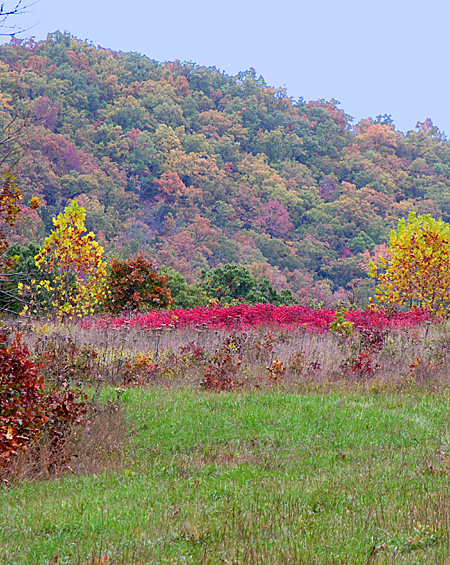
Color change is underway

You may recall from a previous post entitled Landscaping My Way – Installment #1 that I have taken pains to preserve patches of dwarf sumac in some of the clearings on the ranch.  The photograph above shows why I save the sumacs – they are the beautiful bright red plants that you see at the base of the hills above, and I revel in their vivid splendor this time of the year.

I will continue to post periodic updates on the fall colors out here, as long as they continue to improve.  A bright, sunny day is forecast for Saturday, so maybe I will have the opportunity to take some nice pictures.

An Unexpected Visitor

Not too long ago, Retta and I began hearing an unusual noise emanating from the air conditioning duct work.  I went down into the basement utility room to investigate the source of the noise.  It soon became apparent that the noise was coming from the 5 ton air handling unit (pictured below) that is a part of the heat pump system that cools and heats our home.  Inside the housing (on the left side of the picture) there is a large blower unit, which utilizes a fan assembly that looks much like a giant hamster exercise wheel.  The sound seemed to be originating from inside this blower, so I decided to call the company that installed this HVAC system for us a few years ago.  Last week, the company sent a repair technician, who pulled the blower assembly apart and determined that a broken fan unit was causing the noise.

Air Handler Unit

Today the repair technician returned with the new parts, and after installing the new blower assembly, we were pleased to find that the offending noise had disappeared.  The technician then decided to test the unit under load, so we switched on the heat pump so that he could check the voltage and amperage draw.  He found that one of the two sets of auxiliary heating coils was drawing current, but that the other remaining set was not (both sets should have drawn the same amperage).

The technician proceeded to disassemble the unit again, this time to inspect the auxiliary heating coils, which are located at the rear of the air handler cabinet, above the blower unit.  He said something to me, which I could barely hear, because his head and shoulders were buried inside the air handler cabinet.  He said “there’s something I didn’t expect to find in here.”

And this is what he pulled off of one of the auxiliary heater coils - 

This visit didn't work out well for either of us!

It just goes to show – when you live out in the country, there are frequently critters showing up where you least expect them, so keep you eyes peeled and be on the lookout at all times!

Fall Colors Are Slowly Appearing

Hillside trees are beginning to change color

As you can see in the photograph above, the trees around this part of the Ozarks are just beginning to undergo the color transformation that makes this such a pleasant time of year to be outdoors enjoying the scenery.

Pin oak turning red

The pin oaks, such as this one, are among the first trees to exhibit a reddening of their leaves.  As such, they stand out in stark contrast to the surrounding greenery.

Pin oak leaves in early fall

The pin oak leaves change from dark green to red, after which they will turn rusty brown before leaping off the tree, in a final act of suicidal defiance in the face of the seasonal changes that are taking place.

The change has begun

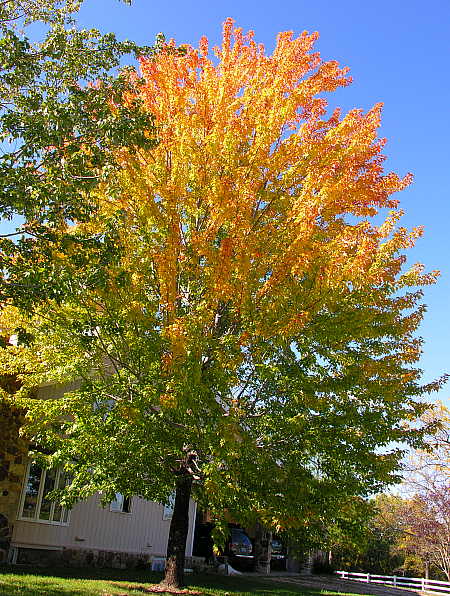
This specimen of sugar maple begins it’s color change from the top down, and will undergo several variations of shading prior to the leaves falling from the tree.

Behind horse pasture

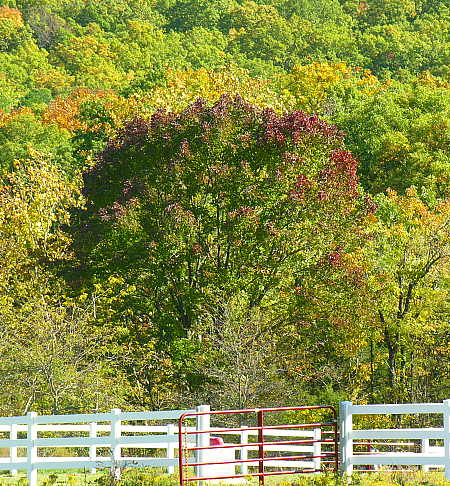
I haven’t identified this tree yet (hint, hint), but the outer layer of leaves regularly turn a brilliant purplish shade as the fall change progresses.

There is an excellent website that publishes the Ozark Mountains Fall Foliage Report, where you can learn all about the causes of the color change, as well as obtain up-to-date color reports and forecasts, and get directions for scenic local fall drives throughout the Ozarks region.

I will be posting the changes that occur at this location periodically over the next couple of weeks.  So far the weather has been favorable for a spectacular fall show.  If the cool, sunny days continue, along with cold (but not freezing) nights, we should be in for a real treat this year.  I’m keeping my fingers crossed!

Rusty Wheels Old Engine Club

There is a local group known as the Rusty Wheels Old Engine Club that stages a public show twice a year at their club site outside of Harrison, Arkansas.  Unfortunately, I usually read about how good their shows are in the newspaper after they occur.  This year was different however.  I ran across an advertisement regarding the show as Retta and I savored our dessert at the ice cream shop, after enjoying a delightful meal at a local diner, a Friday night “tradition” we have recently established.  So I spent Saturday at the show, taking in the old machinery while reveling in the beautiful fall weather we have been having.

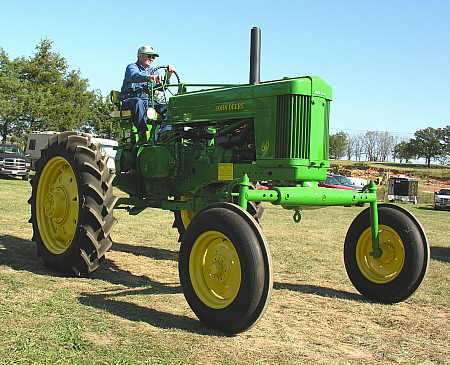
John Deere 1951 Model A - HC

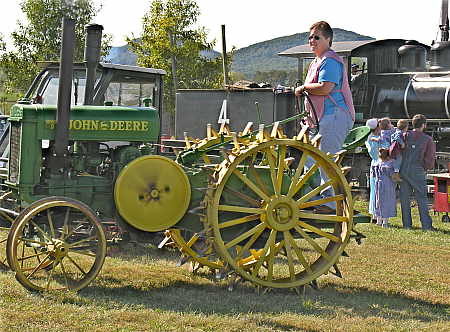
I had expected that I would see many restored tractors at the show, such as the John Deere 1951 Model A – HC tractor shown above, and the rugged looking steel cog-wheeled John Deere shown below. 

John Deere steel-wheeled tractor

I did not expected to see the large variety of interesting additional machinery and activities that were at the fall show.  Those items that I can identify, I will.  If I can’t, maybe you can fill me in with a helpful comment.  Forgive the lengthy post, but the following photographs a but a small sampling of what was available to see. 

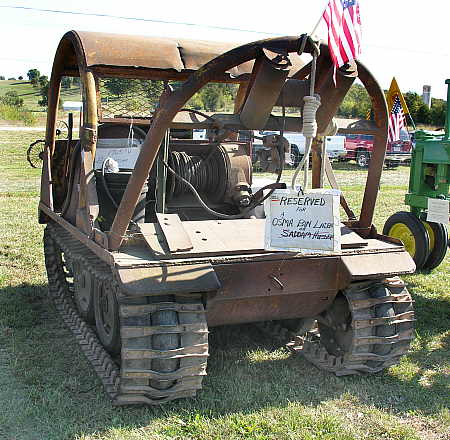
1965 Bombardier log skidder

How about this 1965 Bombardier log skidder?  Un-restored, but it is still in daily use by a local logging crew.  And obviously, an opinionated owner ;)

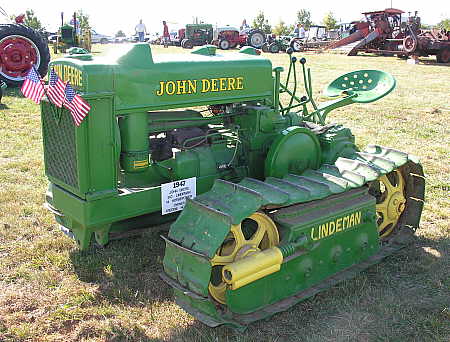
John Deere crawler

This 1947 John Deere/Lindeman 14 horsepower crawler would come in handy from time to time in my woods.

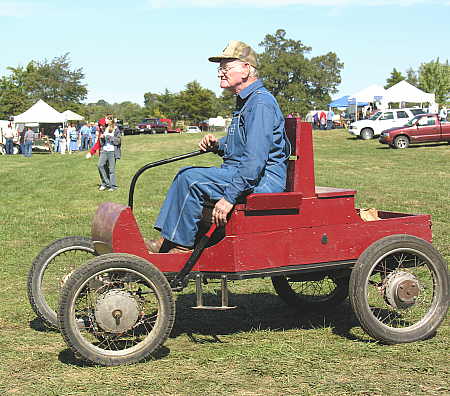
Home built buggy

It’s funny, but every time I made it a point to prominently display my camera (I would pretend to be fiddling with the controls), somebody would take the opportunity to drive right in front of me in their unique machines, such as the gentleman in the home-built buggy, seen above.

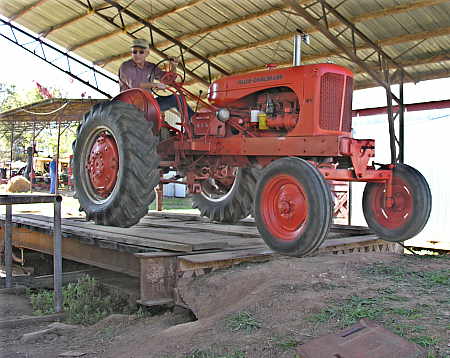
Tractor pull weigh-in

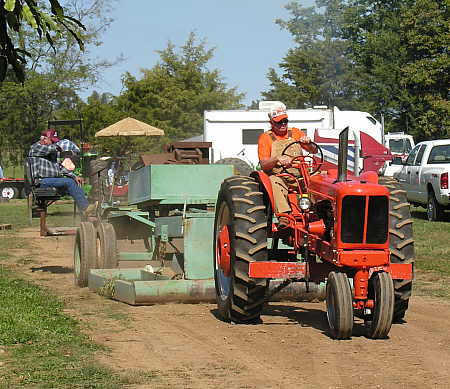
Shortly after lunch, the tractor pulling competition was scheduled to begin, so the preparatory tractor weigh-ins began about noon.  The Allis-Chalmers tractor (pictured above) has just been weighed, and is driving off the scale to await his chance to pull the sled. 

Tractor pulling the sled

For those of you who may not be familiar with tractor pulling contests, here are the basics in a nutshell.  The tractor is hitched up to a device called a sled, the green piece of machinery shown in the picture above.  The sled is engineered with the wheels and axle acting as a fulcrum point, in such a way that the load borne by the tractor increases the further along the track it travels.  Eventually, even the most powerful tractor will come to a standstill.  The tractor that pulls the sled the furthest is declared the winner, and everyone rejoices afterwards!

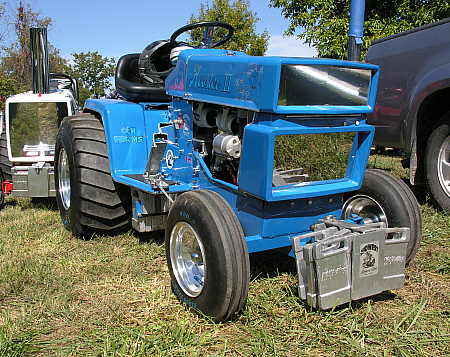
But tractor pulling is not limited to conventional farm tractors.  Massive, high budget jet-propelled or diesel-propelled tractors compete in larger venues, but here in a more moderate income area, the souped-up tractor of choice for pulling competitions are the lawn tractor, as shown below.

Competition lawn tractor

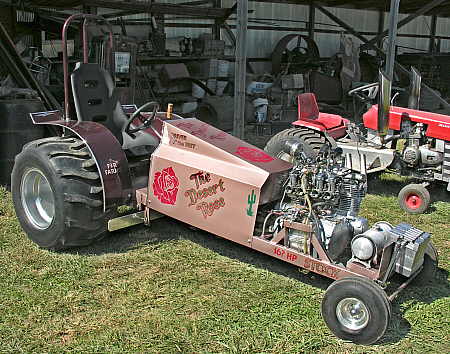
Not the ordinary lawn tractor you would expect to purchase at the local big-box store, but super-duper, highly modified and detailed custom jobs, especially built for these pulling competitions.  Some are so highly modified that they resemble a Top Fuel dragster more than a lawn tractor, as you can see in the following photo.

Highly modified lawn tractor

This is a motor sport that you can be competitive in at the top levels without having to budget hundreds of thousands, or even millions of dollars.

Why work when there's other stuff to do?

And as you can see above, the participants are generally equipped with an active sense of humor.

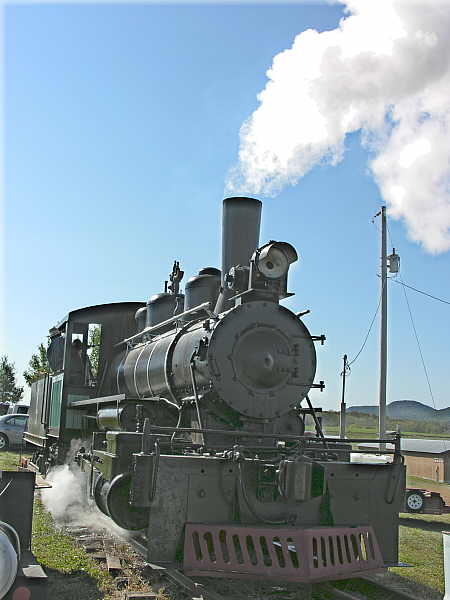
Heavy iron in operating condition

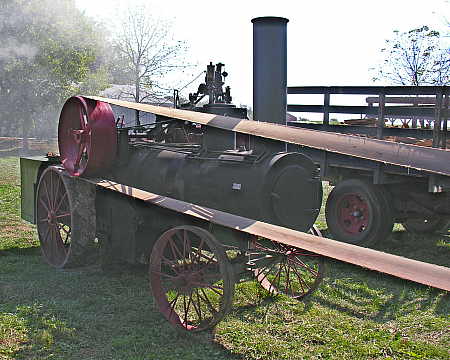
The variety of engine types represented at the show was vast, including this operational steam locomotive.  The engine only travels about 60-70 feet before it reaches the end of the track and has to back up, but it provides enough distance to show off the operational capabilities of the locomotive.

Light iron in operation

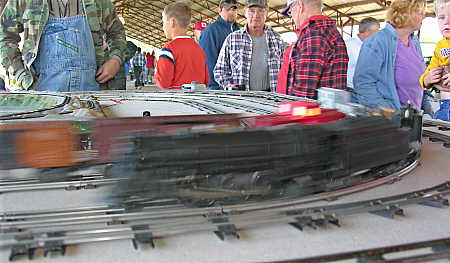
Not to be outdone by larger equipment, the tabletop engineers also had their trains running up and down the tracks.

Small antique engine

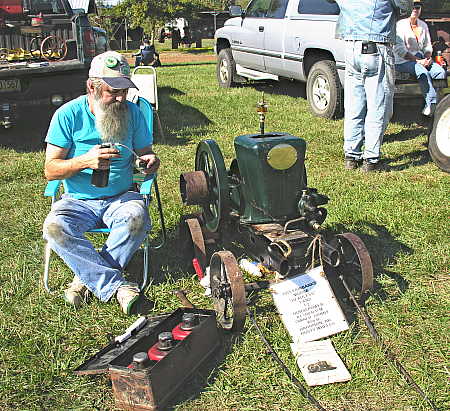
This fellow made it his goal to keep this antique engine running the entire duration of the day, so everybody who walked by could see it running.  He was on the road to success in this quest, but it was no easy task.  He was constantly fiddling with the engine to keep it chugging along, but then what else would you expect from a 1915 Fairbanks Morse 1.5 hp engine? 

Brand new model engine

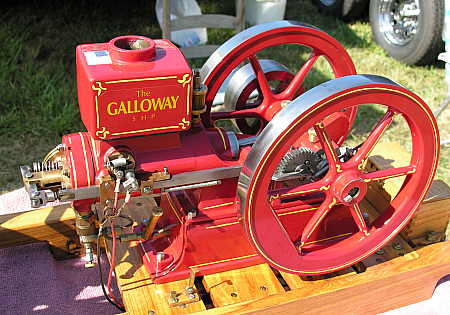
There were many variations of operational small engine replicas on display and for sale, one of which is shown in the picture above.  This kit is manufactured and marketed by a gentleman who lives in the neighborhood, using only a 7″ lathe and small milling machine for the production of his kits.

Anybody need something cut?

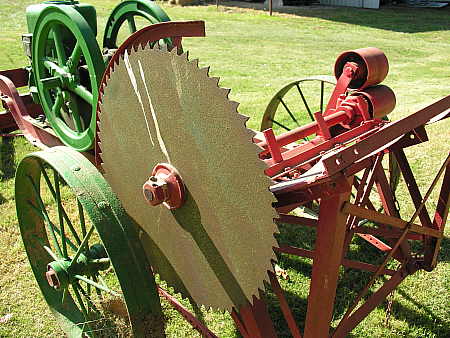
Various old saw and sawmill equipment was displayed at the Rusty Wheels Old Engine show, such as the tow-able cut-off saw seen above

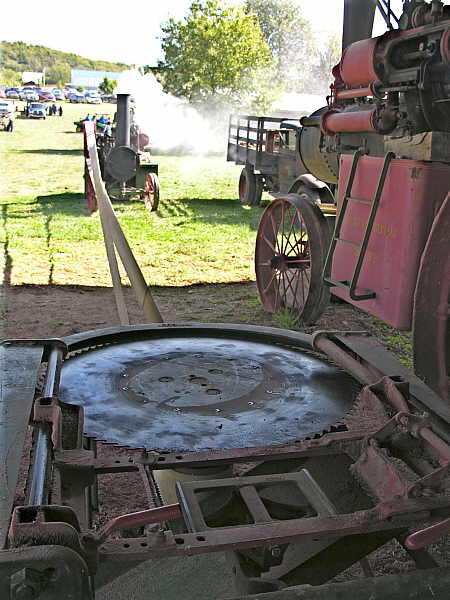
Operational lumber saw mill

This horizontal saw is powered by the steam engine located a distance outside the shed.  The engine powers the saw via a long belt and pulley system, which you can see in the picture above.  There is a large distance separating the engine from the saw for several reasons.  This arrangement affords room for long lengths of lumber to be cut, keeps the saw operators out of the smoke and noise from the engine, and protects them from harm should some type of pressure failure occur in the steam engine.

Engine to power the saw

But the most important reason for the distance is to create the grip necessary for the belt to power the saw.  The sagging weight of the long belt causes it to exert tremendous pressure onto the surface of the pulleys, thereby reducing slippage to a minimum.  Additionally, since the seam that is used to join the two ends of the belt is prone to damage, the extreme length allowed the ends to be trimmed and re-spliced as necessary.  The engine would just have to be moved a little closer to the equipment, and all would be operational once again.

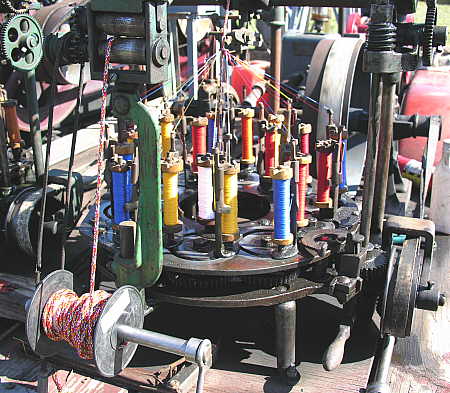
Cord braiding machine

Various old industrial equipment was on display, and most had been restored to operating condition, with ongoing demonstrations of the machinery in action.  The photograph above shows a cord braiding machine.  This machine kept chugging along all day, weaving the brightly colored threads above into the cordage you see spooling onto the reel, seen at the lower left of the photograph above.

I could go on with hundreds of additional photographs, but instead I invite you to see for yourself at the next Rusty Wheels Old Engine show, which comes up again this spring.  It is well worth the time, and adult admission is free, children and seniors free-er, of course!

The website for the Rusty Wheels Old Engine Club is www.rustywheels.com.

UPDATE:

 Spring 2011 Show -  June 10th and 11th, 2011

 Fall 2011 Show -  October 7th and 8th, 2011      

There’s Gold In Them Thar Hills!

Well, maybe not gold, but possibly there might be silver.  And why do I think that there might be silver in the hillock that we so pretentiously call “our mountain?”  Because I know for certain that there has been lead ore extracted from this area in the past, and I just learned recently on the Discovery Channel that silver strikes may occur in proximity to lead ore veins.

Here is a brief history of lead mining in the general area.  The most prominent and successful mining operation in the area was under the auspices of the New York Zinc and Lead Company, which operated the Bear Hill Mining Property at George’s Creek in Bear Hill Hollow in the late 1800’s, however the mining of lead was first noted to occur in 1818.  During the civil war, there were three lead ore smelters operating in a nearby township (which is now at the bottom of Bull Shoals Lake).  The lead ore from this area was used primarily for bullets, which the area supplied to both the Union and Confederate armies throughout the Civil War.  My neighbor’s ancestors conducted a very successful business at the time of the Civil War, called the Markle Cannon Foundry.  They utilized the “Gillette Razor” methodology of doing business (sell the razor cheap, and profit from over-priced blade refills).  This company donated cannons to both combatant armies during the civil war, and then profited handsomely by provisioning the armies with expensive cannon balls, which were produced, in part, with lead mined locally.

Lead mining occurred on and off during the ensuing years, but became active with the onset of WWI, and later, WWII.  The last known commercial lead mining in the area ceased operations in 1959.

In reviewing the Abstract of Title which we obtained as a result of our purchase of the property, we have found five instances of mining leases that were granted to mining concerns by the various owners of this land, spanning the period from the early-1800’s to the mid-1960’s.  I have not been able to determine how much ore was extracted from this site, nor how long the mining was active, but I do know it occurred on this property.

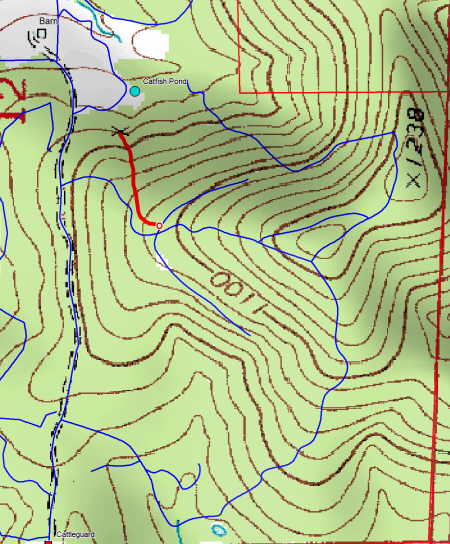
Topo of

This is a topographic view of a part of “our mountain.”  You may recall the panoramic view from the mountain top, which is seen in the upper right part of the map above.  In the upper left side of the map, notice the red line I have drawn.  This line represents a ravine that cuts it’s way down one part of the slope, where lead ore has been extracted in the past.  Today’s post will show what the upper portion of this ravine (and past mining locale) looks like.  At the lower part of the red line, you can see the crossed pick-ax symbol that the USGS used to indicate the presence of a mining operation at the time the area was mapped.  We will explore the lower portion of the ravine in a future post, when more leaves have fallen and the area becomes more conducive to photography.

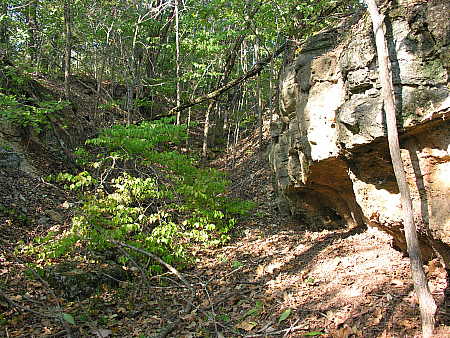
Looking up the ravine

This picture was taken at about the midway point of the mining area, looking up the ravine.  Notice the rock outcroppings on the right.  This is the result of the ore extraction process that occurred here.

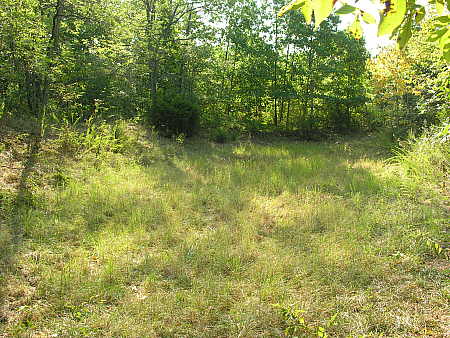
Revetment pond

This photograph shows a dry pond site at the top of the ravine, denoted on the topographic map as a red O.  It was my initial belief, upon first seeing the dry pond, that it was an unsuccessful stock tank for cattle that at one time grazed a large, crescent-shaped pasture midway up the mountain.  I have now come to believe that it was constructed to be a revetment, or containment pond, to prevent a deluge of water from cascading down the ravine during the thunderstorms that sometimes manage to avoid bypassing our property.

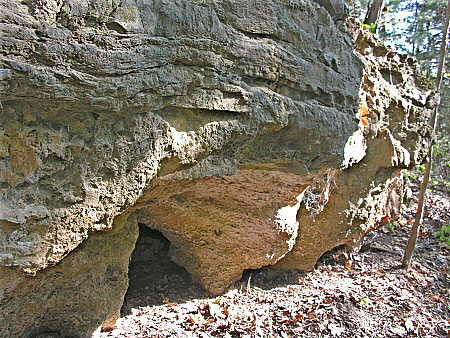
Excellent critter habitat

The erosion that has occurred in the exposed rock outcroppings has created small caverns at the base of the rocks.  Although there was nothing in this hole at the time of this photograph, I am sure that it has been a shelter for some critters from time to time.

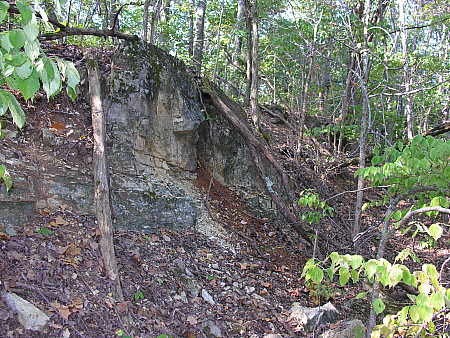
Ravine wall

This is another rocky ledge in the upper ravine area that has been created by the mining activities of the past.  One day, I would like to accompany someone trained in geology through this area, so that I can learn to understand what I am seeing in these outcroppings more fully.

Tenuous footing

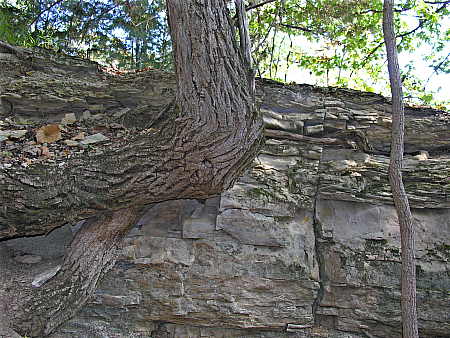
This oak (?) tree appears to be growing directly out of the rock.  I find it interesting to see how it grows horizontally, and then makes an abrupt 90 degree turn, again reaching for the sky.

So now you have seen the upper part of the ravine where lead ore extraction has occurred on this property.  This might be the exact spot where I soon discover the “Mother Lode” silver ore vein on our land.  If I do, I’ll keep you all posted.  And then again, maybe not.  But that’s how legends are born.

Bois D’arc

Bois D'arc

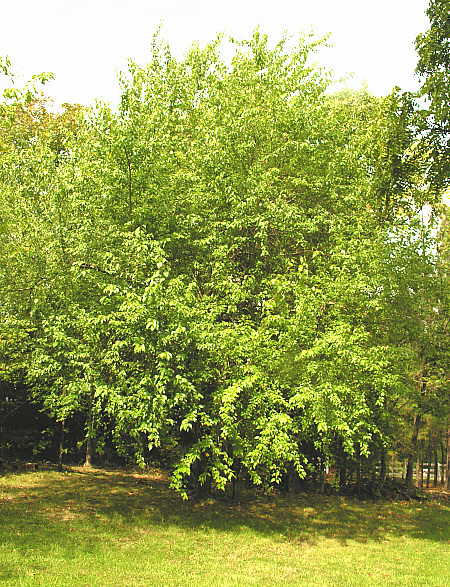
This is a tree with various names.  Some refer to it as the bois d’arc (pronounced “bodark”), which is french for “bow wood.”  It is also referred to as an Osage orange tree, hedge apple tree, and horse apple tree.  All of these monikers have a basis in the properties of the tree, as we shall see in the following paragraphs.  Some people dislike these trees, while others adore them, depending upon their perspectives.

Trunk of bois d'arc

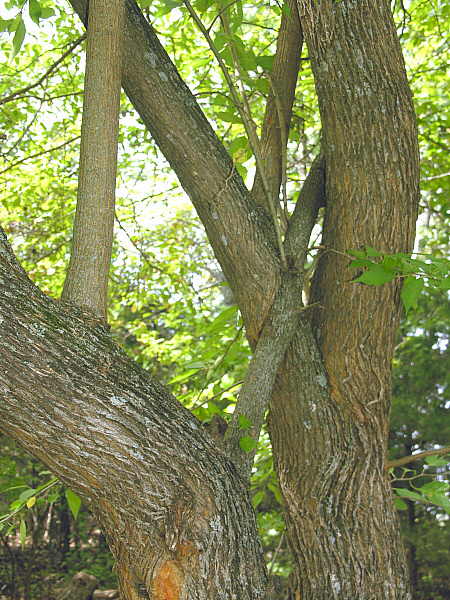
The picture above is a trunk of a bois d’arc tree.  The wood of this tree is extremely hard and tough, which makes it a sought after tree for cutting into fence posts.  But if you intend to cut one of these trees, you had better arm yourself with plenty of sharp chains on your chainsaw, as the tough, yellowish wood of the bois d’arc will dull the chain rapidly.  It is also advisable to wear long sleeves made of thick fabric, as the spines on the branches can cause painful lacerations if you are not careful.

Tangled branches of the bois d'arc

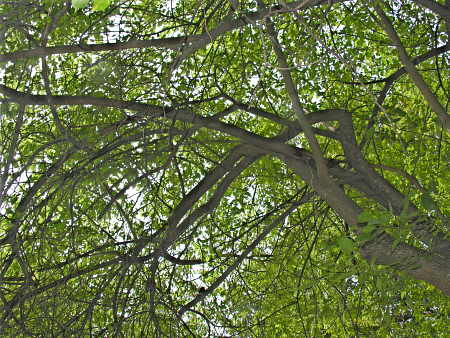
The canopy of the bois d’arc forms a tangled mass of branches, which are armed with stout, flesh-piercing barbs.  Because of the dense mass of resilient, barbed and tough wood that the tree produces, it was planted with tight spacing as a hedge row in times prior to the invention of barbed wire.  It is referred to as being “horse high, bull strong, and hog tight,” an ideal specification for a farmstead hedge row.  Because of the toughness and decay resistance of the wood, combined with the long, straight, resilient branches that this tree produces, it was prized as a source of wood in which to construct bows in the past, hence it’s name bois d’arc tree, or bow wood tree.

Bois d'arc fruit

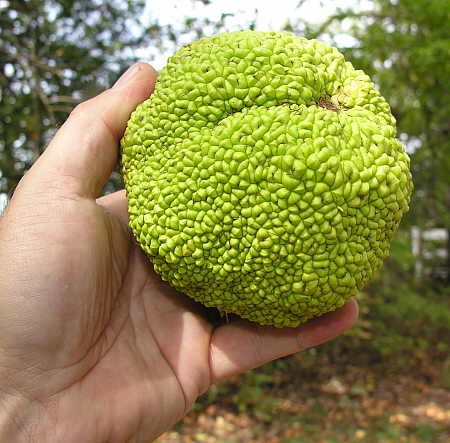
This is the fruit produced by the bois d’arc.  Some call this the Osage orange, possibly because the skin emits a citrus-like scent when it begins to rot.  Because the trees were often grown as a hedge, the fruit has been called a “hedge apple” by some.  Because the fruit is consumed by horses, it is termed a “horse apple” by others.  Osage orange, hedge apple, or horse apple, it remains that humans do not consume this fruit.  But, as just mentioned, horses eat the fruit of the bois d’arc tree, as well as squirrels and cattle.

Inside of fruit

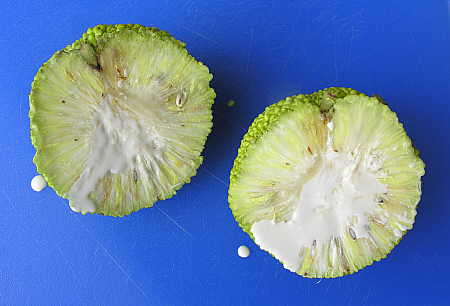
If you slice the fruit in half, which requires a stout knife, as the fruit is quit hard until it begins to rot, you will find that after a minute or two the fruit begins to “weep”, as you can see in the photograph above.  Only the female tree produces the fruit, which propagates the tree through the germination of the approximately 200 seeds contained within the fruit.  In the fall, the fruit begins to drop from the limbs of the tree, and when they do, watch out, as it hurts to be struck by the falling, heavy, hard fruit of the Osage orange, or bois d’arc tree.