A Remarkable Story of Hope

Freedom and Jeff
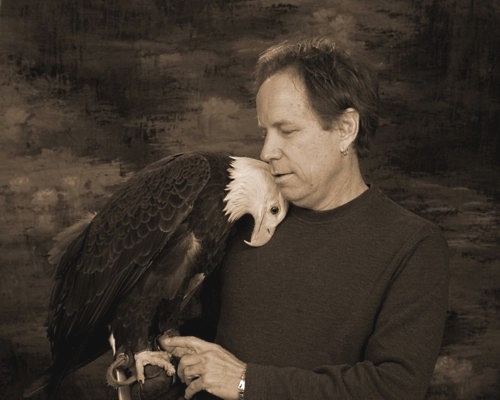
Freedom and I have been together 10 years this summer. She came in as a baby in 1998 with two broken wings. Her left wing doesn’t open all the way even after surgery, it was broken in 4 places. She’s my baby.

When Freedom came in she could not stand. Both wings were broken, her left wing in 4 places. She was emaciated and covered in lice. We made the decision to give her a chance at life, so I took her to the vets office. From then on, I was always around her. We had her in a huge dog carrier with the top off, and it was loaded up with shredded newspaper for her to lay in. I used to sit and talk to her, urging her to live, to fight; and she would lay there looking at me with those big brown eyes. We also had to tube feed her for weeks.

This went on for 4-6 weeks, and by then she still couldn’t stand. It got to the point where the decision was made to euthanize her if she couldn’t stand in a week. You know you don’t want to cross that line between torture and rehab, and it looked like death was winning. She was going to be put down that Friday, and I was supposed to come in on that Thursday afternoon. I didn’t want to go to the center that Thursday, because I couldn’t bear the thought of her being euthanized; but I went anyway, and when I walked in everyone was grinning from ear to ear. I went immediately back to her dowl cage; and there she was, standing on her own, a big beautiful eagle. She was ready to live. I was just about in tears by then. That was a very good day.

We knew she could never fly, so the director asked me to glove train her. I got her used to the glove, and then to jesses, and we started doing education programs for schools in western Washington. We wound up in the newspapers, radio (believe it or not) and some TV. Miracle Pets even did a show about us.

In the spring of 2000, I was diagnosed with non-hodgkins lymphoma. I had stage 3, which is not good (one major organ plus everywhere), so I wound up doing 8 months of chemo. Lost the hair – the whole bit. I missed a lot of work. When I felt good enough, I would go to Sarvey and take Freedom out for walks. Freedom would also come to me in my dreams and help me fight the cancer. This happened time and time again.

Fast forward to November 2000, the day after Thanksgiving, I went in for my last checkup. I was told that if the cancer was not all gone after 8 rounds of chemo, then my last option was a stem cell transplant. Anyway, they did the tests; and I had to come back Monday for the results. I went in Monday, and I was told that all the cancer was gone.

So the first thing I did was get up to Sarvey and take the big girl out for a walk. It was misty and cold. I went to her flight and jessed her up, and we went out front to the top of the hill. I hadn’t said a word to Freedom, but somehow she knew. She looked at me and wrapped both her wings around me to where I could feel them pressing in on my back (I was engulfed in eagle wings), and she touched my nose with her beak and stared into my eyes, and we just stood there like that for I don’t know how long. That was a magic moment. We have been soul mates ever since she came in. This is a very special bird.

On a side note: I have had people who were sick come up to us when we are out, and Freedom has some kind of hold on them. I once had a guy who was terminal come up to us and I let him hold her. His knees just about buckled and he swore he could feel her power coarse through his body. I have so many stories like that.

I never forget the honor I have of being so close to such a magnificent spirit as Freedoms.

Hope you enjoy this.

Jeff

Jeff Guidry and Freedom are at Sarvey Wildlife Center: http://www.sarveywildlife.org/

(Note of clarification – this article is Jeff Guidry’s writing, not mine)

Fall Colors 2011

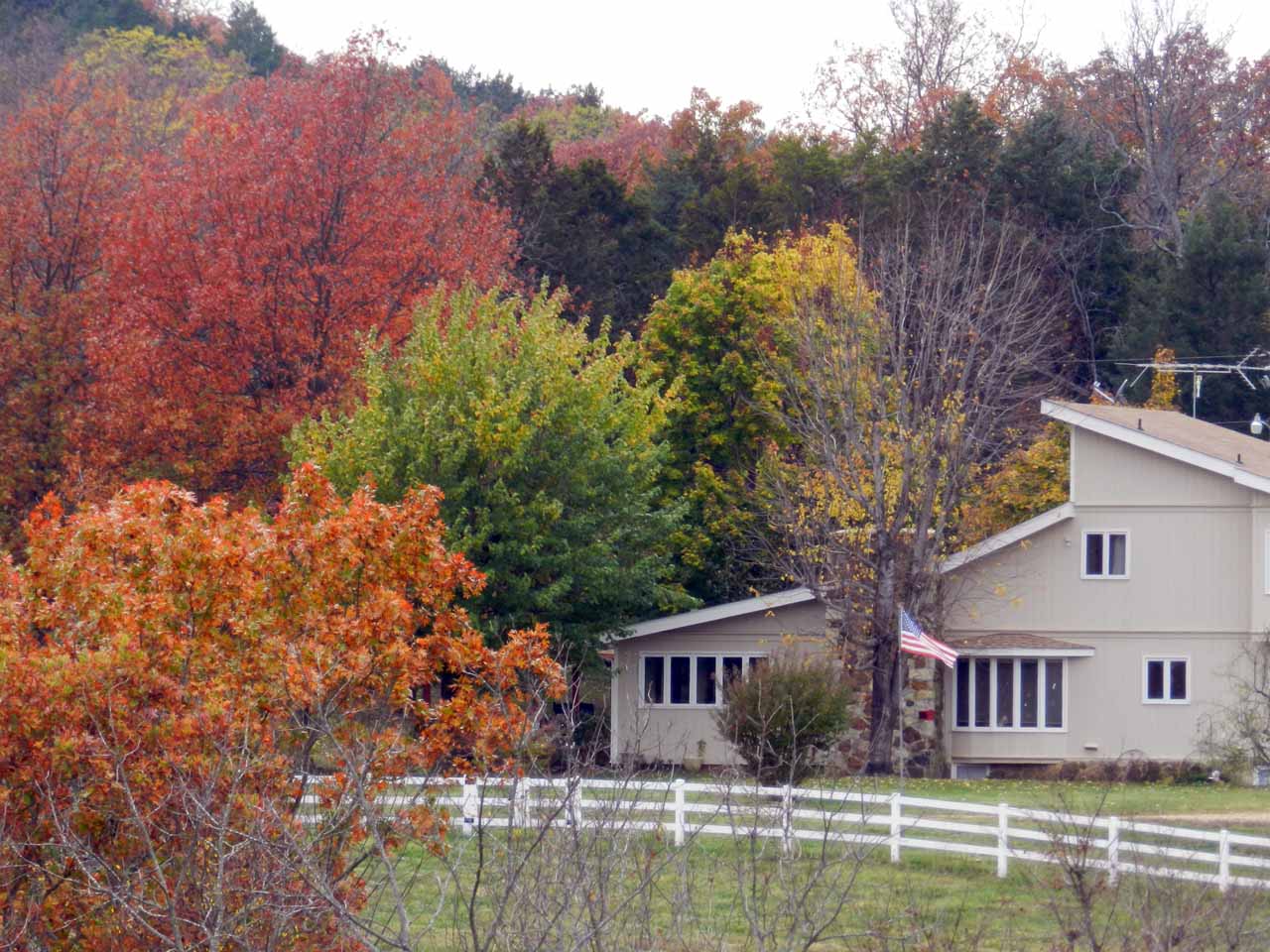
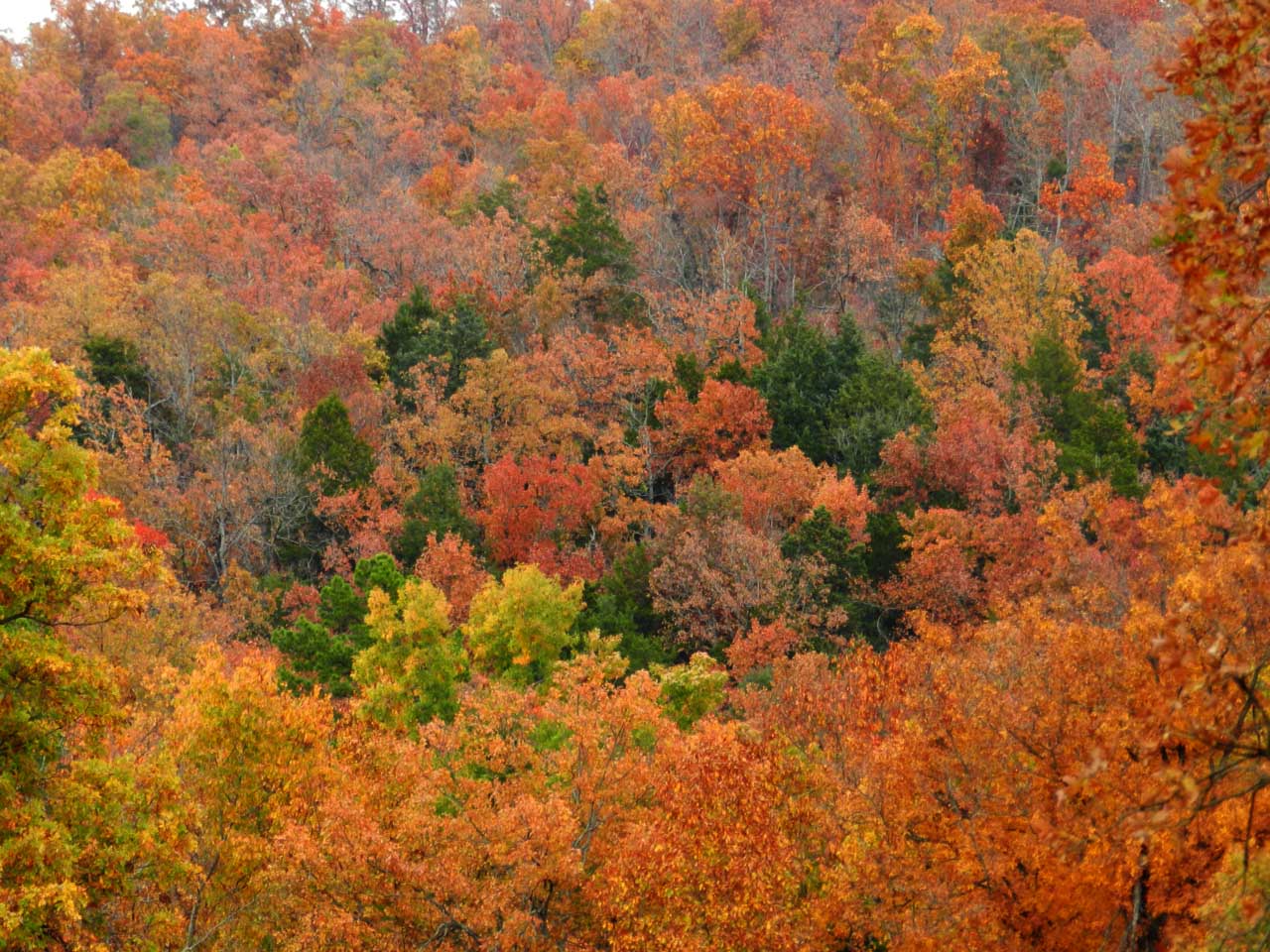
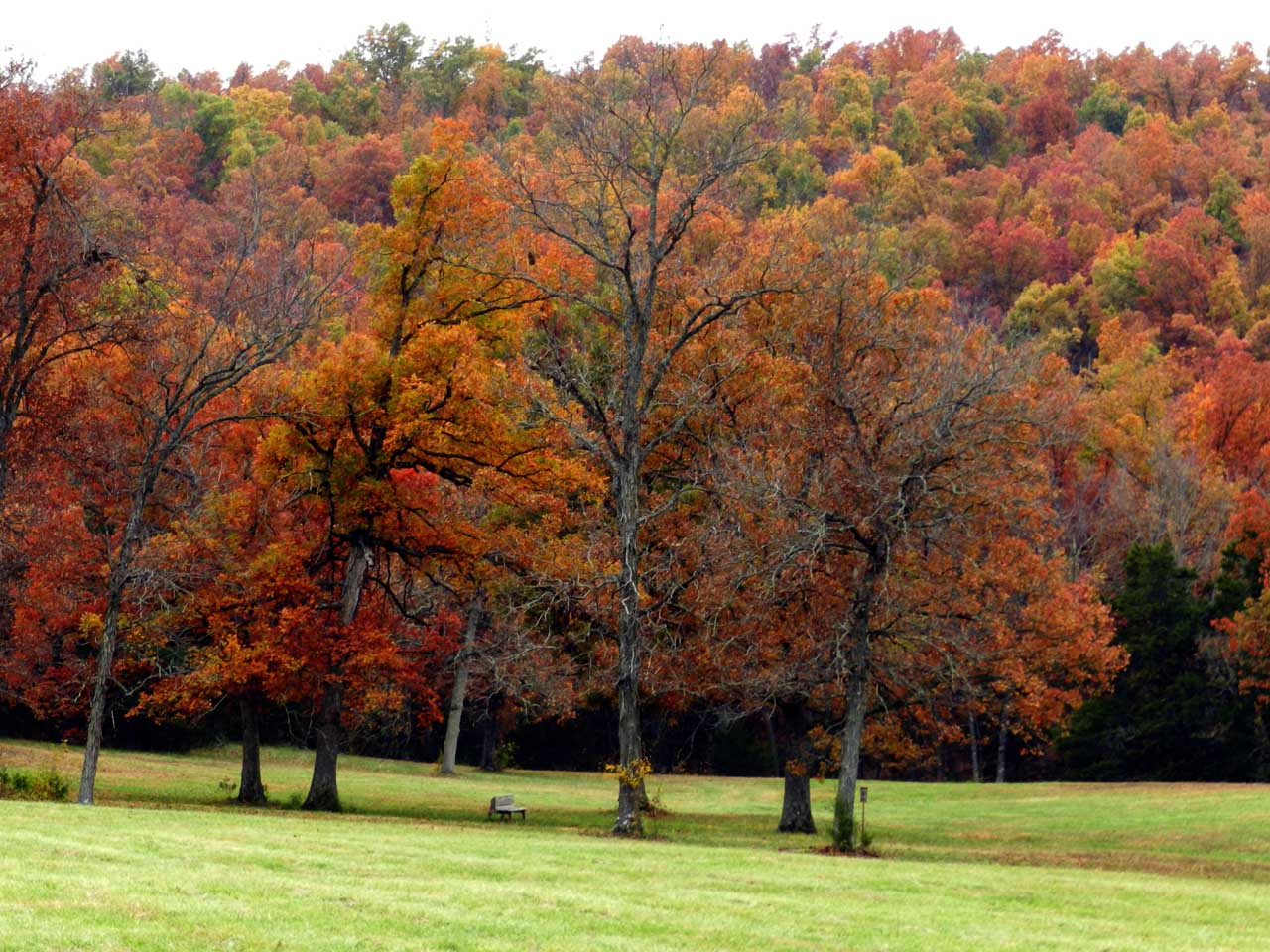
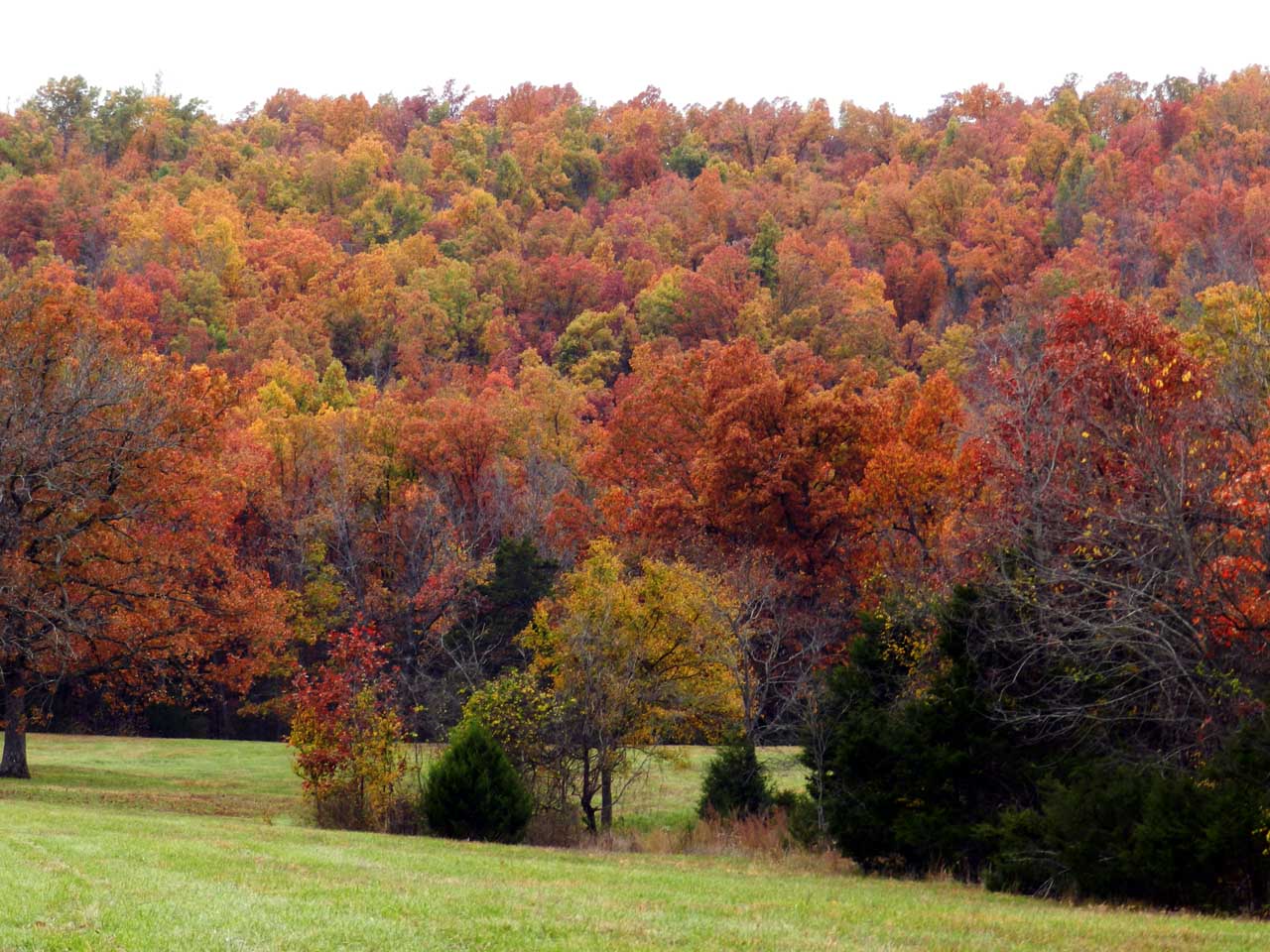
The fall color change peaked about 7-10 days ago, so I thought I would post these photos before winter sets in here in the Ozarks.  The colors were not as vivid as they have occassionally been in the past, but they were still beautiful.

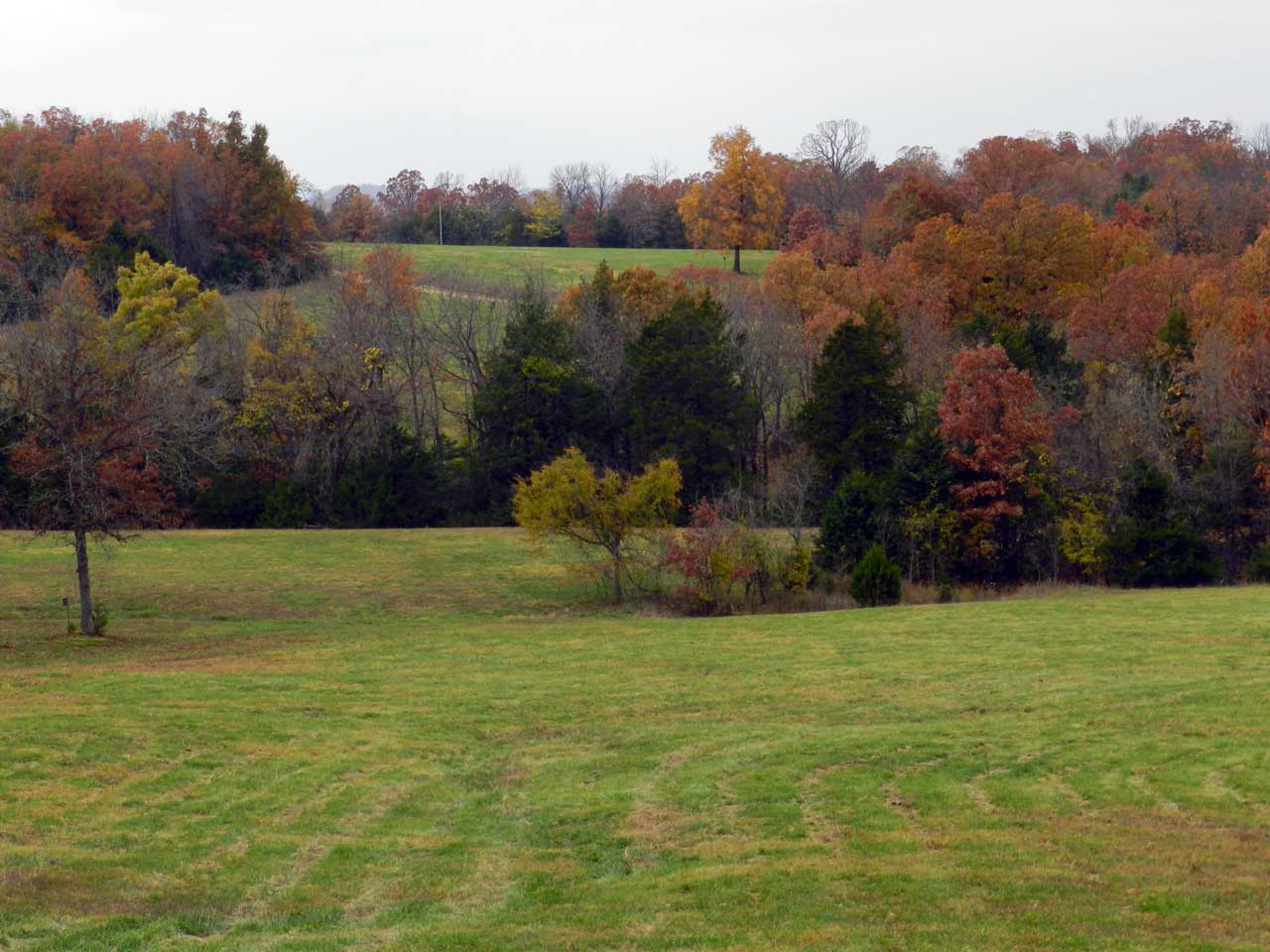
As an aside from the colors, do you notice the loveseat at the end of the pasture, just at the base of the cedar trees?  I discussed this loveseat project in a post here, and provided plans in a post here.

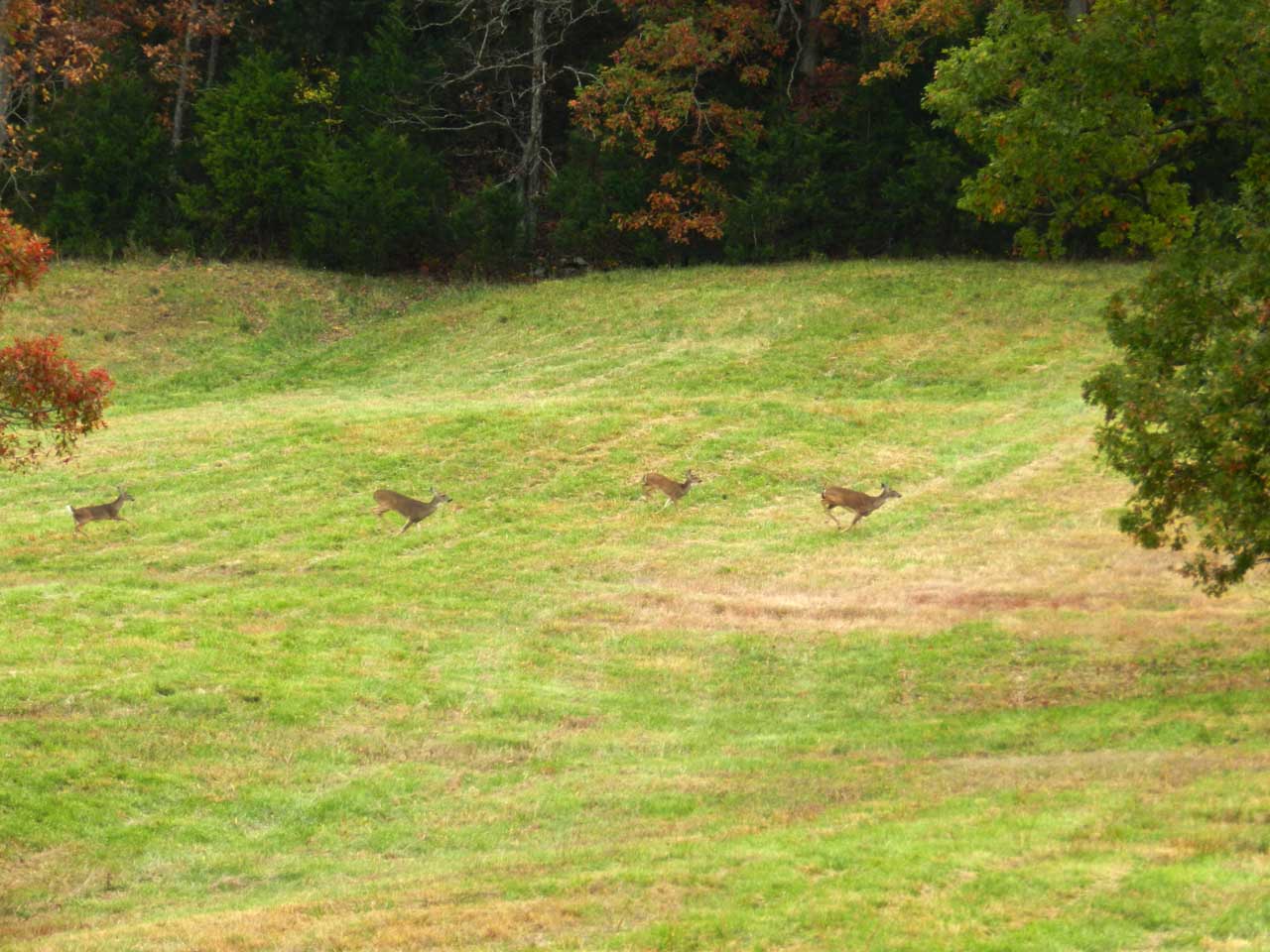
While I was hiking around the property taking fall pictures, I ran across this small group of deer.  They are quite prolific on our land, and sightings are common.

Yellow, rust, orange and pink seem to predominate this year, while the bright scarlet reds were pretty much limited to the sumacs growing on the fringes of our fields.

To continue my aside, notice the park bench under the trees?  Would you believe it -  I wrote about this convertible park bench/picnic table in a post entitled A Benchtable, and posted plans for the Convertible Bench/Table here.  And can you spot the bluebird house as well?  This is one of the 100 that I built to create a bluebird trail on our farm.  Guess what – posts about the Bluebird Trail can be found here and here.

This is a view that encompasses a couple of our pastures.  The colors here have been more brilliant in the past, but they were acceptable this year.

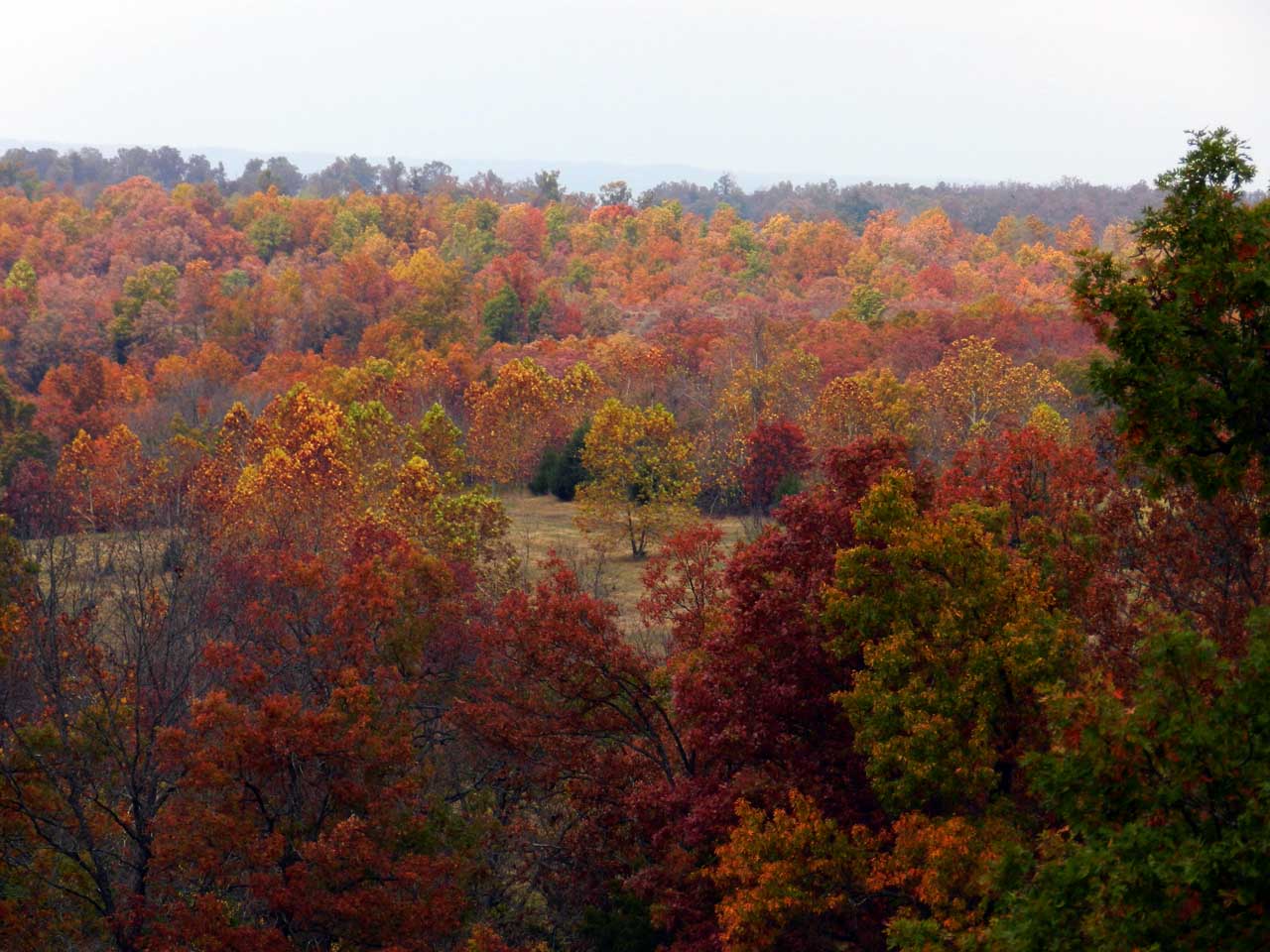
Looking out across some of our wooded areas reveals the multitude of colors that engulf the countryside.

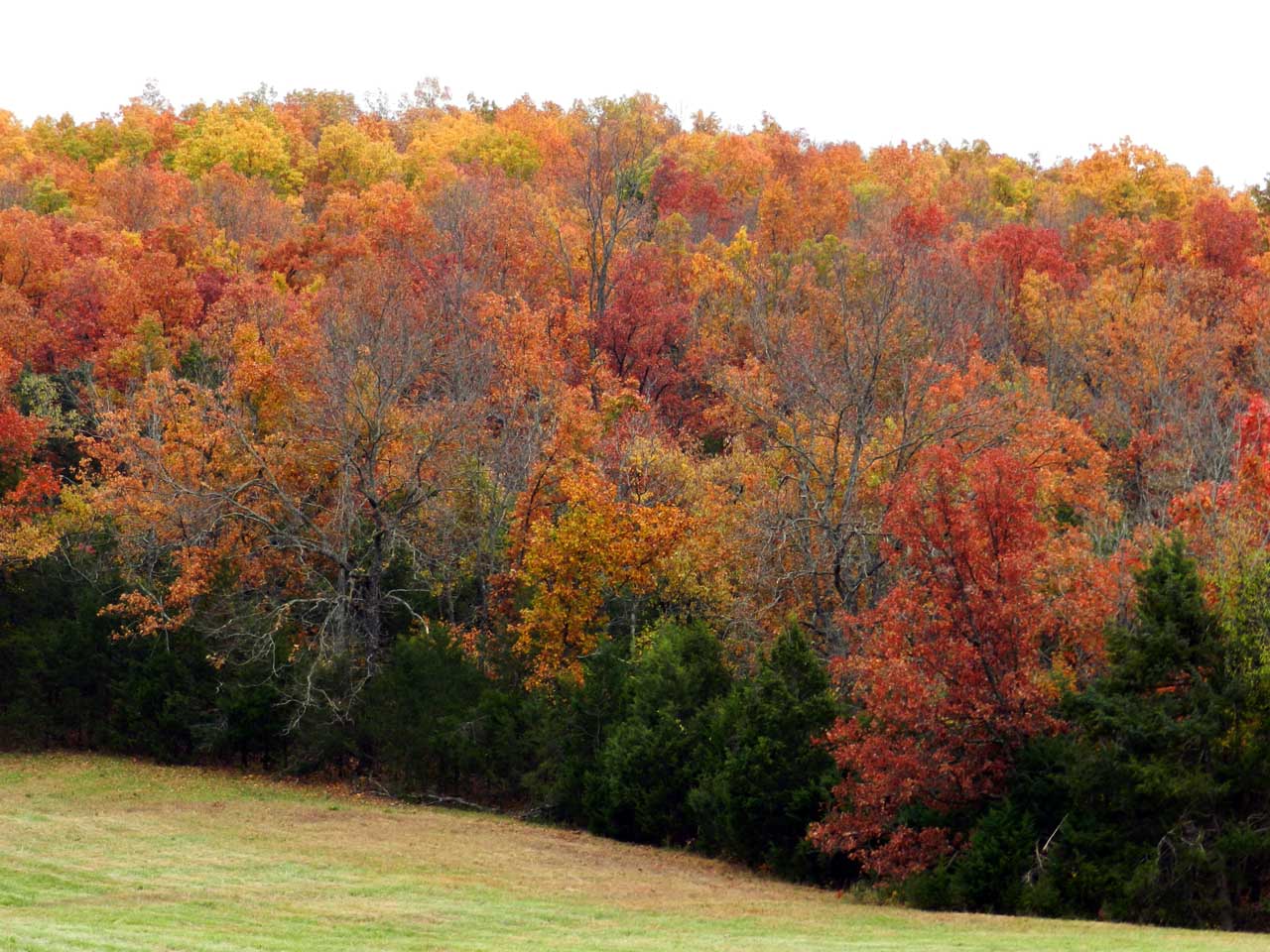
Another hillside surrounding one of the pastures, where you see red cedars (the green trees) in the foreground, and mixed hardwoods on the hill.

Finally, one more view of a hillside surrounding another of our pastures.  All-in-all, it was a pretty colorful fall.  While the weather conditions didn’t provide the most spectacular colors we have witnessed here at La Esperanza, they were delightful nevertheless.  I hope you get a chance to come enjoy the fall colors along with Retta and me someday.

Barn Modification Project

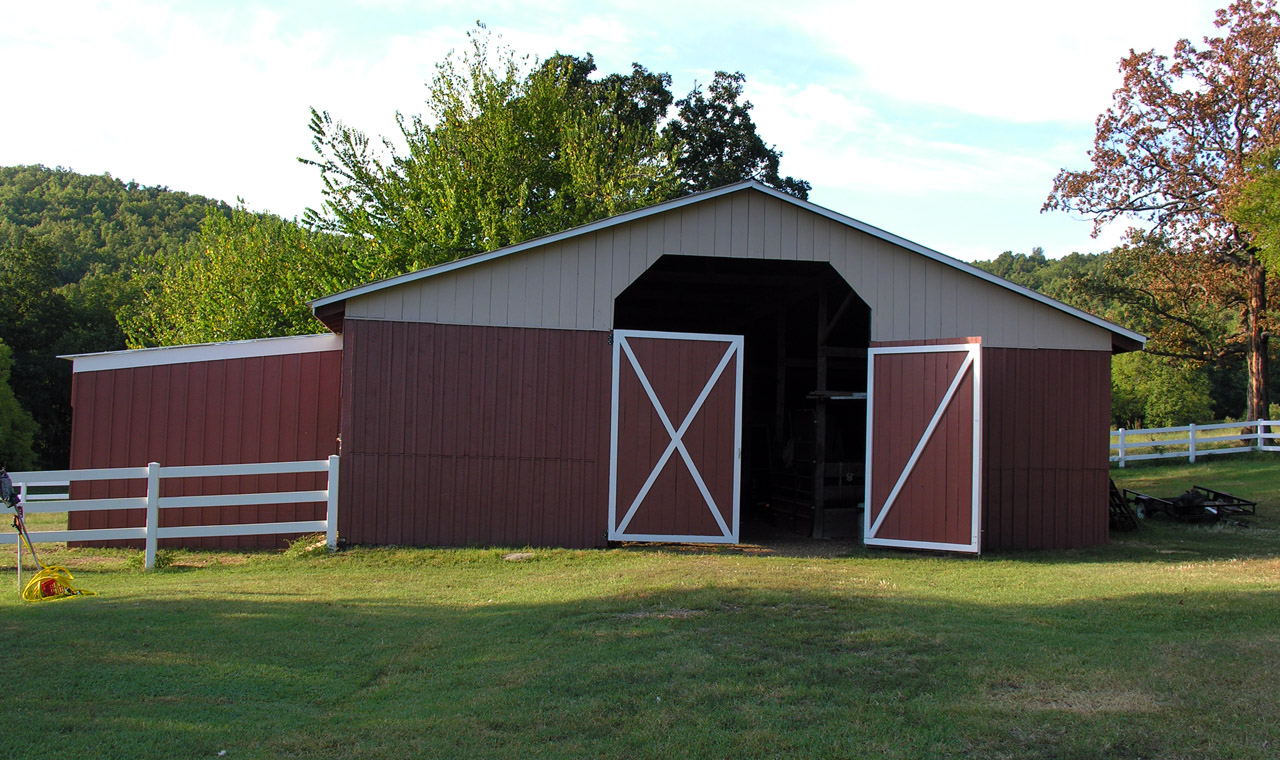
We have recently completed a multi-stage barn project, which included the addition of a loafing shed to the side of the barn, repairing some of the wood that had deteriorated, and painting the entire structure.

Above is a picture of the barn after the work was completed.  You can see the new loafing shed on the left side of the barn.

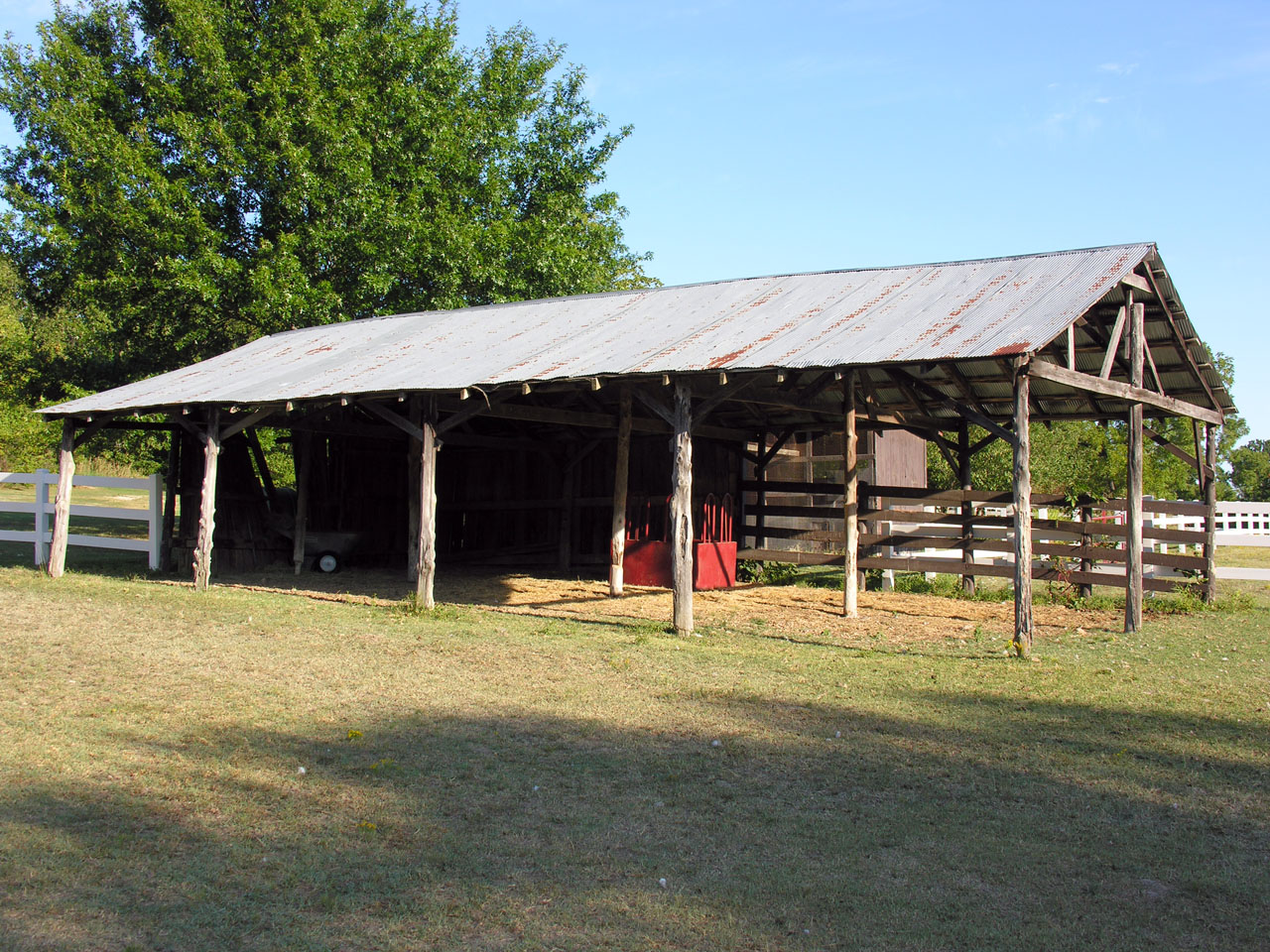
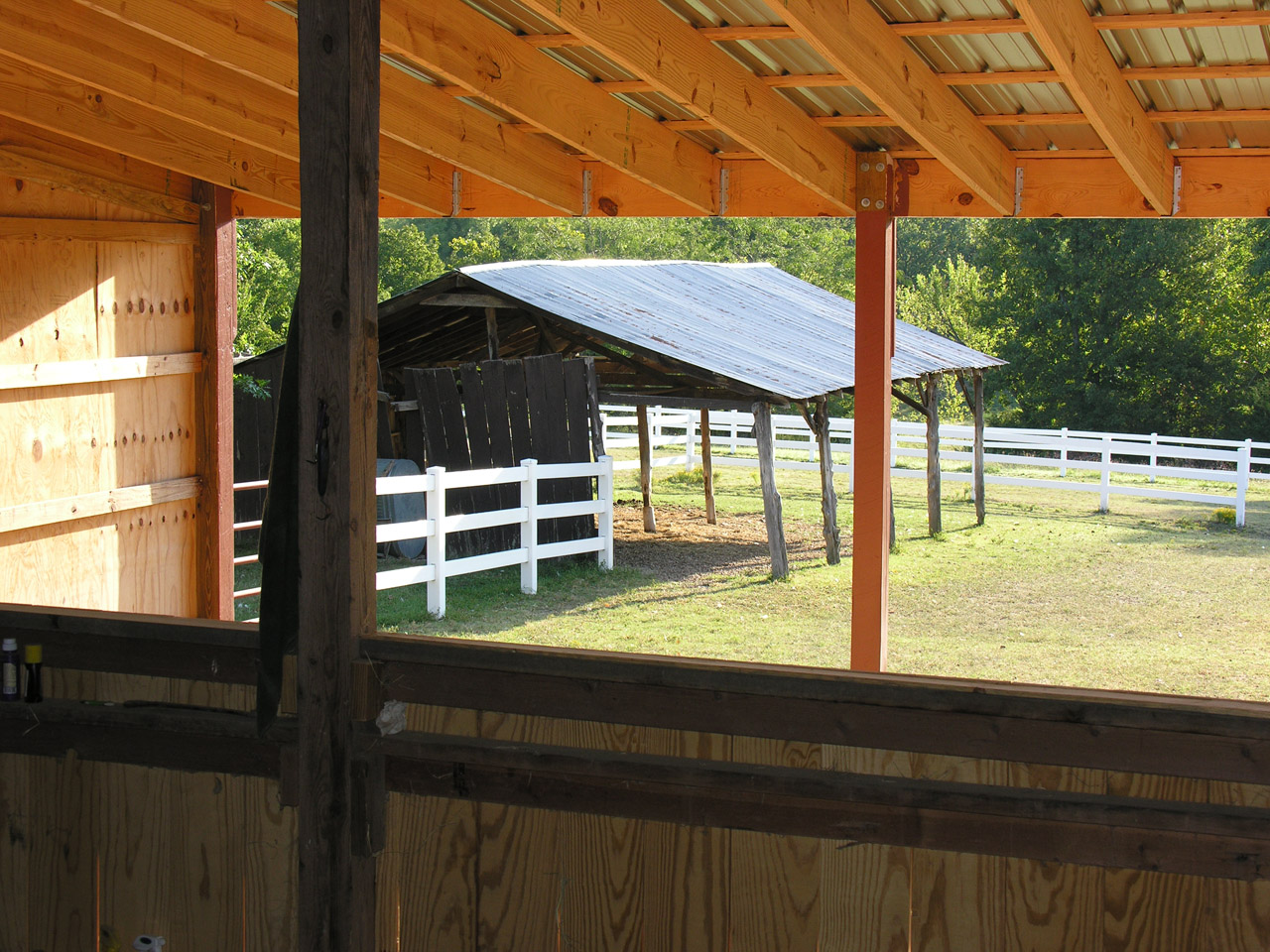
This is the old loafing shed.  While not readily apparent inthis photo, the old structure is in a very poor state, beyond any reasonable repair.  It will come down in the future, salvaging any useful components in the process.

Here is a view of the old loafing shed, as seen from inside the equipment barn.  You might be able to discern the wall about to tumble down – that it hasn’t fallen yet baffles me.

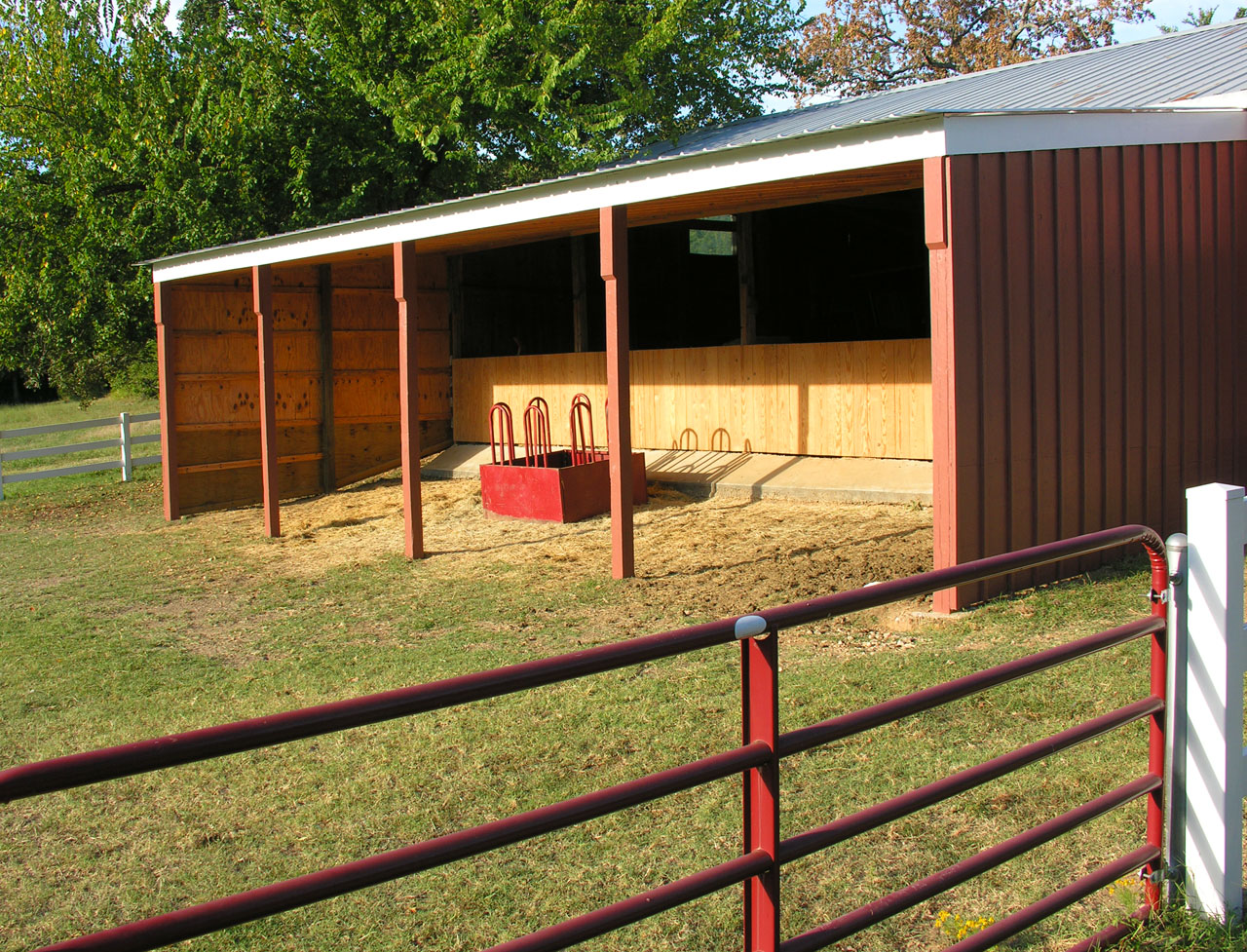
Here is a view of the new 16 foot X 40 foot loafing shed that we added to the side of the equipment barn.

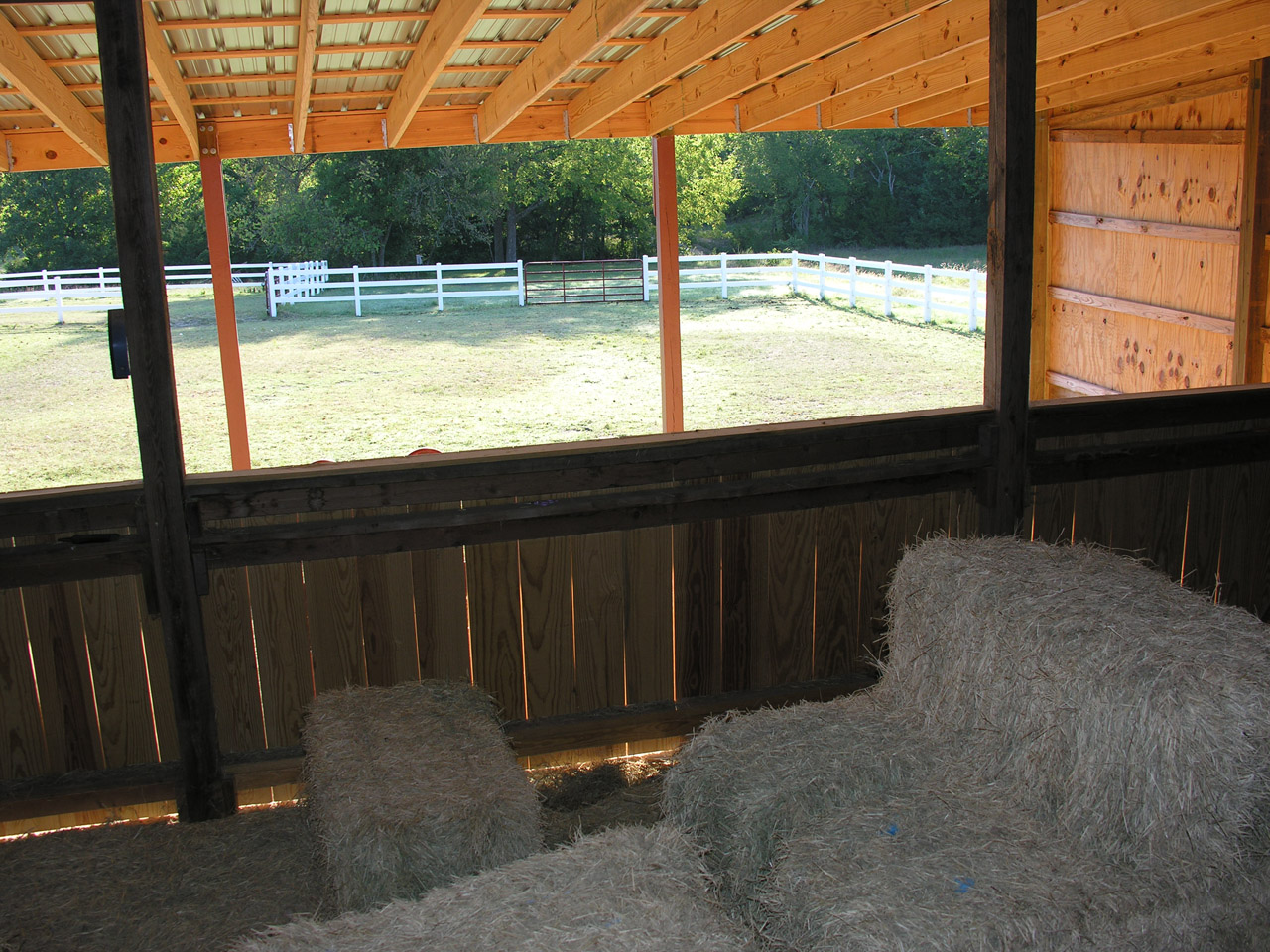
We designed the loafing shed in such a way as to allow hay to be easily tossed over the wall into hay bunkers in the paddock area.

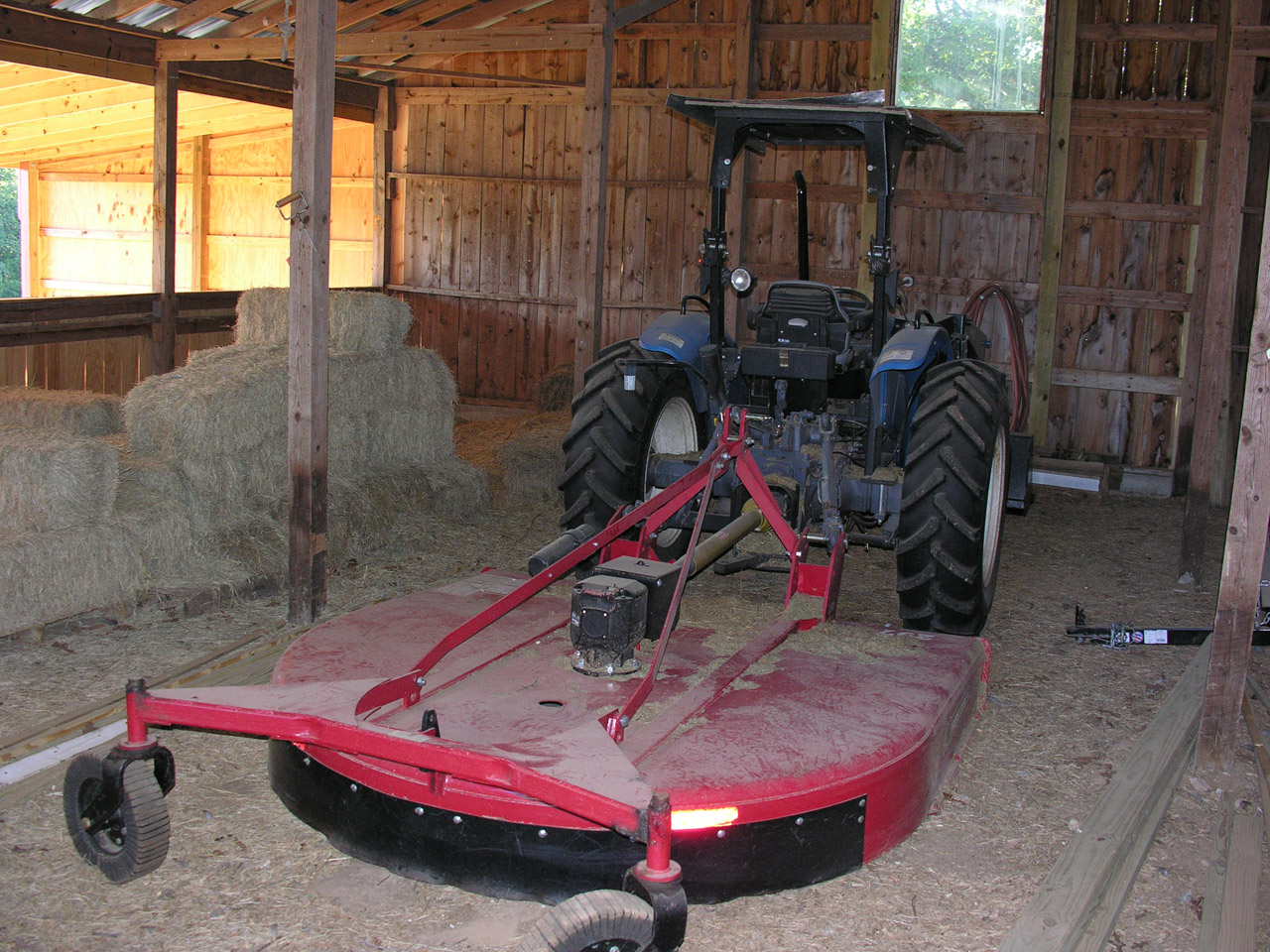
Of course, this is an equipment barn, so here you see the tractor stored inside.  You might notice the bush hog is new (what the heck is a bush hog?).  Our old one finally bit the dust, having been repaired and rewelded numerous time due to those dang rocks!

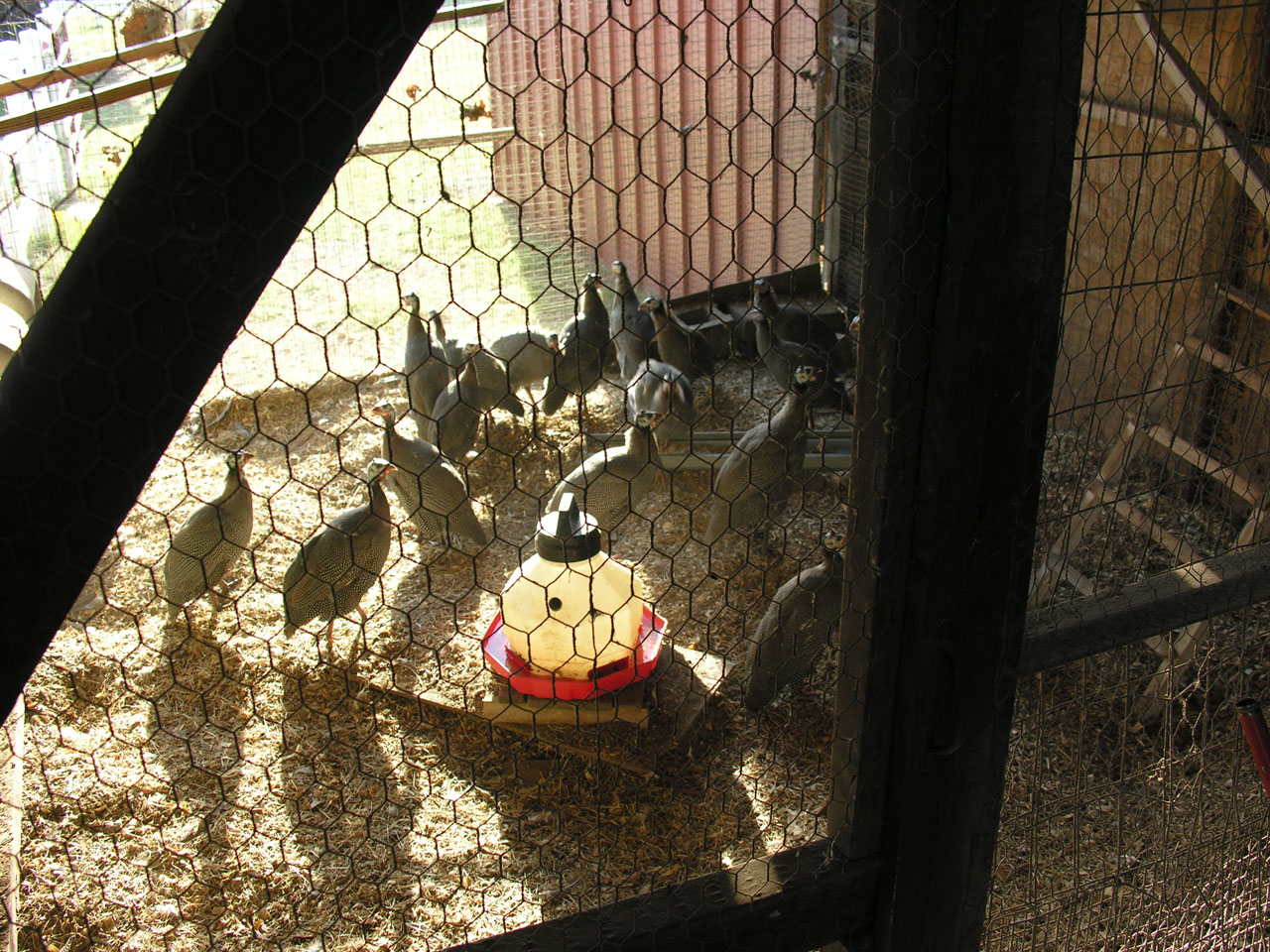
Inside the equipment barn we have an enclosure to house some of our guineas (see “How Could You Not Love a Face Like This?”).

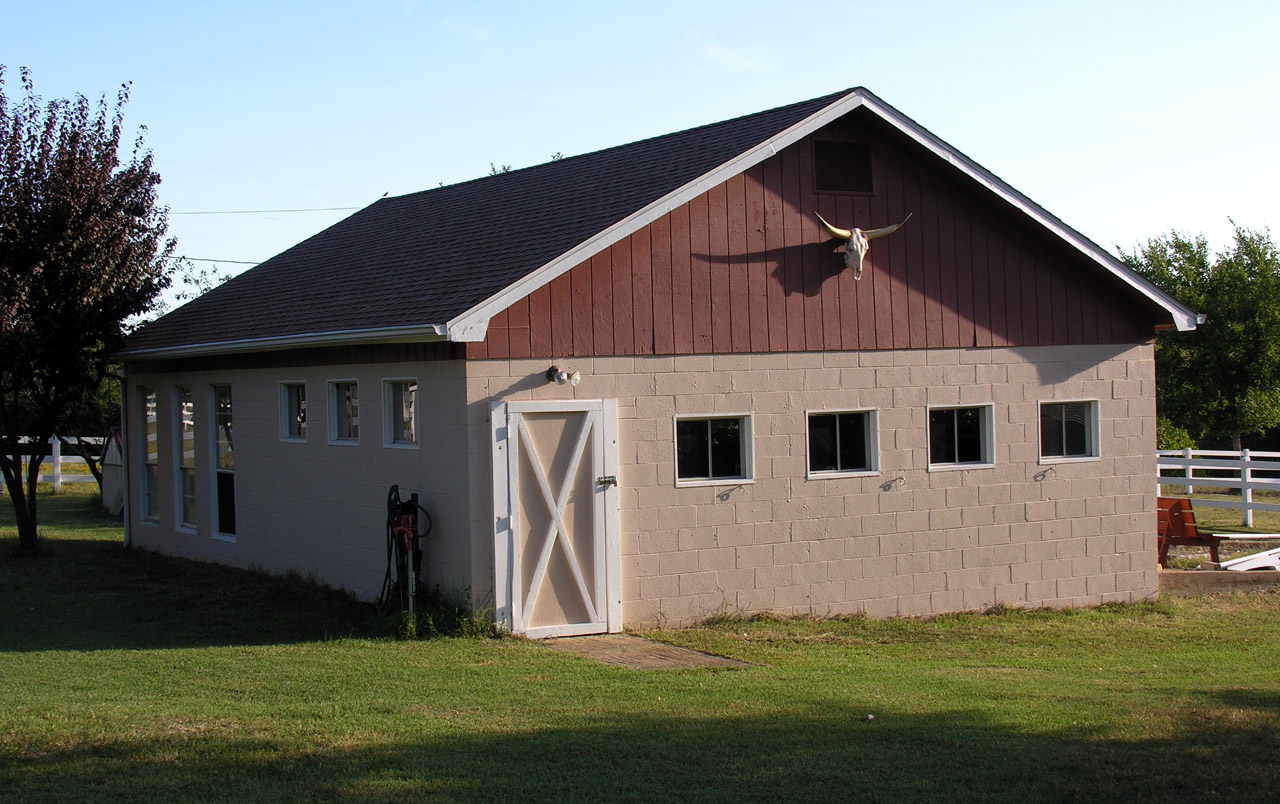
In looking at our shop/tack room, you might notice that we have endeavored to color coordinate the various structures in our barnyard area.   This is the shop side of the cinder block building.  For more on the shop/tack room, see “A Project Long Delayed“.

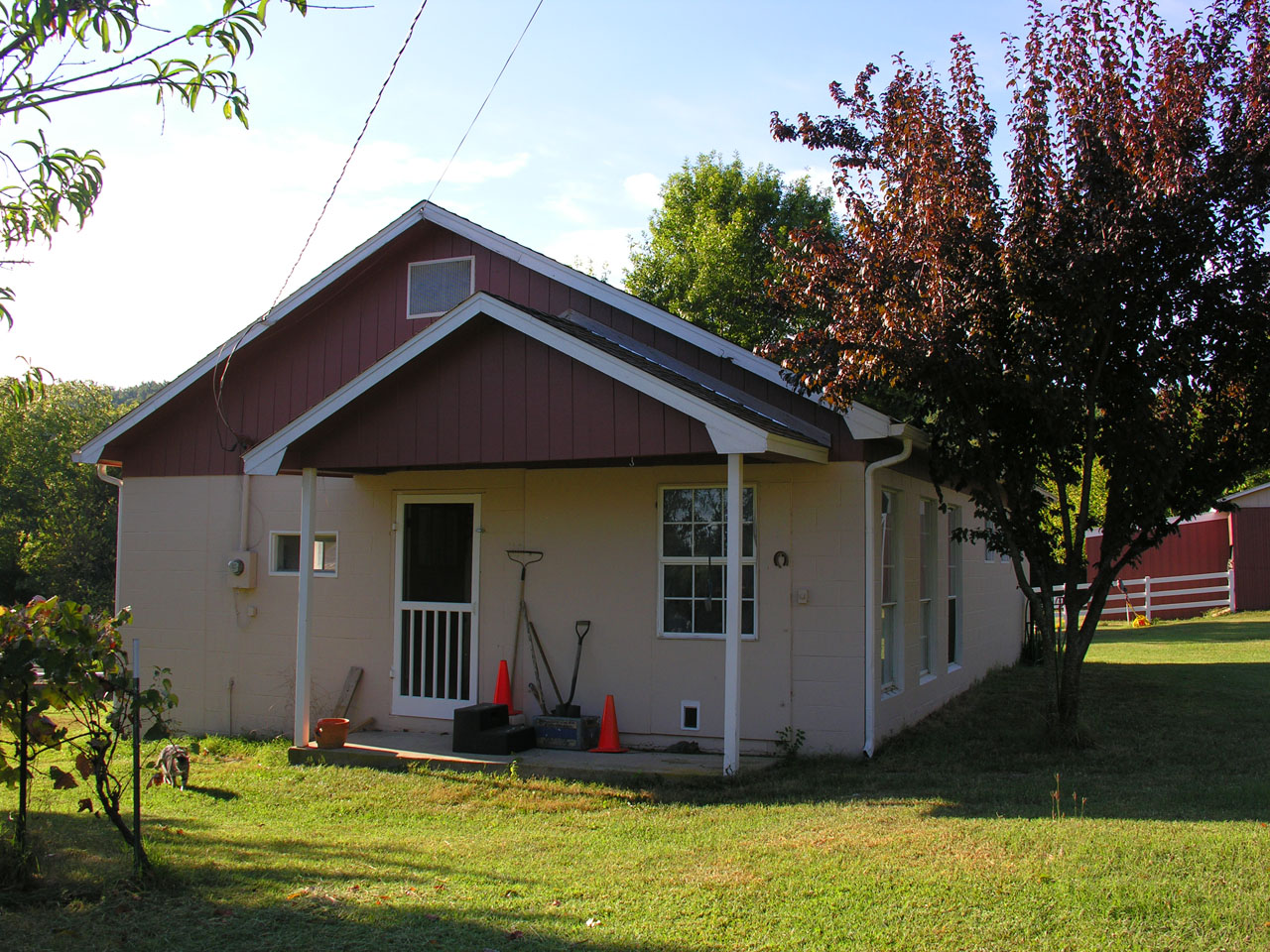
This is the tack room side of the same building.  Notice the newly renovated equipment barn in the background on the right side of the picture.

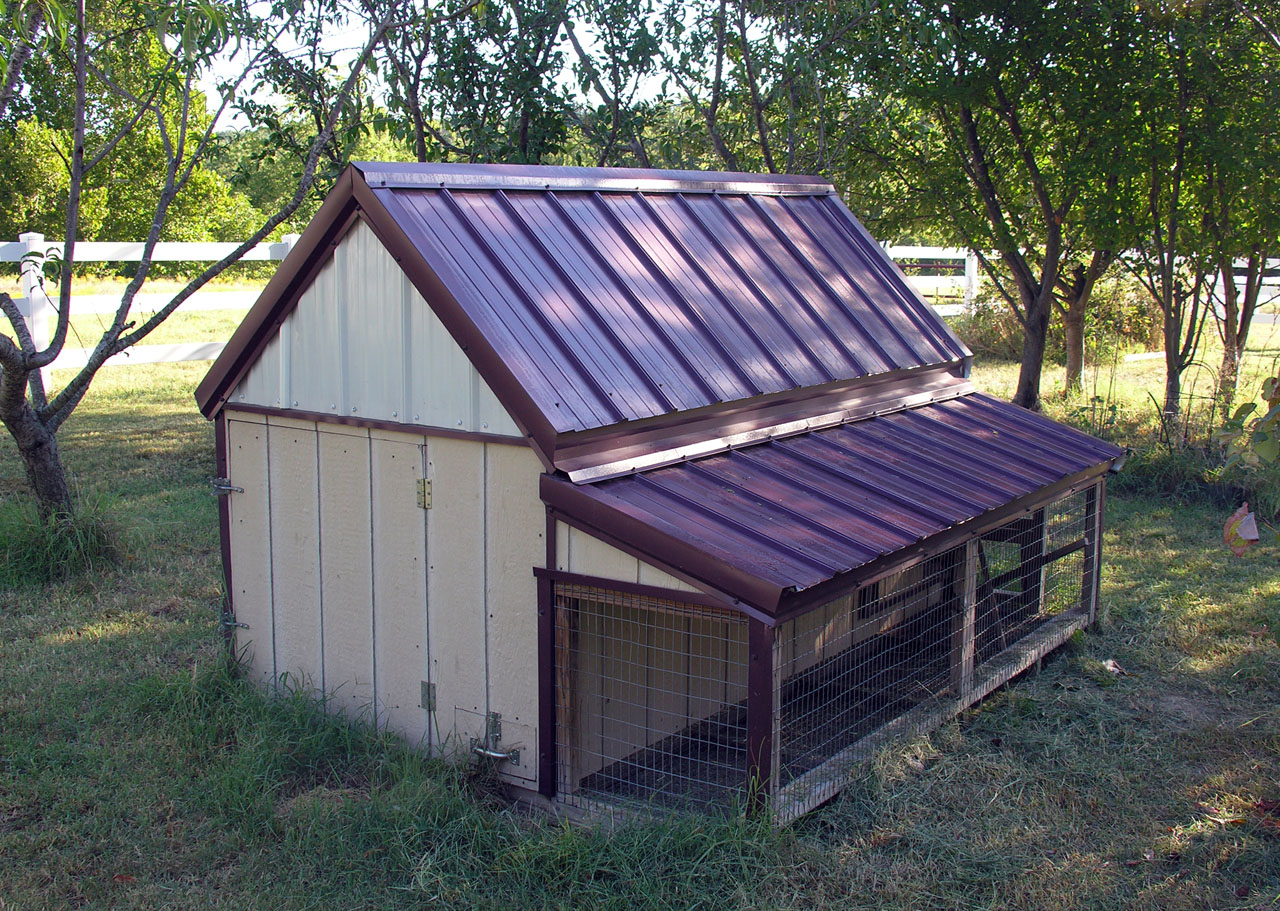
The color coordinated theme includes this small hen house as well.  The other hen house will soon follow suit – it is on our list of projects to be completed in the near future.  For more on the hen houses, see “Welcome to Our Hen Houses“.

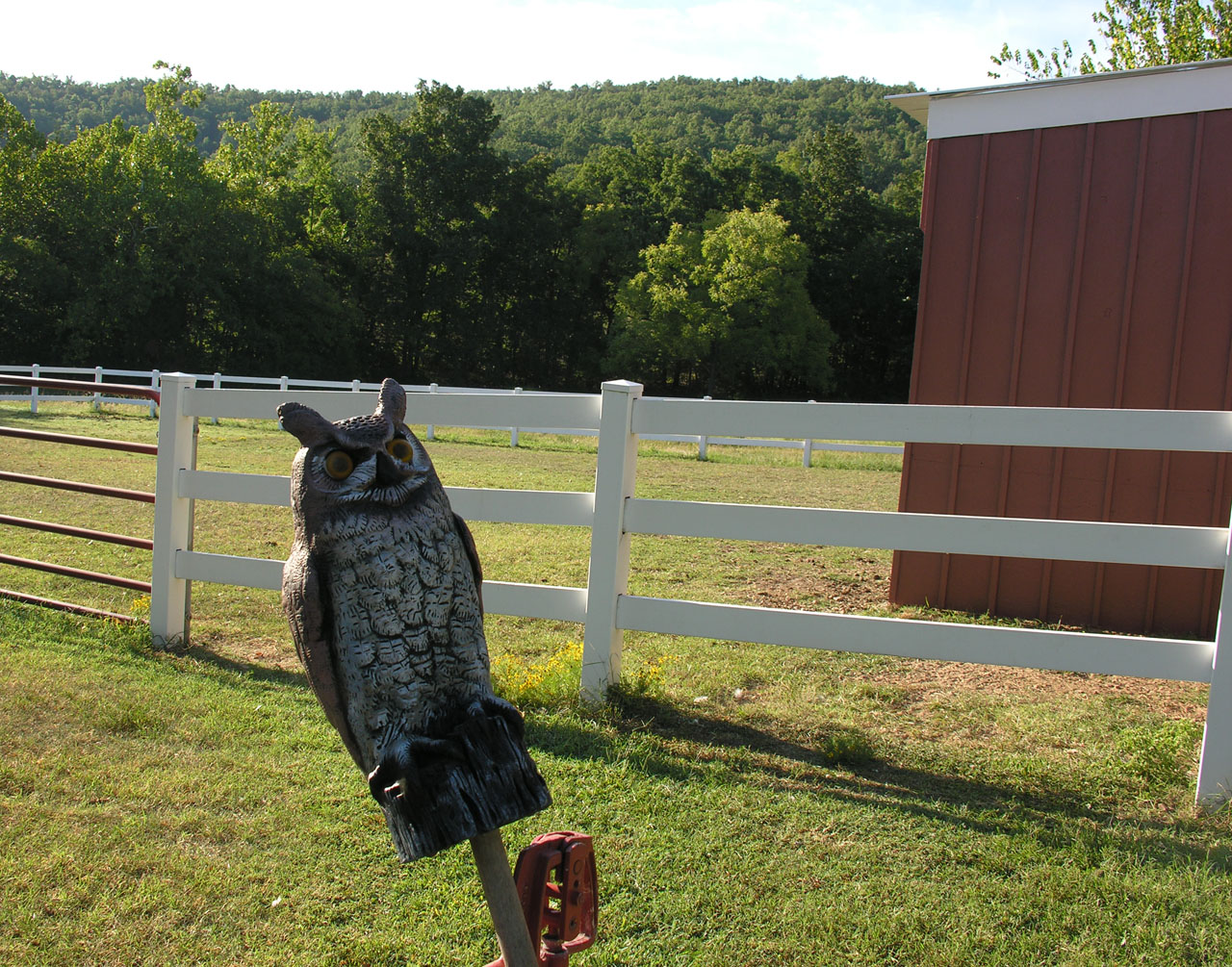
Finally, what barnyard is complete without an owl to keep a keen eye on things?

Some Chores Are a Drag

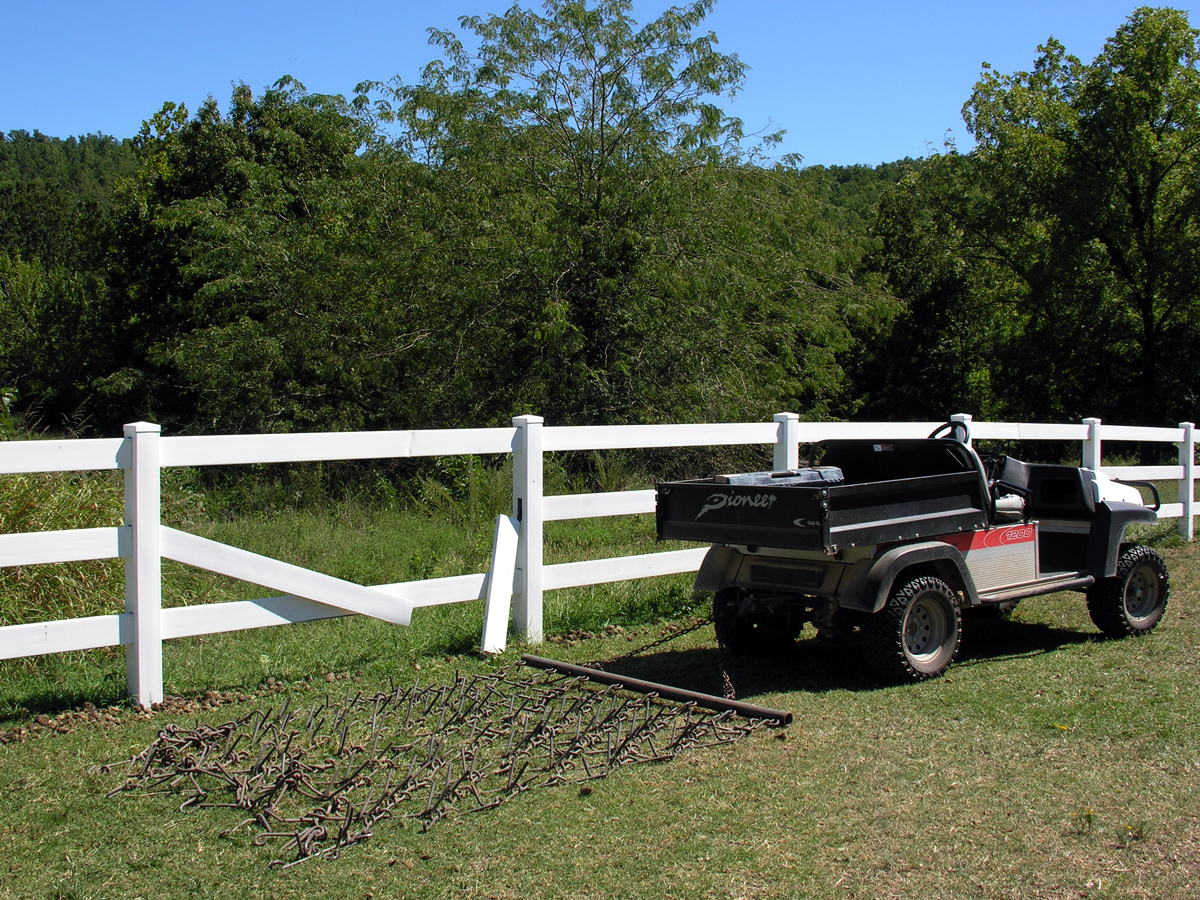
There is something romantic about living on a farm/ranch in the rural Ozarks.  But sometimes, unglamorous chores have a way of presenting themselves.  Today (after much procrastination) was the day I needed to repair a section of fencing.  But before undertaking this job, I needed to drag the pasture so I could walk around without tromping through piles of manure.  So here is a picture of the broken fence rail, and the scotch harrow I use to deal with the manure:

For more about this scotch harrow and dragging the horse pastures, see my previous post entitled Non-Toxic Fly Control, which is, I believe, irresistable reading ;)

For more info on fencing, see my previous post entitled The Most Effective Fence Ever Grown?, and about other damage that has befallen our fencing see Still Cleaning Up After the Ice Storm of 2009.

HP TouchPad – AAAAARGH!!

Saturday’s Rant

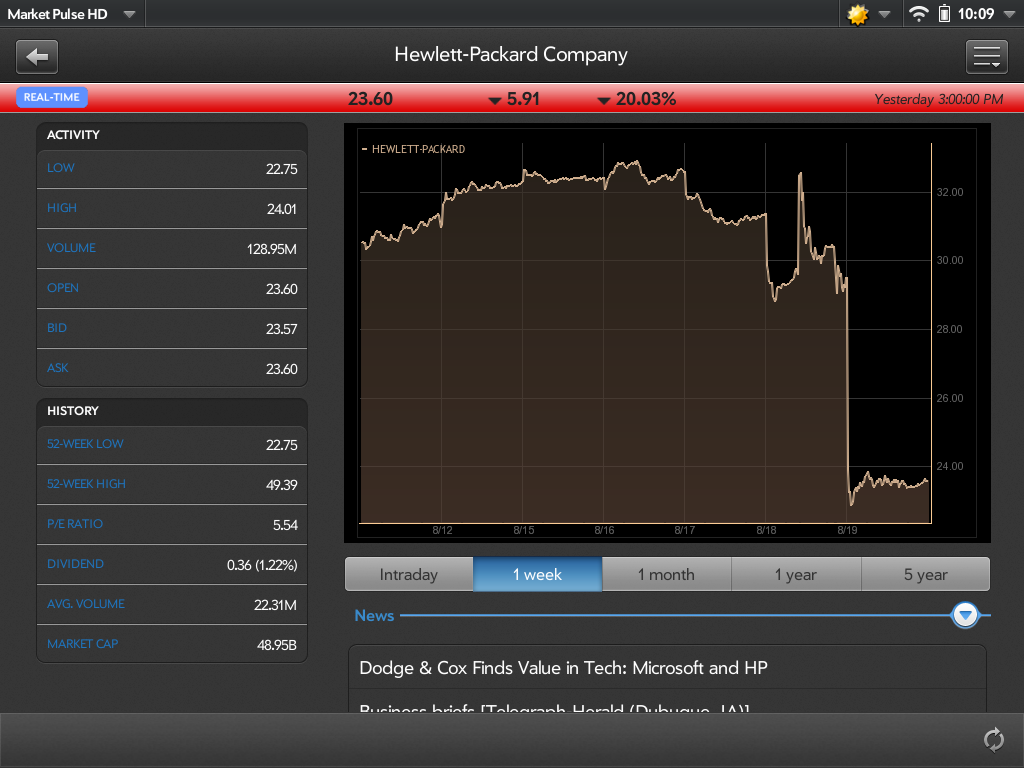
Earlier this week, HP shot itself in the foot by announcing a) that they were seeking ways to jettison their $40 billion per year PC business, b) immediately killing all their webOS hardware products, and c) announcing their intention to totally restructure their core business to emulate IBM and Oracle as a software and IT services firm. As one might expect (except for HP senior executives), the market rewarded this news by devaluing HP stock by over 20% in one day (see chart). Approximately $16 billion in shareholder wealth vanished overnight. Good going, HP!

So on a personal note, I am now in a dilemma. I purchased a 32Gb TouchPad in July, shortly after it’s introduction, for $600. I don’t regret the purchase per se, as the TouchPad running webOS has proven to be phenomenal in my daily routine (I plan to write about my experience with the TouchPad on my blog soon). It has been transformational for me, to say the least. But now I see that the TouchPad is going to be dumped at fire-sale prices. The Touchpad is now being offered on hpshopping.com for as little as $99! At that price, I am seriously considering buying another TouchPad for Retta. It’s a steal, which might soften the blow of having overpaid for the first one by about $500 :'(

Peaceful Co-existence

DSCN0854

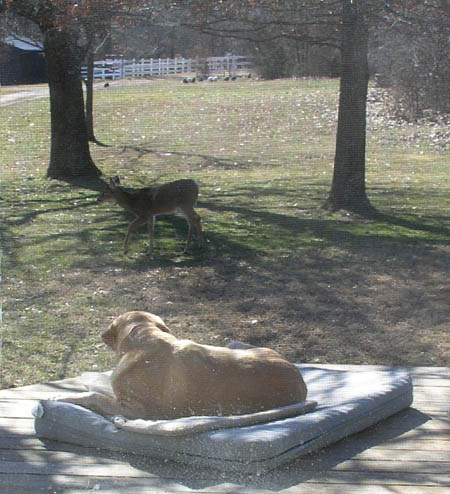
The local population of white tail deer apparently feel right at home with us.  This juvenile seems unphased by our Labrador’s presence, and the dog appears to show only mild interest in the deer.

DSCN0865

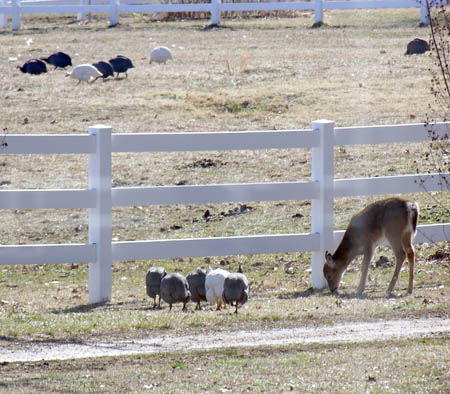
These guineas are curious about any creatures that share their habitat, and take the opportunity to check out this young deer.

DSCN0871

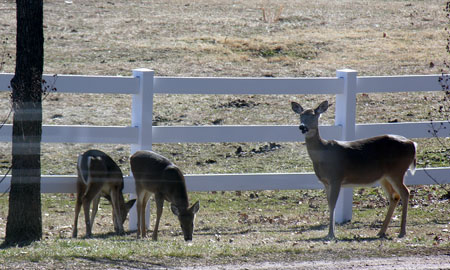
This doe, with her two offspring, have been hanging around the house for some time now.  Now that they have become comfortable with our presence, I suspect we will be seeing them frequently this year.

Stand-By Generator Project

One of the more significant projects we accomplished this past year was the installation of an emergency stand-by generator system.  A major icing event occurred across the Ozarks last winter, which caused wide-spread and prolonged power outages throughout the region.  As fate would have it, I was in California helping with a family medical crisis at the time, while Retta was left alone to deal with the ice storm and it’s aftermath.

One lesson we learned was that the electric company (Entergy, in our case) prioritizes reconstruction of the power grid after a disaster,  and when you live “at the end of the road” in a sparsely populated area,  you are placed at the end of the list (for obvious and appropriate reasons).  It could possibly take weeks for power to be restored, so you had better be prepared!  When the power goes off, so does the heat.  So does the well pump.  Without the well pump, there is no running water.  Without water, there are also no usable toilet facilities.  Without power, communication become difficult or impossible.  Satellite television ceases to operate.  The Internet disappears, as does email, on-line banking and bill-paying.  Cooking reverts to camp stove cookery, while food rots in refrigerators and freezers.  These things were just at the beginning of the list of hardships Retta endured until the power was eventually restored.

When I returned home from California, I promised Retta that she would not have to worry about being without electricity should an ice storm reoccur in our neck of the woods - we would install an emergency generator.  So that is the genesis of this particular project.
gen01

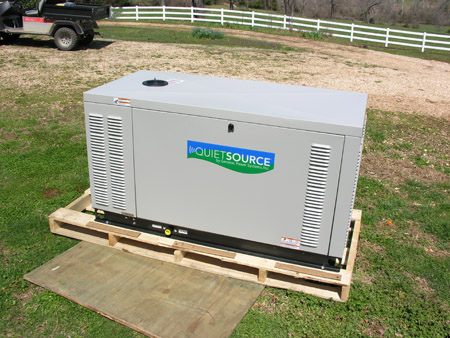
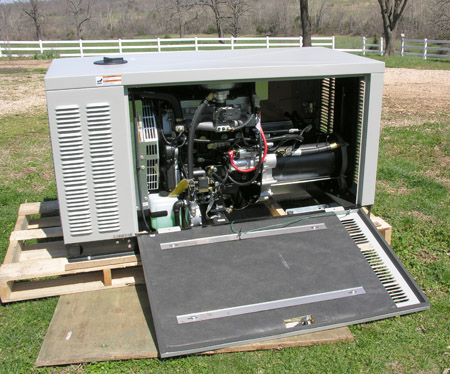
There are many sizes and types of generators available for emergency use.  We decided to purchase this QuietSource 27kw generator (pictured above), after consulting with people in our area who had tried other solutions during the ice storm.  The consensus of opinion was that a permanently installed, automatic whole-house generator system, adequately sized to satisfy a reasonable electrical demand during an emergency, was the way to go.  Opting for 27kw provides us with sufficient capacity so that all reasonable electrical needs will be met, while allowing the generator to run well below it’s full-load rating, saving fuel and prolonging the generator’s useful life.
gen02

The unit is powered by a 2.4 liter Mitsubishi 4-cylinder liquid-cooled engine.  This engine is designed to run at a constant 1800 RPM, which compares to the 3600 RPM of it’s competitors.  Operating at half the speed of most other engines results in significantly quieter operation.  Another benefit, which was more important to me, was the increased fuel economy the slower running engine obtained compared to other engines on the market.  The importance of this will become clear later in this post.
gen03

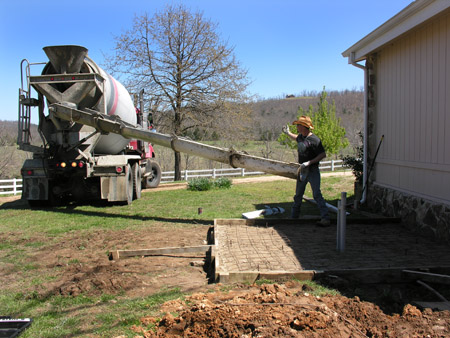
Because of the size and weight of the generator, the manufacturer recommends placement on a concrete slab.  We opted to place the generator along the side of the carport, where you see the slab being poured. 

gen04

Notice in the poured slab above that we stubbed PVC conduit through the concrete, so that the electrical service would feed directly into the generator control panel.
gen05

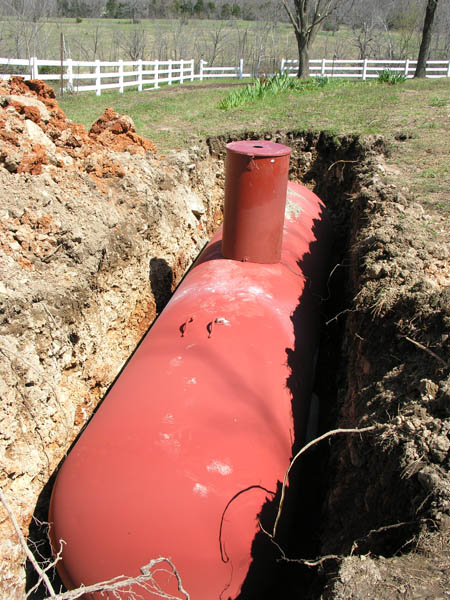
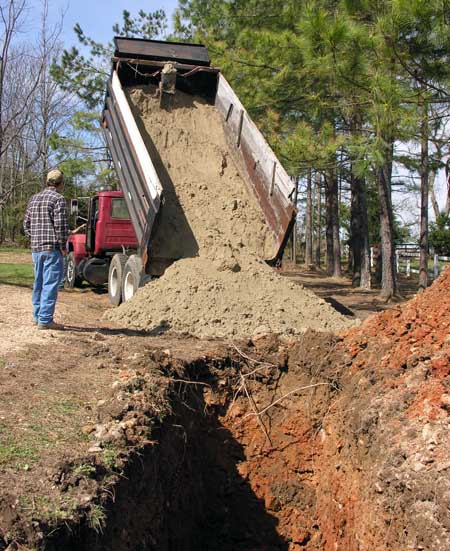
To power the generator, we needed to install a propane tank.  After digging a hole of the proper dimensions, the cavity is bedded with sand, which is meant to prevent contact between the tank and potentially damaging rocks in the ground. 

gen06

This is what the 1000 gallon underground propane tank looked like prior to filling the hole with sand, and then topsoil.  Why a 1000 gallon tank?  Let’s do the math.  A propane tank can only be filled to 80% of it’s volume capacity.  Therefore, a 1000 gallon tank will be filled with 800 gallons of propane.  For a variety of reasons, our propane company recommends filling the tank when it falls to 20% of capacity.  So a 1000 gallon tank provides about 600 usable gallons of fuel to the generator.

The 27kw QuietSource generator burns 2.2 gallons of fuel/hour when run at 50% load, so the 600 usable gallons of propane should last for about 270 hours, or slightly more than 11 days.  Since it could easily be over a week before a propane truck could replenish our fuel supply (given our experience from this past winter), the 1000 gallon capacity propane tank was the smallest size we felt comfortable with – there is no point to installing a system like this if it runs out of fuel in an emergency.
gen07

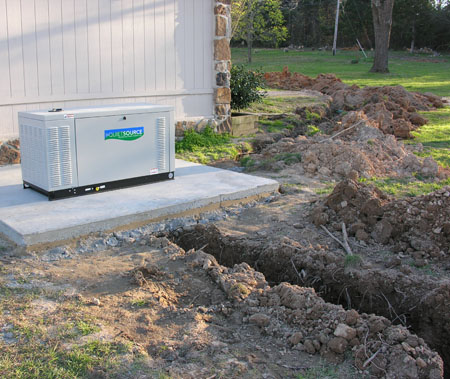
Now we placed the generator on the concrete slab and began the process of connecting things together.  We ran the propane line underground (in the trench on the lower right), as well as the electrical service (in the trench leading around the house, in the upper right).
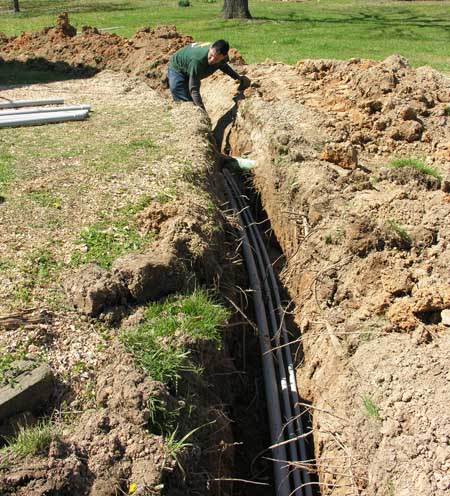
gen08

Three PVC conduits were placed underground.  The larger conduit carries the main power lines.  One of the smaller conduits carries the control wiring between the generator and the transfer switch (at the utility service-entrance of the house), while the other carries 110 volt power to the generator, which keeps the generator starting battery fully charged at all times.
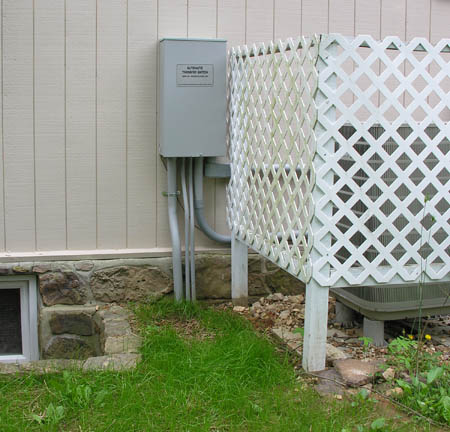
gen09

This is the automatic transfer switch we installed near the utility service entrance.  All of the electricity that goes into the house comes from this switch.  When conditions are normal, the source of power is from the utility company.  When the system senses a power outage, the generator starts, warms up for a short time, and then the transfer switch automatically switches the source of power over to the generator.  Thus, in a power outage, the house only experiences a power loss for a short period of time. and this all happen without any homeowner intervention.
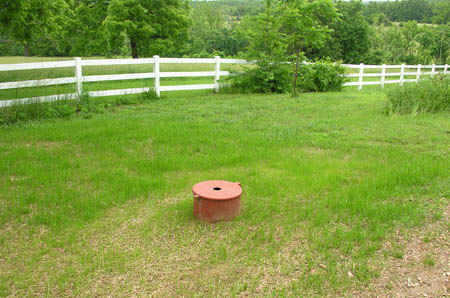
gen10

We replanted grass over the propane tank location, and all that is visible now is the small access riser, seen in the photo above.
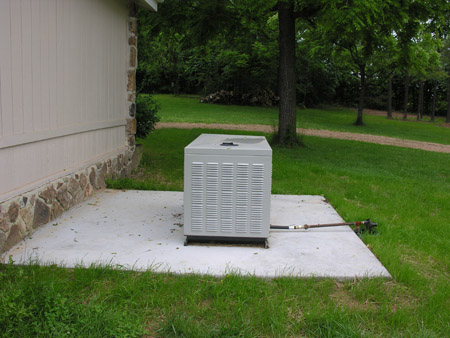
gen11

This is how the finished project looks, now that the trenches are filled and the grass has been reseeded.  The over-sized slab allows for convenient access for routine maintenance or any repairs that may become necessary in the future.

The generator is programmed to start up automatically once a week, in an exercise mode designed to keep the system ready for use at a moments notice.  Since we installed the system, we have only experienced one brief power outage (thank goodness!), but it was comforting to see the stand-by power system kick in automatically, just as it was intended to do in an emergency.

Still Cleaning Up After the Ice Storm of 2009

Ice Storm Damage (0)

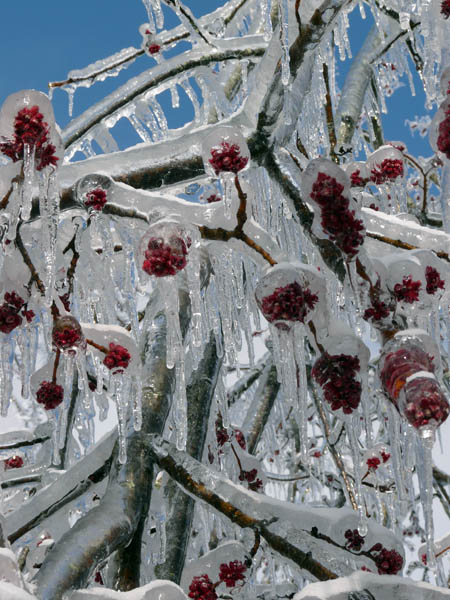
The ice storm that occurred a year ago in the Ozarks created many beautiful scenes, as in the photo above (courtesy of Retta), but it also left a trail of damage and destruction.  Aside from a power outage that lasted weeks (and the subject of my post entitled Standby Generator Project), the ice brought down many trees and limbs in our area.

Ice Storm Damage (1)

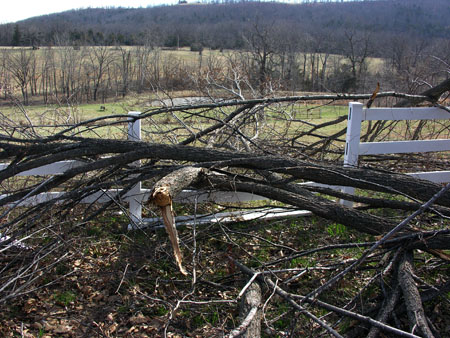
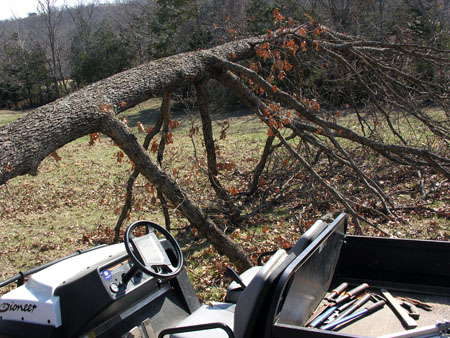
This tree limb, over a foot in diameter, was no match for the weight of ice which had accreted on it during the duration of the storm.  It is only one example of the numerous downed limbs strewn throughout the property.
Ice Storm Damage (2)

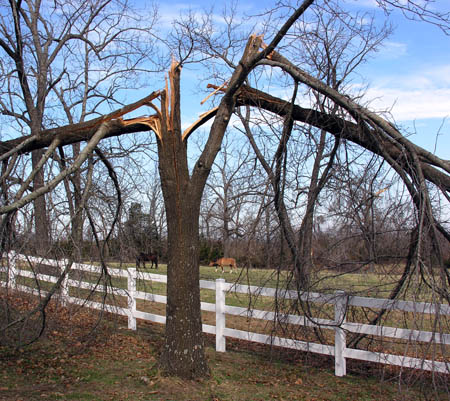
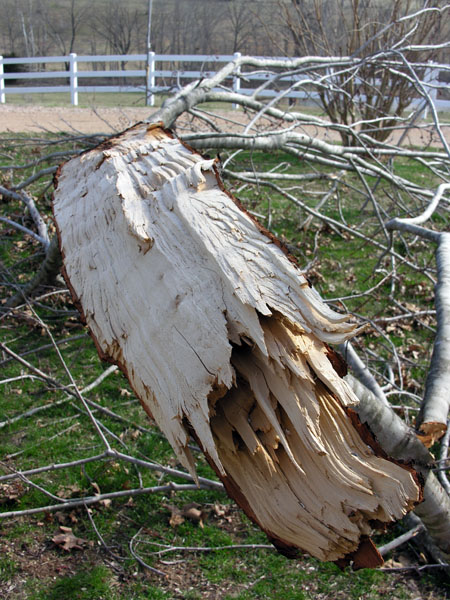
Here is a tree that has no chance for survival.  The three ways to deal with this are;  A) leave it as is, B) remove the potentially dangerous hanging limbs, leaving a dead trunk, or C) remove the entire tree.  Due to the location of this tree (and others within our yard), we opted to remove the tree, however there are many other similarly damaged trees on the property where we have chosen options A) or B) instead.
Ice Storm Damage (3)

The falling limbs played havok with our fencing.  Where large limbs fell on vinyl fencing, rails and posts were broken or shattered.  Sections of barbed-wire fencing either snapped or were toppled to the ground.  We have completed repairs on all the vinyl fencing, but only a portion of the barbed-wire fencing, where the repairs will be ongoing for the foreseeable future.

Ice Storm Damage (4)

Outside the immediate area of the yard, many trees were toppled like matchsticks.  Tree that have fallen into our horse pastures or hay fields have been cut up for firewood and removed, although some of this work still remains.

Ice Storm Damage (5)

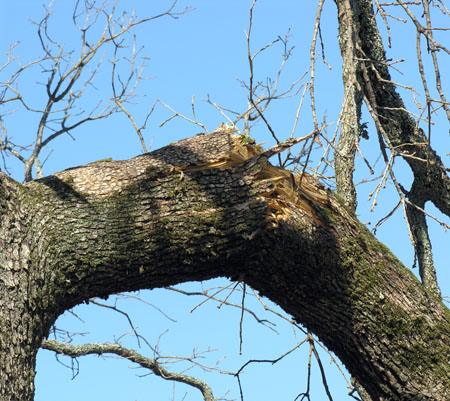
Here is another snapped limb, well over a foot in diameter, located along one of our trails.  I am in the process of locating these potential “widow-makers” and dropping them to the ground, where they can sit safely until I can deal with them fully.

Ice Storm Damage (6)

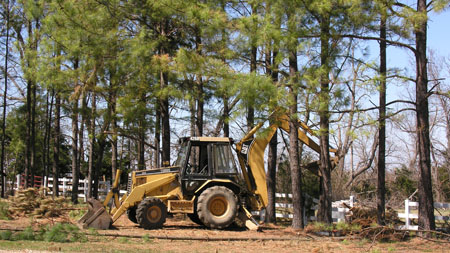
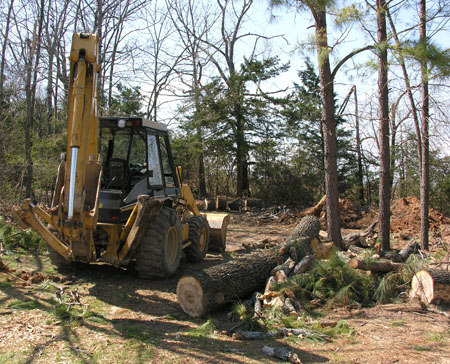
Where we had to fell trees in the yard, we opted to remove the stumps that remained, which required the use of a backhoe, seen above.  After the stumps were pulled from the ground, the backhoe operator filled the resultant holes with topsoil.

Ice Storm Damage (7)

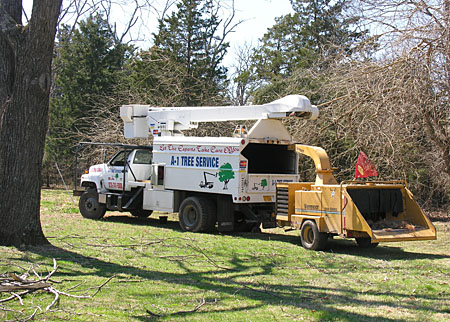
Around the house, there was so much fallen debris that we employed the services of a bucket truck, an industrial size chipper, and a 3-man crew for 5 full 8-hour days.  We now have tons of organic mulch sitting in piles in strategic locations throughout our property!

Ice Storm Damage (8)

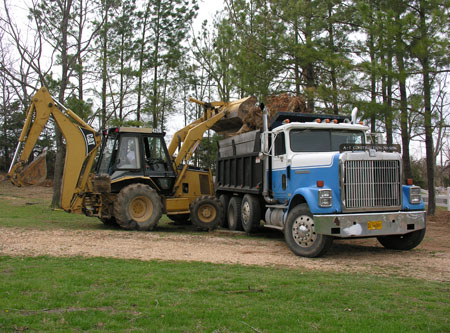
Removal of the tree stumps and cut timber in the yard required the use of heavy equipment, seen above, and large trucks, seen below.

Ice Storm Damage (9)

Even with all the work that has been completed to date, it will probably take us several more years to clean up after the ice storm of January, 2009.  In fact, there are over 200 acres that I have not yet had the opportunity to cut my way into yet.  I had better get to work, pronto (or at least when the temperature climbs out of the single digits)  ;)