In Memorium

September 11, 2001

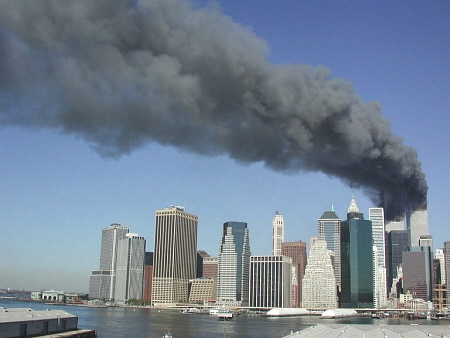
On the morning of September 11, 2001, an anonymous amateur photographer began posting on the Internet photographs he was taking of the horror that was unfolding before his eyes.  This photographer released the photos into the public domain, believing that the benefit to the public outweighed his exclusive rights to his creations.  The photo above is just one of the many he/she posted at the time.

There are many thoughts and emotions that run through my mind as I contemplate the events of 9/11/2001, and the subsequent actions that these events have led us to, but there is one in particular that I will comment about on this rural-oriented blog.  And the thought that comes to mind is the profound difference in the fear mindset that must be occurring between residents of highly populated metropolitan areas, such as the photographer above, who obviously lives in the New York area, and residents in sparsely populated areas, such as myself.

The anonymous photographer above witnessed the initial moments of the World Trade Center catastrophe from the window of his residence.  Grabbing his camera, he began taking pictures of what he was seeing.  He felt compelled to leave the safety of his home, and with camera in hand, began a photographic journey into the heart of lower Manhattan Island.  As I contemplate this, I cannot help but wonder if this person re-lives all of those awful, gut-wrenching pangs he must have felt on that day, each and every time he looks out the window, every time he walks down those streets, and every time he commutes into the city from his home.

I would imagine that people such as this photographer, who live in densely populated areas, encountering locations and situations where the threat of terrorist events are very real, must have a constant awareness (even if only in the back of their minds) that they are in a potentially risky environment.  Particularly when the public is bombarded by the near constant reminders that terrorism exists, and surrounded by some politicians who would exploit that fact to their own political ends, it seems that a person who lives in a “likely” terrorist attack setting might tend to become fixated on the potential threats around them.  At the extreme, they may become immobilized by the fear of becoming a victim in a future attack.

Living in a sparsely populated rural area does not seem to invoke the same type of fears that might flourish in an urban environment.  Terrorism relies on mass, random killing to promote the fear it seeks to create.  And by definition, a sparse population generally presents little opportunity for the “mass” portion of the definition to emerge.  What likely target exists in a hamlet where the sign at the edge of town reads “Population – 735?”  None, I would surmise.  Therefore, those who live in these areas, who travel the back roads and conduct their business in one-horse towns have little to remind them of terrorist activities on a day-to-day basis.

I suspect few, if any, rural people are paralyzed in their fear of terrorist attacks, while many urban dwellers might be.  Perhaps urbanites should consider the possibility of frequent “therapeutic” visits to bucolic rural areas, in order to relieve the pent-up stress caused by the constant reminders of their vulnerability.  And perhaps rural folk might consider an occasional foray into the “belly of the beast,” so as not to forget that there is still a very real threat to many people out there.

Flashback Friday #14: Why You Don’t Catch Me Fishing Too Often

Top ten reasons you seldom find me fishing anymore-

10)  No matter how many times I’ve done it, the task of baiting the hook never gets any more pleasant for me.  Sometimes it’s the critter that is being used for bait that I find distasteful, such as worms.  Now, I’m the first to admit that earthworms are our friends.  I recognize the valuable services that they provide in bringing good things to life.  But I will never get used to the sensation of impaling the helpless creatures with the barb of my hook, while I hold their wriggly, slimy bodies in the proper position so as not to pierce my finger as well.  Sometimes it’s the cruelty of the concept that I find distasteful to my sensibilities.  As in deep-sea fishing, where a hook is carefully inserted into the live bait-fish body, via the gills, in order to allow the live bait-fish the opportunity to swim around, tethered like a puppy, enticing the legions of game fish the angler is targeting.

9)  Removing the hook from a successful catch is another unpleasantness that I prefer to avoid.  Holding on to a thrashing, scaly fish, perhaps armed with sharp barbels or spines, and undoubtedly with razor-sharp teeth, while trying to dislodge a barbed hook from the gullet of the mullet is not my idea of fun anymore.

8)  Still, the task of baiting the hook never gets any more pleasant for me. 

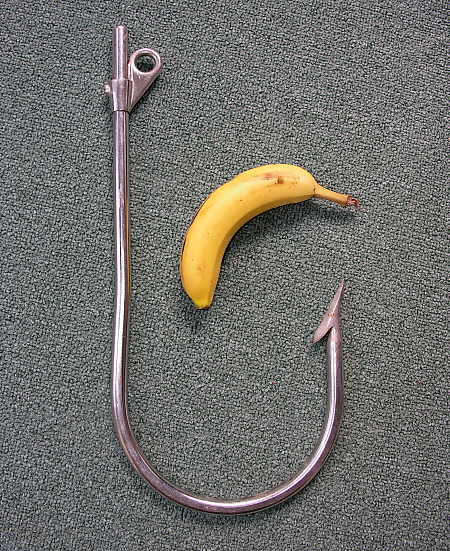
7)  The equipment just keeps getting more and more elaborate and expensive.  Trying to keep up with the latest fishing techniques is challenging enough, but look at the new tackle and bait that I just bought.  I was assured that this was the latest, greatest setup for catching “tropical” fish.  Hooks this size don’t come cheap!

Rig for

6)  Still, the task of baiting the hook never gets any more pleasant for me. 

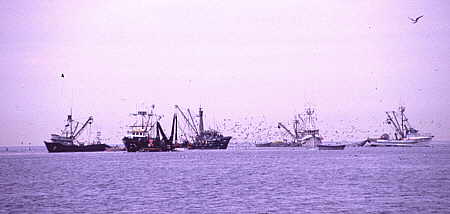
5)  There are already enough fishermen in the world, without my adding one more person to the fray.  Not only are there plenty of fishermen in existence, but they are incredibly efficient in bringing in the catch,  all too often to the point that serial depletion of species is the norm for the fishing industry.  When Retta and I lived on a trawler cruising the Channel Islands, it was very disheartening to frequently witness the following carnage that takes place in our oceans on a regular basis.

The fishermen and their incredible fishing machines

4)  Still unchanged, the task of baiting the hook never gets any more pleasant for me. 

3)  Catch and release, the politically correct fishing method de jour, strikes me as a cruel sport.  I’ve been told by fishermen, sometimes repeatedly, that the act of setting a hook deep into the mouth of a fish does not cause a fish to feel pain.  Nor does the act of removing the hook from the innards of the fish cause distress in the fish.  Having never been a fish, I can offer no first-hand knowledge of the pain/distress capabilities of fish, but if they don’t experience distress from these acts, I certainly do!

2)  Catching fish for personal consumption offers up the daunting task of cleaning the fish.  Some people have no problem eviscerating and cleaning a fish.  I suppose I might be more “squeamish” than most, but I confess to finding the entire fish cleaning process disgusting.  Which is why I am willing to pay others (seafood restaurants and fish markets, for example) to do this bit of dirty work for me.

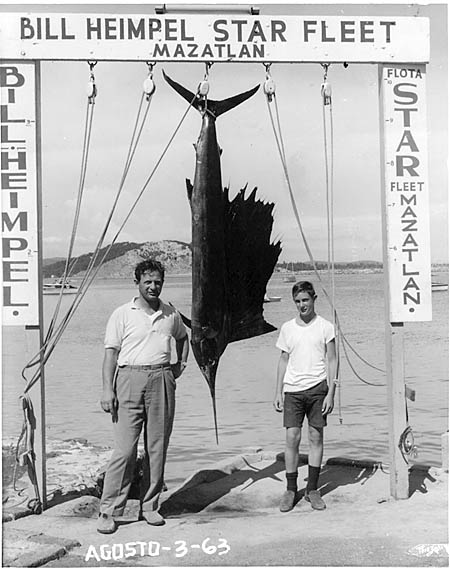
1)  The number one reason you won’t find me hanging around the tackle box much anymore is more psychological than anything else.  When I was a young lad of 11 1/2 years (1/2 years were VERY important to my as an eleven year old), Dad took my on a deep-sea fishing trip while we were on summer vacation in Mazatlan, Mexico.  Many miles offshore, while I was taking a turn strapped into the fighting chair at the stern of the chartered sport fishing boat,  the live-bait on my line was struck by a sailfish.  Immediately, a crew member ran over to help me set the hook.  After about 15 exhausting minutes of fighting this sailfish (with the help of the experienced crew), I turned the rig over to my Dad, who spent the next half-hour or so strapped into the chair as he reeled in the giant fish.  As a naive 11 1/2-year old, I was horrified when the fish was brought alongside the boat, where a crewman proceeded to bash the sailfish’s head repeatedly with a baseball bat, until the fish succumbed to the brutal treatment.  But, despite witnessing this treatment of the sailfish, I was always proud of my little role in the catching of a sailfish, which my Dad had beautifully mounted to adorn the family room wall in our home as I grew up.

Successful catch of a sailfish

But I guess the real reason I don’t fish much anymore is that, once you have caught a fish such as this, anything else might be a little anti-climatic ;)

Flashback Friday #13: Lay Lady, Lay…..

…Lay Across My Big Grass Bed.

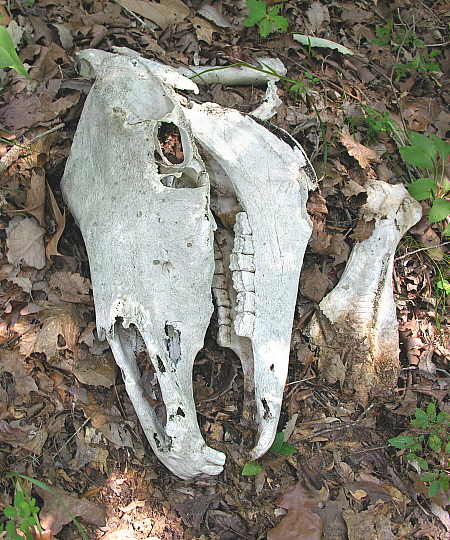
Skeletal remains of Lady

My apologies to Bob Dylan, but how else could I introduce the gentle readers of this blog to Lady (or at least her remains)?

This ranch takes on it’s present form due to the labors of a family I shall call the Farmers.  The Farmers built the present day house and most of the outbuildings in 1980.  They lived here, working the land, raising cattle and operating a small dairy operation until 1996, when they sold the ranch to other owners.

There are three generations of the Farmer family that lived here.  The Farmer parents, the Farmer children, and the Farmer grandchildren.  In fact, a Farmer daughter gave birth to a Farmer grandchild right in the master bedroom of this house.

Eventually, we came to purchase this property in 2001.  In the course of moving our belongings into the house, I discovered an envelope taped to the underside of a desk drawer.  Naturally, curiosity took hold, and I opened the envelope to find a multi-page hand written letter within.  The letter was addressed to nobody in particular, and yet was written as if intended for everybody.  One of the Farmer grandchildren had penned this letter just prior to moving away from this ranch for good.

As I read this letter, I recall that tears began to well up in my eyes, as it soon became obvious how much this young woman loved both the property and the lifestyle that went along with living here.  It was apparent that she leaving the property out of necessity and not choice, which made me feel very bad for this unknown young woman.  Somewhere within the text of her open letter, she mentioned the names of various people that had enjoyed life on this ranch, and at one point the name Lady came up.  I did not think much of the reference at the time, other than to think that Lady was an unusual name (or nickname) for a person.  After sharing the letter that I had found with Retta, I filed it away in a safe place, for posterity’s sake.

Some time later, Retta and I happened to have the opportunity to meet the Farmer family.  At our gathering, when we mentioned the existence of the open letter we had found, one of the Farmers inquired as to whether we had discovered letter #2, written by another of the Farmer grandchildren.  When we replied that we had not yet found this second letter, they told us where it was located.  Just as they had indicated, the letter lay hidden behind the back wall studs of an under-stairs storage closet in the basement.  It was so well hidden that we would have never stumbled upon it, had we not been steered in the right direction by the Farmers.  The second letter had the same poignient tone as the first letter, and again I found a lump in my throat as I read it’s contents.  This second letter also contained a reference to someone named Lady, just as the first letter had.

So that sums up the two open letters that we discovered (with some help, I have to admit).  In the meanwhile, shortly after moving here we began an intense exploration of the hills and hollers of this ranch.  Along a fence line, in a very remote section of the property, we came upon the skeletal remains of a horse, which seemed to be in fairly good condition.  For reasons that I still cannot explain, I felt a desire to bring the horse’s skeletal head over to the house, where we set it among our collection of “yard art.”  And there it remained for quite a long time.

Fast forward a couple of years.  We received a telephone call from a Farmer grandson, who asked if he could come visit the property and reminisce.  We readily agreed, and soon he was hiking and exploring the property he knew so well as a child.  As I began to pick his brain for tidbits of information regarding the history of this ranch, I happened to ask him who this “Lady” was, that I had read about in the letters left by his sisters.  He explained that Lady was a gentle old nag that was ridden frequently by the Farmer grandchildren, and that when she died in 1994, they placed her carcass in a far corner of the property to decompose, which is where Retta and I found the remains.

Now that we knew the history behind the skeletal remains, and the attachment of the Farmer grandchildren to this nag named Lady, we felt that is was almost sacrilegious to leave her skeletal head among our yard art.  So I immediately took the remains out of our yard and returned them to where we had originally found them.  The picture above was taken where the bones now lay, in their former location.

What has surprised me is how the bones have been left undisturbed (except for the temporary relocation that we put them through) for such a long period of time.  It is twelve years since Lady died, and yet the bones remain in the location where first placed, unchewed and unmolested by the native wildlife.

Whenever we pass by Lady’s remains, we pay our respects, now that we know of her past connection to the originators of this ranch.  And I have vowed not to disturb her remains ever again!

Flashback Friday #11

The Most Effective Fence Ever Grown?

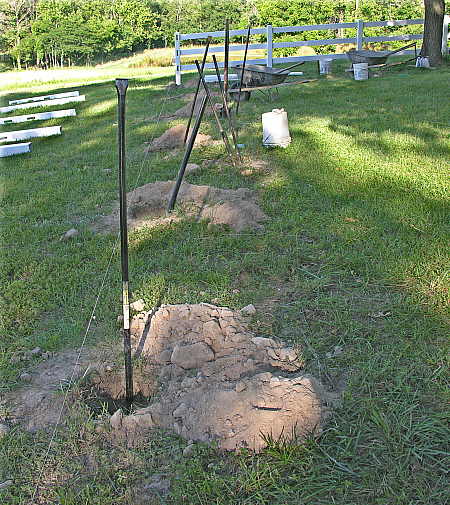
Fence post holes being enlarged

As you can see from the photograph above, we are in the midst of a multi-years long fencing project here at the ranch.  The reason for this undertaking is simple – much of the existing fencing on the property is in the neighborhood of 20-25 years old, and as a result of it’s age, maintenance and upkeep have become problematic for this middle-aged baby boomer with a recalcitrant back.

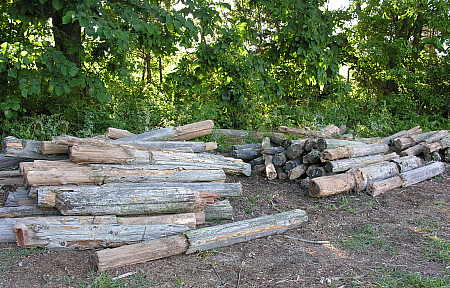
20 year old cedar fence posts

Although there are numerous potential problems with old farm fencing, we were primarily faced with deteriorating cedar fence posts, as shown above.  The posts still retained their structural integrity, however the outer layers of wood have degraded to the point that they will no longer hold a fencing staple or nail.  As a result, frequent maintenance has been required to shore up sagging woven field-fencing and lengthy runs of barbed wire.  A by-product of this fencing project is that we now have a new batch of clean and well seasoned firewood to burn this winter, after I cut and split the old posts this fall.

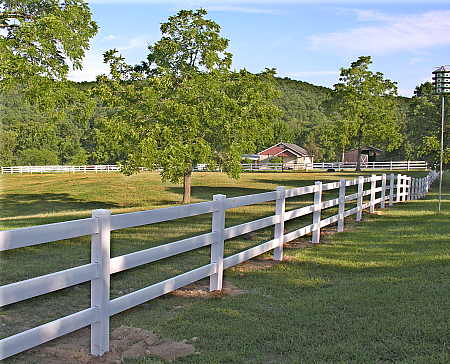
We have opted to convert our horse pasture fencing to a modern, polyvinyl 3-rail equestrian fencing.  The draw of this type of fencing is the promise of a long and maintenance-free useful working lifespan.  When the project is finished, we shall have erected approximately 3000-4000 feet of 3-rail fence, which will enclose the barn and paddock area, and three grazing pastures.  The picture below shows some of the fencing that has already been completed to date –

Polyvinyl 3-Rail Equestrian Fencing

Okay, so how does our current fencing project relate to a “Flashback in Time?”  Well, as I sat one day observing our new fencing, I began to think about all of the fencing systems I could remember seeing in the past.  There are many materials included in my mental fencing inventory, and many construction methods are represented.

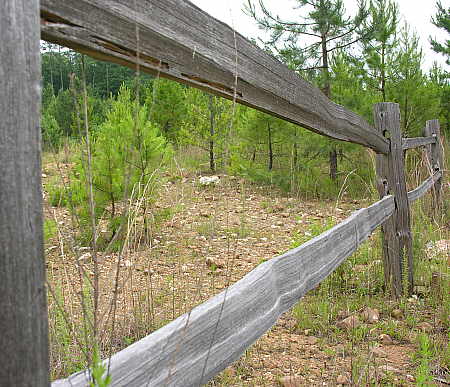
Hand-hewn split-rail fencing

Perhaps the closest cousin to the polyvinyl 3-rail fencing that we are installing is the split rail fencing shown above.  Constructed of naturally occurring regional timber, this was a common type of fencing used around farms and homesteads throughout the nineteenth and twentieth centuries.  This style of fence is relatively strong, easy to build, and somewhat durable.  The main disadvantage of this type of fence is it’s susceptibility to rotting, as you can see in the upper left in the photograph above, and the fact that it will only contain a limited variety of livestock, due to the large gaps between the rails.  It will certainly not deter entry by human interlopers, nor will it keep small critters out of your garden.  A split-rail fence like the one shown above is low on the durability scale, and offers some of the least intrusion protection of any fencing construction styles.

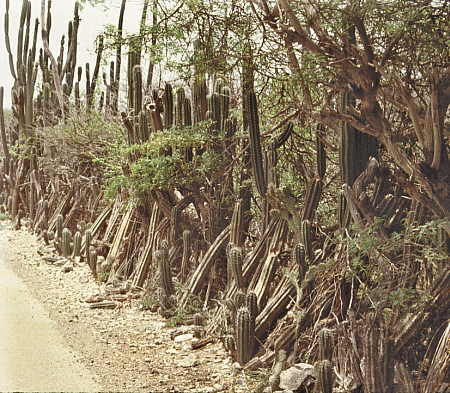
If the split-rail fencing is among the least effective types of fencing that I have seen, then what type of fencing construction tops my list?  It is a type of fencing that few of you worthy and knowledgeable blog readers have probably encountered.  Some time ago, I had the good fortune to travel to the island of Bonaire, in the Dutch Antilles region of the Caribbean Sea.  This was a scuba diving trip to tropical waters, but the diving was done a little different than on most tropical islands.  Because of the topography of the island, the serenity of the waters on the leeward side, and the proximity of the fringing reefs to the shore, Bonaire is an ideal venue for beach diving (that is, entry from the shore rather than from a dive boat).  Because of this, I rented a vehicle to use for the purpose of transporting myself and my dive gear to the various dive sites.  This afforded me the opportunity to sight see as I traveled from reef to reef.  One day, as I was driving to a dive site at the southern end of the island, I came across the following sight –

Effective natural fencing

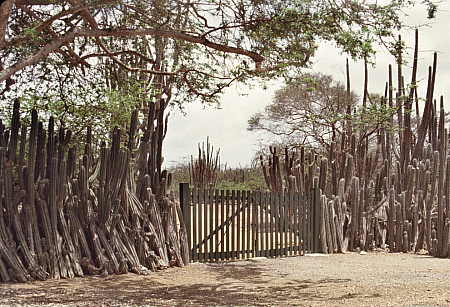
Along the roadside, and surrounding a small farm, was a row of cacti.  Having spent an appreciable amount of time in the deserts of the southwestern United States, I was familiar with many types of cacti, but I had never seen such a uniform and closely spaced row growing in the wild.  It sparked my curiosity, and I stopped to take a picture of this sight.  As luck would have it, the owner of this farm happened to be entering the property at the time, and he came over to talk with me.  I asked him about the cactus, and he explained what this was all about.  Many farmers on this desert island built their fences initially with barbed-wire.  Immediately, they plant small cacti along the fence line.  By the time the original barbed-wire fence has reached an age when maintenance would be required, the cactus will have grown to a point that it acts as an effective barrier.  The beauty of this type of fence construction is that the longer the fence exists, the better it is at fulfilling it’s intended purpose.  Not only does this fence resist deterioration with time, it provides perpetual intrusion protection and livestock containment.  Would you attempt to gain entry to this farm by penetrating the fence?  Do you think a cow, horse or hog would challenge this fence?  I think not.

Mature natural cactus fence

Here is a picture of the gated entryway to the farm I encountered.  The farmer explained that these gates were the only part of the fencing system that ever needed maintenance (not counting the time a drunk driver managed to plow his car through the cacti).

The cactus fencing on the island of Bonaire is the most effective and durable fencing that I have ever encountered, but I don’t think Retta will approve of it here on our ranch.  She detests skin-lacerating, flesh puncturing barbed wire enough as it is, and I am certain that she would approve of cactus spines even less.

Flashback Friday #10

 Channel Islands National Park

Pack your toothbrush and swimsuit, grab your camera, take your Dramamine (if necessary), and join us on multi-day voyage to the Channels Islands National Park, off the coast of southern California.
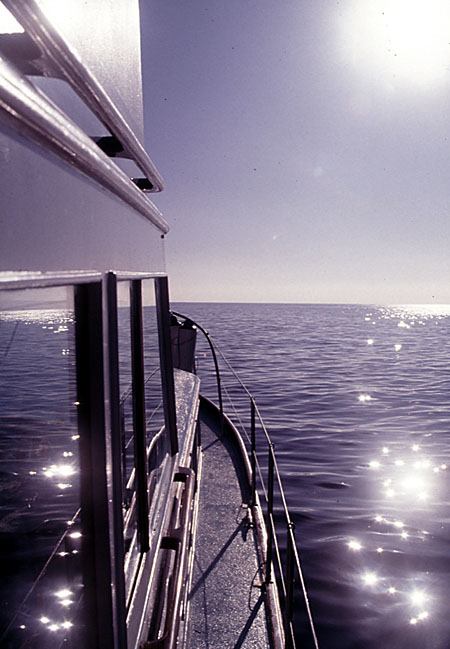
Setting off for Channel Islands National Park

There are eight islands off the coast of southern California.  The most famous, and most visited is Catalina Island, home of Avalon harbor.  The island of San Nicholas is owned by the U.S. Navy, which maintains a facility on the island, and is off limits for civilian visitation.  But there are five primitive, wonderful islands that comprise the Channel Islands National Park.  On this voyage, we shall visit the four northern islands of the Park; Anacapa, Santa Cruz, Santa Rosa, and San Miguel Islands.  It is not easy to get to San Miguel Island.  Located at the far reaches of the Santa Barbara Channel, the weather and sea conditions dictate whether you will be able to reach the island without having to turn back.  Although the seas may be mild at times, they will often reach heights of 25-30 feet, accompanied by gale force winds.  The area around the northern Channel Islands is no place for novice mariners, but relax, you are in the company of a couple of seasoned veterans.
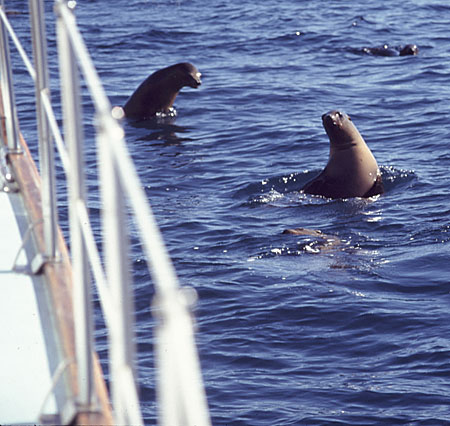
California Sea Lions frolic in the calm water off Anacapa Island

The first island we pass after departing from Channel Islands Harbor is Anacapa Island.  A small island hosting a lighthouse and small ranger station, this island is situated about 11 miles from Channel Islands Harbor.  We will cruise along the back side of this island, where we might be treated to a visit from curious California Sea Lions, who inhabit the rookery at Anacapa Island for part of the year.  After spending a little time with the sea lions, we will continue on our voyage, heading for Santa Cruz Island. Here we will spend the night at anchor at a lovely spot on the back side of the island known as Albert’s Anchorage, about 30 miles from CI Harbor.  After a nice dinner prepared on the deck BBQ grill, we relax and watch the sun set on the horizon.
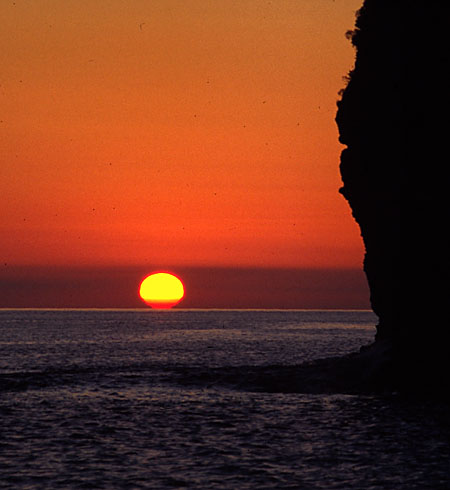
Sunset at Albert's Anchorage

“A red sky at morning, sailors take warning.  A red sky at night, a sailor’s delight”.  According to this old mariners adage, we should be in for a pleasant days journey on the morrow, as we intend to head on over to the next island in the northern chain – Santa Rosa Island.  Santa Rosa Island has an interesting and unique history as a cattle ranch.  Prior to the purchase of the island by the U.S. government for inclusion into the National Park, the island was privately owned and operated as a large and productive cattle ranch.  Mexican vaqueros (cowboys) tended the herds, and the cattle were highly prized for their excellent quality beef.  The cattle transport vessel Vaquero, and later, the Vaquero II, was a common sight in the Santa Barbara Channel, as it shuttled the animals to the mainland from the island.  After the sale of the island, the ranching operation was permitted to continue for a period of time, after which operations ceased, and the cattle were removed from the island.  We intend to cruise to the south side of the island, where we will set our anchor at a spot called Johnson’s Lee, which is about a 60 mile journey from CI Harbor.
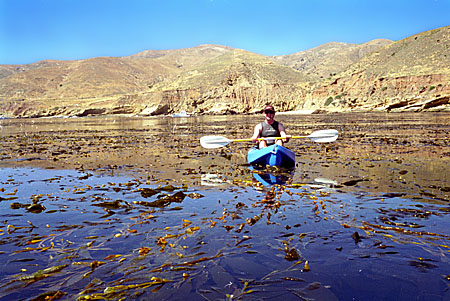
Paddling in the kelp at Johnson's Lee, Santa Rosa Island

Johnson’s Lee is a (sometimes) protected anchorage that contains abundant kelp (giant macrosistis) in beds to depths up to 100 feet.  It is a perfect spot to paddle a kayak, fish, or scuba dive.  Most days you will find that the anchorage belongs to you alone. Occasionally, a commercial dive or fishing boat will pass by, but Johnson’s Lee is generally a secluded spot.
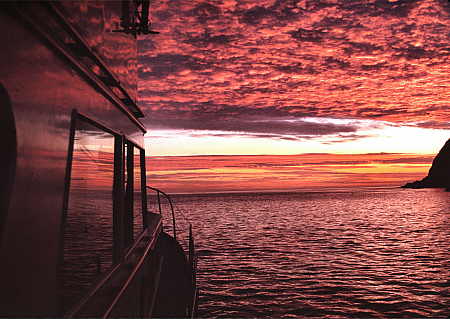
Sunset at Johnson's Lee

As you can see in the photograph above, we seem to be blessed with red skies each night of this trip, and as we listen to the marine forecast on the VHF radio, it looks as if it will be a “go” for our last leg of the cruise to San Miguel Island in the morning.  This final segment of the trip will take us out of the comparative shelter of the islands and expose us to the full force of the prevailing wind, swell and seas of the Pacific Ocean.  Our goal is Cuyler Harbor on the northeast side of San Miguel Island.  Because we have been lucky with the weather, it turns out to be a pleasant and uneventful day of boating, and eventually we enter into, and drop anchor at Cuyler Harbor.
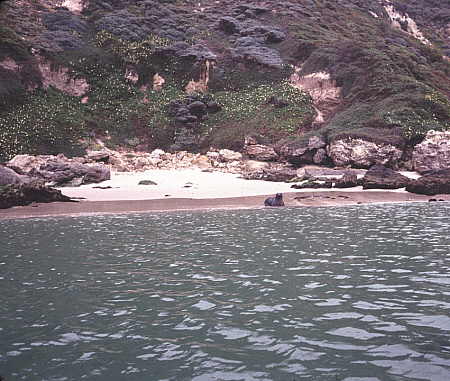
Cuyler Harbor anchorage, San Miguel Island

As usual, we are the only vessel in the harbor, although we may be joined by 1 or 2 small fishing boats in the evening, as they tuck in for the night.  We may be the only boat in the harbor, but we are not alone.  This is the time of the season when the Northern Elephant Seal females, young males, and weaners (weaned pups) haul out for molting along the sandy beaches of Cuyler Harbor.
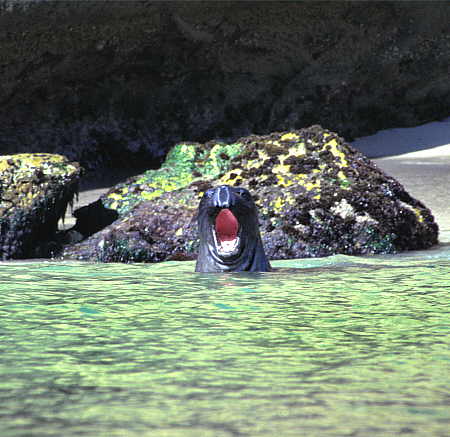
Elephant Seal in Cuyler Harbor

Here, a young male elephant seal practices his guttural bellowing.  The low, rumbling sound of his calls can be heard for quite a distance, and provides an interesting diversion to the sounds of the sea lapping against the hull of the boat at night.
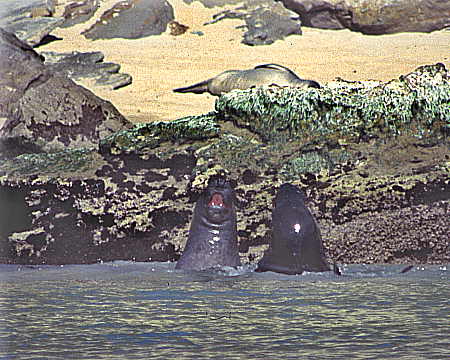
Elephant seals in play at Cuyler Harbor

These two young male elephant seals are playfully sparring with each other, practicing for the time when such posturing and bullying will determine mating opportunities with female elephant seals.  The games continue for hours at a time, and then the young males will haul themselves up onto the beach for some sunning and sleeping.
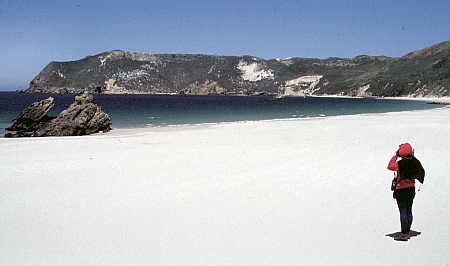
White sand beach of Cuyler Harbor, San Miguel Island

Using the Zodiac tender to land on the beach, we begin our land-based explorations of Cuyler Harbor.  The white sand beaches of the harbor are breathtaking, and the sense of remoteness and isolation permeates the air, along with the cool, salty breezes coming off the water.
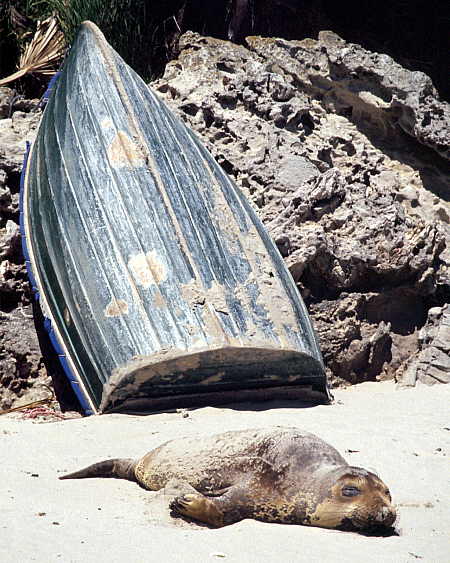
Elephant seal pup sun bathing at Cuyler Harbor

As we begin our hiking, we must pass this weaner, who is quite content to lay on the beach for hours, if not days, on end.  Perhaps he is waiting for someone to help him launch his skiff leaning up against the rocks.  It must be his, as no one else was to be found on the island, and there were no other boats in the harbor.
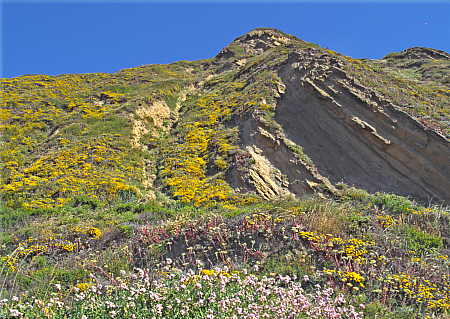
Coreopsis on San Miguel Island

San Miguel Island is one of the few spots in the world that hosts the beautiful Giant Coreopsis.  We are lucky to be here at a time of year when they are in bloom, and the hillsides are bright yellow as far as the eye can see.  Mixed in among the coreopsis are numerous species of wildflowers, each more beautiful than the next.

Overlook of Cuyler Harbor, San Miguel Island

Hiking up the overlook trail, we can look back down upon Cuyler Harbor, as we catch sight of our vessel anchored off in the distance.  Eventually, our land based explorations come to an end (to be detailed in a future post), and we return to our vessel and bed down for the night.  We will spend several more days at anchor here in Cuyler Harbor, paddling kayaks, diving, and hiking on the island.  When the weather forecast suggests calm seas in the morning, we secure the vessel for the long cruise back to Channel Islands Harbor.  Our return route will take us along the front (weather) side of the northern Channel Islands, but the journey should be just fine, as the forecast is for “fair weather, and following seas”, just the words any mariner longs to hear.
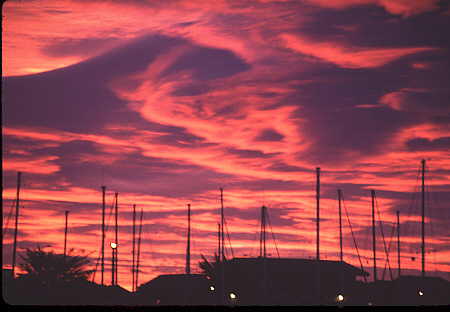
Sunset at Channel Islands Harbor

It is evening before we pull into the slip at Channel Islands Harbor, and after securing and washing off the boat, we sit back on our deck chairs to watch another in the fortunate series of evening sunsets before us.  “Look, Retta – a red sky at night.  Do you want to head off to San Miguel in the morning?” 

Flashback Friday #7

 A Day at the Races

There is nothing quite like the smell of aircraft fuel, super-heated tire compounds, popcorn and hot dogs all mixed up into one giant aroma that can only mean one thing. It’s race day, and I am in heaven!

An up front confession – I was a racing whore.  As a young man I was fortunate enough to connect with a fledgling race team, backed by an awful lot of money, that eventually rose to become a significant player in the Sports Car Club of America (SCCA) Trans-Am racing series.  And my involvement?  Eager to be around racing and race cars at almost any price, I volunteered a great deal of my time to the long, tedious hours of work that go into producing and maintaining championship race cars.  In exchange for my services, the owner of the racing team provided me with airfare, lodging and meals so that I could be a part of the pit crew as the team participated in the Trans-Am racing series around the country.  This was pretty heady stuff for a teenager, and I soon grew addicted to the sport of auto racing.  Eventually, like all good things, this came to an end as my life began to take other paths.

Later in life, while I was engaged as a computer/business consultant, I managed by chance to become involved in automobile racing once again.  This time my position with the race team was a more respectful one.  Now I was working in the capacity of an independent contractor, and actually received substantial pecuniary renumeration for my efforts.  The type of racing which I was involved with had changed as well.  Now I had a chance to rub elbows with the “big boys” of the American racing scene at the time, the Championship Auto Racing Team (CART) racing series.  For those unaware of the racing scene, CART was the sanctioning body for the Indianapolis 500 event, prior to the formation of the Indycar Racing League (IRL) by Tony George, the Indianapolis Motor Speedway owner.

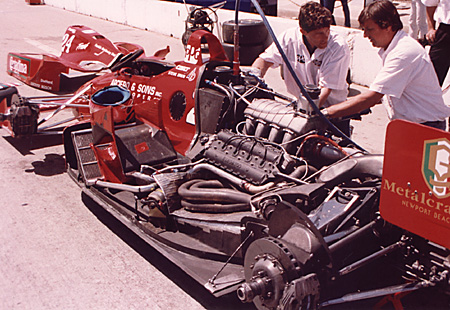
My role with my client racing team was that of a database programmer.  At this time in racing, radio telemetry systems were all the rage.  Real-time monitoring in the pits of all vital automotive systems was being developed and advanced, and all of the major teams were involved in a race to see who could perfect their systems first. Telemetry systems proved to be an important factor in winning the races in the CART racing series.  The team I worked for, Arciero and Sons, wanted to extend the usefulness of the data that was being transmitted in real-time from the car to the technicians in the pits.  And that is where I came into the picture.  My role was fairly simple; capture the data stream as it was received in the pits, creating a database of the various data parameters.  The database could then be used in various ways after the race had ended.  The biggest benefit from this new addition to telemetry systems was in the postmortem failure analysis that occurred when things went wrong on the track.  The team engineers could sift through the recorded data, performing various analytical techniques to try to isolate probable causes of the race cars’ failure.

Fine tuning engine control modules

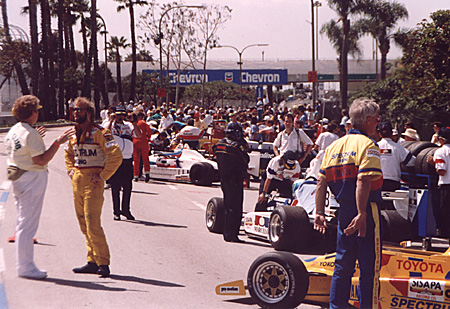
The photo above shows two automotive engineers at work on the race car prior to the start of the Long Beach Grand Prix in Southern California.  What they are doing here is checking, double-checking, and then triple-checking the telemetry sensors and transmitters vital to this new system (winning teams have a peculiar quirk, they like to triple-check everything).

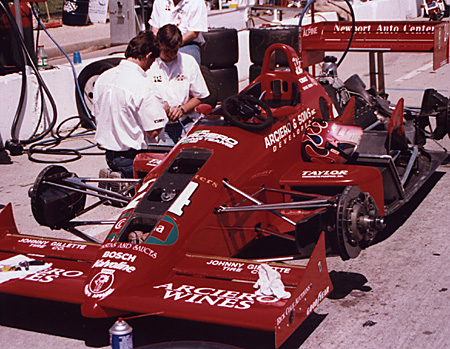
Checking the transmitter for signal strength

As the engineers verify the proper functioning of the various automotive systems, they put the car back together in preparation for the race.

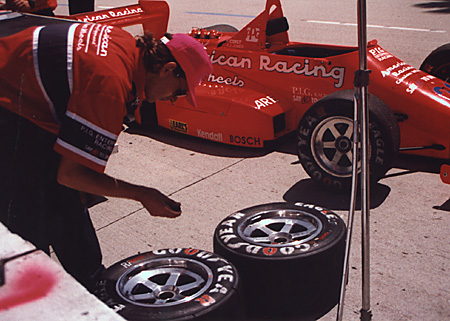
All details must be checked prior to the race

Here, a rival competitor’s crew member checks the air pressure in the tires that will be used at the first pit stop.  Usually each team will assign one crew member with the responsibility of checking tire pressures every 15 minutes or so, to adjust for pressure changes resulting from changes in air temperature.  It is an exacting process, and no detail goes unchecked (by winning teams, that is).

 Excitement builds before the start of the race

The excitement and tension begins to build amongst the folks involved in the racing effort.  A lot of time, effort, and money have been allocated to the racing endeavor, and all are hopeful for the best results, but each racer knows that only one car will cross the finish line first.

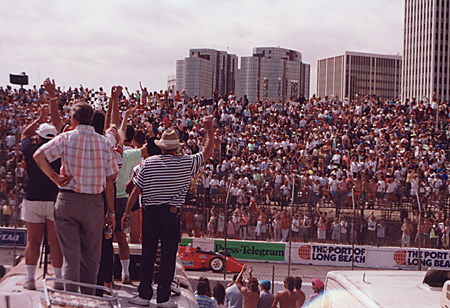
Huge crowds attend the race

When the race finally gets underway, thousands upon thousands of race fans gather and cheer along the teams that they favor.  And once again, I get to savor the pungent, almost sickening-sweet aroma of aircraft fuel, super-heated tire compounds, popcorn and hot dogs.  And I love every moment of it!

Flashback Friday #6

 Mount Gould Sojourn

Mofo Five

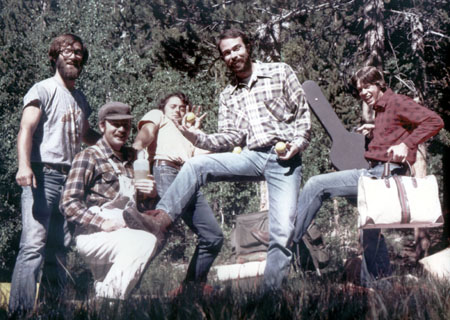
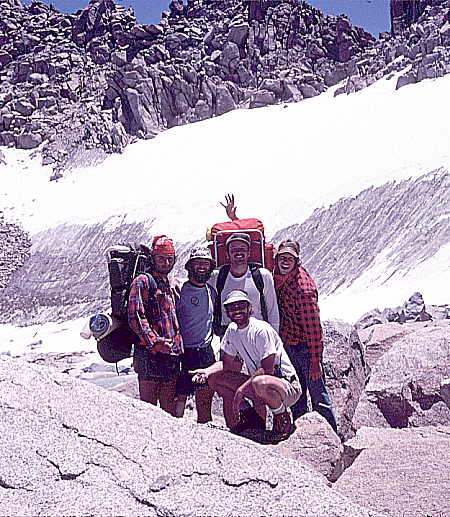
Would you be brave (or foolish) enough to take a journey with this motley crew?  If so, than follow us on our journey to the top of Mount Gould, which occurred over thirty years ago.  The humble author of this blog is the character on the extreme left, in his more *vibrant* days.  Actually, these fellows turned out in later life to be a veterinarian, a physician, a respected music producer, an architect, and some fellow that I heard was last seen furiously writing blog posts somewhere in the Ozarks ;)

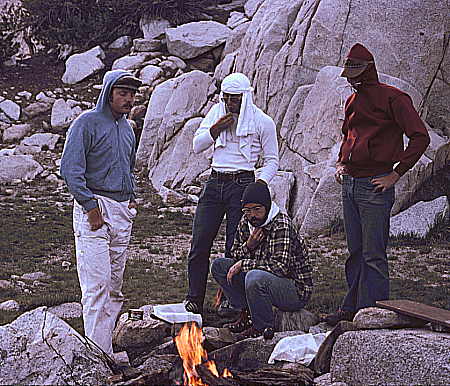
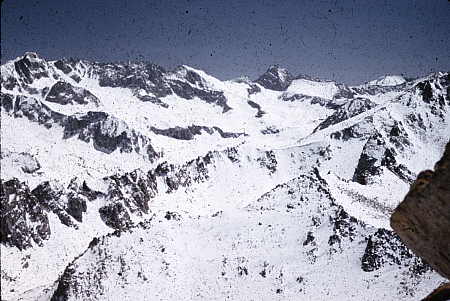
Mount Gould is a moderately high (13005′ elevation) peak in the John Muir Wilderness area of the Sierra Nevada mountain range.  It lies within the bounds of Kings Canyon National Park in California.  The route to the top of Mount Gould takes you from the trail head area in Onion Valley on the eastern flank of the Sierras, through beautiful mountain scenery on your way along the Kearsarge Pinnacles, and ultimately to the craggy peak called Mount Gould.  Here is a photo of our group gathered around the campfire in Onion Valley as we acclimate to the elevation change and prepare for our climb to come.

Keeping the mosquitos at bay

If you thought that we were huddled by the fire for warmth, you would be wrong.  It turned out that the mosquitoes were extremely pesky that evening, and the only comfort was to cover up from head to toe and stay close to the smokey, sooty fire for protection.  The next day we hiked along the rugged Kearsarge Pinnacles area on our way to the base of the ridge leading up to Mount Gould. 

Setting off for the base camp

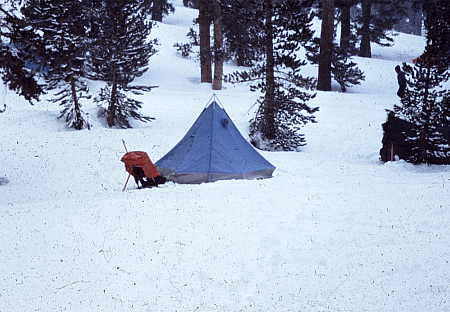
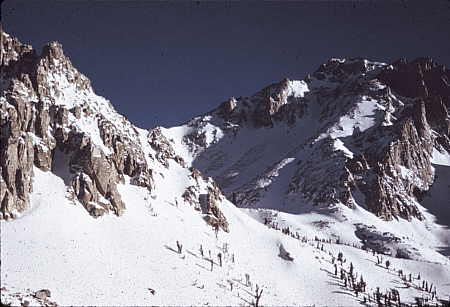
As we gained elevation and ventured further into the High Sierras, we began to encounter snow on the ground and in the trees.  Finding a spot to set up camp was pretty easy – you certainly didn’t need to worry about where to pitch your tent, as the entire surrounding landscape was blanketed by a soft carpet of snow.  As long as you stay out of any avalanche pathway you are safe and secure.  It is off to bed early in the evening, as we have a strenuous hike awaiting us in the morning.

Base camp

When we arise early the next morning, we assess the first leg of the hike.

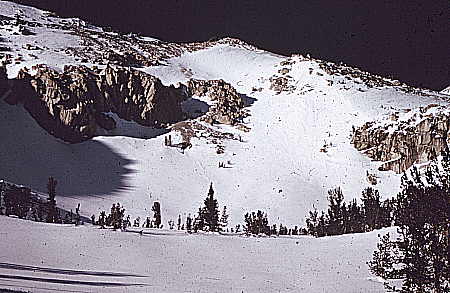
First leg up the mountain

We will begin our ascent by following the ridge you see in the photo above.  We plan to switchback across the snow-covered slope before us, ending up on the crest of the ridge at the far left in the photo above.  From there the plan is to follow the ridge line as much as possible on our way up to Mount Gould.

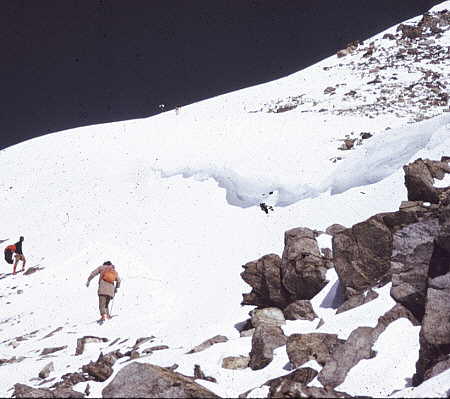
Making our way up the slopes

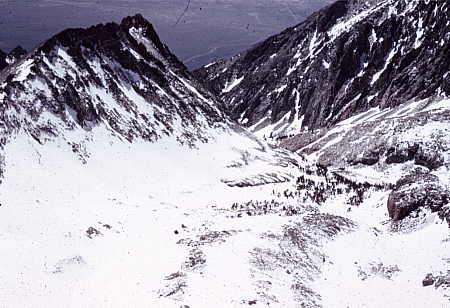
Here you can see what is involved in this trek.  The climbing is not technical at all, just a slow but steady plodding up the snow covered slope toward the first goal we had set, which was the ridge line above us.  Eventually, we arrived at the top of the ridge, and were greeted by the following sight –  

Mount Gould behind Kearsarge Pinnacles

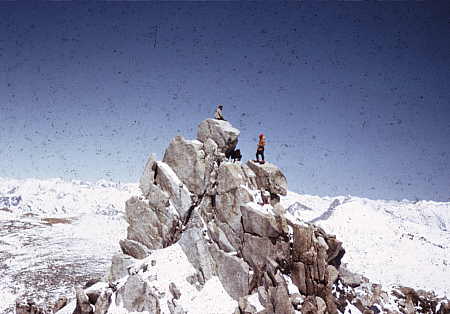
In this photo you can see Mount Gould, just to the right of center.  We are still quite a distance away from our goal, and we have lots of snow and rock to traverse before we arrive at our intended destination.  It is a test of fortitude and desire more than skill or daring to climb this sort of peak in the winter, but if you plan properly, and stick to your plans, than you will eventually reach the top, as we did here –

Conquering the peak

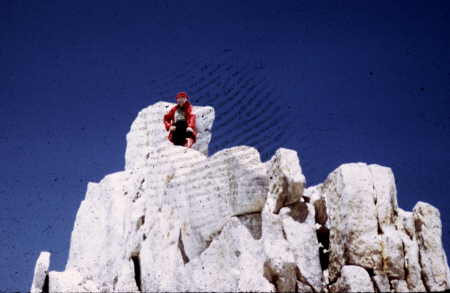
That is your humble (and tired) author you see at the top of Mount Gould.  And how did he obtain this picture?  By sending fellow mountaineer Chris up an adjacent rock to snap some photos, as seen here (hiding behind a nasty fingerprint) –

Chris on a rock (not Chris Rock)

So now we have been successful in our attempt to scale Mount Gould, but the REAL fun is just about to begin.  It has taken us well over 6 hours to make our ascent of Mount Gould, and now we plan to make it back to base camp in less than 1 hour.  And just how do we intend to do this?  By using a technique called the “Glissade”.  The first step in a glissade descent is to don your trusty nylon rain suit.  This will act as a slick surface for your body, which you are soon to propel down the snow-covered slopes as fast as you can, using only your ice axe as a rudder and your ice axe as your brakes (via a technique called an ice-axe arrest).

Glissade chute

In this photo you can see the chute that we chose to glissade down the mountain crest.  On the way up, this section might have taken 1-2 hours to climb.  On the way down, thanks to the glissade technique, it took just a few fun and wild minutes.  From this point we can turn around, and now looking down the mountain again, this is what we saw.

Final glissade down to base camp

All that remained between us and our base camp was this long, steep, snowy section of mountain that was just ideal for a joyous glissade.  We made it back to base camp, tired, a little wet, and very happy campers.  After a good nights sleep, we hiked back down to Onion Valley where we encountered –

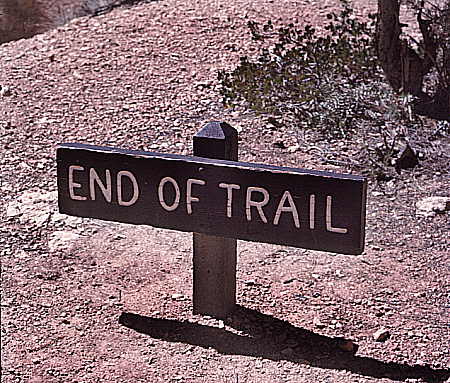
All good things come to an end


The First Sport Utility Vehicles

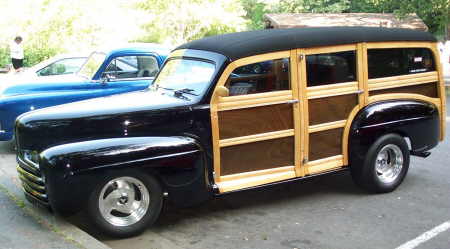
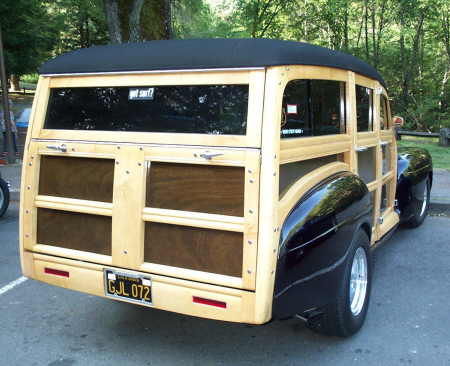
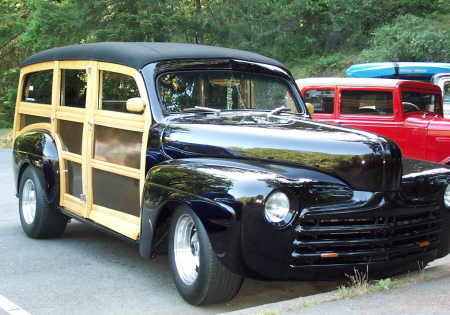
This post could be considered an update to the previous Flashback Friday post.  Over at Pure Florida there is a surfer guy who expressed an interest in the woody shown in the background of a couple of the pictures I had posted.  Had I known, I would have featured a good photo of the vehicle, so Florida Cracker, this is for you.

1946 Ford Super Deluxe Woody Station Wagon

This is a 1946 Ford Super Deluxe Woody Station Wagon.  To be more accurate, it is a highly modified 1946 Ford Super Deluxe Woody Station Wagon, unlike what you would have purchased from your local Ford dealer back in 1946. This was one of the finest regularly driven customized woodies I have ever seen.

Prior to the mid 1930’s, wood was a more economical material to use in the fabrication of automobiles than steel.  Many vehicles utilized wood in the chassis framework as a structural component, upon which steel body assemblies would be built.  Eventually, a small number of automobiles began to shed portions of the steel body in favor of all wood exposed body panels.  Besides the material cost considerations, there was another dynamic at work.  Prior to common adaptation of the automobile as our standard mode of transportation, this country traveled by horse-drawn carriage.  As the automobile gained in affordability and popularity, there were many craftsmen skilled in the methods of woodworking used to manufacture the carriages that lost their livelihood.  By transferring their skills to the automobile industry, many regained employment building the wooden body parts for this new breed of vehicle which we now call a woody.

The original derivation of the term station wagon has interesting roots.  Prior to World War 2, there was no such thing as common commercial air travel.  Substantially all long distance travel in America was done by train.  Passengers needed transportation from hotels and private residences to the local train station to embark on their journeys.  Cabbies, or hacks, began to alter regular automobiles by rebuilding and extending the rear trunk sections to hold the large amounts of baggage that was being hauled to the train station.  This is where the term “station wagon” comes from.  They were also referred to as “depot hacks”, but this term did not stick, so we are left with today’s usage of station wagon.

1946 Ford Super Deluxe Woody

There is much nostalgia regarding the woody as THE wheels for surfers in America.  Contrary to common recollection, the woody was originally chosen by surfers for two simple reasons.  First, they were cheap in the late fifties and early sixties.  While some authentic wood paneled vehicles were produced after WWII (including this 1946 Ford), it was increasingly more economical to produce vehicles entirely from steel.  Since domestic automobile production came to a virtual standstill during the war years, it can be inferred that most woodies were produced prior to 1941.  Therefore, by the late fifties and early sixties, most of the wooden autos still in existence were at least 20 years old.  If you have ever seen an unmaintained woody, you will understand that in 1960, prior to their nostalgia induced popularity, a woody could be purchased for a paltry sum of money.

The second reason that the woody became popular amongst surfers was the space available in the rear to transport their surfboards.  For those familiar with the surf culture, you will know that surfing is a nomadic sport, in the sense that gung-ho surfers are always venturing to different spots seeking the “perfect wave”.  It is not uncommon for a surfer to start his surfing day at one location, and through the course of the day, travel up and down the coast searching for the most challenging wave sets to tackle (and the prettiest surfer girls to flirt with).  The large space in the rear of the woody station wagon was perfectly suited to the task of hauling surfboards.  The flip up tailgates associated with the woodies allow the surfer to quickly throw many boards in the back of the vehicle and travel to the next venue.  It is interesting to note that the second most popular surfer vehicle of the past was the Volkswagen bus, for just the same reasons; they were inexpensive and they could hold many surfboards easily.

1946 Ford Super Deluxe Woody

It is just a guess, but from my observations along the California coastline during the course of many years, it would seem that very few woodies are still being used by surfers.  The nostalgic popularity of these vehicles has probably made the cost of a classic woody prohibitive to most surfers today.

Flashback Friday #5

In the summer of 2000 Retta and I took a road trip to see the old growth redwoods along the northern California coastline.  In this northwestern part of the state there is an abundance of protected lands including Redwood National Park,  Prairie Creek Redwoods State Park, Del Norte Coast Redwoods SP, and Jedediah Smith Redwoods SP.  These parks are all managed cooperatively by the National Park Service and the California Department of Parks and Recreation.

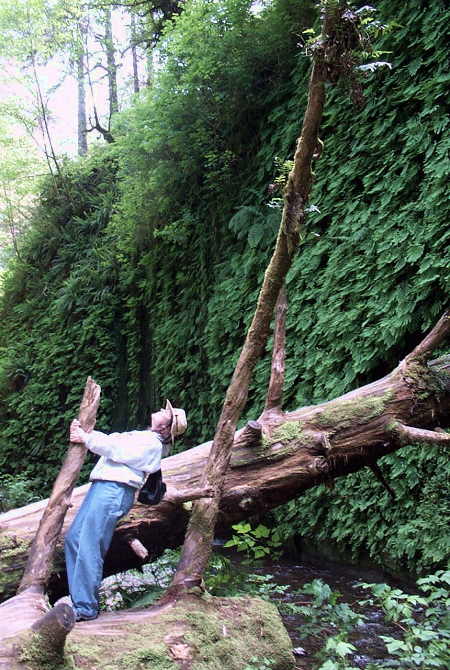
One treasure that lies within this region is the  under-visited Prairie Creek Redwood State Park.  Besides the majestic coastal redwoods (the tallest living organism), this park contains two gems.  The first is a place called Fern Canyon, which is a lush, green canyon filled with ferns (aren’t I perceptive?).

Enjoying Fern Canyon

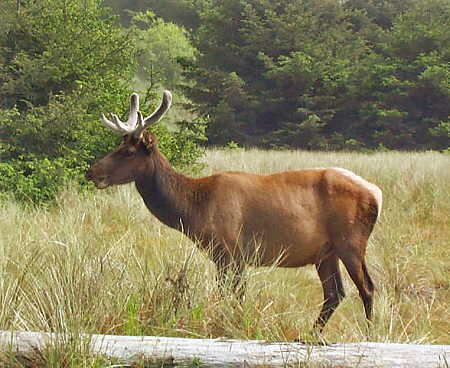
Fern Canyon is a beautiful place to spend a morning or afternoon enjoying the ambiance that only a fern canyon can provide.  As an added treat, in order to get to the trail head that takes you into the canyon, you have to drive along a stretch of land called Gold Bluffs Beach, which offers absolutely spectacular vistas of the coast and ocean.  But the real draw for photographers and nature lovers are the elk which inhabit the beach area.

Elk at Prairie Creek Redwoods SP

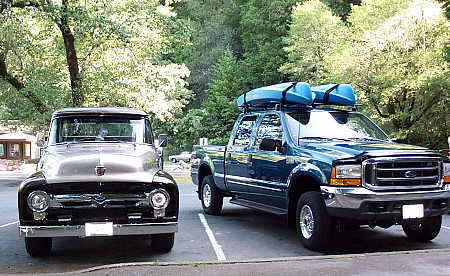
It’s funny how you can travel to a destination in order to see the expected sights, only to find something else entirely unique and unexpected.  This is what happened to us on this particular trip.  As we were driving along the Redwood Highway, we found an unoccupied rest area along a beautiful river. Pulling into the rest area for a some R&R, Retta and I got out our folding chairs and settled in to enjoy a little snack.  Not long after, we noticed a truck parking next to ours.  At the time, our truck was a 2000 Ford, shiny and brand new, looking as if it had just come off the showroom floor (which it had).  The Ford truck which had pulled in beside ours was about a half-century older than our truck, but it looked shinier and newer than ours did!

Which is the new truck?

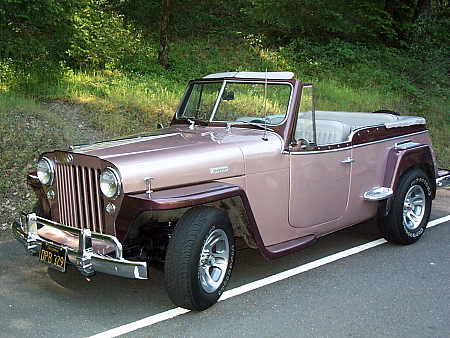
Before long another vehicle enter the rest area, this time a sparkling Willys.  I believe it was a 1950 Willys Jeepster Phaeton, and it was immaculate.

1950 Willys Jeepster Phaeton

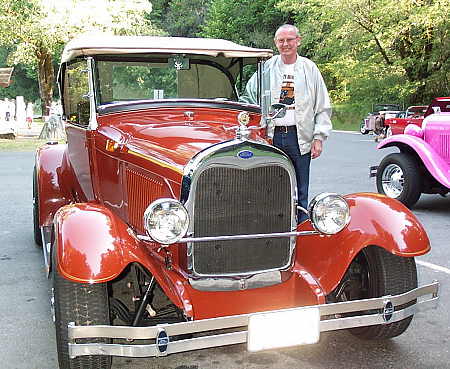
Being a car-guy at heart, I had to investigate these vehicles.  As I got up from my chair to walk on over to the parking lot, I saw several more vehicles enter the lot, each one more exotic than the last.  I talked to a gentleman who had just jumped out of this set of wheels –

Old Ford roadster

He explained to me that this was a vintage and customized car club out for their monthly weekend excursion.  Part of the rules of the club are that all members (which in this case are the cars, and not the people) must be ambulatory, and that to remain in the club, each vehicle must participate in at least 6 such outings per year, or be put on probation (whatever that entailed).

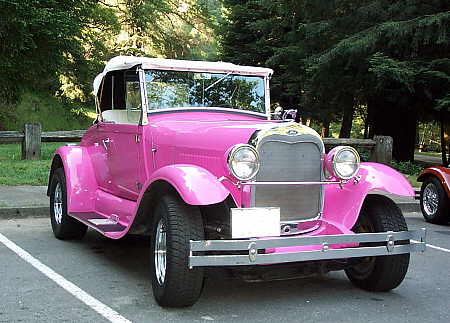
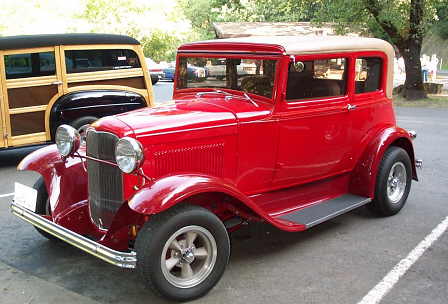
Before long, the entire lot was filled with all manner of unique and interesting vehicles, most of which I cannot identify with any precision, so I will not attempt to.  But here are some more of them.

Nice ride!

Gangsta sled

Big wheeled baddie

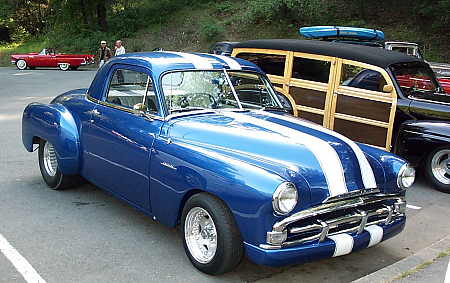
You can’t see it in the last picture, but the entire rear of this vehicle (I think a modified business coupe) has been altered to accommodate the massive 20″ wide rear tires!  There were probably about 40 vehicles in total that day, and the best part of it all was that Retta and I were treated to a “personal” car show.  As you may well imagine, each vehicle owner was eager to talk about their buggy, and there were many interesting tales that were told.  Alas, I only wish that I had taken notes, so I could remember all of the details.

Flashback Friday #4

Lessons Learned the Hard Way

In the early 1970’s I owned a Toyota Landcruiser (“Toy”) that I came to believe was jinxed.  While this vehicle brought me plenty of pleasure in it’s ability to allow me the freedom to explore rugged terrain, it also had it’s share of tempermental moments.   For instance, once on a trip to Oregon to visit my friends Craig and his lovely wife Linda, the three of us decided to explore a slough off the Willamette river.  Along this slough, there were numerous shallow puddles of standing water that we wound around and motored through.  The shimmering water in the afternoon sunlight was an enchanting sight to behold.  So much so that I lost focus on what I was doing and drove directly into a deep hole filled with water.  Darn jinxed Toy!  “Well, this is no big problem” I thought to myself.  We can just back out of this measly little puddle.  I believe Craig just chuckled to himself as he hopped out of the Landcruiser to snap a picture.  Linda was apparently confident at this point in time, at least as far as I can tell from the picture below:

We'll get out of this mess

Putting the transfer case into granny-low gear, I attempted to back the Toy out of the puddle.  We were sitting on a silty surface, however, and the vehicle tires promptly dug themselves into the mud.  Darn jinxed Toy!  “Well, this is no big problem” I thought to myself.  We can just get out the high-lift jack, jack the Toy up very high on the jack, and then push the Toy over to the side, thus putting the tires on a more solid footing.  I believe Craig just chuckled to himself as he hopped into the water to help me along with this scheme.

Hmmm - this doesn't seem to be working

This incident occurred over thirty years ago, and so my recollection of the exact events that transpired from here on may be a little rusty, but I think it went something like this.  Craig and I spend hours and hours trying out various schemes and methods in our attempt to free the Toy.  I recall Craig doing a lot of chuckling in the process.  I recall myself uttering a few curses.  And I recall that we were totally unsuccessful in freeing the Toy.  I had managed to flood the engine with water however, and now we had no power.  Darn jinxed Toy!  “Well, this is no big problem”  I thought to myself.  Actually, “this is now a problem” is what I really thought!

In this part of Oregon, at least back at that time, logging was in full swing.  Fortunately for me and the Toy, Craig pointed out that there was a saw mill located nearby.  It was now near midnight, and we figured (actually, Craig figured) that if we hurried on over to the mill, we might find someone to help us out of our predicament, as the mill shift change occurred at midnight.  Sure enough, we found a man with a four-wheel drive pickup sporting a winch (not an unusual sight in Oregon) who agreed to help us.  Soon, he and his winch had the Toy back up on solid ground.  This kind and helpful man even towed my now non-operating vehicle to a local service station, where we parked it for the night.

The following morning, Craig gave me a ride to the service station, where I learned from the mechanic that yes, he could drain and flush the engine, transmission, transfer case, front and rear differentials, but that it would be very costly.  Darn jinxed Toy!

The following year, while out exploring in the California desert with some friends, we had a little competition to see whether my Landcruiser F-40 could outperform their Jeep CJ5 over a rugged desert trail.  Up and down the hills and ravines we drove (in a designated ORV area, I should note) pushing our vehicles to the limit.  My Toy performed admirably in this battle of the 4WD’s, that is, up until the very last hill on the trail.  I was so thrilled over the prospect of a good showing amongst my Jeep driving friends that I lost focus once again, and drove over a large rock that I shouldn’t have.  My vehicle became high-centered on a boulder, and I was once again stuck.  Dang rocks!   Darn jinxed Toy!

When will I ever learn?

Later that same summer, I again headed up north, this time to the west coast province of British Columbia, where I was keen to do some hiking.  Along the way, in Washington state, I met a nice couple who were very interested in my Landcruiser.   After much discussion about the pros and cons of owning such a vehicle, we decided to do some day hikes together.  When they learned that I was headed towards the Canadian Rockies, they offered me the use of a cabin they owned in BC.  They told me that they had built a bridge over a river that runs alongside the cabin, and that the hiking from that point was excellent.  I took them up on their offer, and so they proceeded to draw a map directing me to their remote cabin in the woods.  When I arrived at the cabin, this is what I found –

 This is the place I'm supposed to stay in?

Parking the Toy, I investigated this old dilapidated structure.  From inside, you could see rays of daylight streaming through the roof.  There were all manner of creepy-crawlers on the floor and on the walls.  Droppings from vermin was everywhere.  This was not the type of accommodations I had expected, and I refused to stay in such quarters.  Exploring out back, I found what appeared to be some type of old storage structure, or maybe an old hog shed.  Whatever it was, it was clean inside and had a functional roof, so it became the base camp for my hiking.

A good place for shelter from the rain

Even though the cabin that the couple had told me about had not lived up to my expectations, the hiking that was available beginning across their bridge was some of the best I have ever encountered. 

A great place to begin hiking

After spending a week hiking and camping out in the hog shed, I decided that it was time to push onward in my journey.  As I loaded up the vehicle with my camping gear, I noticed a large puddle of fluid underneath the front of the Landcruiser.  Getting down on my hands and knees to investigate, I discovered that some critter had chewed through the lower radiator hose, thereby releasing all of the coolant from the radiator.  The vehicle was again non-operational, and I was stuck far from any village or town.  Darn jinxed Toy!  “Well, this is no big problem” I thought to myself.  Having the foresight to pack the always-essential roll of duct tape in the tool box, I proceeded to wrap the damaged hose with tape, fill the radiator with water from the river, and limp on over to the nearest town, where proper repairs were undertaken.

It was not until years later, after I had sold that Landcruiser, that I finally realized what wonderful experiences that Toy had given me.  And looking back, I can now see that I was the cause of most of my travails with that vehicle, not the vehicle itself.  So the lessons learned are A) look to yourself as the cause of your follies, and B) drive a Jeep instead of a Toyota!

Flashback Friday #3

About Bodie California

In 1859, nearly 150 years ago, gold was discovered in Mono County, California.  A mill was established in 1861, employing about 20 workers who were the founders of the town of Bodie.  By 1880, Bodie had grown to exceed 10,000 residents.  Like all boom towns that grew up around the gold strikes of the mid 19th century, the were saloons, hotels, brothels, thieves and scoundrels.  But there were also hard working, churchgoing, God-fearing people living in Bodie as well.  Again, as happened in other gold-induced boom towns, eventually the cost of extracting the gold exceeded the dwindling revenues generated by the mining endeavor.  The mine was no longer capable of supporting it’s workers, and this triggered the collapse of Bodie’s economy.  A fire in 1892 sealed the fate of the town of Bodie, and now it joins the ranks of other gold-rush era ghost towns.

Bodie is now operated as part of the California State Park system, and is opened to visitors (although the general public may not enter the buildings, except that select groups are allowed entry after-hours by special arrangement).   Mono County, where Bodie lies, is within the arid rain shadow of the mighty Sierra Nevada mountains.  The resulting dryness is ideal for the preservation of the surviving structures in the ghost town.

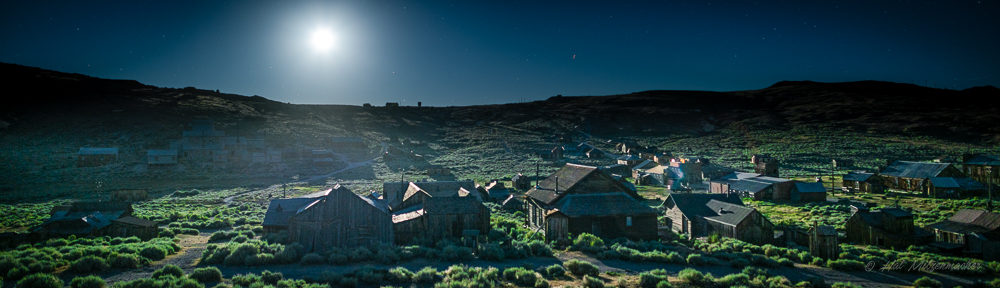
It seem obvious to me that pictures of a ghost town should convey a certain “ghastliness”,  so I have taken the liberty to doctor up the following photos.

Ghostly moon over Bodie

A haunted church?

How much was a gallon of high-test gasoline back then?

Freight wagons

Main Street

The mines at Bodie

Examining the ruins

Abandoned wagons litter the street

Carpentry shop

Flashback Friday #2

Let’s turn the clock back to the year 1966.  If you were around in 1966, you would have found the following to be true:

Lyndon Johnson was President of the United States.  The new Medicare act was implemented.  The Supreme Court issued the the well-known Miranda decision.  It was a bad year for Los Angeles sports fans, as the Baltimore Orioles swept the LA Dodgers in 4 games, and the Boston Celtics bested the LA Lakers in an extremely competitive 7 game series.  The Oscar for Best Picture went to “Sound of Music”, and Frank Sinatra walked away with the Grammy award for Best Album of the Year.  On the economic front, you could buy first-class postage for a nickel.

But the most important 1966 event in the agricultural world was the introduction of the John Deere model 1020 industrial tractor.  The significance of this tractor is that it signaled to the tractor world John Deere’s intention to compete vigorously in the low cost utility tractor market.  To be price competitive, John Deere needed to cut production costs, and to that end, they developed a three-cylinder gasoline engine, which was put into their new model 1020 tractor in 1966.  This tractor is credited with starting the 3-cylinder utility-tractor engine configuration, which is so popular  among tractor manufacturers today.  Here is a picture of the John Deere model 1020 tractor, which sold for $4500 back in 1966-

John Deere 1020

This is a 1966 John Deere model 1020 tractor that is owned by my neighbor Jimmy.  This is not a “coddled” tractor restoration by any stretch of the imagination.  This is a work-a-day tractor that is put into hay production and bush-hogging use regularly.  Periodically, this tractor needs to be “convinced” as to who’s the boss.  Jimmy stores a large, heavy hammer in the tractor’s tool box for just such occasions!

Our late neighbor Boots used to cut, rake, ted, and bale the grass in our hay fields until he passed away several years ago.  Now, Jimmy is doing this for us on a share basis.  Here is Jimmy hard at work cutting the hay in preparation for baling this past season-

Jimmy cutting hay with a sickle-bar mower

The hay field pictured above is one of the fields that Retta and I have decided to take out of hay production this year.  It is our hope that by keeping the fields that are close in proximity to the house and barn areas short, we will reduce the effects of predation on our fowl (see previous post).  It is also our hope that the short grass will help to create a fire-defensible zone in the areas around our house.  You may already know that we have been plagued by a spate of wildfires recently (see posts here and here).  I have read claims on other farming and ranching related blogs that tall grasses will not burn, as long as they are lush and green.  I have seen otherwise,  and until the firebug that is running around in our area is apprehended, I will rest easier with short grass surrounding the house and paddock areas.

Like all other land-use decisions a property owner faces, this decision involves various trade offs. Short grass means less cover for predators, which is our goal.  But it also means less cover for the wildlife that have learned to make effective use of the tall grass.  Birds of various species use the grasses to nest in.  Deer use the grasses for browse and for cover.  Grassy areas along the forest-field transition are used by the deer to give birth to their young.  Wildlife of all types will use the tall grasses to bed down in.  And who hasn’t heard of the proverbial “snake-in-the-grass?  The long grasses, which the wildlife have utilized up until now, will no longer be available in these fields.  Not to mention the production of several hundred square bales of hay that will be lost.

Wildlife cover

In conjunction with our decision to take several hay fields out of production, we will be compensating by allowing several other fields, such as the field shown in the photograph above, to grow to their full extent and remain tall throughout the year.  These fields will be cut on a rotating basis, such that, at any given time, long grasses will be available for the wildlife to utilize.

Some crazy, eccentric people will sure go through a great deal of trouble just to raise chickens and guinea fowl, won’t they?

Flashback Friday #1

Since this is the first installment of Flashback Friday, I thought it would be fitting to search for something to post that also related to a first of some kind.  When I came across these photos, my searching immediately ended.

Some years ago,  my daughter expressed an interest in learning to scuba dive.  Having a few dives under my weight-belt, I was totally thrilled at the news.  Sara enrolled in a basic open-water certification course (taught by her cousin Bruce), and after thorough training involving classroom work, pool training, beach dives, and open-water dives off of a commercial dive boat, she proudly had her C-card in hand.  Retta and I were living on a boat at that time, a trawler named Lorelei, so we said “Hey Sara, how about going out to the Channel Islands with us for some diving?”  “Sure”, she replied.  And so we did.

Gearing up for a dive

While we were gearing up for a dive along a shallow reef in the vicinity of the sea lion rookery on the south side of Anacapa Island, we spotted a harbor seal peeking out from the floating kelp fronds, apparently spying on us.

Who just dropped an anchor on my fin?

After finishing the ritual of gearing up and performing buddy checks on each other, Sara and I took turns entering the cool waters of the Pacific ocean with the finest back-rolls off the starboard bulwark that we could muster up.

As we descended down the water column, we could not help but be entranced by the sight of the giant kelp, which sways to and fro in the gentle surge of the sea.

Descending into the kelp forest

As we continue our descent to the bottom, so that I can check to be certain that the anchor is securely set, we both continue to admire the surreal seascape that unfolds before our eyes.

The kelp forest is enchanting

As you gaze up at the sight of the sunlight, watching as the rays dance between kelp fronds, you can become so entranced with the moment that you don’t notice other things that surround you.  Like the harbor seal that Sara and I saw from the deck of the boat.

Who dropped an anchor on my fin? I want to know who dropped that anchor?

Because we had been so intent in our focus on the kelp, this harbor seal felt secure enough to approach us.  After spending a little while with us, the seal lazily swam off into the kelp forest.  Sara and I continued our dive, examining the various creatures that one is likely to encounter in the area, including a curious California sea lion.

Did someone mention an anchor?  There's one down to the left.

They say that all good things must come to an end, and so it was with this dive.  Sara and I made our way back towards the boat.  Locating our anchor line, we were about to begin our ascent when we spotted another harbor seal, apparently their to bid us adieu!

Please come back - but leave your anchor at home next time!

Slowly ascending along the anchor chain, we made a safety decompression stop at a depth of 15 feet.  When the required time had elapsed, we both made our way over to the swim platform, where we boarded Lorelei and stripped off our gear.  This had turned out to be a wonderful day.  The sun was shining.  The seas were calm.  The visibility underwater was excellent.  The marine life had been exceptionally cooperative.  But most important, Sara’s maiden dive as a certified diver turned out to be a great one!

Congratulations Sara - a job well done!

And Sara’s papa was proud.

In Remembrance of “Squawk”

Sometimes Retta will toss stale bread and other tidbits out on the lawn for the crows to enjoy.  There is one crow who will often come near the kitchen window and pester Retta with it’s cawing until she tosses something out for it.  This got me to thinking about a crow I met some decades ago, in the badlands of Death Valley

Badlands of Death Valley

Death Valley was one of my frequent haunts decades ago, and I would try to visit the area twice per year.  One of my favorite hikes extends from the valley floor, up through the steep, narrow walled Golden Canyon, and on to Zabriskie Point (at the very upper right in the photo above).  At the very left top of the photo is a landmark called Manley’s Beacon.  Here is a closer view of Manley’s Beacon:

Manley's Beacon, Death Valley

The area around Manley’s Beacon is a rugged, but very beautiful area, so I made it a habit to pack a lunch and spend a few hours poking around the area for photo ops, or looking for fossils, or just enjoying the scenery.

Picnic lunch spot

One day, as I was eating my lunch, I heard the distinctive “caw, caw, caw” of a crow echoing throughout the area.  The cawing continued for quite a while, and seemed to originate from a draw some distance away.  Suddenly, on a whim, and knowing that I was out of earshot of any other people, I began my best imitation of a crow.  Soon, the crow began to mimic my cawing patterns.  I kept this up, and much to my surprise, the crow flew over to where I was sitting.

First meeting with Squawk

Well, I certainly didn’t want to get a reputation for being inhospitable, and since I was eating lunch, I offered the crow a morsel or two (okay, so I shared half my lunch with him, so what?).  The crow spent a good deal of time with me on that rocky outcropping, but refused to come any closer than a few yards away.  He looked nervous about being even that close to me, but I suppose his fondness for people food trumped his fear.

She exhibited wariness at first

On my next trip to Death Valley, several months later, I hiked up to the same area and soon settled in to eat my lunch.  I began a chant of “caw, caw, caw”, and before long, my chants were being echoed by some crow in the distance.  This time, as the crow approached the outcrop, he showed no sign of hesitation, and proceeded to land almost on my boot.  We had lunch together, and then he left.  I believe it was on this second encounter with him, that I began to call him “Squawk”.  It just seemed to fit.

The crow gets more brave with time

This routine went on for a few years.  Whenever I would visit Death Valley, it now became a necessity to hike up to Manley’s Beacon, just to see if Squawk would show up for lunch!  It almost became an obsession.  About five years after my first encounter with Squawk, I again returned to the area, and being a creature of habit, again went to visit my “friend” the crow.

A later visit to the badlands

Before too long, as had become the routine, Squawk responded to my calls, and joined me for lunch and a little socializing.

Squawk, is that you?

But this time, Squawk had a surprise for me.  Squawk was not a he, but a she.  At least, that is what I now presume.  For Squawk had brought along a guest for lunch, and he certainly appeared to be more the virile sort than Squawk.

Squawk's mate?

As it turned out, due to life’s twists and turns, that was the last time I ever had the opportunity to visit with Squawk and her mate.  I do wonder, from time to time, what ever became of them.