You Can’t Escape the Long Arm of the Law

If you have followed this blog for any time now, you may know that we have suffered a rash of wildfires over the past half-year in our county.  We have had four fires that have burned on our property since Thanksgiving Day 2005, and all have occurred under the worst possible conditions for firefighting - very windy days combined with drought conditions (our drought has eased this spring, thank goodness).  If you would like to refresh your memory, you can read previous posts here, and here.

When I read our local weekly newspaper today, I came across the following article:

Arson Investigation Results In Arrest

Following a joint investigation between investigator Jim Thomas of the Marion County Sheriff’s Office and investigators with the Arkansas State Forestry Commission, a Harrison man was arrested for arson.

Marion County Sheriff Carl McBee said, “Nicholas Ray Taylor, age 21, of Harrison was arrested on June 13 on an outstanding felony warrant charging him with unlawful burning, which is an unclassified felony.”

McBee said that the investigation occurred after several fires were reported in the Zinc area of Marion County from January through March of this year.  With information provided by concerned citizens in the Zinc and Lead Hill areas, investigators developed enough information to arrest Taylor.

During the interview, Taylor admitted that he intentionally set four fires in the Zinc area.  Taylor was a new member of the Zinc Volunteer Fire Department.

Taylor was booked into the Marion County Jail and released after posting a $2,500 bond.  He is scheduled to appear in the Marion County Circuit Court on June 28 to answer the charge filed against him.

“I would like to thank all of the members of all of the fire departments who worked long, hot hours fighting these fires and for their assistance during this investigation,” McBee said.

Source: Mountaineer Echo – June 25, 2006 – by Jane H. Estes – Front page

I would also like to thank these firefighters once again for all of their hard work and dedication to their communities.  Without volunteer firefighters, there would be no one to turn to in these kind of situations.  It is too bad that there was one “bad apple” in the barrel, along side of all the other wonderful men and women who give so unselfishly of themselves.  Hopefully, these frightening events are now going to be a thing of the past.  There is enough to worry about in this world without these kinds of nutcases running around loose.

Sir George’s Fifteen Minutes Of Fame

Sir George, our Yellow Labrador Retriever, sat me down and had a talk with me today.  It seems that he was feeling a little bit slighted, in that Gracie (our Great Pyrenees) and the two new kittens appear to be getting more cyberspace notoriety than he is receiving.  I indicated to George that he had a valid point, and that I would attempt to rectify the situation.  After consulting with my editor-in-chief (me), I decided to help George attain his well deserved fifteen minutes of fame by posting his picture on the World Wide Web.

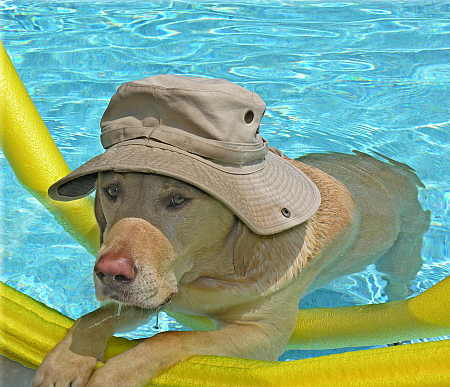
George loves summertime activities.  His favorite pastime, besides sleeping and eating, is lazing around the swimming pool.  Doesn’t he look as if he would fit right in at one of those senior-citizen retirement villages that are so heavily promoted down in Florida?  I think he would enjoy a good “swim-up” bar, along with a friendly older gentleman to talk to on occasion. 

George loves summer activities

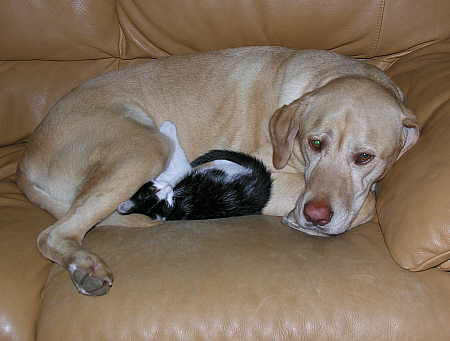
As you can see in the picture below, George and the kittens are getting along just fine.  Sometimes the kittens drive George crazy with their constant playfulness and miniature feline antics, but usually they just seem to enjoy each others company.

The nurturing instinct takes over

If cats and dogs, who are reputed to be natural enemies, can get along like this, why can’t we humans do the same, I wonder?

Flashback Friday #8

William J. Clinton Presidential Center
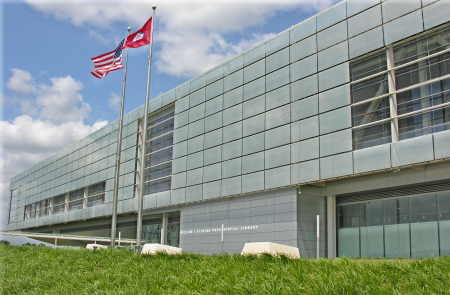
 Exterior of Clinton Presidential Center

Today’s field trip takes us just south of the Ozarks to Little Rock, Arkansas, where we will visit the Clinton Presidential Library and Museum.  The Clinton Library is the newest of eleven Presidential libraries administered by the U.S. National Archives and Records Administration.  Besides the Clinton Library, I have visited the Herbert Hoover Presidential Library and birthplace cottage located in West Branch, Iowa, and the Ronald Reagan Presidential Library located in Simi Valley, California.  The Harry S. Truman Presidential Library in Independence, Missouri is on my list for a visit in the near future, and I aspire to see the seven additional Presidential Libraries in the course of my lifetime.
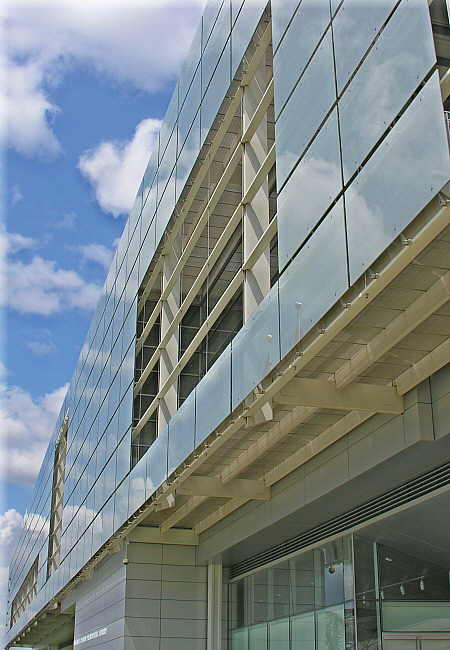
Unique architecture abounds here

The first thing that one tends to notice upon arrival at the Clinton Library site is the unique architecture of the building itself.  I have seen this building in photographs, in video, and through the lens of my camera.  And none of these depictions of the building do it justice.  My meager photographic skills certainly can’t, but maybe they will whet your appetite to see for yourself some time. 

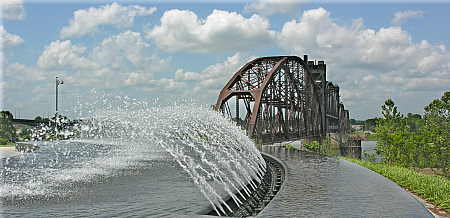
Plaza fountain

The grounds of the Clinton Presidential Center lie along the banks of the Arkansas River, next to an old railroad trestle that is in the process of renovation.  The area is beautifully landscaped, and though it will take many years to achieve the mature lushness that surrounded the Hoover Library in Iowa, or the wonderfully aromatic rose garden at the Reagan Library in California, it is in a remarkably pretty location.
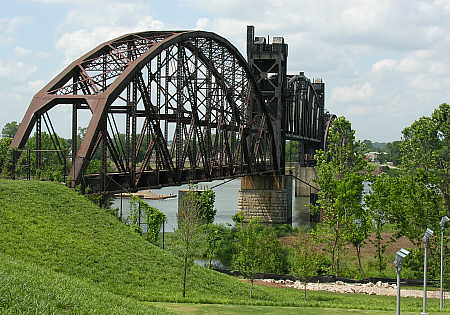
Railroad trestle across Arkansas River

As you begin to acclimate to the unusual architecture, you begin to notice all kinds of little surprises, such as this interior/exterior transition which is viewable from upstairs only –
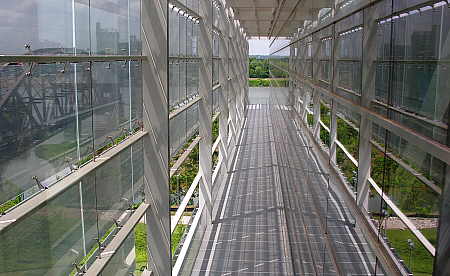
Ever changing views

The public exhibits are contained on two floors, with an open mezzanine allowing for an unimpeded view of the facility.  I was impressed by the spaciousness that this design presented, as opposed to the museum-like, one room leading into another room design of the Reagan or Hoover Libraries.  It allows the visitor the opportunity to see where the crowds are gathered at any given moment, and to divert to an empty section of the Library, which makes the visit much more enjoyable.

It is interesting to note the bookcases that are situated at the ends of the exhibit sections, which hold the large blue binder shelves.  Contained within these binders are some of the actual archived and indexed presidential documents.
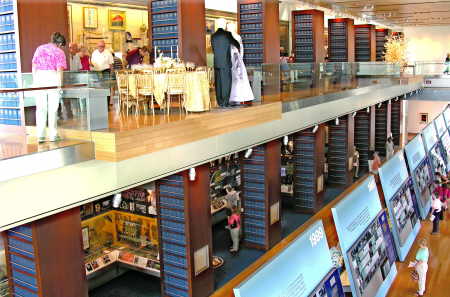
Interior of Clinton Presidential Center

The Clinton Library and Museum exhibits seem to have been designed from the ground up to be a more hands-on, interactive experience than I encountered at either the Hoover or Reagan Libraries.  The Cabinet Meeting Room is recreated in actual scale, and visitors are encouraged to sit around the cabinet table to explore the issues that were current at the time of the Clinton administration.
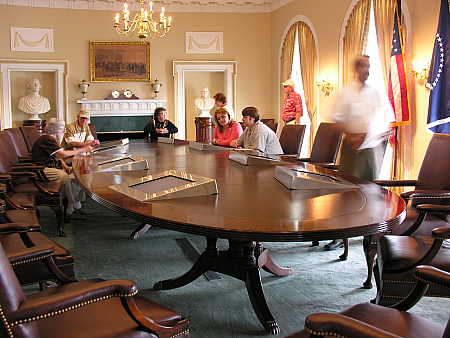
The Cabinet Meeting Room

Interactive touch screen display panels are built into the Cabinet table, and a surprising amount of information is accessible directly from this system.  You are encouraged to ask questions of the docents, who are knowledgeable about many aspects of the Clinton presidency and Presidential protocol.
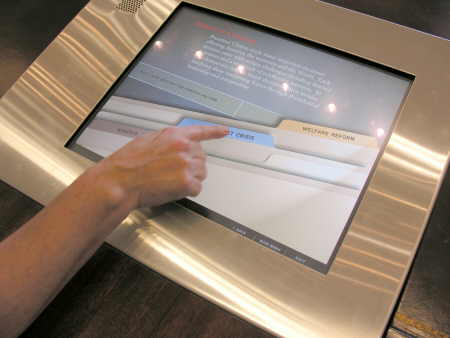
Touch screen information displays

Scattered throughout the building are varied signs and symbols of America and the presidency, such as this rug that lays on the floor of the Oval Office replica.

Seal of the Office of the President of the United States of America

First Ladies in America have a history of White House re-decorating, from flooring to furnishings, from art to landscaping, and everything in between.  But the one item that gets updated most often seems to be the White House formal dinnerware.  The display at the Clinton Library of a complete formal table setting was gorgeous.  Since I am pretty sure I will never be invited to a White House dinner, it was nice to see how I might have dined if I were.
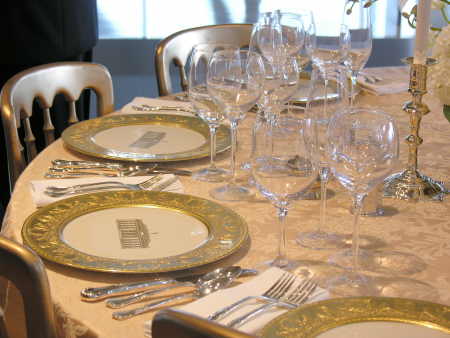
Elegant place settings

A self-admitted car guy, I couldn’t resist snapping a few pictures of the Presidential Limousine.  Forget the sit-down dinner with all the fancy china and crystal and all, I would rather just be invited for a few laps around the block in this baby!  Can you imagine what it would be like to be chauffeured around in the Presidential Limousine, motorcade entourage and all?
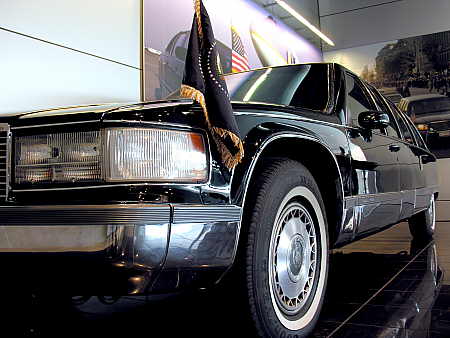
The finest ride in town!

I guess no tour of a Presidential Library should end without some mention of politics, and this one won’t either.  The concept of the Presidential Libraries administered by the U.S. National Archives and Records Administration is to make available to historians, scholars, and the American public the complete record of the subject administration, accessible in one convenient location.  This has been achieved at the three Presidential Libraries that I have visited.

An additional function of these libraries, through the museum portion of the facilities, is to present a portrait, a legacy if you will, of the President depicted.  The materials that are displayed to the public, and the manner in which they are displayed are generally under the control of a foundation created by the former President in question.  It stands to reason that controversial positions of an administration are presented in the best available light by the library’s foundation.  So in the sense that what is displayed, and how it is displayed is cherry-picked, you might argue that you are viewing revisionist history at times.  I will not argue with that point of view, but I will point out that all three Presidential Libraries that I visited seemed to be equally adept at “shaping” events to suit the image they wanted to portray.

So my (unsolicited) advice is this – visit every Presidential Library you can, and take away from them all of the knowledge and history that they have to offer.  Take off your political hat and put on your historian’s hat when you enter the front doors, and be thankful for the opportunity to get an inside peek at selected American presidencies.

Fescue To The Rescue

Festuca arundinacea

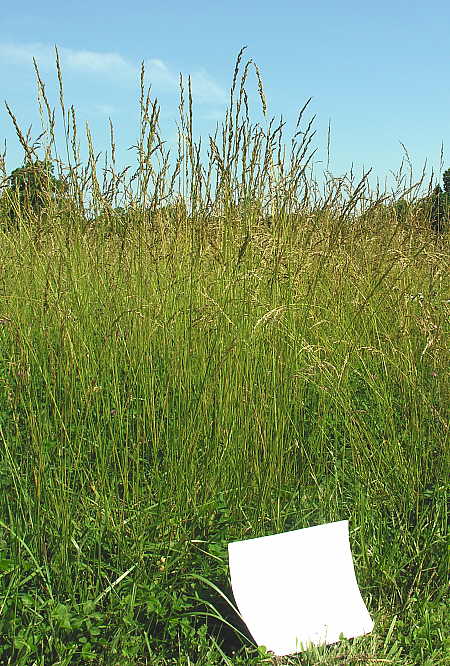
Tall fescue ready for cutting

Tall fescue, as pictured in this 5 acre hay field above, is a robust cool season grass that has been imported to the Ozarks region.  Tall fescue has major benefits to the farmer, but it also brings with it major headaches.

The major benefit that fescue bestows lies in the relatively diverse growing conditions that it will thrive in.  Fescue will tolerate wet soil and short periods of flooding.  At the same time, it is also very draught resistant.  Although it grows most vigorously when soil pH, phosphorus and potassium levels are within certain bounds, it will thrive in conditions that are well outside of the recommended ranges.  About the only requirement that seems to be absolutely necessary for vigorous fescue growth is an adequate supply of available nitrogen in the soil.  Because of the wide diversity of environmental and soil conditions that fescue will thrive under, it has spread throughout the cattle producing regions of the Ozarks.  Agronomists have estimated that about 75% of the tall fescue in the Ozarks is infected with a fungus called an endophyte.  An endophyte is a fungus that grows within another plant, without causing any apparent harm to the host plant, and in some cases, providing benefits to the host.  For fescue, the benefit of the endophyte is that it produces chemicals called “alkaloids” which protect the grass from insects and nematodes.  It is said that any square inch of bare soil will soon grow something, as nature abhors a vacuum.  If that square inch is in this neck of the Ozarks, most likely it is fescue that will emerge, due to the reasons cited above.

The negative factors pertaining to fescue arise primarily due to the health effects fescue has on livestock.  The very endophytes that have caused fescue to predominate in the area also lead to the health risks to animals.  The alkaloid ergovaline causes the constriction of the blood vessels in animals.  Since cattle rely on increased blood flow through capillaries under the skin for heat reduction in the warmer months, the reduced blood flow as a result of vessel constriction can easily lead to heat stress, which in turn leads to early embryonic death.  Another byproduct of fescue induced heat stress is reduced feed intake and decreased animal performance.  For horse owners, the endophytes create a condition called fescue toxicity, which can lead to spontaneous abortion or still birth in foaling mares.

For this reason, farmers reactions to fescue are both mixed and intense.  It is a grass with robust growth, yet requires careful hay and pasture management to prevent adverse health effects on livestock.

There is much information available to the farmer and rancher regarding fescue management.  It can be easily obtained on-line, or through any agricultural extension office.  For the homeowner, there is also a large quantity of information available for the best lawn management practices.  But for someone like myself, who has many acres of established tall fescue that is NOT being actively grazed by livestock, there is very little information that I have been able to find on how to manage fescue without substantial monetary expenditures.  Fortunately, our land is comprised of many fields, and through much experimentation, I have found procedures and schedules that combine to produce lush, green growth at a minimum of expense.

Tall fescue height at cutting time

The photo above shows tall fescue at maturity.  The white sheet of paper is a standard sheet of 8.5 x 11 paper, which should help to indicate scale.  When mature, the fescue reaches a height of 48″ or more.  The ample seed head is located at the top of the grass stem.

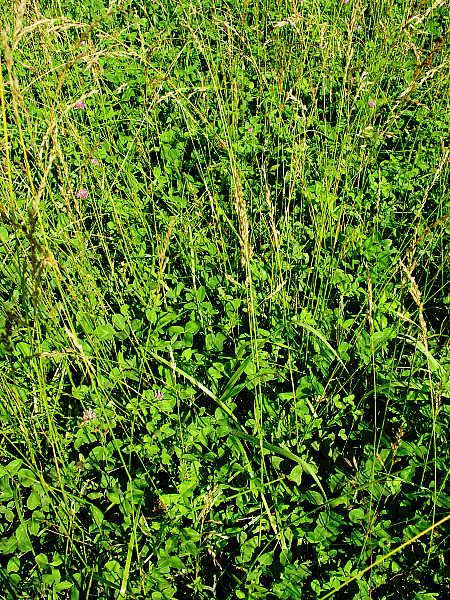
Red clover

In order to meet the minimum nitrogen requirements that fescue needs to achieve optimum growth, one can rely on either an imported, or an intrinsic nitrogen source.  An imported nitrogen source would be the application of any type of fertilizer, either natural or synthetic.  This is the routine most farmers would go through, but it requires a considerable annual outlay, in both fertilizer costs, and fuel costs to spread the material.  Since we derive no income from the production of cattle, it makes little sense for us to incur these expenses, especially since there is another way to provide nitrogen to the soil.  As you can see from the photograph above we rely on an intrinsic nitrogen delivery source – red clover interspersed with the fescue.  The clover will supply and fix the nitrogen into the soil, providing the fescue with this all important resource.

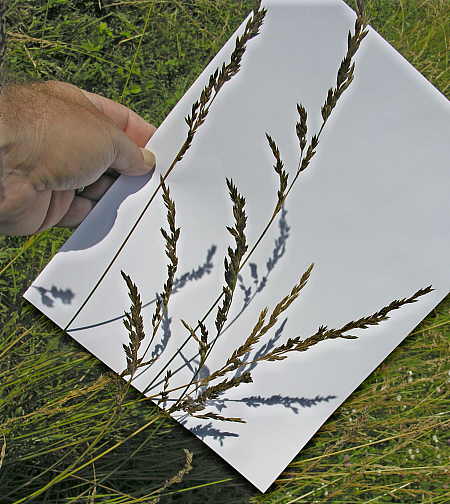
Seed heads are not quite ready for cutting

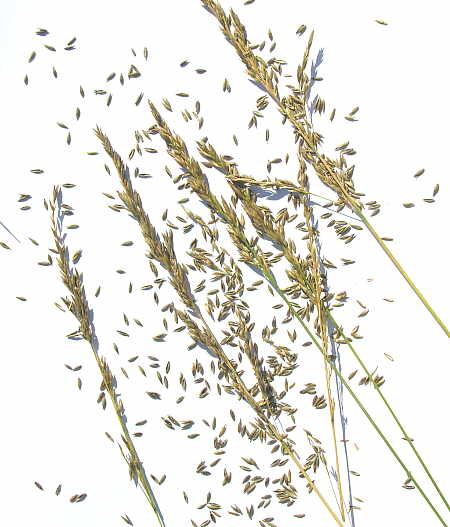
Eventually, the fescue grass will run out of steam and need to be replaced with fresh seedlings.  The way that we manage this is to delay the cutting of the fields until such time as the cutting will also serve to re-seed the field.  In the photograph above, you can see the seed heads of the fescue grass.  Notice that there are no loose seeds on the white sheet of paper.  If the fescue field is predominately at this stage, then it is too early to cut.  By waiting until the seed head readily sheds its’ seeds when you shake the fescue stem, as shown clearly in the picture below, then any cutting and baling of the fescue grass will result in the loose seeds being sown into the field.

Ready for cutting when seeds fall off

The cutting of the grass, as opposed to just letting it persist throughout the season, serves to eradicate weeds and brush that would otherwise occur in a field of this type.  The annual or semi-annual cutting of the fescue, along with the encouragement of natural re-seeding, tends to crowd out any undesirable plant growth, and because of the extremely tolerant nature of the fescue to adverse conditions, it will eventually take over the field.

By following this type of schedule consistently, you achieve a constant re-seeding of the field, and by including clover in the mix, you provide the necessary nitrogen for vigorous fescue growth.  And best of all, you will notice that there was nothing that had to be purchased, so the expense is limited to the fuel required for cutting the grass.

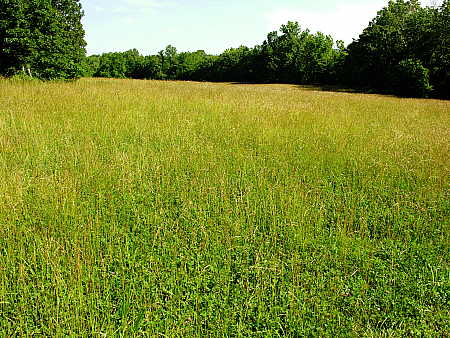
What we have found on our land by experimentation is that by allowing the fescue to produce viable seed on a regular basis, and by being persistent with the cutting of the grass, we can produce fields that look like the one that follows, and do it at a very minimal cost.

Unharvested and ungrazed fescue field

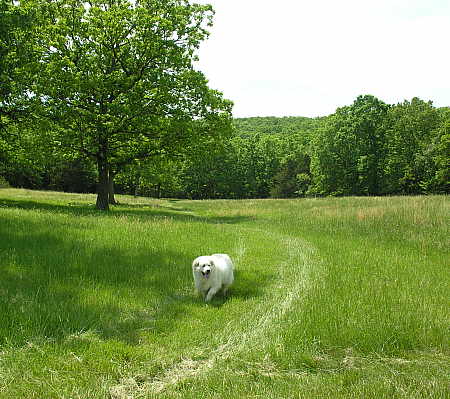
You will have to ask our Pyre Gracie if it is all worth the effort.  I think I can see a big smile of approval on her face.  Can you?

A New Piece of Farm Equipment?

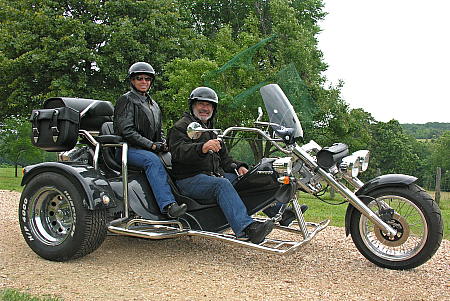
We are very fortunate to have visitors to the ranch this week.  My brother Mark and his friend Sandra are on a cross country trip, and they have stopped by to see us.  How do you think they fared driving up a two mile long, bumpy and rutted dirt road to get to our place?

Mark and Sandra on Rewaco Trike

The trike that is pictured above is a Harley-Davidson powered, German built Rewaco Trike.  It is way more cool than it even appears in this photograph.  You have to see it in person to believe it.  I wonder if Mark would allow me the liberty of attempting to attach my Bush Hog rotary cutter to his trike, because the pastures are getting a little bit long?

Gone to Waste

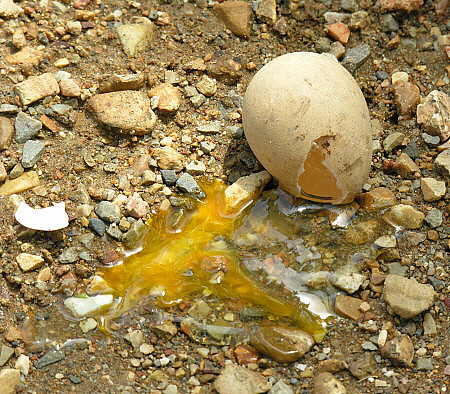
It's useless now

This is (was) an egg produced by one of our guinea hens, but now it is no more.  I found this egg, in the condition that you see it, in the middle of the gravel lane that leads into the paddock facilities.  This egg came to it’s rather abrupt demise perhaps twenty yards away from the closest spot that I would imagine a right-minded guinea hen would lay it.

How do you suppose that the egg managed to end up in this location, in the condition that you see it?  I did not put the egg there.  I’m pretty sure that Retta did not place the egg there, although I cannot absolutely rule out the possibility, as she isn’t home right now for me to ask her.  We can be certain that neither of my dogs were the guilty culprit, because they would not have left any evidence behind.  I’ve seen their handiwork, and believe me, this isn’t their modus operandi.

The guineas never meander along this barren gravel drive, as there is a nice lawn along either side of it, rife with insects and other treats, which the guineas much prefer.  So even if you were to imagine a guinea hen ambling along and having a sudden, overwhelming urge to drop an egg, it would have most likely been on the grass, not on the gravel.

It seems logical (to me, at least) that we can rule out critters such as possum, raccoon, fox, coyotes and the like, for the same reason that I am ruling out my dogs.  All of these scavengers would most likely have eaten the spilled contents of the egg when it broke.  An even more likely scenario would have them down the egg, shell and all, immediately upon finding the “incredible edible” egg.  That is what I have seen our Pyre Gracie do on occasion.

An interesting observation is that the shell is entirely intact, with the exception of the small hole that you can see in the photograph.  It almost looks as if the hole had been pecked at in order to open it.  If so, then this would suggest a bird of some type.  Perhaps some bird found the egg, picked it up in his talons and flew off with it, ultimately ending up in this spot where I found it.  I suppose it is possible, as I once had half of a pork tenderloin stolen off of my BBQ grill on board the boat I once lived on, by a clumsy seagull who ended up dropping it into the water (I wonder, do crabs like pork?).

However this egg managed to end up broken and spilled on the gravel roadway, it sure seems to be a waste.  We could have eaten this guinea egg, or offered it to our dogs with their evening meal.  I suspect that our cats would have even enjoyed it, although I haven’t ever seen them eating eggs.  Speaking of cats, I have some that need to be fed, so I’m off…..

Flashback Friday #7

 A Day at the Races

There is nothing quite like the smell of aircraft fuel, super-heated tire compounds, popcorn and hot dogs all mixed up into one giant aroma that can only mean one thing. It’s race day, and I am in heaven!

An up front confession – I was a racing whore.  As a young man I was fortunate enough to connect with a fledgling race team, backed by an awful lot of money, that eventually rose to become a significant player in the Sports Car Club of America (SCCA) Trans-Am racing series.  And my involvement?  Eager to be around racing and race cars at almost any price, I volunteered a great deal of my time to the long, tedious hours of work that go into producing and maintaining championship race cars.  In exchange for my services, the owner of the racing team provided me with airfare, lodging and meals so that I could be a part of the pit crew as the team participated in the Trans-Am racing series around the country.  This was pretty heady stuff for a teenager, and I soon grew addicted to the sport of auto racing.  Eventually, like all good things, this came to an end as my life began to take other paths.

Later in life, while I was engaged as a computer/business consultant, I managed by chance to become involved in automobile racing once again.  This time my position with the race team was a more respectful one.  Now I was working in the capacity of an independent contractor, and actually received substantial pecuniary renumeration for my efforts.  The type of racing which I was involved with had changed as well.  Now I had a chance to rub elbows with the “big boys” of the American racing scene at the time, the Championship Auto Racing Team (CART) racing series.  For those unaware of the racing scene, CART was the sanctioning body for the Indianapolis 500 event, prior to the formation of the Indycar Racing League (IRL) by Tony George, the Indianapolis Motor Speedway owner.

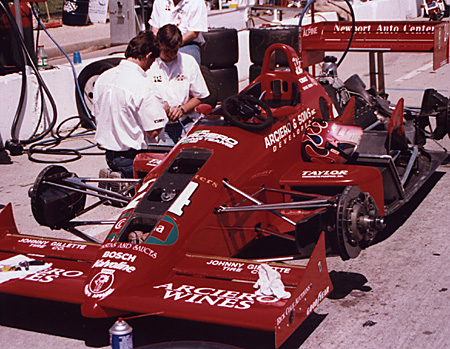
My role with my client racing team was that of a database programmer.  At this time in racing, radio telemetry systems were all the rage.  Real-time monitoring in the pits of all vital automotive systems was being developed and advanced, and all of the major teams were involved in a race to see who could perfect their systems first. Telemetry systems proved to be an important factor in winning the races in the CART racing series.  The team I worked for, Arciero and Sons, wanted to extend the usefulness of the data that was being transmitted in real-time from the car to the technicians in the pits.  And that is where I came into the picture.  My role was fairly simple; capture the data stream as it was received in the pits, creating a database of the various data parameters.  The database could then be used in various ways after the race had ended.  The biggest benefit from this new addition to telemetry systems was in the postmortem failure analysis that occurred when things went wrong on the track.  The team engineers could sift through the recorded data, performing various analytical techniques to try to isolate probable causes of the race cars’ failure.

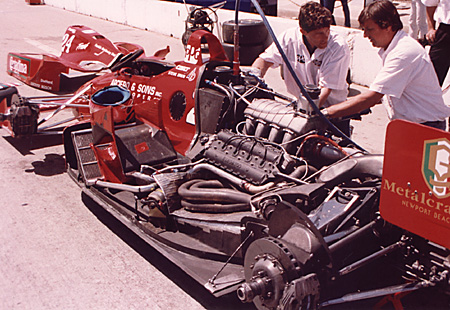
Fine tuning engine control modules

The photo above shows two automotive engineers at work on the race car prior to the start of the Long Beach Grand Prix in Southern California.  What they are doing here is checking, double-checking, and then triple-checking the telemetry sensors and transmitters vital to this new system (winning teams have a peculiar quirk, they like to triple-check everything).

Checking the transmitter for signal strength

As the engineers verify the proper functioning of the various automotive systems, they put the car back together in preparation for the race.

All details must be checked prior to the race

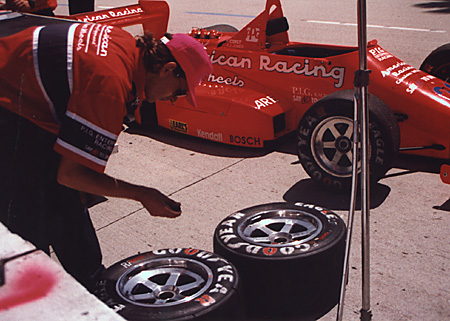
Here, a rival competitor’s crew member checks the air pressure in the tires that will be used at the first pit stop.  Usually each team will assign one crew member with the responsibility of checking tire pressures every 15 minutes or so, to adjust for pressure changes resulting from changes in air temperature.  It is an exacting process, and no detail goes unchecked (by winning teams, that is).

 Excitement builds before the start of the race

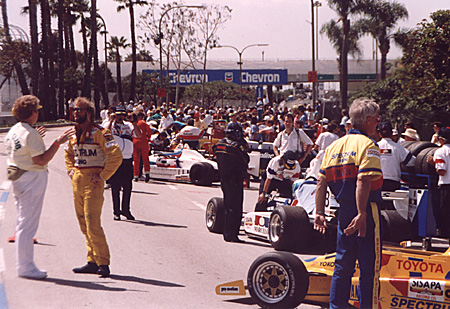
The excitement and tension begins to build amongst the folks involved in the racing effort.  A lot of time, effort, and money have been allocated to the racing endeavor, and all are hopeful for the best results, but each racer knows that only one car will cross the finish line first.

Huge crowds attend the race

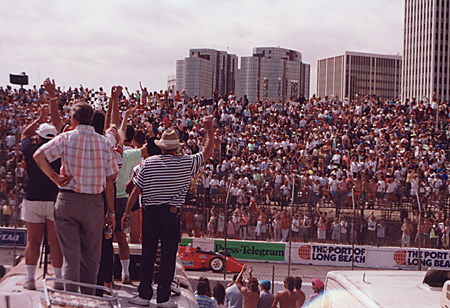
When the race finally gets underway, thousands upon thousands of race fans gather and cheer along the teams that they favor.  And once again, I get to savor the pungent, almost sickening-sweet aroma of aircraft fuel, super-heated tire compounds, popcorn and hot dogs.  And I love every moment of it!

Kitten Update

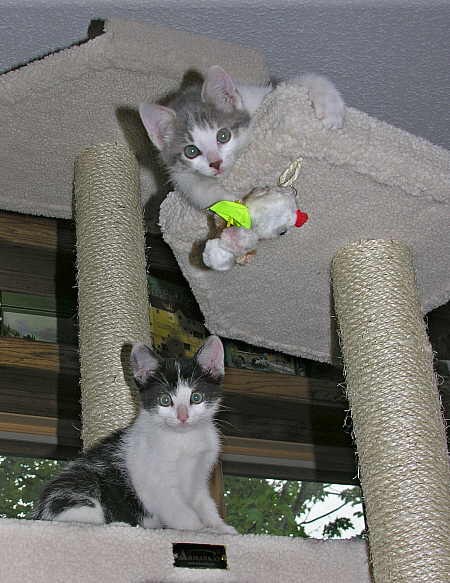
Bosco and Hobbs

Remember those two kittens that Retta found beside the highway last month? Well here they are again, only this time they have names.  We named the cute gray and white kitten on the top perch Hobbs.  The other cute kitten, the one that sports a black and white coat, is named Bosco.

Bosco and Hobbs are doing just fine.  Their health is excellent, and they are quite pleased with their daily routine; sleep, eat, play….. sleep, eat, play….. sleep, eat, play. 

Max (our 2 year old tabby) did not know quite what to make of these kittens at first, which might stem from the fact that he was an “only child” and had no prior recollection of feline siblings.  Despite a little bit of trepidation, curiosity eventually got the better of Max, and he now seems to have accepted the two newcomers as legitimate members of the family.

Gracie (our huge but gentle Great Pyrenees) and George (a genius Yellow Lab) are well conditioned to the routines of our ever-expanding household.  To their way of thinking, two more family members to protect only adds to their status and prestige around here, so they are happy.  They told me so.

On This Memorial Day

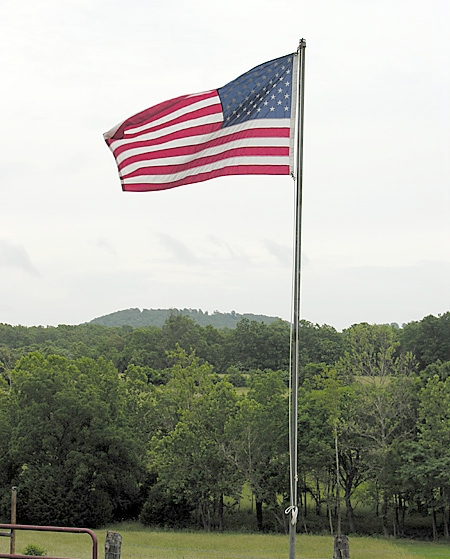
The symbol of who we are and what we stand for

There are times in a persons life when dreams of the future are formed and nourished.  Hopefully, with honest work, persistence in the face of life’s ever-present obstacles, and a good dose of luck, a persons dream may eventually be realized.  I feel blessed in the fact that Retta and I are able to lead the life that we do, as this lifestyle has been a long time dream for the both of us.  Because we could not have arrived at the place we find ourselves in today without the freedom to make and implement our plans along the way, I am always cognizant of the benefits that living in a free country has bestowed on me.  And that is one of the many reasons that we proudly fly the Stars and Stripes on a daily basis.

When I look out the window in the morning as I sip my AM cup of coffee, I see our flag.  As I putter around the front yard, doing this or that, I see our flag.  As I drive back and forth across fields and pastures doing my tractor work, I can see our flag from various vantage points.  When I pull back into the barn to put the tractor away, I see our flag.  And walking back to the house from the barn/paddock area takes me right by the flag, so I see it again.  And every time that I see our Stars and Stripes, I am reminded that the opportunity to live my lifestyle, and enjoy the freedoms that I do, is because of the environment created in a free society.

Today is the special day for us to stop and pay our respects to all of those brave, and yes, the not so brave, men and women who payed the ultimate price so that you and I may exercise our freedom of choice.  Retta and I tip our hats to you all, and thank you for the sacrifice that you and your loved ones have endured to make life better for all of the rest of us.

Thank you.

An Interesting Website

Retta was searching for solutions to the problem of squirrels consuming the pears off our pear tree, when she ran across a website entitled “All Squirrels Must Die – the official homepage of the Squirrel Defamation League”.  This site is tongue-in-cheek, and it had me in stitches.  A good place to start your visit would be with the following essay.

Dr. Squirrelove or: How I Learned to Stop Worrying and Love the Squirrels

It is well worth a click to check out this funny website.