Relocation Day For This Critter

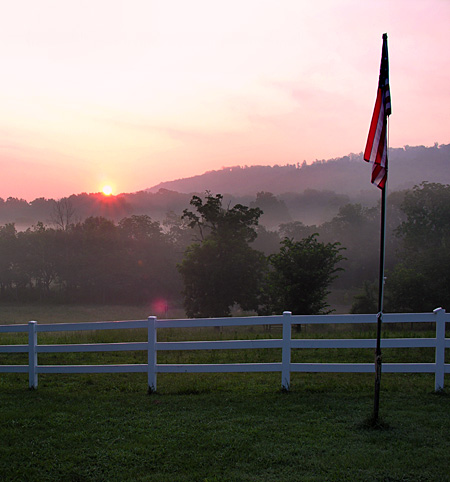
Morning sunrise at the ranch

Woke up this morning to a wonderful sunrise, and as I stood savoring the moment, I noticed Retta making her way toward me from the direction of the barn.  “It’s a baby raccoon,” she said.   “OK,” I replied,  “I’ll take care of it now, and then have my cup of coffee.”

After lacing up my boots and donning a light jacket, I headed out to the barn, where we are temporarily housing about 30-40 of our juvenile guineas.  Over the past few nights, some predator has consistently found a way to out-maneuver our defenses, with the result that several young guineas have (literally) lost their heads over these visits.

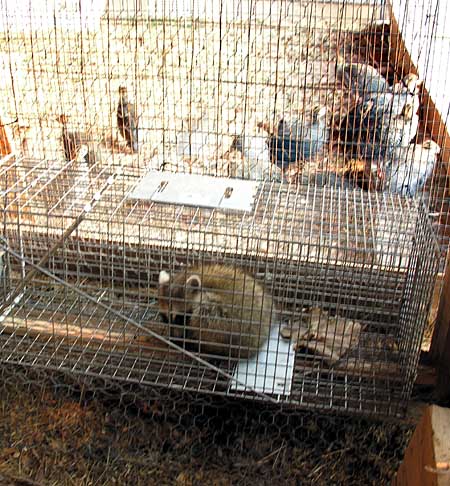
You can check-in anytime you want, but you can never leave…

So “Trapper Retta” fetched the Havahart live-animal trap, baited it with cat food,  and set it out alongside the guineas’ pen last night, and sure enough, she caught the (alleged) culprit.

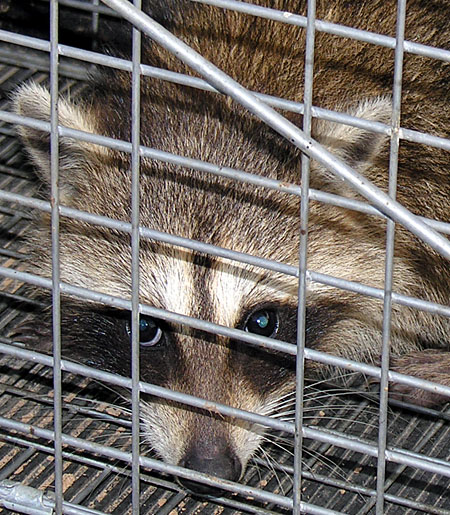
Please, kind sir, don’t harm me!

It wasn’t really a baby – I’d say more of an adolescent raccoon, but he was plenty capable of bestowing deadly havoc upon our fowl.

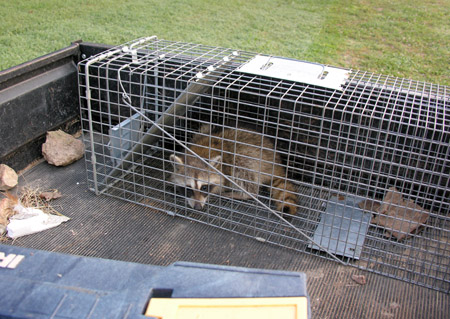
Our journey begins

I loaded him into the back of our utility vehicle (thank goodness the captive wasn’t a skunk), and proceeded to transport him to a location a couple of miles away from our barn area.

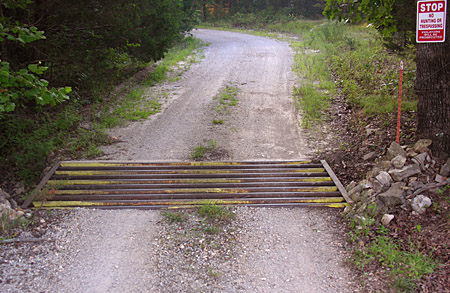
The great iron barrier

To reach the relocation spot I had in mind for this raccoon required us to traverse a cattle guard.  Could this help foil the critter’s return to our barn?  I doubt it, as he could easily scamper across the iron pipes, or simply walk around the cattle guard to reach the other side.

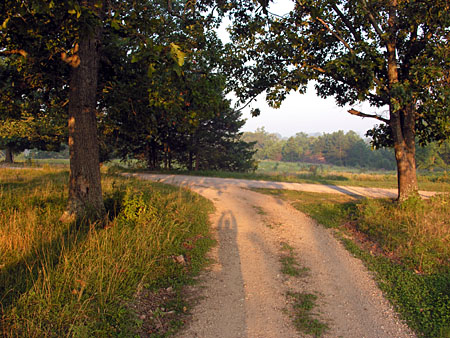
The fork in the road

A little further down this road, we came to the (proverbial) “fork in the road.”  I suppose  it is possible that the critter might become confused about which direction to follow when he reached this junction,  but I wouldn’t count on this outcome as being probable.

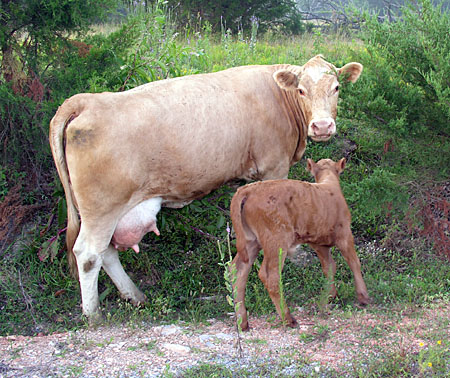
Momma, why does he look like a man, but smell like a raccoon?

As we continue along the road some distance further, we pass momma and calf, whose presence (along with other members of the herd) might deter a wayward raccoon from trespassing upon their cherished grazing pastures.

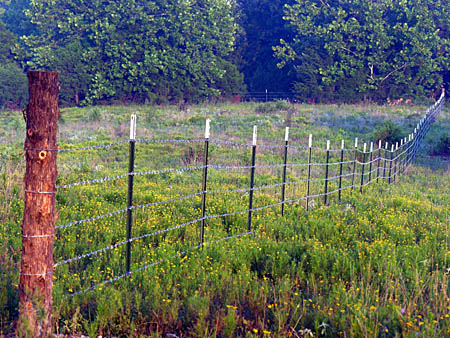
Ouch!

The next “barrier” we must pass is the new barbed-wire fence our neighbor just completed across a section of his property.  If you were a raccoon, would you want to chance scraping your back on the sharp, pointed barbs of a newly-stretched fence?

Actually, I sincerely doubt that any of these so-called “barriers” will prove to be an impediment to the raccoon, should he choose to return to our barn.  A couple of miles is not a particularly long distance for a raccoon to range,  and the barbed wire fencing, the herd of cattle and the iron cattle guard are mere trivialities to a critter such as this raccoon.

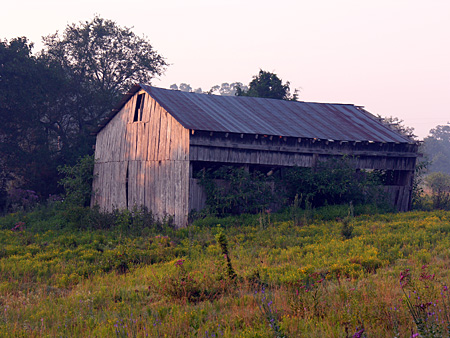
Hey, this doesn’t look so bad after all.

What I am counting on is my blissfully naive hope that this young raccoon will find his new relocation spot sufficiently attractive in it’s critter-type amenities so that he wouldn’t even consider leaving it to return to our farm.  I’m hoping he will find this old, unused barn to be a perfect home for a young raccoon, who is just starting off in this world.

Or perhaps I should have loaded him into the truck, and transported him down the highway for about twenty miles before releasing him into the wilderness?  We’ll know soon enough!

They’re Back!

It sometimes seems as if there is no middle ground in the precipitation department.  While some areas of the country are still undergoing a drought of severe proportions, with crop failures, a pending rampant fire season, and localized water shortages, other regions (Texas, Oklahoma and Kansas, for instance) find residents with flooded homes, rivers 20′ or more over flood stage, and farmers with ruined crops.

Fortunately, we have fared pretty well weather-wise in this part of the Ozarks.  You may recall my post lamenting the lack of enough rain to keep the ponds completely full.  You may also recall, however, my post regarding this season’s hay crop, which ended with a photograph of the ominous skies that appeared over our hayfields at precisely the time that the grass should have been cut, dried and baled.  Since that time, we have not had three successive dry days in a row, which is about the dry period that is needed to process the grass into bales of hay.   The result is that our hayfields have still not been cut.  It remains to be seen whether or not the grasses will be sufficiently nutritious and appropriate for baling when the next dry spell occurs, whenever that may be.

Too much rain?

On another front, the lack of dryness has caused the lawn around the house to grow much higher than I normally like to keep it.  Even when there has been no outright rain, the fog, and the dew that accompanies it, has prevented the lawn from drying enough for me to play lawn-mower man.

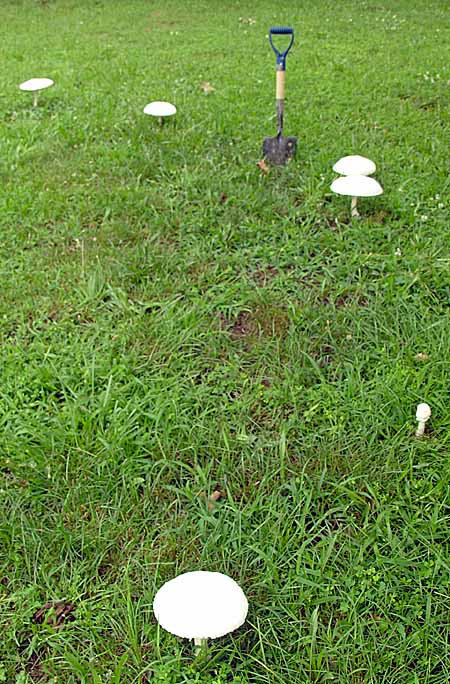
Mushrooms poping up all over the lawn

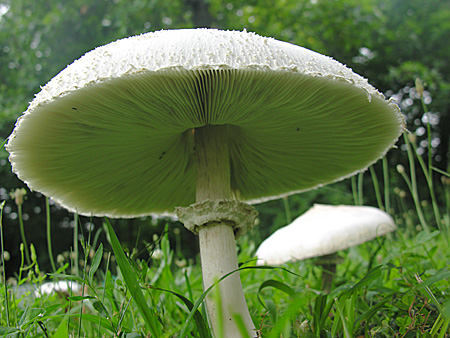
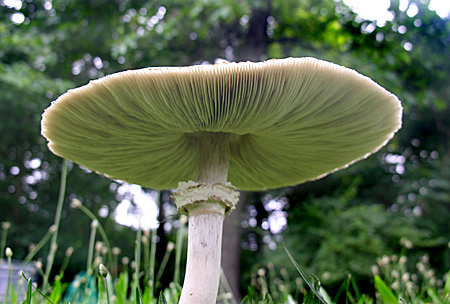
Because the weather conditions are just perfectly fine for fungi, the giant, unidentified mushrooms (which you may recall from this post) have returned in force to my perpetually damp lawn.

A shovel beside the mushrooms to show scale

Again, in case you missed the last post about the mushrooms, here is a picture to help depict a sense of scale of these mushrooms.

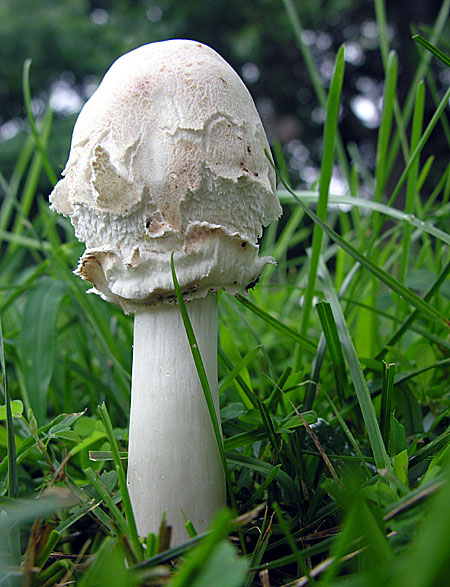
Young mushroom specimen

When they first emerge, the mushroom cap looks like the one in the photograph above, which takes on a sort of helmet shape.

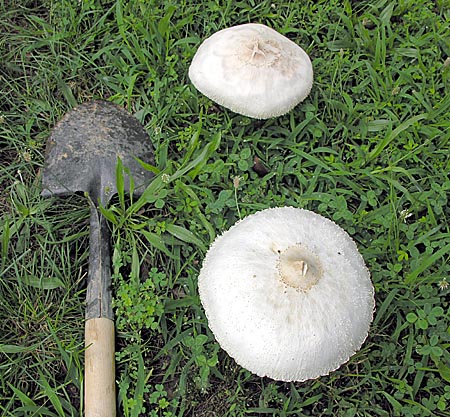
Mushroom taking on a convex shape

Soon, however, the mushroom cap breaks free of the ring at its base, and flares out into this convex configuration that you can see in this picture.

Mushroom cap that has flattened out

After attaining a convex shape for a short period of time, the cap then starts to flatten out, and even begins to curl up around the outer edges, which can be seen in the photograph above.

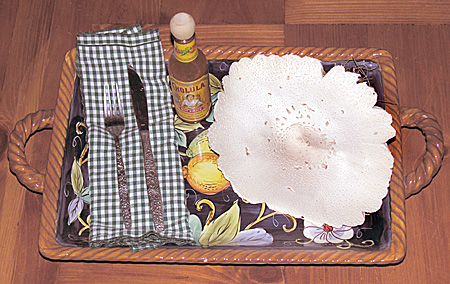
In my last encounter with these mushrooms, I contemplated making a meal out of them, but Duane, for my own safety,  convinced me not to, even though Ed reassured me that Cholula Sauce goes well with anything!  But now I am re-assessing the situation.  Maybe I was a little too tentative last time.  Perhaps I shouldn’t have chickened out, and just doused the mushrooms with Cholula Sauce and proceeded to eat them.

Maybe this is the way to deal with them!

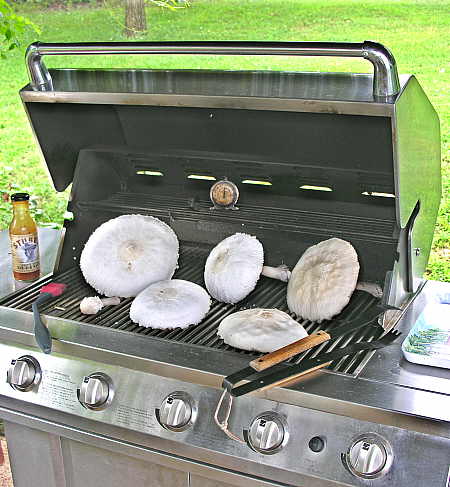
On the other hand,  perhaps they would taste better basted with Stubb’s Mopping Sauce and grilled until golden brown. 

I’ll let you know how they turn out.  Or maybe I won’t!

Animal Roll Call

I’ve been “tagged” by Karl at Pile of O’Melay’s to compile a roll call of the animals we currently provide a home to.  Here is my pictorial animal roll of our domestic denizens.

Chipper

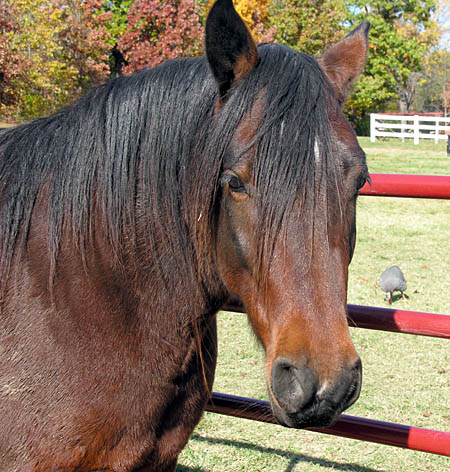
Chipper is our gelded quarter horse, probably around 18 years of age.  Born and raised on the farm next-door.

Tojo

Tojo is our gelded Missouri Fox Trotter,  who is about nine years old.

George

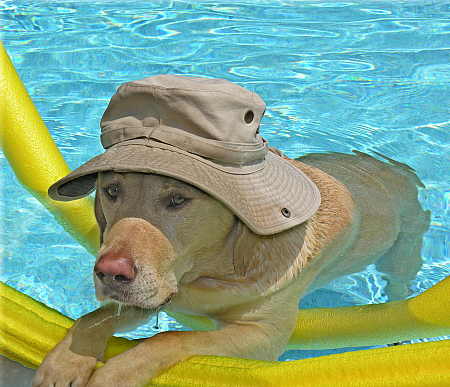
George, our yellow Labrador Retriever, has boundless energy.  He loves the water, which is what you would expect from most any Lab.

Gracie

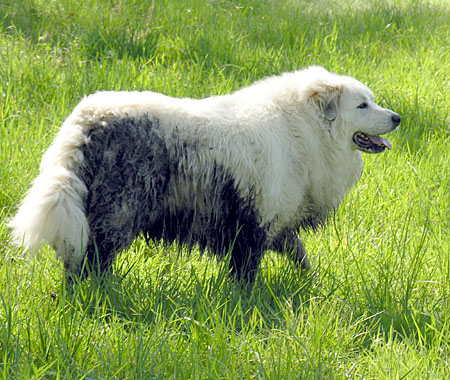
Gracie is our very large Great Pyrenees.  She is a wonderful watchdog, as well as a loving, gentle pet.  She loves a good roll in the mud, as you can see from this photograph.

Max

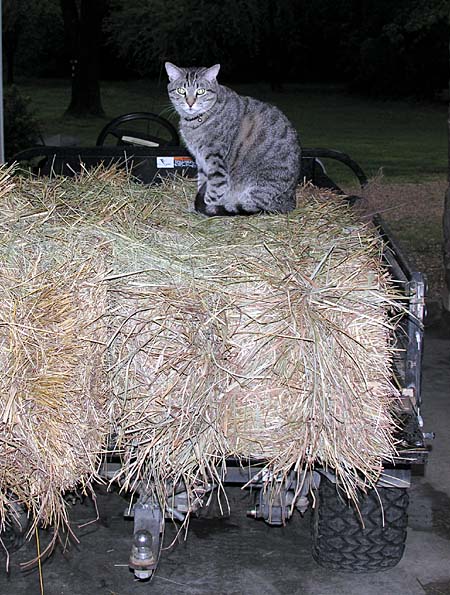
Max (our oldest tabby) was the sole kitten in his litter, born on another farm located next-door to us.

Bosco and Hobbs

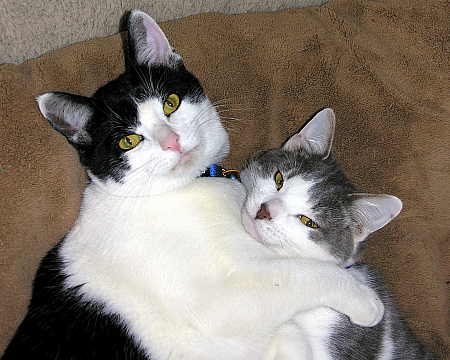
These two cats are Bosco and Hobbs, whom you may recall were rescued by Retta along the side of a local rural highway.

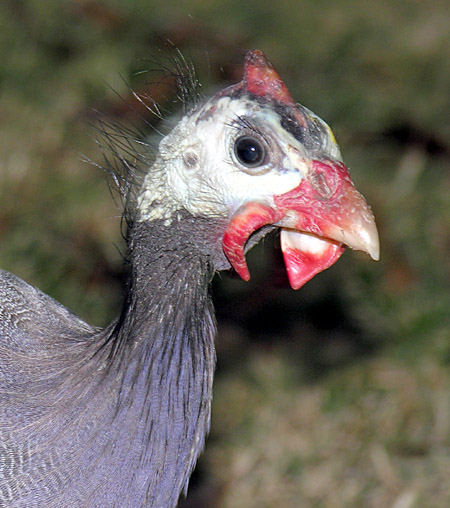
Adult guinea

We currently have 12 adult guineas, but they are soon to be joined by our fledgling flock of guinea keets.

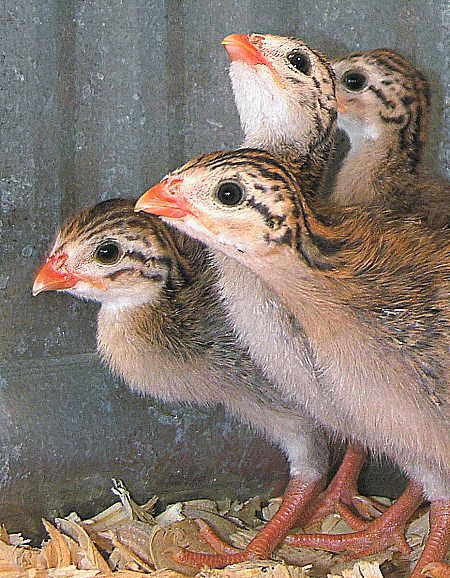
Guinea keets

We now have 40 guinea keets that the adult guineas have hatched for us, and they will soon join the adults that wait outside the nursery.

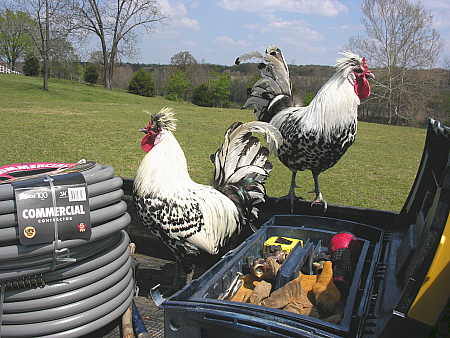
Roosters

These are two of the three adult roosters that have survived the predators that occasionally pay a visit around here.  They are quite sociable, and always seem to be curious about any human activity that they observe.

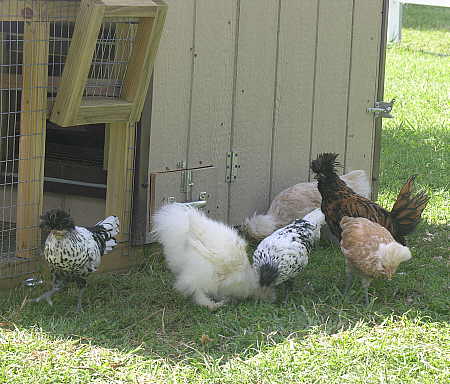
Chicks

And these are a few of the 17 chicks we are currently raising.

 To recap in list form:

  • 2 horses
  • 2 dogs
  • 3 cats
  • 12 adult guineas
  • 40 guinea keets
  • 3 adult chickens
  • 17 young chicks

Be sure to check out Karl’s post to see what animals others have at the moment.

Will Today Be the Day?

Flycatcher chicks

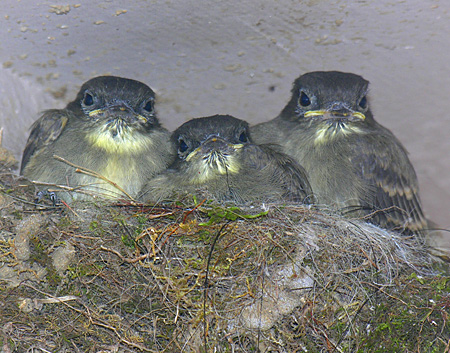
It looks to me as if these flycatcher chicks are ready to get a lesson in flying from their parents.  Although you can only see three chicks in this photograph, there are actually five in the nest.  I suspect that they will be gone shortly, off discovering the world for themselves.

Ideal viewing location for nest

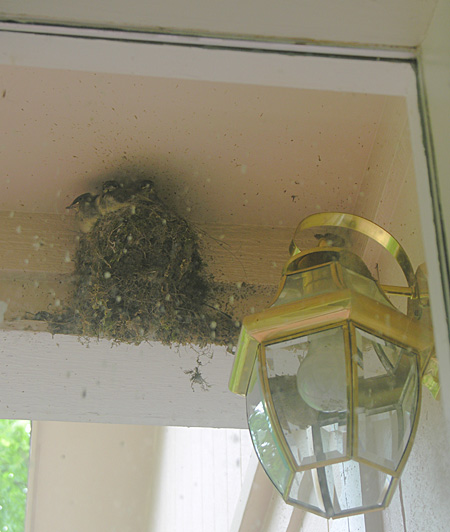
We normally discourage birds from building their nests on our house, but these flycatchers have chosen to build their annual nest in an overhang just outside a front-door window, which affords us a wonderful view of the nest from inside the house, as you can see above.  Having a nest at this location is a little messy at times, but because we have such a good view of the action,  it is allowed to remain year after year.  It doesn’t hurt their cause that flycatchers, as the name suggests, will consume vast quantities of flies.  You may recall from a previous post, entitled Non-Toxic Fly Control, that we try to utilize as many natural methods of fly control as possible.  These flycatchers are just one more tool in our arsenal.

I’m In a Fowl Mood Today

Turkey parade

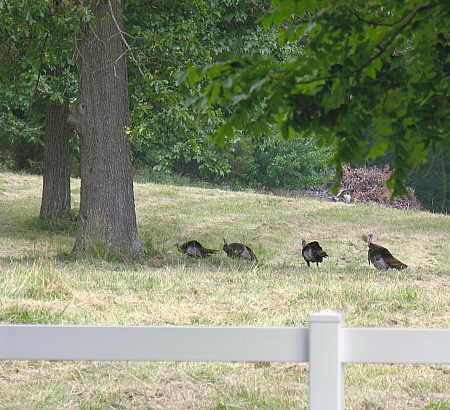
I’m in a fowl mood because it seems like I’m surrounded by the feathered creatures day and night.  Stepping out the door, I see a group of wild turkey parading before me.  It’s a sight I always enjoy, and it gets me to thinking about the domestic fowl we (“we” – meaning Retta) raise as a hobby.

The old hen house

Here is one of our hen houses, which you may have seen in previous posts.  We use this building to house our guineas, whose numbers range variously from a few, to several dozen, depending on the time of year and activity of the local predators.

Broody guinea hens

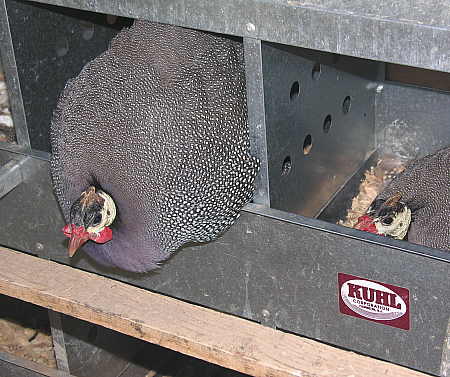
Usually, our guineas would find some secluded spot in the tall pasture grasses in which to lay their eggs.  This year, however, several have decided to utilize the nesting boxes that are installed in the hen house.  They have been very broody as well, sitting on the eggs in quite a maternal fashion, patiently waiting for the eggs to hatch and the new-born chicks to emerge from their confining shell.

 Hatchling nest litter

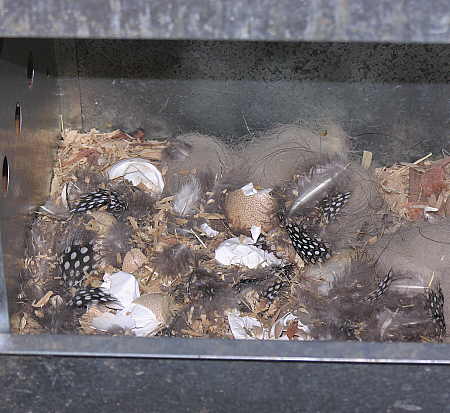
Daily, Retta inspects the nest boxes, and when she finds newly hatched keets, she removes them from the box, leaving behind the litter of egg shells and feathers that you see in the photograph above.  To date, we have 36 little keets, and the number grows daily.

Temporary guinea keet nursery

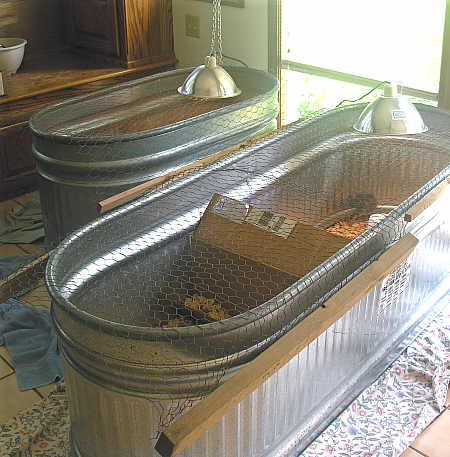
We place the new-born keets into our makeshift nursery, which is comprised of a couple of livestock water tanks, having a bed of pine shavings and warmth provided by a pair of incandescent heat lamps.

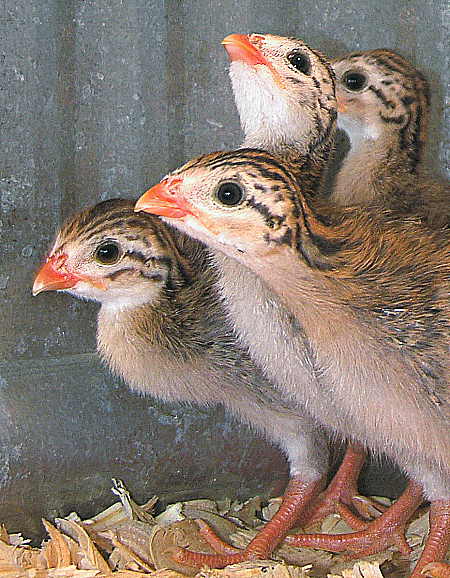
Guinea keets

We will keep these fine looking guinea keets indoors, under our watchful eyes, until such time as their feathers come in fully and they grow to a more substantial size.  Then, it’s back out to the hen house for them, where we will keep them penned up for a few weeks.  After that, when the keets are large enough, we will begin letting them out of the hen house during the day, so that they can go about their glorious job of devouring thousands upon thousands of those ticks that we all love to hate so much.

New hen house for the chickens

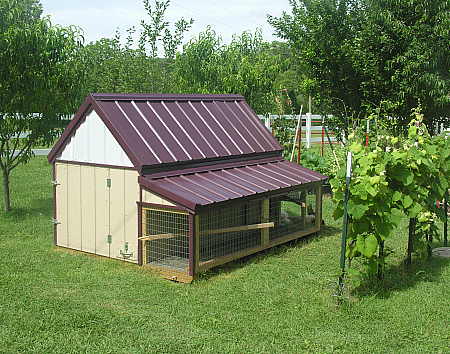
Meanwhile, you may remember a post where we took a ride across Bull Shoals Lake on the Peel Ferry, the sole surviving Arkansas public auto ferry.  Ostensibly, the reason for that ride was to look over some professionally built hen houses, to determine if we should buy, rather than build, a new domicile for the chicks Retta had ordered from a local hatchery.  You can probably tell from the excellent workmanship of the new hen house in the picture above that we opted to buy, rather than build.  After looking at the cost of materials to build an equivalent structure, it turned out being worth our while to purchase this hen house.  It is sturdy, portable, and heavily constructed with quality materials by a group of Amish craftsmen in the Seymour, Missouri area.

Hen house interior

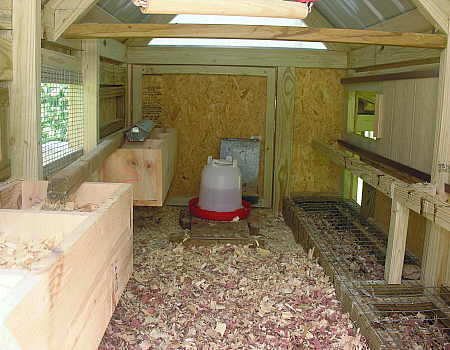
The interior has a translucent fiberglass panel to allow light into the house, and features 6 nesting boxes, perches, and slide-out litter drawers beneath the perches.  There is access to the protected outdoor “yard” area from within the house, and it is all protected from the weather with well-built metal roofing.

Egg doors for nesting boxes

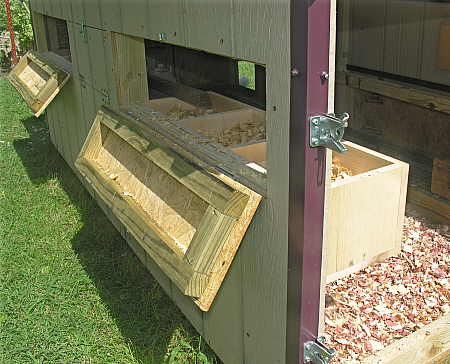
The nesting boxes have doors that open up from the outside, so that we can easily collect the eggs that the hens will begin laying sometime soon.

Chickens enjoying the shade of the hen house

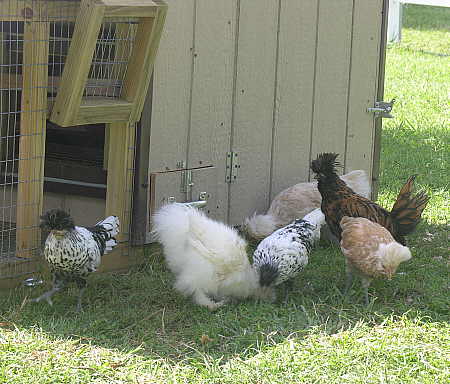
Here are just a few of the young chickens that now call this hen house their home.  They say variety is the spice of life, and we seem to be pretty well-seasoned with this eclectic mix of chicken breeds, which includes assorted Polish chickens, Silkies, and Spitzhaubens.

So now, perhaps, you understand why I sometime feel that I’m in a fowl, fowl mood.

Should He, or Shouldn’t He? Would You?

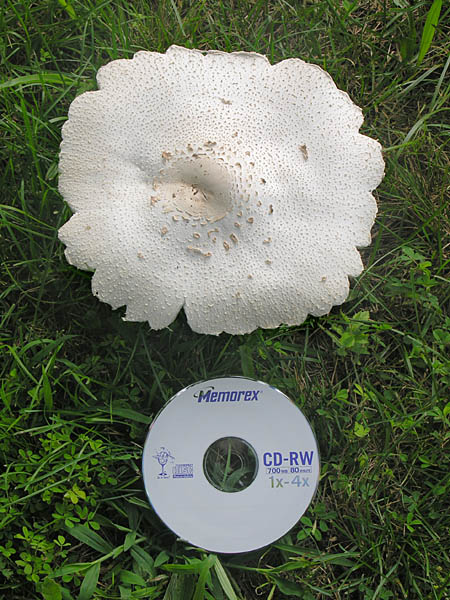
Mushroom found in the lawn

While preparing to cut the grass today, I ran across this gigantic mushroom.  In order to provide a sense of scale, I placed a CD on the ground next to the huge blob of fungus before snapping the photo.

I am not familiar with the various members of the mushroom family, so I cannot identify this particular specimen, and hence, cannot tell you if this is edible or not.  But there is certainly one way to tell:

Should he, or shouldn’t he?

If you don’t hear from me for a little while,  I’m sure you’ll have an inkling as to why!

A Few Days Down East

Once again, I seem to have strayed off the farm, so here I am with yet another travelogue, rather than my usual ranch type ramblins.   Let’s start off in the wharf district of Portland, Maine, where I was surprised to find that cobblestone streets still exist.
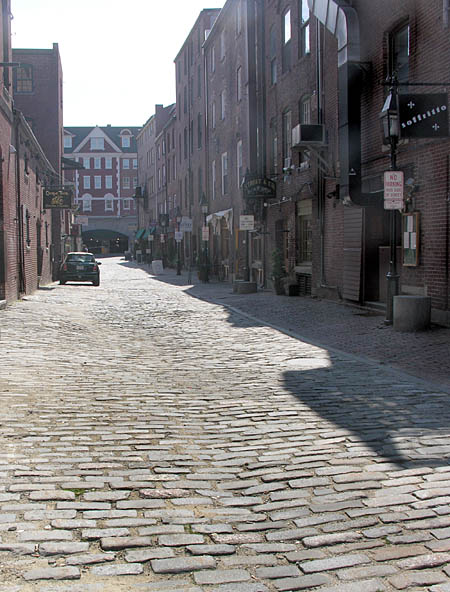
Cobblestone street

There are many fine shops and restaurants in the wharf area,  and there are numerous opportunities to take part in “touristy” activities, as well.  Having a little salt in my blood, I opted to focus on things with a maritime flavor, so I decided to take a sightseeing cruise on Casco Bay,  which is where Portland, Maine is located.

Schooner on Casco Bay

Casco Bay is a lovely and picturesque body of water, where you are certain to cross paths with a variety of interesting vessels, such as the schooner seen in the preceding photograph.
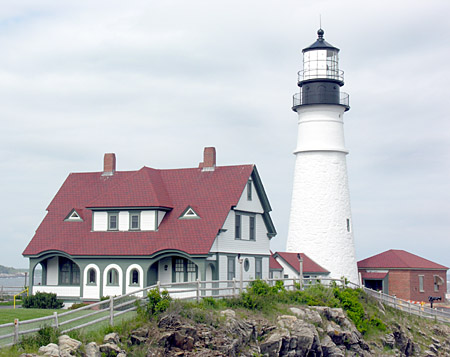
Portland Head lighthouse

Casco Bay and the surrounding waterways are dotted with many navigation lights, some with lighthouses, such as the Portland Head Lighthouse seen above. 

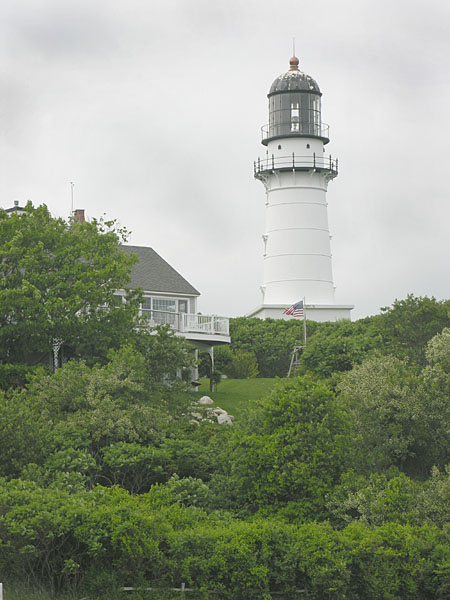
Cape Elizabeth light

Another light with a house on the grounds is the Cape Elizabeth Light (seen above), located in what is called the “two lights” area of Cape Elizabeth.
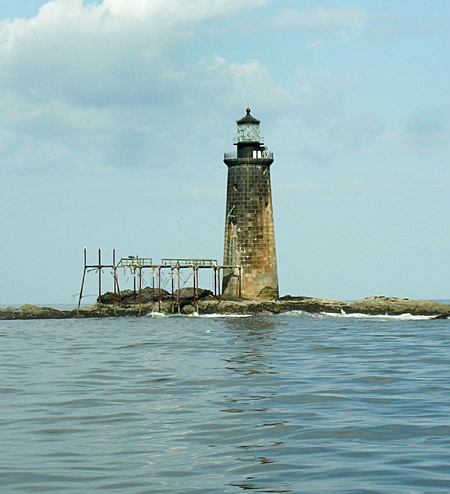
Ram Island Ledge light

There are several lights that are located on islets or rocks within the waterways.  This one, called the Ram Island Ledge Lighthouse has a boat launching pier for access to the light.  The light is now automatic, however it used to be manned in shifts of two-week duration.  That is, except for those stormy occasions when ocean conditions might strand the keeper for many weeks at a time!

Tugs escorting a tanker ship into Casco Bay

Whether manned or automatic, the purpose of the lights is to keep vessels off the rocks.  In the photograph above, you can see two tugboats racing to catch up with a tanker ship headed into Casco Bay.  After passing the Portland Head Light, they will assist the tanker in the berthing process.
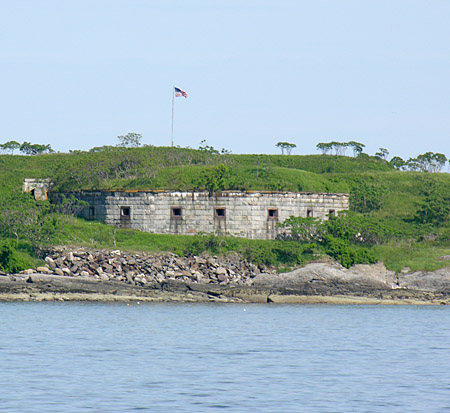
Land based civil war era fort

There are many Civil War era forts located in and around Casco Bay, such as this land based fort seen above.
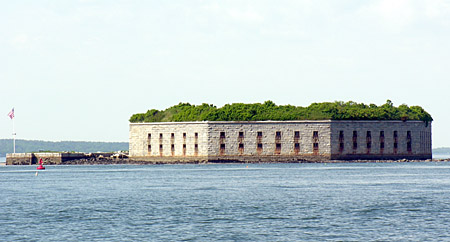
Fort Gorges, Hog Island Ledge, Casco Bay

There are also island based forts located in Casco Bay, such as Fort Gorges, which was active from 1857 until 1946.
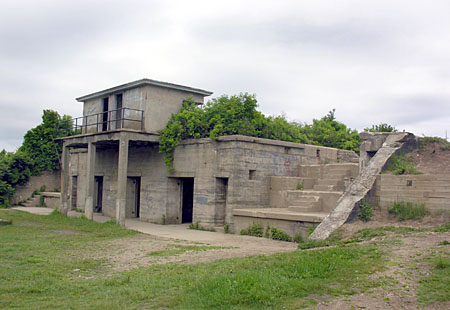
Fort Williams

Down in Cape Elizabeth you can hike around the remnants of Fort Williams, which saw active use from 1872 until 1963.  Nearby is the Portland Head Lighthouse, which offers a fine museum for visitors.
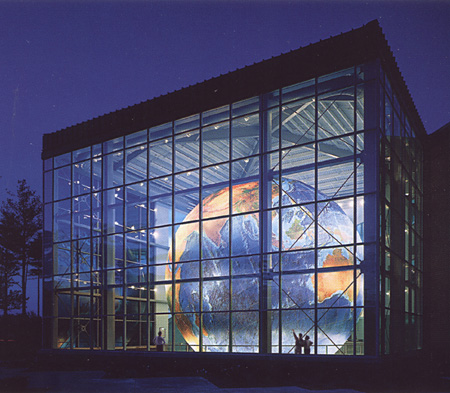
DeLorme globe named Eartha

If you head northeast out of Portland, you will soon come to the town of Yarmouth, and if you pay close attention, you are liable to see the world’s largest rotating and revolving globe!  Located in the DeLorme Headquarters, this globe is name Eartha, and is the largest printed image of the Earth ever created (photograph courtesy of The Map Store).  The globe has a circumference of nearly 130 feet and a diameter of over 41 feet.  It represents one of the largest computer mapping databases in the world.  The printed data comprises 140 gigabytes of information.
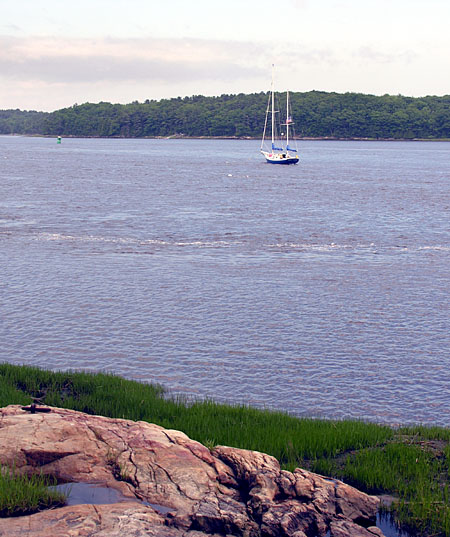
Kennebec River

Continuing on from Yarmouth along Highway 1, you eventually come to Bath, Maine.  Bath is situated on the banks of the lovely Kennebec River, and because the banks along this deep river slope gently, and because deep water lays close to shore, this location has been utilized as a shipbuilding area for quite some time, hence Bath’s nickname – The City of Ships.
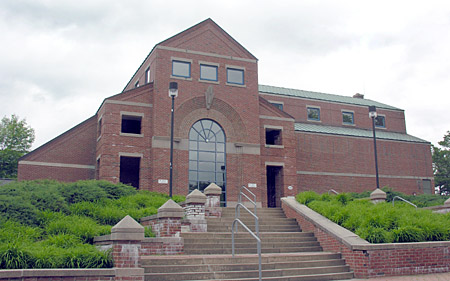
Maine Maritime Museum

To commemorate and preserve the shipbuilding heritage of the region, the citizens of Maine have contributed time and money to create the Maine Maritime Museum, which houses an amazingly vast collection of maritime paraphernalia and artwork.
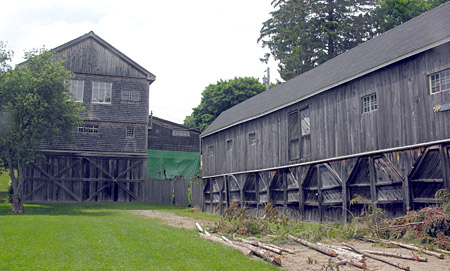
Boatshop and storage on the grounds of the museum

Located at the site of the historic Percy & Small Shipyard, the campus of the Maine Maritime Museum contains many buildings to house the collection.  Above are portions of the old Boatshop.
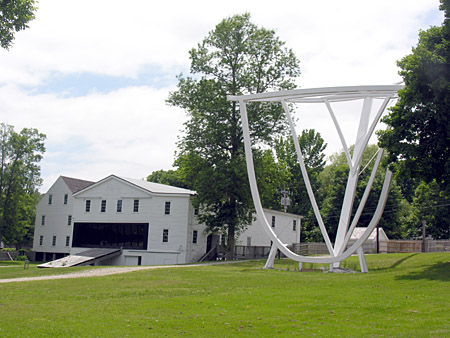
Mill and Joiner Shop

The white building is the Mill and Joiner Shop, where authentic shipbuilding machinery is on display for visitors to see.  The large white skeleton that you see is a mock-up of the stern bow section of the schooner Wyoming, which was the largest wooden vessel ever built in America.  The skeleton sits in the old shipyard exactly where it was originally built (except for being slightly upslope from the shore, for environmental reasons).
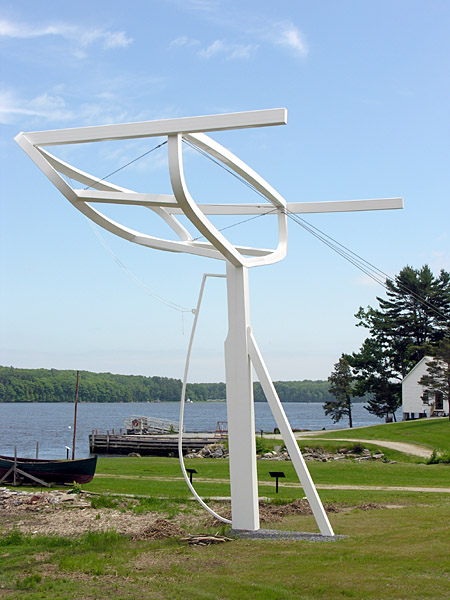
Bow section of schooner Wyoming

Looking in the other direction, you now see the mock-up of the bow stern section of the Wyoming.  It is difficult to get a sense of scale and perspective from these pictures.  Let me just assure you – this vessel was huge!
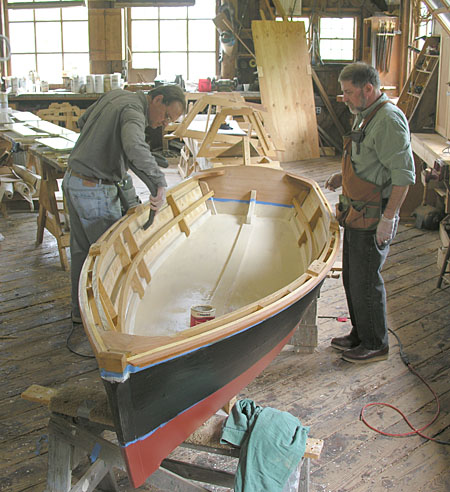
Craftsmen working on a small boat

On a smaller scale, these two craftsmen were putting the finishing touches on a traditional Maine “Susan” boat.  Although these men are painting the boat, the boat itself was built by the Bath, Maine sixth-grade class from September 2006 until May 2007.  This boat will be raffled off to some lucky ticket holder, and the proceeds from the raffle benefit the Maine Maritime Museum.
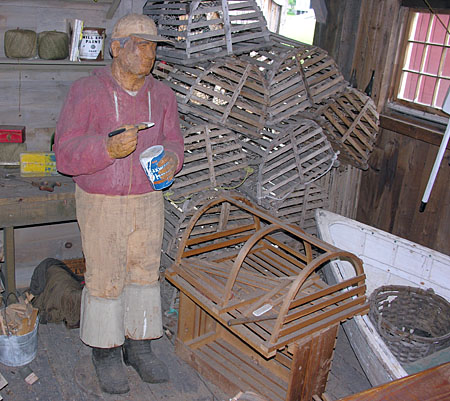
Trap display at the Maine Maritime Museum

The Museum has a wonderful exhibit entitled “Lobstering and the Maine Coast.”  Within this exhibit (which is housed in it’s own building) you will find displays covering all aspects of the lobster fishery and trade, beginning with it’s early origins and continuing to today’s methodologies.

Did you know that in the early days,  lobster were so plentiful that they washed up on shore?  And that local officials decided to harvest the washed-up lobsters to feed inmates in the local jails and prisons?  And that the inmates, becoming sick from having to eat lobster morning, noon and night began rioting and creating havoc?  Imagine – protesting regarding TOO MUCH lobster???

Ship under construction at the Bath Iron Works

Anyhow, back to the Bath, Maine area.  You are looking at a destroyer that is currently under construction at the Bath Iron Works, which is a General Dynamics company.  This facility builds the Arleigh Burke Class AEGIS guided missile destroyers for the U.S. Navy.   Bath Iron Works, in conjunction with the Maine Maritime Museum, conducts tours of the Bath Iron Works (on a limited basis).  I was fortunate to get on a tour, but I cannot share any pictures of the experience with you, because cameras and photography are prohibited while on the grounds of the shipyard (or at any other defense contractor’s location) for security reasons.   I can say, however, that the tour was well worth taking.  The size and scope of the fabrication process that you can see here is absolutely amazing.
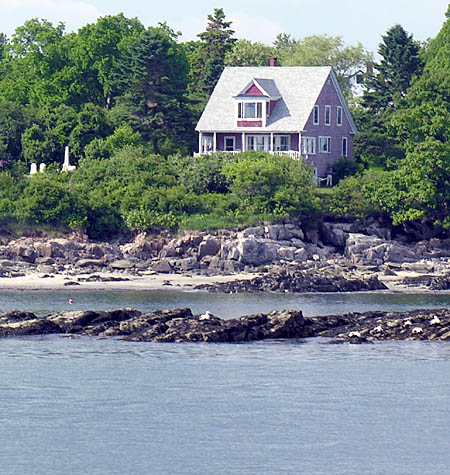
Anyone hungry for dinner yet?

Eventually, with all of the sightseeing and walking around, you are bound to get hungry.  Poking around all the coves and inlets brings you into a lobster fishing village or two, where you are sure to run into the local lobster shack, which can be as simple as a converted bungalow, like the one you see in the picture above.  So are you ready for some famous live Maine lobsters?
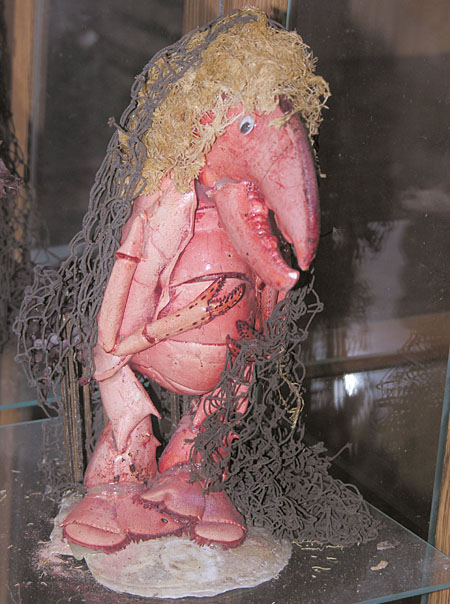
Lobster people at the Estes Lobster House

No, not like this lobster (which is the work of the proprietors of the Estes Lobster House, located at the bottom of beautiful Harpswell Neck).
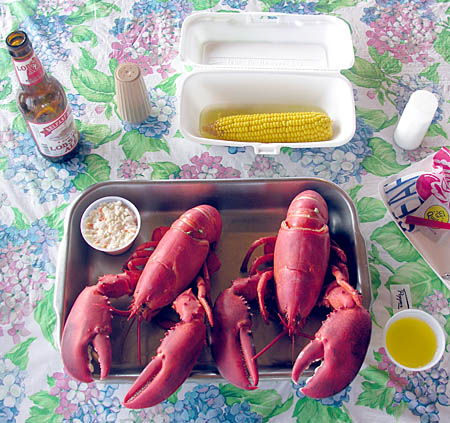
Twin lobster dinner, with all the fixings

This is more like what I had in mind.  In my humble opinion, this is the perfect Maine dinner.  Two steamed whole Maine lobsters, accompanied by corn-on-the-cob, cole slaw, drawn butter, and of course, a bottle of the locally brewed Lobster Ale.

Now that’s what I call eating!

UPDATE - December 20, 2007

George Rolt commented that my captioning of the bow and stern sections of the schooner Wyoming was in error.  An examination of a launch day photograph included in the following information sign at the Maritime Museum shows that George is correct.  I have corrected the post accordingly.
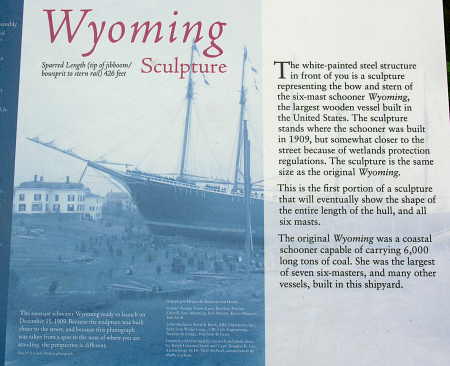
Schooner Wyoming

The People Pond

We are fortunate to have several ponds scattered around our property.  Previously, I had written about three of them: the catfish pond (remember the discussion about flocculant?),  the carp pond (recall “The Grassing of the Carp”),  and the spring-fed pond (which shrank dramatically during the dryness of last year).

There is another pond on the property, which is the subject of this post.  I call it the “people pond.”  As caretakers of the land and stewards of the animals, we strive to provide an aquatic environment conducive to the well-being of all the wildlife that reside at this location – so why not the human inhabitants, as well?

Unlike the other ponds on the property that automatically adjust themselves to exist in all seasons throughout the year, the people pond needs a little extra effort and management.  In the fall, the people pond needs to undergo the process of winterizing.  The people pond must be cleaned, and the water chemistry adjusted for the long winter to come.  Pipes, pumps, filters and other equipment must be drained of all water, to prevent expansion damage that would occur if water were allowed to freeze inside of the equipment.  The water level is drawn down, and the people pond is covered for the duration of the cold season.

In the late spring, usually around Memorial Day weekend, we anxiously undertake the annual ritual of opening up the people pond for the summer.

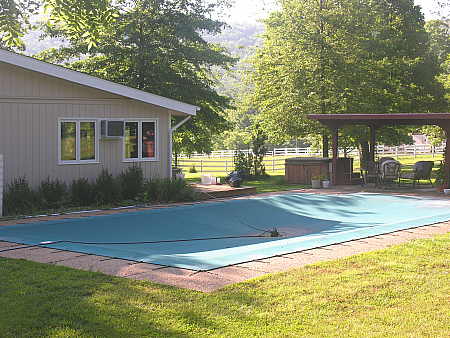
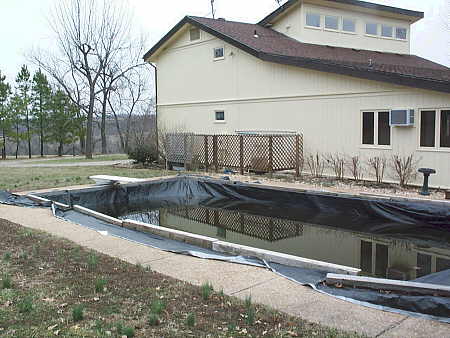
Winterized people pond

The winter safety cover shown in the photograph above serves two purposes.  First, it serves to protect against accidental people pond incidents, and second, it keeps dirt, leaves and debris out of the people pond during the winter months.  In the center of the cover sits a sump pump, equipped with an automatic sensor switch, which keeps the cover drained of water from rain and melting snow.

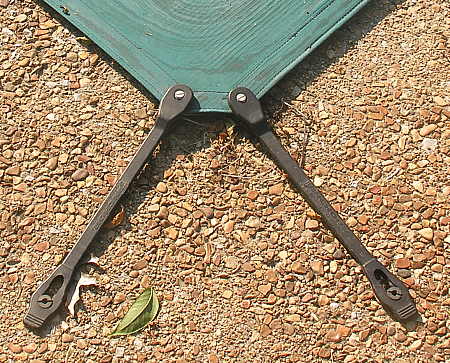
People pond winter safety cover fastening system

The cover is attached to the decking that surrounds the people pond by a series of heavy elastic straps, which are held in place by bronze retractable anchors embedded in the deck.

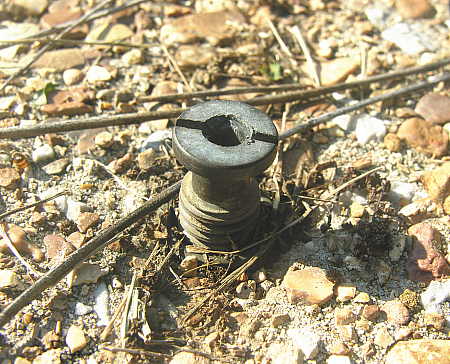
Telescoping strap anchors

The retractable anchor tend to accumulate debris over the course of the winter, so it is necessary to wash them off with a strong stream of water from the garden hose.

Protectant applied to anchors

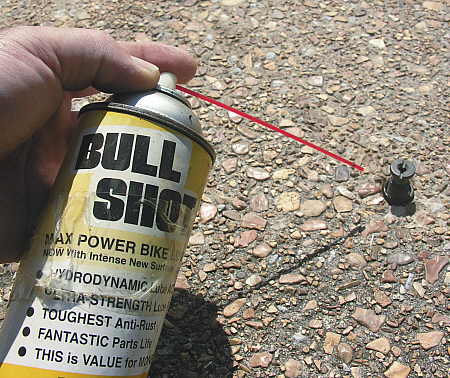
Before screwing the anchors flush into the deck, I find it helpful to spray them with a little lubricant first.  The product that I like to use for this purpose is either Bull Shot, shown above, or Boeshield T-9, developed by Boeing Aircraft Corporation.  Either one of these products contain a wax-like ingredient, which assures that the protectent will adhere to the anchor even in wet conditions.

Gizmo for winterizing the people pond skimmer

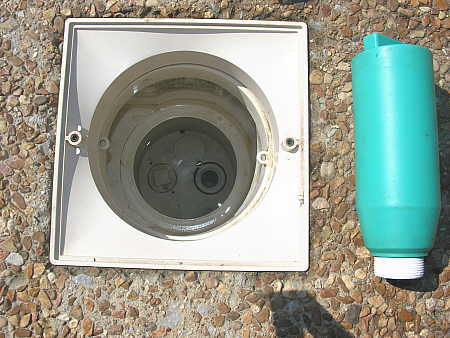
The turquoise gizmo that you see beside the skimmer assembly is just that – a Gizmo ™.  This device is used to seal the water return lines in the winter, after they have been cleared of water.  If you look closely at the photograph above, you can see the hole down at the bottom of the skimmer that the Gizmo screws into.  With the Gizmo properly in place, any rain water that manages to get into the skimmer and freeze will not ruin the equipment.  As the freezing water expands, it will cause the Gizmo to collapse in on itself, thus sparing the skimmer from damage.

Cleaning the people pond cover

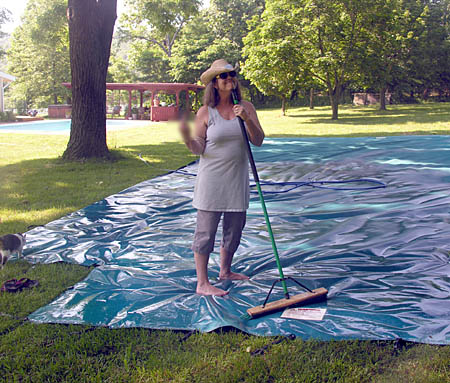
The people pond cover needs to be cleaned and thoroughly dried prior to summer storage.  As you can see from the photograph above, it is not particularly good form to be standing around taking pictures as your better-half does all the work!  Thank goodness for the blur function of my image editing software, or you might see the “salute” I received for my blunder.

Storage bag for people pond safety cover

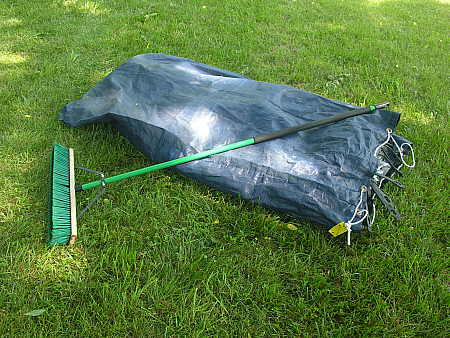
The people pond cover folds nicely into a breathable nylon storage bag, which will find it’s way into the equipment barn for the summer.

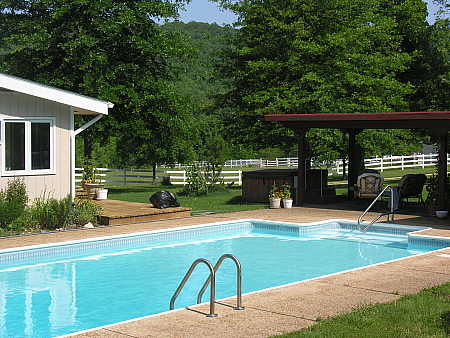
People pond now open for the summer

Now that the cover is off the people pond, all that remains is to raise the water level, adjust the water chemistry, prime the pump and filter units, and install the hand rails and exit ladder.  Notice the clarity of the water in this picture.  This is what the water should look like immediately upon removing the people pond cover.  If the water does NOT look like this, then somebody did not properly adjust the water chemistry prior to winterizing the people pond the previous fall.

Our people pond has been quite a project.  Compare the photograph above with the picture that is shown below.

People pond in it’s less glamorous days

This is what the people pond looked like when we bought this house.  It was in dire need of some TLC, needing a new liner, winter safety cover, pump and other necessary equipment.  The water was filthy and gross, containing slime, algae and assorted creatures.  It did not deserve to be called a people pond.  Now it does.

A Project Long Delayed

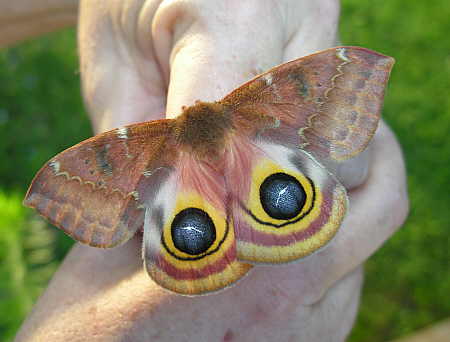
Luna Moth

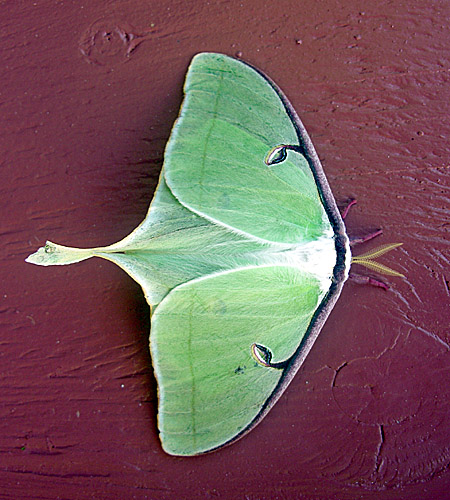
This morning, after finishing my cup of coffee, I headed outside to begin my chores.  George (our faithful yellow lab) accompanied me as I made my way over to the milking barn, where I spotted this lovely Luna moth that you see in the photograph above.

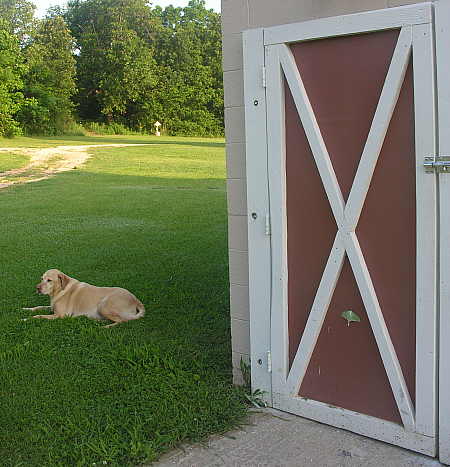
Luna moth resting on shop door

The Luna moth was resting on the back door of the milking barn, and seemed to be completely oblivious to my presence.  He ended up spending most of the morning clinging to the door, perhaps taking advantage of the shade on that side of the building.

Milking barn before repairs were made

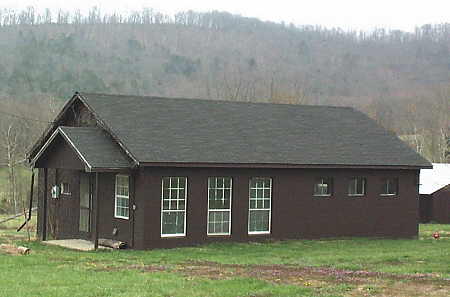
This is what the milking barn looked like when we first bought this property.  It was in pretty poor shape, and was being used to store mostly junk.  Step-by-step, we have been undertaking a renovation of this building. 

We are now converting the front room into a tack room ( a room where we will store saddles, pads, blankets, bridles, halters, leads, crops, carrot sticks, reins, bits, farrier tools, brushes and combs, fly spray, medications, and all the hundreds of other things you find are necessary to keep horses).

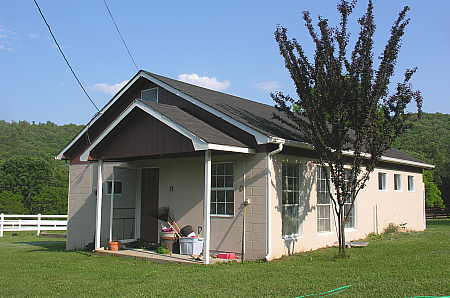
One-time dairy barn

Here is the front of the milking barn as it looks today.  We call this the “milking barn” because it was built and used as dairy barn in the past.  This 36′ x 25’ building is constructed from cinder block, and is comprised of two equally sized 18′ x 25′ rooms.  The room toward the front of the building (with the full-length windows) formerly contained a stainless steel milk storage tank, and was thus called the “tank” room.  The milk was picked up every other day by a dairy wholesaler, who transported the product to a major milk processor.

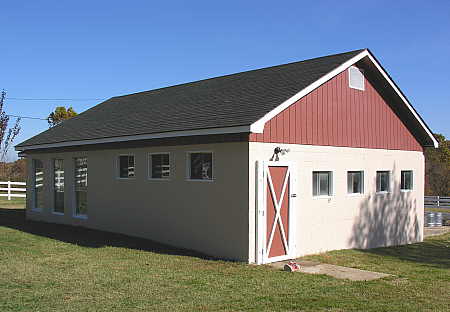
Rear of former dairy barn building

This is the rear portion of the building, which is where the cows would be milked daily.  The room on this side of the barn was obviously called the “milking” room.  Inside the milking room were eight stalls arranged in a herring-bone pattern on either side of the room.  In the center of the room was a four foot deep milking pit, where the person doing the milking would stand to work, much like the pits that are used in an oil-change garage for the mechanic to position himself under the vehicle.  Grain was stored in hoppers located in the attic above the milking room, and a system of chutes would automatically supply strategically placed feed troughs with grain for the eight cows being milked.
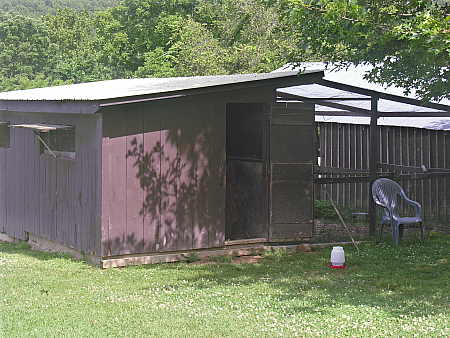
We are in the process of converting this room into a workshop, so that I will have no excuse to not get my equipment maintenance and repairs done in a timely manner.

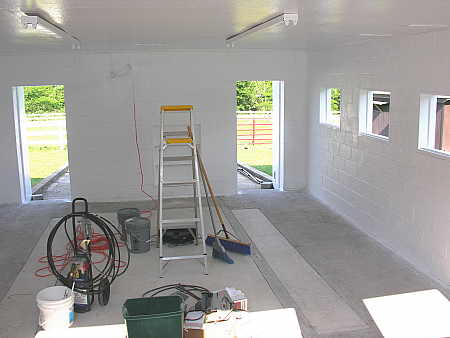
Interior of shop side of barn

Excuse all the things laying around on the floor, but I just completed the painting of the inside of the new “shop” this morning.  In the picture above, you can see where the 4′ deep milking pit used to be located.  We have filled in the pit with tons of gravel, and topped it off with a 5″ reinforced concrete slab.  Now that the shop has been painted, I will install work benches and storage shelving.  After that, I will plan out and install conduit for 110v/220v electrical service to locations around the shop, where I will place my compressor, drill press, etc.

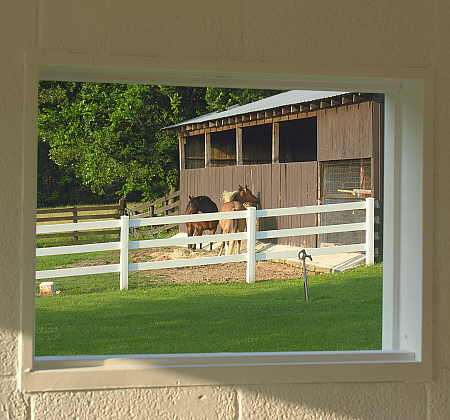
Looking out a window of the new shop

The shop is in a great location far from the house, so noise from power tools and equipment will not be a bother to residents in the house.  The horses, which I can keep an eye on through the many windows in the shop, may not like the noise, but they can always stroll over to another pasture if it is bothersome to them.

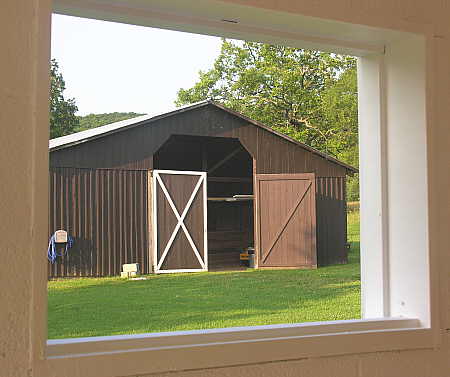
Looking out another shop window

I can also keep an eye on the equipment barn, which is located out another of the shop windows.

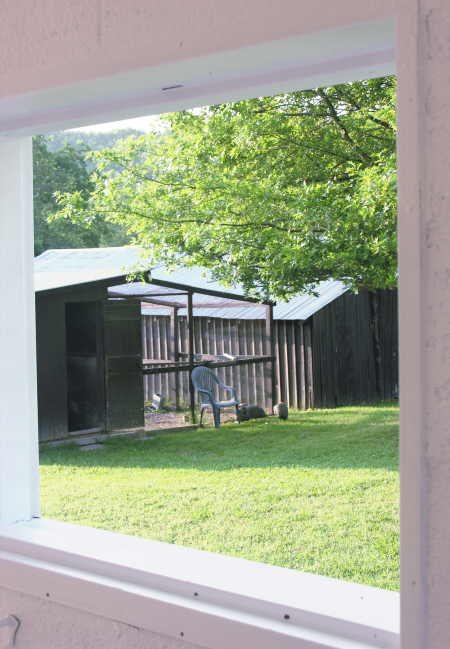
Looking out yet another shop window

The hen house (sorry, it’s still not repainted yet) is in view of the shop, so I can keep a watchful eye on things over there, as well.

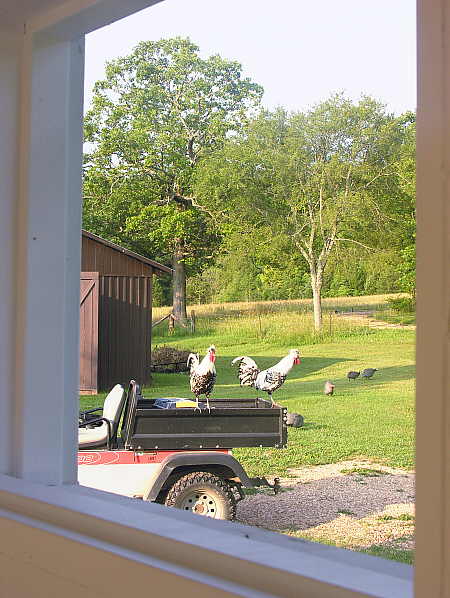
My helpers are waiting for me outside this shop window

And all the while, my trusty “helpers” can keep a keen eye out for me, too.  They certainly wouldn’t want to miss any of my foibles, as I run amok in my new shop!